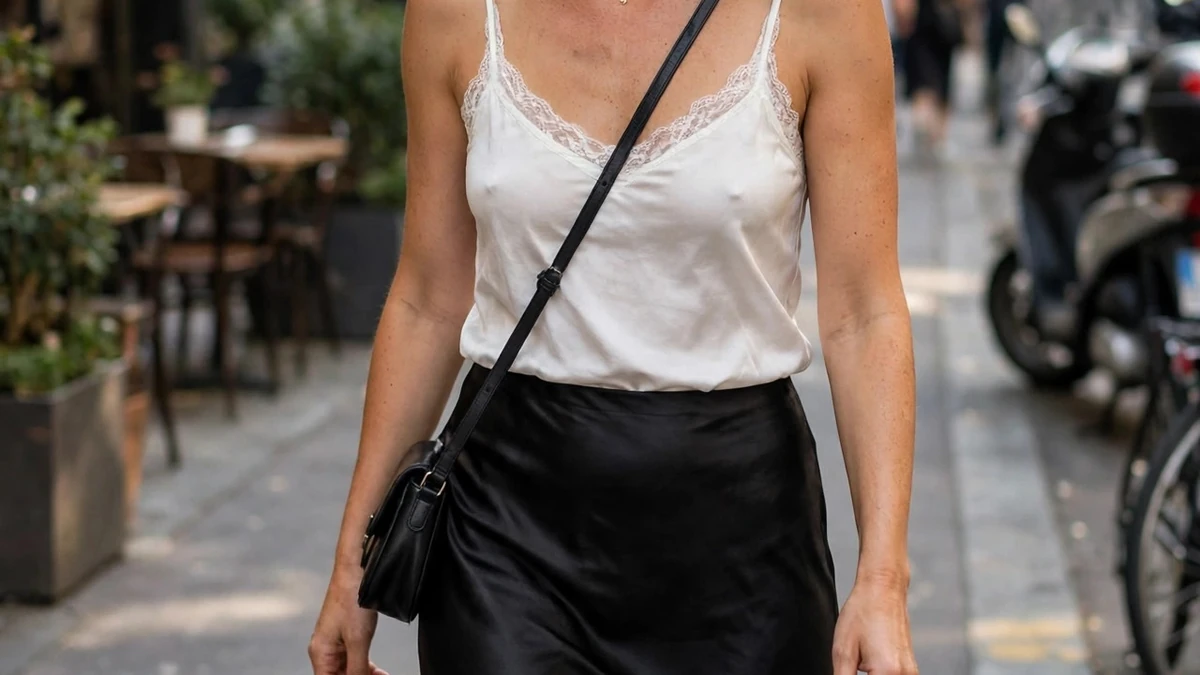
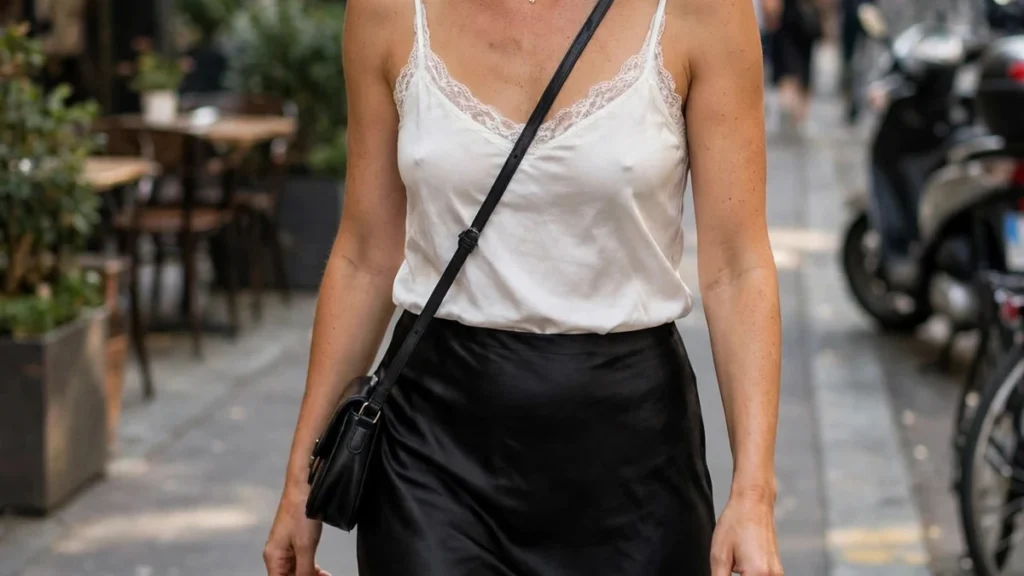
A slip skirt is the quietest piece in a wardrobe, and often the hardest working. It is a simple, bias-cut skirt that falls straight from the waist and moves the way the fabric moves, with no stiff structure. A slip skirt looks effortless because it is the simplest skirt there is, yet it asks more of the fabric than almost any other garment. When the fabric is right, it drapes like water. When it is wrong, it clings, rides up, and shows every seam underneath.
The confusion around the slip skirt usually starts with its name. It comes from the slip, the undergarment once worn beneath dresses, and the modern version keeps that same idea: a light, fluid layer that sits close to the body without squeezing it. It is not a pencil skirt, which is tailored and firm. It is not an A-line skirt, which flares from the waist. It is its own shape, cut on the bias so the fabric stretches gently across the hips and falls in a soft column.
Below are nine facts that explain what a slip skirt actually is, how the best ones are made, and how to choose, wear, and care for one in 2027. Each one covers what matters, what to watch for, and who it suits best, so you can buy with your eye on the fabric, not just the label.
Key takeaways
- A slip skirt is a bias-cut skirt, usually in silk, satin, or a fluid synthetic, that drapes rather than holds a shape.
- The fabric decides everything: a good slip skirt falls smoothly, while a cheap one clings, catches light unevenly, and rides up when you walk.
- Length matters more than size. A midi length suits most people, while a maxi length needs the right shoes to avoid dragging.
- Slip skirts work year-round, layered with knitwear in winter and worn alone with a simple top in summer.
- No slip skirt hides a bad fit, and a skirt that pulls at the hips or shows every line underneath is the wrong cut, not the wrong body.
What a slip skirt actually is
A slip skirt is a skirt cut on the bias, which means the fabric is cut diagonally across the weave instead of straight along it. That single choice changes everything about how the skirt behaves. Bias-cut fabric has a natural give, so the skirt stretches slightly across the hips and settles into a smooth line, then falls in a soft, liquid drape. It is the same technique used for 1930s evening dresses, and it is the reason a slip skirt looks expensive even when the design is plain.
Most slip skirts are made from silk, satin, or a fluid synthetic such as viscose or polyester satin. Silk is the classic choice: it is light, breathable, and has a soft sheen that catches light without glaring. Satin is usually silk or a synthetic woven to a high shine, and it gives a more polished, evening look. Viscose is a good middle ground, with a similar drape at a lower price, while polyester satin is the most affordable and the easiest to wash, though it can look shinier and feel warmer.
The shape itself is simple. A slip skirt usually has an elasticated or flat waistband, a straight or gently flared hem, and no pockets, pleats, or heavy seaming. Lengths run from just above the knee to ankle-grazing maxi, though the midi length, falling between the knee and the ankle, is the most common and the most versatile. The hem is often left plain, and the skirt is designed to be worn with almost anything, from a white shirt to a chunky knit.
How we chose these facts and what to look for
Look first at the fabric and the bias cut. Hold the skirt up and let it hang: a good slip skirt falls in a smooth, even column with no twisting at the hem, because the bias cut is balanced. If the hem twists to one side, the cut is off, and the skirt will keep twisting every time you wear it. Run your hand down the fabric. It should feel cool and smooth, not sticky or plasticky, and it should slide over your palm rather than gripping it.
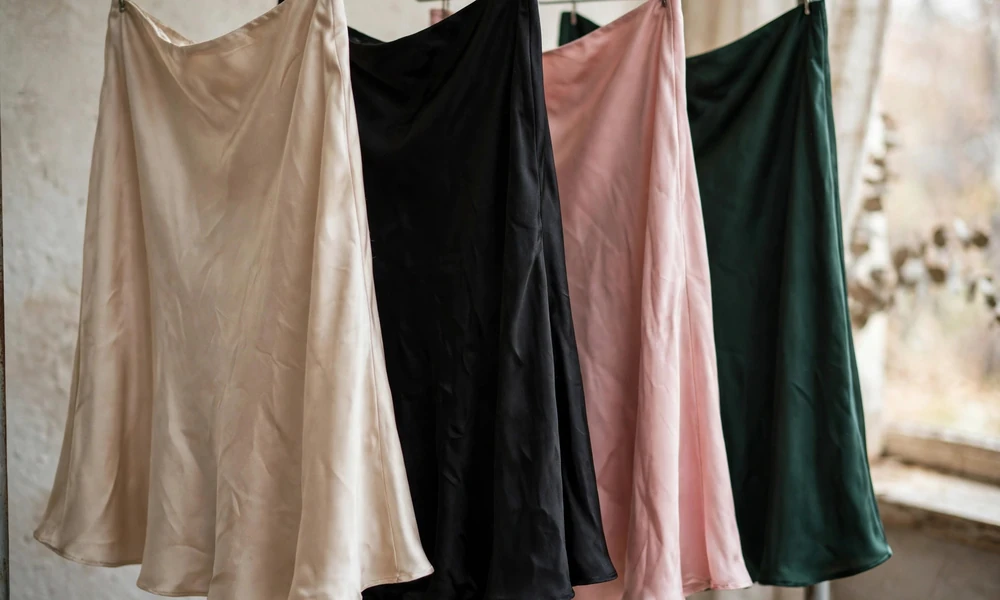
Look next at the lining and the waistband. Many slip skirts are unlined, which keeps them light, but a thin lining stops the fabric from clinging to tights in winter. A flat waistband with a side zip gives the cleanest line, while an elasticated waist is more comfortable and more forgiving. Either is fine, but a waistband that digs in or rolls down will ruin the smooth silhouette the skirt is meant to give. Our guide to satin dresses covers the same fabric questions, because satin behaves the same way whether it is cut as a dress or a skirt.
Finally, look at the finish. The seams should be neat and flat, the hem should be even, and the fabric should not show a visible sheen difference between the front and the back. Check the skirt in daylight if you can, because satin and silk change dramatically under shop lighting. A skirt that looks rich and soft in daylight is a good buy. One that looks glaring or cheap in daylight will not improve at home.
The 9 key facts about slip skirts in 2027
What it really is
What we like: The simplest skirt shape there is, cut on the bias so it drapes rather than holds a rigid line, and easy to dress up or down. What to consider: It shows the line of whatever is worn underneath, so underwear and layering matter more than with a structured skirt. Best For: Anyone who wants a fluid, elegant skirt without tailoring. Fabric: Silk, satin, viscose, or polyester satin. Price Range: £25 to £400. Standout Feature: The bias cut, which gives the skirt its liquid drape.
The history
What we like: A genuine piece of fashion history, from 1930s bias-cut evening dresses to the 1990s minimalism that made the slip skirt a wardrobe staple. What to consider: The 1990s association means some styles can look dated if the fabric is too shiny or the length is too short. Best For: Anyone who likes classic, unfussy pieces with a long history. Fabric: Originally silk, now silk, satin, and viscose. Price Range: £25 to £400. Standout Feature: A shape that has stayed in fashion for nearly a century.
The fabrics
What we like: Silk is breathable and soft, satin is polished and evening-ready, and viscose gives a similar drape for much less money. What to consider: Polyester satin can feel warm and look overly shiny, and cheap silk can be thin enough to show through. Best For: Silk for everyday elegance, satin for evening, viscose for a first slip skirt. Fabric: Silk, satin, viscose, polyester satin. Price Range: £25 to £400. Standout Feature: The way each fabric changes the skirt’s mood entirely.
The lengths
What we like: Midi is the most versatile length, working with trainers, boots, and heels, while maxi is dramatic and elegant. What to consider: A knee-length slip skirt can look like a slip rather than a skirt, and a maxi needs the right shoes to avoid dragging. Best For: Midi for most people, maxi for evening, knee-length for summer. Fabric: Silk, satin, or viscose. Price Range: £25 to £400. Standout Feature: The midi length, which suits almost every height.
The cuts
What we like: A straight bias cut is the classic shape, while a slight A-line flare gives more movement and a little more room at the hem. What to consider: A very narrow cut can restrict your stride, and a wide flare can look like a different skirt altogether. Best For: Straight cut for a clean line, gentle flare for walking comfort. Fabric: Silk, satin, or viscose. Price Range: £25 to £400. Standout Feature: The bias cut, which lets the skirt stretch across the hips.
The colours and prints
What we like: Neutral colours like black, champagne, and navy are the most versatile, while animal print and floral add personality without effort. What to consider: Very pale colours can show through, and a large print can overwhelm the simple shape. Best For: Neutrals for a first slip skirt, prints for a second one. Fabric: Silk, satin, or viscose. Price Range: £25 to £400. Standout Feature: The way a plain colour lets the fabric do the talking.
The price
What we like: A good slip skirt exists at every price, from affordable viscose to investment silk, and the shape is so simple that even a cheap one can look good. What to consider: The cheapest skirts often use thin polyester satin that looks shiny and feels warm, and they rarely last. Best For: Viscose under £60, silk from £100 upward. Fabric: Viscose, silk, or satin. Price Range: £25 to £400. Standout Feature: The value of a well-made viscose skirt, which looks far more expensive than it is.
How to style
What we like: A slip skirt works with almost everything: a white shirt, a chunky knit, a fitted top, a blazer, or a simple camisole. What to consider: The fabric is fluid, so a very loose top can look shapeless; a tucked-in or fitted top balances it better. Best For: A white shirt and flats by day, a camisole and heels by night. Fabric: Silk, satin, or viscose. Price Range: £25 to £400. Standout Feature: The way one skirt covers both day and evening.
How to care
What we like: Silk and viscose are easier to care for than their reputation suggests, and most slip skirts need only gentle washing and careful storage. What to consider: Silk should not go in a hot wash, and satin can water-stain if it gets splashed. Best For: Hand washing silk, machine washing viscose on a gentle cycle. Fabric: Silk, satin, viscose, or polyester satin. Price Range: £25 to £400. Standout Feature: The fact that a well-cared-for silk skirt can last for years.
Which slip skirt is right for you
If this is your first slip skirt, choose a midi length in a neutral colour, in silk if you can afford it and viscose if you cannot. That combination is the most forgiving and the most versatile, and it will work with more of your wardrobe than any other version. A black or champagne skirt in a midi length is the safest first buy, and it is the one you will reach for most often.
If you are tall, a maxi length works beautifully, because the extra fabric has room to fall. If you are shorter, a midi that ends just below the knee is the most flattering, and a small heel helps the line. If you want a skirt for evening, choose satin in a dark colour. If you want one for everyday, choose silk or viscose in a neutral. Our guide on how to wear a maxi skirt in winter covers the same length questions, because a long, fluid skirt needs the same thinking whatever the fabric.
Think about your climate too. Silk breathes well in warm weather, while satin can feel warm and viscose sits in the middle. The right slip skirt is the one that fits your life, not just your wardrobe.
The caveats that matter
A slip skirt is an honest garment. It does not hide a bad fit, it does not forgive a cheap fabric, and it does not work with the wrong underwear. It is a reason to choose carefully, because a good slip skirt is one of the most flattering things you can own, while a bad one is one of the least.
| Detail | What is known |
|---|---|
| What it is | A bias-cut skirt, usually silk, satin, or viscose, that drapes rather than holds a shape |
| Best first buy | Midi length, neutral colour, silk if possible, viscose if not |
| Best fabric | Silk for drape and breathability, viscose for value, satin for evening |
| What to avoid | Thin polyester satin that looks shiny, and a hem that twists when the skirt hangs |
| Underwear | Seamless, nude-toned underwear, because the fabric shows every line |
| Styling | A fitted or tucked-in top balances the fluid skirt; a very loose top can look shapeless |
| Care | Hand wash silk in cool water, machine wash viscose gently, hang by the waistband |
| What it does not do | It does not hide a bad fit or a cheap fabric, and it does not suit every occasion |
If the skirt pulls across the hips, rides up when you walk, or shows a visible line through the fabric, it is the wrong cut or the wrong size, not the wrong body. Try a size up, try a different fabric, or try a gentle A-line flare. The right slip skirt should feel like nothing when you wear it, and it should move when you move, without catching or clinging.
Checklist: choosing a slip skirt honestly
Use these checks before you buy, and again when you try the skirt on at home.
- Check the bias: hold the skirt up and let it hang. The hem should fall straight, not twist to one side.
- Check the fabric: it should feel cool and smooth, slide over your hand, and not look glaring in daylight.
- Check the waistband: it should sit flat and comfortable, without digging in or rolling down.
- Check the length: a midi that ends between the knee and the ankle suits most people best.
- Check the underwear line: wear seamless, nude-toned underwear, because the fabric shows every line.
- Check the walk: walk, sit, and climb stairs. The skirt should move with you, not ride up or catch.
Frequently asked questions
What is a slip skirt?
A slip skirt is a skirt cut on the bias, usually in silk, satin, or viscose, that drapes in a soft, fluid column rather than holding a structured shape. It takes its name from the slip, the undergarment once worn beneath dresses, and it keeps the same idea: a light layer that sits close to the body.
What should I wear with a slip skirt?
Almost anything, as long as the top gives the outfit some structure. A white shirt, a fitted knit, a blazer, or a simple camisole all work. In winter, a chunky knit tucked in at the front is the easiest combination, and in summer, a camisole and flat sandals are enough.
Can I wear a slip skirt in winter?
Yes, with the right layers. Wear it over tights, add a heavy knit on top, and choose boots rather than sandals. A lined slip skirt is worth seeking out for winter, because the lining stops the fabric from clinging to tights.
Is a slip skirt the same as a satin skirt?
No, though they overlap. A slip skirt is defined by its bias cut, while satin is a fabric. A slip skirt can be made from satin, silk, or viscose, and a satin skirt is not always cut on the bias. A silk blouse, such as one from our guide to silk blouses, pairs well with either, because the fabrics share the same soft sheen.
How do I stop a slip skirt from clinging?
Choose a fabric with some weight, such as silk or a good viscose, rather than thin polyester satin. Wear seamless underwear, and if the skirt still clings, a light slip or a lined version will fix it. A quick spray of anti-static spray on the inside of the skirt also helps.
How do I wash a slip skirt?
It depends on the fabric. Hand wash silk in cool water with a gentle detergent, and dry it flat away from direct sun. Viscose can usually go in the machine on a gentle cycle, and polyester satin is the easiest of all. Always check the care label first.
The bottom line
The best slip skirt in 2027 is not the most expensive or the most fashionable. It is the one in the right fabric, the right length, and the right cut for you, that falls smoothly and moves when you move. A midi skirt in silk or good viscose, in a neutral colour, is the safest first buy, and it is the one you will wear most.
Choose the fabric first, check the bias cut second, and try the skirt on with the shoes and top you actually plan to wear with it. If it falls straight, feels like nothing, and lets you walk, sit, and climb stairs without catching, it is the right one. That is the honest way to buy a slip skirt, and the only way that lasts.