Your shampoo cleans your hair, but does it really clean your scalp? If your roots feel heavy a day after washing, or flakes keep returning no matter how often you shampoo, the problem may be buildup on the skin of your scalp, and that is exactly what a scalp scrub is made to remove.
A scalp scrub is an exfoliating treatment for the skin on your head. Like a face scrub, it lifts away dead skin cells, excess oil and residue from styling products, dry shampoo and hard water. Unlike shampoo, which mainly cleans the hair shaft, a scrub works directly on the scalp surface, where flakes, sebum and product film collect around the follicles.
This guide explains what a scalp scrub is, how physical and chemical versions differ, what benefits to expect, how often to use one, how to apply it, and who should skip it.
Key takeaways
- A scalp scrub exfoliates the skin of the scalp, removing dead cells, excess sebum and product buildup that ordinary shampoo leaves behind.
- Physical scrubs lift buildup away with fine particles; chemical scrubs dissolve it with acids such as salicylic or glycolic acid.
- Most people need a scrub only once a week, and dry or sensitive scalps often need it only every other week.
- A scrub is a pre-shampoo treatment, not a shampoo replacement, and it should always be followed by a gentle wash.
- A scrub will not cure dandruff, hair loss or a scalp condition, and a sore, broken or inflamed scalp should skip it.
What Is a Scalp Scrub?
A scalp scrub is a treatment product designed to exfoliate the scalp, the skin beneath your hair. The scalp sheds dead skin cells constantly, just like the skin on your face, and it also produces sebum, the natural oil that keeps skin supple. Add in styling products, dry shampoo, sweat and mineral deposits from hard water, and a thin film of residue builds up over time. Ordinary shampoo removes some of it, but not all, especially around the follicle openings.
That buildup is the reason a scrub exists: exfoliation clears the dead cells and residue so the scalp surface is clean again. If your scalp feels raw or sore afterwards, the product was too harsh or you used it too often.
Be clear about what a scalp scrub is not. It is not a shampoo, and it is not a hair mask, because it is meant for the skin, not the lengths. It is not a treatment for dandruff or hair loss. And it is not scalp oiling, which adds oil rather than removing buildup. Oiling softens and moisturises; scrubbing clears and resets.
Physical vs Chemical Scalp Scrubs
There are two fundamentally different kinds of scalp scrub, and choosing between them matters more than choosing a brand. Physical scrubs work by rubbing: fine particles such as sugar, salt, jojoba beads or fine clay are massaged over the scalp, and the friction lifts dead cells and residue away. The effect is immediate and easy to feel. Roots feel lighter the same wash, which is why people love them, and overuse them.
Chemical scrubs work by dissolving rather than rubbing. They use acids, most often salicylic, glycolic or lactic acid, to loosen the bonds between dead skin cells so they rinse away. Salicylic acid is the scalp specialist because it is oil-soluble: it works inside the oily environment at the roots, loosening scale and softening stubborn flakes. With no friction involved, chemical exfoliants are usually gentler on sensitive skin, and far easier to rinse out of thick, curly or coily hair.
Neither type is better in every case. A physical scrub suits a healthy, resilient scalp with visible buildup, used with light pressure. A chemical scrub suits oily, flaky or sensitive scalps, and anyone who finds grains irritating. Some products combine both, but if your scalp is reactive, start with a chemical formula and skip the grains. The same distinction applies to the face; see our guide to the best exfoliating cleansers.
What Are the Benefits of a Scalp Scrub?
The benefits of a scalp scrub are cosmetic, but they are real and easy to notice. The first is buildup removal. Heavy stylers, oils, dry shampoo and hard-water minerals leave a film that an ordinary wash does not fully lift, and a scrub clears it. Hair at the roots looks less flat and greasy afterwards.
The second benefit is fewer visible flakes. Loose surface flakes are lifted and rinsed away, so the scalp looks cleaner and dark hair shows less white residue. This is not treating dandruff: true dandruff is driven by yeast and inflammation and needs a medicated shampoo as its main treatment, with a scrub as support at most. A 2024 study found a hydroxy-acid scrub with a hydrating serum significantly reduced adherent scalp flaking from the first session.
How Often Should You Use a Scalp Scrub?
Once a week is plenty for most people. That is the standard starting point for anyone who uses styling products, dry shampoo or heavy oils, or who washes their hair infrequently. Very oily scalps may manage twice a week with a gentle chemical formula only. Dry or sensitive scalps often need only every other week.
Build your routine around your scalp type, not a fixed calendar: oily scalps weekly, balanced scalps every ten days, dry or sensitive scalps every two weeks with a mild chemical exfoliant. Colour-treated hair should use gentle formulas every ten to fourteen days.
How to Use a Scalp Scrub, Step by Step
A scrub is a pre-shampoo treatment, and the order matters: scrub first, then shampoo, then condition the lengths. Start with wet hair, parted in sections. Apply a small amount directly to the exposed lines of scalp, a little at a time.
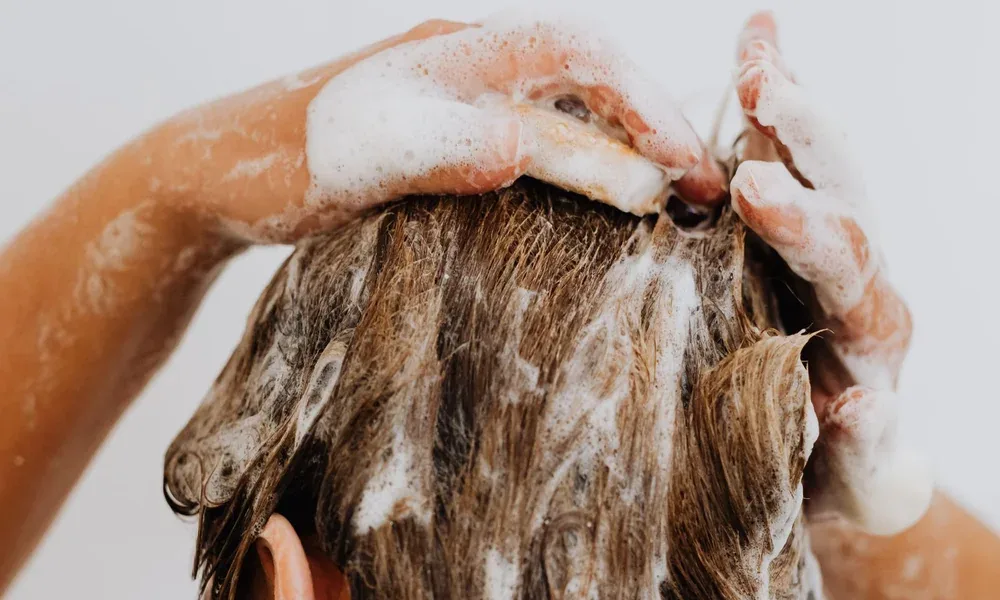
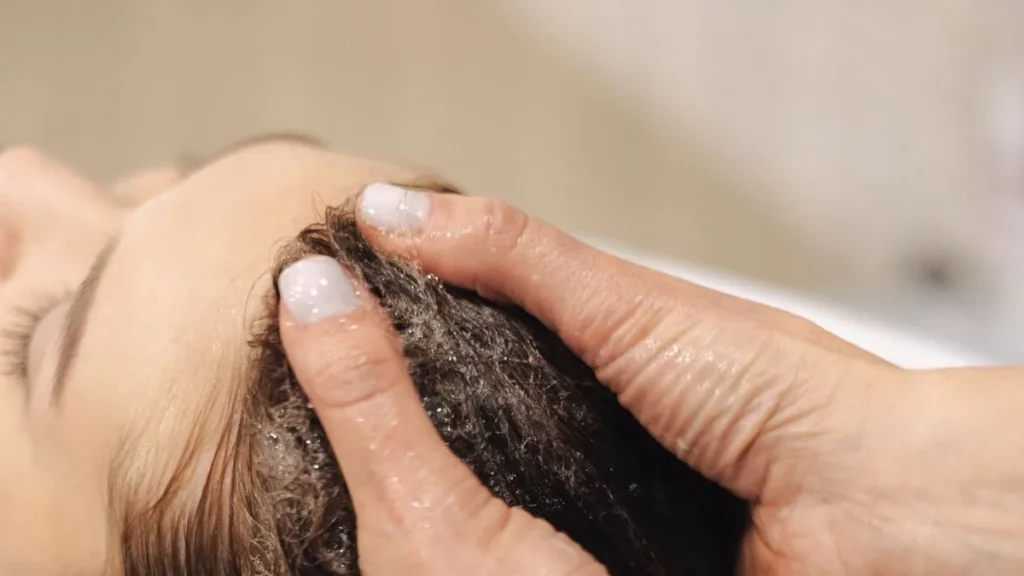
Massage with the pads of your fingers in small, gentle circles for two to three minutes, covering the crown, sides and back of the head. Let the particles or the acid do the work: light pressure is enough, and pressing harder does not clean better, it only irritates. Never scratch with your nails, and do not work one spot repeatedly. Rinse a physical scrub thoroughly, as grains can linger in thick or curly hair. Follow the leave-on time on a chemical scrub, usually a few minutes, then rinse.
Then shampoo as normal, ideally twice: the first wash lifts the loosened residue, the second cleans the scalp. Our guide on how to wash your hair properly covers the double-shampoo technique. Finish with conditioner on the mid-lengths and ends only, keeping it off the freshly exfoliated scalp, and rinse with lukewarm water rather than hot.
Scalp Scrub vs Scalp Oil: Which Does Your Scalp Need?
Scrubs and oils are often sold side by side, but they do opposite jobs, and confusing them is the most common mistake in scalp care. A scrub removes dead cells, excess sebum and product residue. An oil adds moisture, softness and a protective film. A dry, tight scalp that feels rough and looks dull usually needs oil. A heavy, greasy scalp with visible buildup and flat roots usually needs a scrub.
The distinction matters most for dandruff-prone scalps. The yeast linked to dandruff feeds on oils, so adding oil to a flaky, itchy scalp can make it worse, while a gentle chemical scrub can help lift flakes as a support to medicated shampoo. A dry scalp that is already stripped will only get drier if scrubbed aggressively. For the oil side of scalp care, see our round-up of the best scalp oils, which explains which oils suit which hair type and how to use them as a pre-wash treatment.
| Type | How it works | Best for | Watch out for |
|---|---|---|---|
| Physical scrub (sugar or salt) | Fine grains lift buildup by friction | Healthy, resilient scalps with product buildup | Harsh if pressed hard |
| Physical scrub (jojoba beads) | Smooth, round beads exfoliate gently | Normal scalps that want a mild grain | Can linger in thick or curly hair |
| Chemical scrub (salicylic acid) | Oil-soluble acid dissolves scale and sebum | Oily, flaky or dandruff-prone scalps | Drying if used too often |
| Chemical scrub (glycolic or lactic acid) | Water-soluble acids loosen surface dead cells | Dry, dull buildup and sensitive scalps | Stings broken skin |
| Clay or charcoal scrub | Absorbs excess oil while grains exfoliate | Very oily roots and heavy dry-shampoo users | Can strip fine hair |
| Clarifying shampoo | Strong cleansers strip residue, no exfoliation | Occasional deep clean between scrub days | Overuse strips colour |
| Scalp brush or silicone massager | Soft bristles lift flakes with massage | Daily gentle maintenance between scrubs | No use on heavy buildup |
| DIY scrub (sugar and oil) | Homemade grains in a carrier oil | Occasional use when no product is to hand | Patch test first |
Who Should Avoid a Scalp Scrub?
Some scalps should not be scrubbed at all, and knowing which one you have is more important than choosing a product. Skip scrubs entirely if your scalp is sore, broken, sunburned, freshly scratched or inflamed, or if you have open cuts, sores or a rash. Exfoliating broken skin stings and delays healing.
People with scalp psoriasis, eczema or seborrhoeic dermatitis should be cautious too. A gritty physical scrub on an inflamed, flaky scalp usually makes things worse. The same applies to significant hair loss: scrubbing will not treat the cause. If you have a diagnosed scalp condition, ask your dermatologist before adding any exfoliant. Also skip the scrub the week after colouring, bleaching or chemical straightening, while the scalp is still sensitive.
Your First Scalp Scrub: A Checklist
- Choose a gentle chemical scrub if your scalp is oily, flaky or sensitive; a fine-grained physical scrub only if it is healthy and resilient.
- Patch test behind your ear or on a small section of scalp 24 hours before your first full session.
- Wet your hair, part it in sections, and apply a small amount of scrub directly to the scalp, not the lengths.
- Massage for two to three minutes with the pads of your fingers, using light pressure and no nails.
- Rinse thoroughly, then shampoo twice and condition the lengths only, keeping conditioner off the scalp.
- Note how your scalp feels over the next two days before repeating.
Frequently Asked Questions
What is a scalp scrub?
A scalp scrub is an exfoliating treatment for the skin of the scalp. It removes dead skin cells, excess sebum and product buildup that ordinary shampoo leaves behind, using fine particles or acids. It is a pre-shampoo treatment, not a shampoo replacement.
How often should I use a scalp scrub?
Once a week suits most people who use styling products or dry shampoo. Very oily scalps may manage twice a week with a gentle chemical formula, while dry or sensitive scalps often need only every other week.
Is a physical or chemical scalp scrub better?
It depends on your scalp. Physical scrubs suit healthy, resilient scalps with visible buildup. Chemical scrubs with salicylic, glycolic or lactic acid are usually gentler, suit oily, flaky or sensitive scalps, and rinse out of thick, curly or coily hair more easily.
Can a scalp scrub help with dandruff?
It can help lift visible flakes as a support, especially a salicylic acid formula, but it cannot treat dandruff itself. True dandruff is driven by yeast and inflammation and needs a medicated antifungal shampoo as the main treatment.
Can a scalp scrub make hair grow faster?
No. There is no strong evidence that scrubbing the scalp makes hair grow faster or regrows lost hair. A clean scalp is a better environment for the hair you already have, but growth speed is set by genetics and health.
Should I use a scalp scrub before or after shampooing?
Before shampooing. Apply the scrub to wet hair, massage it in, rinse, then shampoo as normal, ideally twice, to wash away the loosened buildup.
The bottom line
A scalp scrub is a simple, useful tool with a modest promise: a cleaner, lighter scalp, and roots that look less weighed down. It is not a cure for dandruff or hair loss. Pick the right type for your scalp, use it once a week at most, apply it gently with your fingertips, and always follow it with a proper shampoo.
Start with a gentle formula, patch test first, and listen to your scalp. If it feels fresh and calm, keep the ritual. If it feels tight or sore, cut back or stop.
Note: This article is general information, not medical advice. If you have a scalp condition, significant hair loss, or a skin allergy, speak to a dermatologist or trichologist before using a scalp scrub.