
A ruby ring is one of the most romantic purchases in fine jewellery, and one of the easiest to get wrong. A ruby can look sensational in a shop window and disappointing in daylight. The difference usually comes down to a handful of checks you can learn in an afternoon.
Rubies are red corundum, the same mineral family as sapphires, but the buying rules are not the same. Colour matters more than anything else, treatments are more common and more consequential, and the stone’s origin can move the price by thousands.
This guide covers what to look for, from the colour that defines value to the treatments, settings and certificates that protect you.
Key takeaways
- Colour drives value: look for a vivid, saturated red with a hint of pink.
- Ask about treatments first. Heat treatment is standard, but glass filling and surface diffusion change value dramatically and must be disclosed.
- Buy the stone, not the origin story: a fine Mozambican ruby beats a mediocre Burmese one every time.
- Get an independent certificate from a recognised lab for any ruby ring over a modest budget, and check the report matches the stone.
- A ruby is hard enough for everyday wear at 9 on the Mohs scale, but protective prongs or a bezel keep it safe, and yellow gold flatters red best.
Colour comes first, and it is worth slowing down for
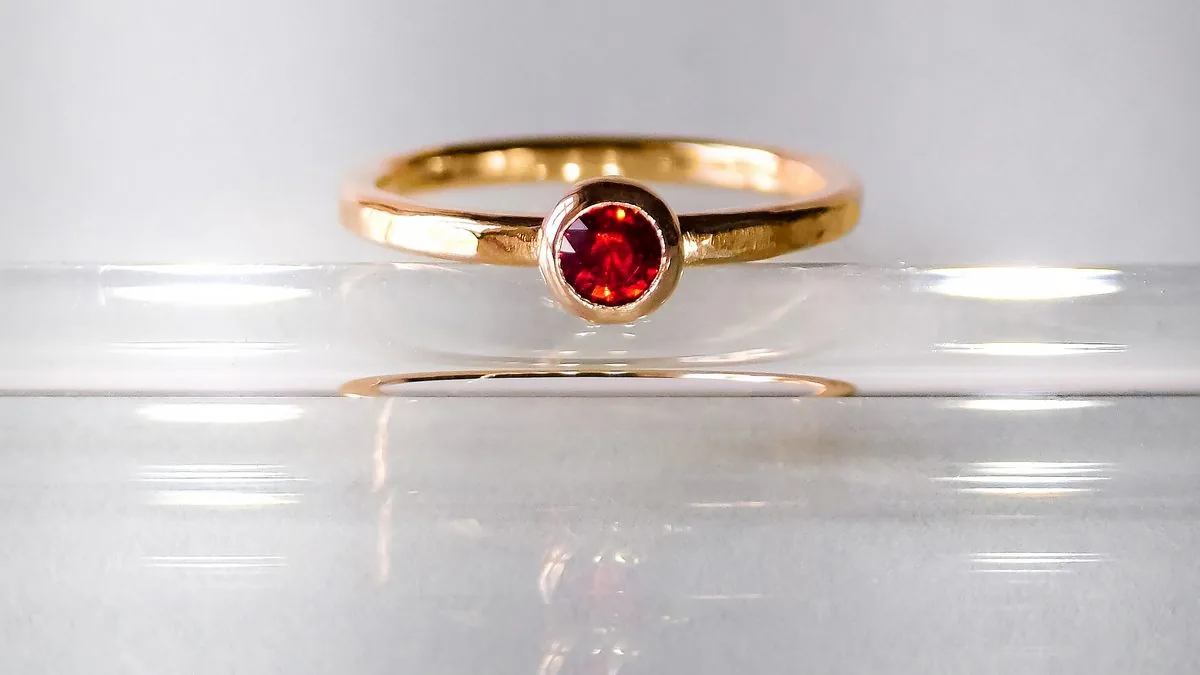
With rubies, colour is the factor. The trade’s ideal is often described as pigeon blood red: a pure, vivid red with a slight pink or purple undertone, glowing rather than flat. You do not need a pigeon blood ruby to own a beautiful ring; you need a stone whose red feels alive.
Look at the ruby in daylight, not only under the jeweller’s spotlights. Shop lighting is designed to flatter gems, and a ruby that looks fiery under a halogen lamp can turn dark and dull by a window. A good ruby keeps its colour in ordinary light; a poor one goes murky, almost black in the centre, or fades to a pinkish wash.
Watch for brown and orange undertones, the most common reasons a ruby looks cheap. A brownish red reads muddy, while an overly orangey stone can be mistaken for a garnet. A touch of pink is welcome, and the most valuable reds are saturated, slightly pinkish, and bright.
The four qualities that shape a ruby
After colour, judge clarity, cut, carat weight and tone. Rubies are rarely as clean as diamonds, and that is expected. Most contain inclusions, tiny internal features. Avoid large, dark inclusions near the centre, surface-reaching cracks, or a cloudy, milky look that dulls the red.
Cut matters more than many buyers realise. Rubies are usually cut into ovals and cushions. Whatever the shape, check the symmetry and make sure the table, the flat top facet, sits centred. A badly cut ruby can have a dark patch in the middle, called a window, where light leaks through instead of bouncing back to your eye.
Carat weight affects price steeply, because fine rubies over two carats are far rarer than small ones. In a ring, a well-cut 1.5-carat ruby with vivid colour will outshine a flat 3-carat stone every time. Tone is the lightness of the red: too dark and it looks almost black in low light, too light and it reads as pink sapphire.
Treatments: the question that changes everything
Almost every ruby on the market has been treated in some way, and that is not a scandal. What matters is which treatment, how much of it, and whether the seller told you. Heat treatment is the standard: the stone is heated to improve its colour and clarity, and untreated rubies are a small, expensive minority. A heated ruby is a normal purchase.
Glass filling is a different story. A heavily fractured ruby is filled with lead glass to hide the cracks and improve transparency. They are fragile, though: the glass can be damaged by heat, ultrasonic cleaning and some chemicals, and the stone is worth a fraction of a heated ruby of the same appearance. A glass-filled ruby should be sold much cheaper, clearly labelled. If a deal looks too good to be true, glass filling is often the reason.
Surface diffusion is another treatment to know. Colour is diffused into only the outer layer of a pale stone, giving it a red skin over a pale core. It sharply reduces value. Ask the seller to state every treatment in writing, and if they cannot or will not, walk away.
Natural, lab-created or synthetic: know what you are buying
Natural rubies formed in the earth over millions of years. Lab-created rubies, also called lab-grown, are real rubies with the same chemical composition and crystal structure, grown in a laboratory. They are not fakes, and they can be beautiful, but they cost far less than natural stones of similar appearance. Synthetic is the older word for the same thing; the price should still reflect that it was grown in weeks, not mined.
Imitation rubies are a separate category: glass, garnet or red spinel sold as ruby. Red spinel is a particular trap because it can look remarkably like ruby, A reputable seller will never confuse the two, but a bargain-bin listing might. A natural ruby certificate should confirm corundum, not spinel or glass.
There is nothing wrong with choosing a lab-created ruby ring. The mistake is paying a natural price for a lab-created stone, or buying one without being told. Decide which you want before you shop, and check the paperwork matches your decision.
Origin: beautiful, but never the whole story
Ruby origins carry romance and real price differences. Burmese rubies from Myanmar are the most prized, famous for pigeon blood colour and strong fluorescence in sunlight. Thai rubies tend toward a darker, slightly brownish red and are often more affordable. Mozambican rubies from Montepuez have become the most important source in recent years, producing excellent colour at more accessible prices. Sri Lankan rubies are often lighter and pinkish.
Origin affects price, but it should never override what your eyes tell you. A fine Mozambican ruby with vivid colour and good clarity is a better ring than a dull Burmese stone with a famous name and a higher price. Treat origin as a bonus on a stone you already love, not as the reason to buy one you do not.
Settings and metals that flatter a ruby
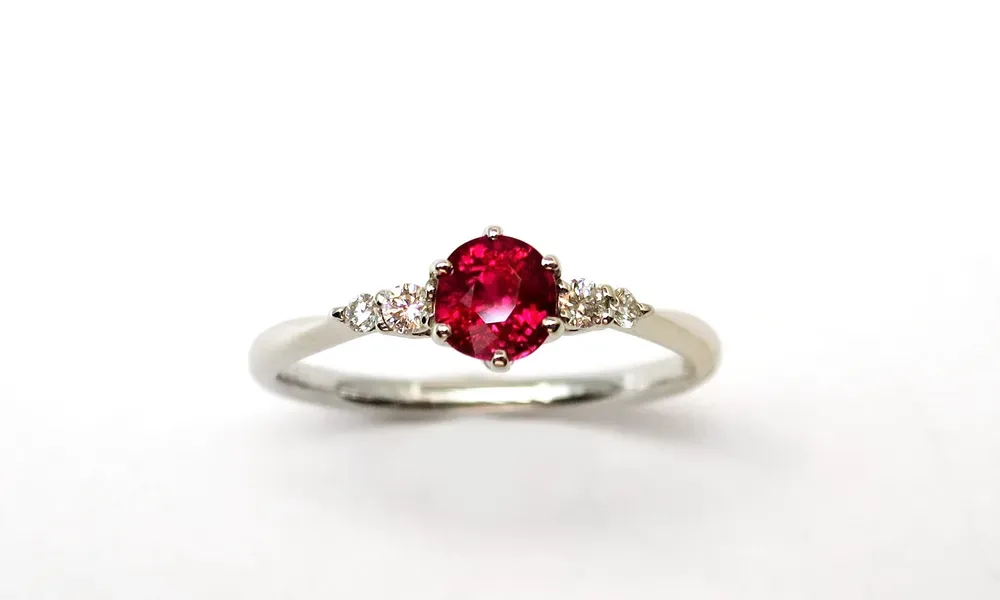
The metal you choose changes how the red reads. Yellow gold warms a ruby and is the classic pairing, making the stone look richer and more traditional. White gold and platinum cool the red slightly and suit a modern, crisp look, while rose gold adds a soft, romantic blush that works beautifully with pinkish rubies. Try each metal in daylight before deciding.
The setting style matters for both looks and safety. A solitaire with four or six prongs puts the ruby front and centre and lets light in from all sides. A halo of small diamonds makes the centre stone look larger and adds sparkle. A bezel setting, where metal wraps the stone’s edge, is the most protective option for an active lifestyle, though it shows slightly less of the stone.
Check the craftsmanship before you buy. The prongs should be even, smooth and firmly gripping the stone, with no gaps you can see daylight through. The band should feel comfortable and solid, not thin or flexible. If you are considering a ruby engagement ring, a halo or bezel setting is worth serious thought, because it protects the stone through years of daily wear.
What a ruby ring should cost
Ruby prices vary enormously. Small commercial-quality rubies, often heated and included, can appear in rings costing a few hundred, while fine one-carat natural rubies with vivid colour typically start in the low thousands. Stones over two carats with top colour can reach five figures per carat.
Price is driven by colour first, then by size, clarity, treatment and origin, in roughly that order. A heated stone costs less than an unheated one of the same appearance, a glass-filled stone costs a small fraction, and a lab-created stone costs far less than a natural one. If two rings look similar but one costs a tenth of the other, the difference is almost always in the treatment or the origin of the stone.
Ruby ring qualities at a glance
| Quality | What to look for | What to avoid |
|---|---|---|
| Colour | Vivid saturated red, hint of pink | Brownish or washed-out red; dark centre |
| Clarity | Eye-clean or fine silk | Large dark inclusions; milky haze |
| Cut | Symmetrical; centred table; no dark window | Lopsided; dark patch in middle |
| Treatments | Heat only, disclosed | Undisclosed glass filling |
| Origin | A bonus, not the reason to buy | Premium for origin over colour |
| Certificate | Independent lab report | No paperwork on a costly ruby |
| Setting | Secure prongs or bezel | Thin, gappy prongs |
| Price | Colour first | A deal far below market |
Certificates and sellers: the paperwork that protects you
For any natural ruby ring costing more than a modest amount, an independent certificate is not optional. Recognised labs include GIA, GRS, Gübelin and SSEF; their reports state whether the stone is natural or lab-created, its treatments, and sometimes its origin. Ask to see the report before you pay, and check it matches the stone in the ring.
Buy from a jeweller with a clear returns policy. If a seller rushes you, refuses a return, or cannot produce paperwork, the ring is not worth the risk however beautiful it looks. Keep every document: the laboratory report, the receipt, and any appraisal. A diamond buying guide follows the same principle, and keeping paperwork is a habit worth building with every fine jewellery purchase.
Checklist: what to look for in a ruby ring
- View the ruby in natural daylight and check the red stays vivid and glowing.
- Ask for every treatment in writing: heated only, glass-filled, or lab-created.
- Check clarity: fine silk is fine, but avoid large dark inclusions and surface cracks.
- Inspect the cut for symmetry and for a dark window in the centre of the stone.
- Confirm the setting is secure, with even prongs or a protective bezel, and a comfortable, solid band.
- Get an independent lab certificate for any costly natural ruby, and keep the paperwork.
Frequently asked questions
What is the most important thing to look for in a ruby ring?
Colour, without question. A vivid, saturated red with a slight pink undertone is what makes a ruby beautiful and valuable. Judge the colour in daylight, and choose the most vivid red your budget allows.
Are heated rubies bad?
No. Heat treatment is standard practice, accepted throughout the trade. It improves colour and clarity and is stable and permanent. What matters is that the heating is disclosed.
How can you tell a real ruby from a fake one?
By testing, not by looking alone. Glass imitations often contain round bubbles, while red spinel and garnet can look very similar to ruby. A laboratory certificate stating the stone is natural corundum is the reliable way to be sure.
Is a ruby ring durable enough for everyday wear?
Yes. Ruby scores 9 on the Mohs scale, second only to diamond, so it resists scratching well. Clean it with warm soapy water and a soft brush, and skip ultrasonic cleaners if the stone is glass-filled.
How much should a ruby ring cost?
Small commercial rubies appear in rings costing a few hundred, fine one-carat natural rubies typically start in the low thousands, and top-colour stones over two carats can reach five figures per carat. Colour drives the price first.
Which ruby colour is best for a ring?
The most prized colour is a vivid, slightly pinkish red often called pigeon blood, with strong saturation and a medium to medium-dark tone. In practice, the best colour looks alive in daylight: rich and glowing, without brown or orange undertones.
The bottom line
A great ruby ring starts with a vivid red that holds its colour in daylight, honest disclosure about treatments, and a secure setting with an independent certificate. Buy the best colour you can afford, and never pay a natural price for a lab-created or glass-filled stone. For more ideas on styling red gemstone jewellery, see our guide to the best ruby rings for every occasion.
Note: This guide is general buying advice, not a gemmological appraisal. Prices vary by market and quality, and an independent laboratory report is the only reliable confirmation of a ruby’s identity, treatments and origin.