

A cashmere coat is one of the most expensive things in most wardrobes, and it is also one of the most questioned. Is it really warmer than wool? Does it really last? Or is it simply a luxury label on a coat that does the same job as a good wool one for half the price? These are fair questions, because a cashmere coat can cost three or four times as much as a wool coat, and the difference is not obvious at a glance.
The honest answer is that a good cashmere coat is genuinely different from a wool coat, but the difference is in the wearing, not in the label. Cashmere fibres are finer and softer than sheep’s wool, which means a cashmere coat feels lighter, softer and less bulky, while still keeping you warm. It drapes better, looks better with age, and is the coat people reach for on the coldest days.
Below are nine reasons a cashmere coat is worth it in 2027, from warmth and softness to cost per wear and longevity. Each one is honest about what cashmere does well and where it falls short, so you can decide whether the price makes sense for you.
Key takeaways
- Cashmere is warmer for its weight than sheep’s wool, because its fibres are finer and trap more warm air.
- A cashmere coat feels softer, lighter and less bulky than a wool coat, and it drapes more elegantly.
- Cashmere costs more upfront, but a good coat worn for years can cost less per wear than a cheaper coat replaced often.
- Cashmere needs gentle care, including brushing, careful storage and protection from moths, to last its full life.
- No coat is a financial investment, and a poor-quality cashmere coat is a worse buy than a good wool one, so quality matters more than the label.
What a cashmere coat actually is
Cashmere comes from the soft undercoat of cashmere goats, which grow it to survive bitterly cold winters. The fibres are much finer than sheep’s wool, typically around 14 to 19 microns across, compared with 20 to 30 microns for most wool. That fineness is what makes cashmere feel so soft, and it is also what makes it so warm for its weight. Fine fibres trap more still air, and still air is what keeps you warm.
A cashmere coat is usually made from woven cashmere cloth, sometimes pure cashmere and sometimes blended with a little wool or silk for strength. Pure cashmere is the softest and the warmest, but it is also the most delicate and the most expensive. A blend with 10 to 20 percent wool is often a sensible compromise, adding durability without losing much of the softness. What matters most is the quality of the fibre, not the percentage on the label. Long, fine fibres make a coat that stays soft and resists pilling. Short, coarse fibres make a coat that pills quickly and feels rough.
The other thing to know is that not all cashmere is equal. The best cashmere comes from long fibres combed from the goat’s undercoat, and it is graded by length and fineness. Cheaper cashmere often uses shorter fibres, which is why it pills and loses its shape. A good cashmere coat should feel soft, smooth and light in the hand, with no scratchiness and no stiffness.
How we judged whether cashmere earns its price
Look first at the fibre itself. Hold the coat up to the light and feel the cloth between your fingers. Good cashmere feels smooth, dense and slightly springy, with a soft halo of fibre on the surface. It should not feel scratchy, and it should not feel thin or papery. Check the seams and the lining too. A well-made coat has clean seams, a lining that moves freely, and buttons that are sewn on firmly.
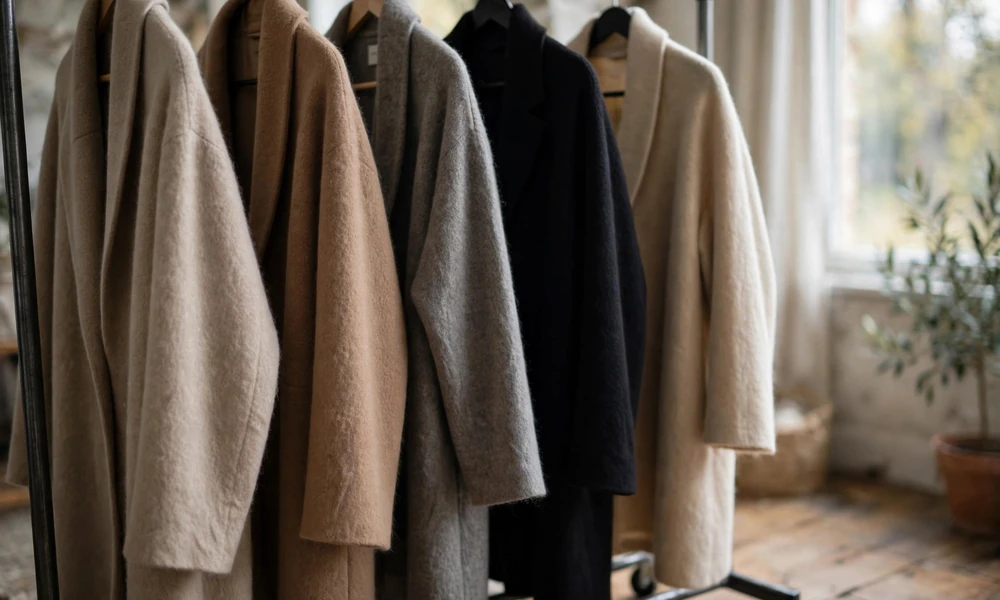
Look next at the weight and the warmth. A cashmere coat should feel noticeably lighter than a wool coat of the same warmth, and it should feel warm within a minute of putting it on. Try it on with the clothes you actually wear underneath, and walk around in it for a few minutes. If it feels heavy, stiff or clammy, it is not a good cashmere coat, whatever the price. Our guide to why cashmere is worth the price explains the same test in more detail, and it is worth reading before you spend serious money on any cashmere piece.
Finally, look at the care the coat will need. Cashmere is not difficult to look after, but it is not wash-and-wear either. It needs brushing after wearing, careful storage with moth protection, and occasional professional cleaning. If you are willing to do that, a cashmere coat will last for many years.
The 9 reasons cashmere coats are worth it in 2027
Warm in a way wool is not
What we like: Cashmere fibres are finer than wool, so they trap more warm air in the same weight of cloth. A cashmere coat keeps you warm without the bulk of a heavy wool coat. What to consider: Cashmere is not windproof, so it needs a good cut and a lining to perform in a gale. Best for: Cold, dry days and long walks. Cost: About £400 to £1,500 for a good coat. Time needed: No extra time, just wear it. Standout feature: Warmth without weight.
Soft in a way wool is not
What we like: Cashmere is one of the softest natural fibres, with no scratchiness and no itch, even against bare skin at the neck and wrists. What to consider: Very cheap cashmere can feel rough, because it uses short, coarse fibres. Best for: Sensitive skin and anyone who finds wool itchy. Cost: About £400 to £1,200 for a good coat. Time needed: No extra time, just wear it. Standout feature: Softness you feel all day.
If wool ever itched, cashmere feels like a different material altogether.
Light, not bulky
What we like: A cashmere coat is noticeably lighter than a wool coat of the same warmth, which makes it easier to wear all day and easier to travel with. What to consider: A very light cashmere coat can feel less substantial, and some people prefer the weight of wool. Best for: Commuting, travelling and all-day wear. Cost: About £400 to £1,500 for a good coat. Time needed: No extra time. Standout feature: Warmth you barely feel carrying.
Holds its shape for years
What we like: Good cashmere cloth has a natural spring to it, so a well-made coat keeps its shoulders, its lapels and its line for years, rather than sagging or stretching out of shape. What to consider: Cheap cashmere stretches and bags at the elbows, so quality is everything. Best for: Anyone who wants a coat that still looks right in five years. Cost: About £500 to £1,500 for a coat that holds its shape. Time needed: A few minutes a week, brushing and hanging it properly. Standout feature: A silhouette that lasts.
Looks better with age
What we like: Cashmere softens and develops a gentle sheen with wear, and the cloth takes on a lived-in elegance that a new coat cannot fake. What to consider: It needs brushing to keep the surface even, and pilling needs to be dealt with early. Best for: Anyone who likes clothes that improve with wear. Cost: About £10 to £20 a year for a cashmere comb and brush. Time needed: A few minutes after wearing. Standout feature: Character that grows with time.
A cashmere coat looks its best in year three, when the cloth has softened and settled into your shape.
Cost per wear is lower than it looks
What we like: A £900 cashmere coat worn 150 times over five winters costs £6 per wear. A £250 coat replaced every two winters costs more per wear, and it never feels as good. What to consider: This only works if you actually wear the coat, and if you buy good quality. Best for: Anyone who wears a coat every day in winter. Cost: About £400 to £1,500 upfront, less per wear over time. Time needed: A few minutes a week in care. Standout feature: Value that shows up over years, not weeks.
Works with everything you own
What we like: A cashmere coat in camel, navy, black or grey goes with almost everything, from tailored trousers to jeans, and from a dress to a suit. What to consider: Very pale cashmere shows marks easily, and very bright colours date faster. Best for: Anyone building a simple, versatile wardrobe. Cost: About £400 to £1,500 for a classic shade. Time needed: No extra time. Standout feature: One coat, many outfits.
A classic cashmere coat in a neutral shade is the coat you do not have to think about, and it still will be in five years.
Handles cold, dry days better than you expect
What we like: Cashmere performs best in cold, dry weather, which is exactly when most people need a coat most. It keeps you warm without overheating indoors, because the fibres breathe. What to consider: Cashmere is not the best choice for wet weather, and it should not be soaked. Best for: Cold, dry winters and heated indoor spaces. Cost: About £400 to £1,500 for a good coat. Time needed: No extra time. Standout feature: Warm outside, comfortable inside.
Cashmere breathes, so it does not leave you sweating indoors, which is the difference between a coat you keep on and one you want to take off.
A coat you keep, not replace
What we like: A good cashmere coat is a coat you keep for a decade, not a season, and it becomes part of your wardrobe in a way a fast-fashion coat never does. What to consider: It needs moth protection in storage, and it needs care to reach its full life. Best for: Anyone tired of replacing coats every couple of years. Cost: About £400 to £1,500 upfront, plus a little care each year. Time needed: A few minutes a week, and proper storage in summer. Standout feature: Longevity that justifies the price.
Owning a coat you have worn for ten winters is the opposite of fast fashion, and the most honest reason cashmere is worth it.
Which cashmere coat is right for you
If you want the softest, warmest coat you can buy, and you are willing to look after it, a pure cashmere coat in a classic shade is the right choice. Camel, navy and black are the safest, and a single-breasted, knee-length cut is the most versatile. It will go with everything you own, and it will still look good in five years.
If you want most of the softness with more durability, a cashmere and wool blend is a sensible compromise. Look for a blend with at least 70 percent cashmere, and check that the cloth feels soft and dense rather than thin or scratchy. A blend is also a good choice if you wear your coat every day in all weathers, because the wool adds strength. Our guide to why wool coats are worth it is a useful comparison here, because it makes the case for wool honestly, and reading both will help you decide which fibre suits your life.
If your budget is tight, do not buy cheap cashmere. A poor-quality cashmere coat pills, stretches and loses its shape, and it is a worse buy than a good wool coat at the same price.
The caveats that matter
Cashmere is not for everyone, and the most common mistake is buying it for the label rather than the quality. A coat that says cashmere on the label but feels rough, thin or papery is not worth the price, whatever it costs.
| Detail | What is known |
|---|---|
| Why it is warm | Fine fibres trap more warm air, so cashmere is warmer for its weight than wool |
| Why it is soft | Cashmere fibres are finer than wool, with no scratchiness against the skin |
| What to pay | About £400 to £1,500 for a good coat; below £300, check the fibre quality carefully |
| Best shades | Camel, navy, black and grey; pale shades show marks, bright shades date faster |
| How long it lasts | Many years with brushing, proper hanging and moth protection in storage |
| Biggest enemy | Moths, which love cashmere; store with cedar or lavender and clean before storing |
| When not to buy it | If you will not brush or store it properly, or if you need a coat for wet weather |
| What it does not do | It does not hold its value as an investment, and it does not suit every climate |
Cashmere is also a moth magnet, and that is the one risk people underestimate. Moths are drawn to natural fibres, and cashmere is their favourite. Clean your coat before storing it for the summer, store it in a sealed bag or box with cedar or lavender, and check it when you take it out again. A coat ruined by moths is a painful loss, and it is entirely preventable. If you are buying your first serious winter coat, our guide to the best winter coats for women is a useful starting point, because it covers wool and other materials alongside cashmere, and it will help you compare honestly before you spend.
Checklist: buying a cashmere coat honestly
Use these checks before you buy, and again after your first winter with the coat.
- Check the feel: it should be soft, smooth and dense, with no scratchiness and no papery thinness.
- Check the fibre: long, fine fibres resist pilling; short, coarse fibres pill quickly, so ask about fibre length if you can.
- Check the seams and lining: clean seams, a lining that moves freely, and firmly sewn buttons are signs of a well-made coat.
- Check the shade: classic camel, navy, black or grey will outlast a fashionable colour by years.
- Check the care: be honest about whether you will brush it, hang it properly and protect it from moths.
- Check the cost per wear: divide the price by how many times you will wear it each winter, and compare that with a cheaper coat you would replace sooner.
Frequently asked questions
Is a cashmere coat really warmer than a wool coat?
Yes, for its weight. Cashmere fibres are finer than wool, so they trap more warm air. A cashmere coat is warmer than a wool coat of the same weight, and it feels lighter and less bulky while it does it.
How long does a cashmere coat last?
Many years, often a decade or more, if it is looked after. Brush it after wearing, hang it on a wide hanger, protect it from moths in storage, and have it cleaned professionally when it needs it.
Does cashmere pill?
Some pilling is normal, especially in the first weeks, and it is not a sign of poor quality on its own. Long, fine fibres pill less than short ones. Remove pills gently with a cashmere comb, never a razor, and the pilling usually settles down after the first season.
Can you wear a cashmere coat in the rain?
Light drizzle is fine, but heavy rain is not ideal. Cashmere should not be soaked. If your coat gets wet, let it dry naturally away from heat, and brush it once it is dry.
Is a cashmere and wool blend worth it?
Often yes. A blend with at least 70 percent cashmere keeps most of the softness and warmth, while the wool adds strength and durability. It is a sensible choice if you wear your coat every day, and it usually costs less than pure cashmere.
Should I buy a cheap cashmere coat?
No. A cheap cashmere coat usually uses short, coarse fibres, which pill quickly, feel rough and lose their shape. It is a worse buy than a good wool coat at the same price.
The bottom line
A good cashmere coat is worth it if you want the softest, warmest, lightest coat you can buy, and you are willing to look after it. It keeps you warm without bulk, it feels comfortable all day, it looks better with age, and over years of wear it can cost less per wear than a cheaper coat you replace often.
It is not worth it if you buy cheap cashmere, if you will not brush and store it properly, or if you need a coat for wet weather. Buy the best quality you can afford, in a classic shade, look after it, and it will be the coat you reach for every winter for years to come.