What happens when a whole generation of women decides that breathing comfortably matters more than a cinched waist? That question runs through 1920 fashion. In a handful of years, the stiff, corseted Edwardian silhouette gave way to dropped waists, bare arms, knee-skimming skirts, and bobbed hair. The change was stitched together with jersey, beads, and a lot of nerve. The sections below cover what changed, why it happened, and how to tell a real 1920s look from a costume-shop imitation.
What “1920 Fashion” Actually Means
Before anything else, a clarification that trips up a lot of readers. The phrase 1920 fashion is usually used loosely to describe the entire decade from roughly 1920 to 1929, rather than the single year 1920. That matters because the famous flapper look is more of a mid-decade phenomenon. In 1920 itself, many women were still wearing longer, more structured garments. The dramatic shortening and loosening peaked closer to 1926 and 1927. So when a museum label or a vintage seller says “1920s,” read it as a decade-spanning mood rather than a precise timestamp.
From Corset to Dropped Waist: The Silhouette Shift
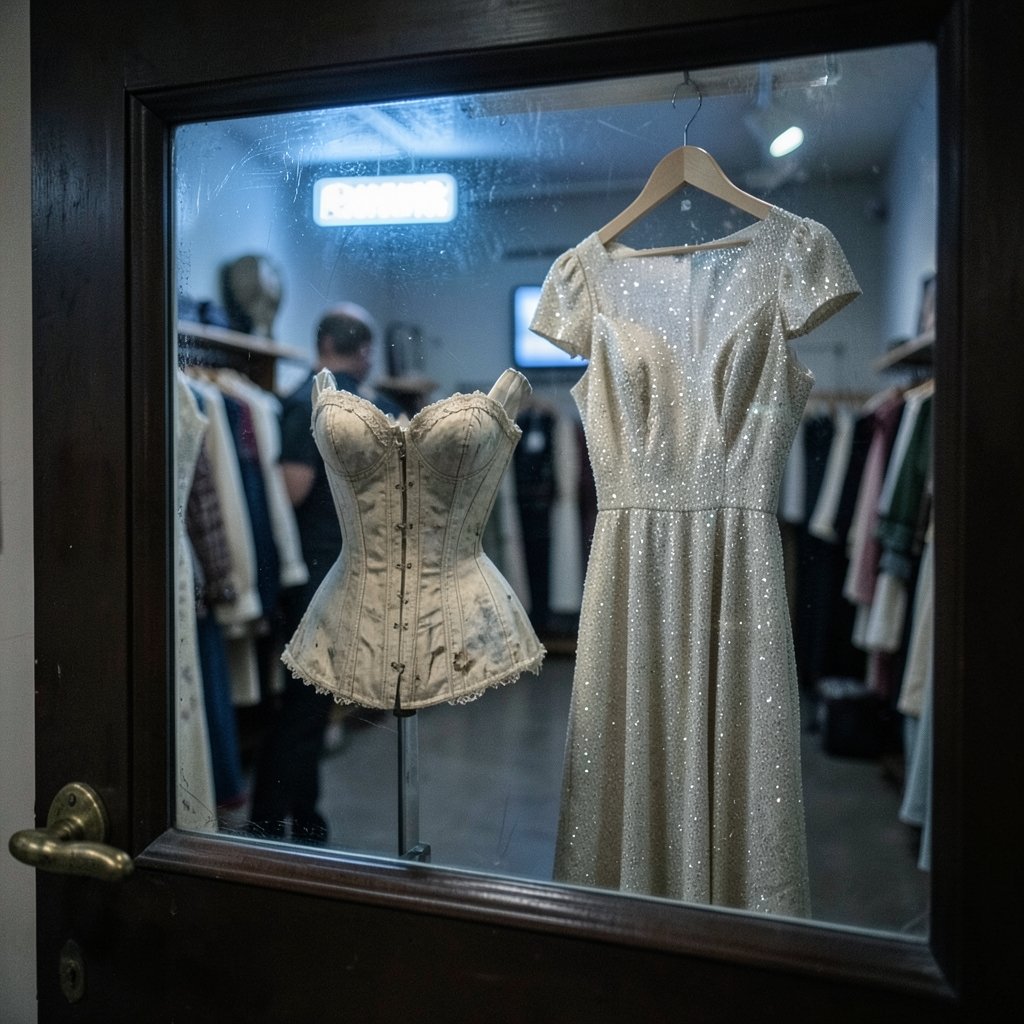
The biggest story of the era is the shape of the body under the clothes. Edwardian dressing had built women outward and inward: corseted torsos, high busts, long skirts to the ankle. By the early-to-mid 1920s, daywear had transformed into loose, dropped-waist dresses. The waistline slid down toward the hips, and hemlines climbed from ankle to knee.
Fashion historians disagree about how abrupt this change was. Some frame it as a sudden post-war break; others see a gradual loosening that started before 1914 and accelerated after the First World War. Either way, the direction is not in dispute. Clothes got lighter, shorter, and easier to move in, and that shift set the template for much of what followed in Italian luxury fashion and beyond, where ease and drape eventually became luxury signifiers rather than compromises.
The Hemline Rollercoaster
Hemlines did not simply rise and stay there. They shortened through the early 1920s, peaked around 1926 to 1927 near the knee, then dropped again by 1929 and 1930 as the decade closed. If you are dating a photograph or a vintage dress, the hem is one of your best clues. A calf-length skirt with a dropped waist points late in the decade; a just-below-knee hem with heavy beading points to the flapper peak.
The Cloche Hat and the Bob
Two accessories define the era in most people’s minds, and both are easy to date. The cloche (French for “bell”) is a close-fitting, bell-shaped hat that became standard women’s headwear in the mid-1920s, roughly 1922 to 1927. It hugged the skull so tightly that it practically demanded short hair.
Which brings us to the bob. Short, bobbed hair for women spread through the early-to-mid 1920s and became inseparable from the flapper image. Dating varies by source, with some placing the vogue from about 1920 onward. The practical result: hats, haircuts, and dresses evolved together as one system. Change one and the others had to follow.
Chanel, Jersey, and the Case for Simple Clothes
Coco Chanel’s contribution to 1920s dressing is often oversimplified into a single garment, but the real influence was philosophical. Her jersey daywear helped legitimize simple, functional women’s clothing at a time when “dressed” still meant “complicated.” The little black dress is frequently dated to a 1926 Vogue description, though the exact issue is worth verifying before you cite it in a paper.
A word of caution for researchers: company histories are promotional by nature. If you need solid sourcing on 1920s dress, museum costume collections and academic fashion-history timelines are far stronger than brand storytelling. The same discipline applies when you read about modern runways, which is why pieces like the 2026 fashion trends guide tend to separate observation from hype.
Men’s 1920s Fashion: Softer Suits and Oxford Bags
Women’s fashion gets the headlines, but men’s clothing changed too. Suits became softer and less waisted, moving toward the sack suit shape that would dominate for decades. Meanwhile, Oxford bags, extremely wide trousers, became a student fashion often dated to the mid-1920s at Oxford. The exact origin date is debated, so treat the “invented at Oxford in 1924” story as folklore unless a solid source backs it up.
The through-line for both genders is the same: less structure, more movement, more casual ease creeping into everyday dress.
The Garçonne: France’s Boyish Ideal
In France, the flat-chested, boyish garçonne style took its name from Victor Margueritte’s 1922 novel La Garçonne. The novel’s date is well documented, and the look it named, slim hips, minimal curves, short hair, became a recognizable 1920s trend. It is a useful reminder that 1920s fashion was not one global uniform. Regional variations mattered, and Parisian vocabulary did not always translate directly to London, New York, or Milan.
Evening Wear: Beads, Dropped Waists, and Art Deco
If daywear got practical, evening wear got theatrical. 1920s evening dresses typically featured dropped waists, sleeveless or short-sleeved cuts, and heavy beadwork. The look is bound up with the Jazz Age and Art Deco: geometric patterns, metallic shimmer, and fringe that moved when you danced. This is the version of the decade that survives most vividly in film and costume exhibitions, and it is also the version most often copied badly.
Ready-to-Wear and the Business of Being Fashionable
The 1920s saw real growth in ready-to-wear and department-store fashion, supported by sewing-pattern companies and mail-order catalogs. This is a broad trend rather than a single dated event, but its effects were permanent. Fashion stopped being only a custom-made privilege and became something closer to a mass market. Women could buy a look, sew a look, or order a look through the post. That shift is arguably as important as any hemline.
It also created the modern appetite for trend information. The 1920s had magazines and pattern books; today the same hunger shows up in newsletters and the best fashion substacks that help readers cut through the noise without drowning in email.
How to Spot a Real 1920s Look vs. a Costume
Practical experience matters here. Most “1920s” outfits sold for parties are not historically accurate, and knowing the tells saves you money and embarrassment.
| Feature | Authentic 1920s | Typical Costume Version |
|---|---|---|
| Waistline | Dropped toward the hips | Natural or elastic waist |
| Hemline | Knee-length (peak 1926–27) | Often too short or floor-length |
| Fabric | Silk, wool jersey, cotton voile | Shiny polyester satin |
| Beading | Hand-set glass beads, weighty | Glued plastic sequins |
| Hat | Tight cloche, mid-1920s | Feather headband |
| Hair | Bobbed, close to the head | Long wig with a headpiece |
Common Mistakes People Make
- Assuming 1920 means flapper. The flapper is a mid-decade look, not a January 1920 uniform.
- Buying the feather headband. The cloche is the era’s real hat; headbands are a modern shortcut.
- Ignoring undergarments. The flat-chested line came from bandeau-style brassieres, not from nothing.
- Overlooking menswear. A 1920s party with no sack suits or Oxford bags is only half the picture.
- Trusting brand histories. Museum collections and academic timelines are more reliable.
What Actually Works
If you are styling a 1920s look for a shoot, a play, or a themed event, start with the silhouette and work outward. Get the dropped waist and knee-length hem right, choose a matte or softly lustrous fabric, and let the beading be the one flashy element. Skip the accessories that scream costume. A simple cloche and a bob, real or pinned, will do more for authenticity than a dozen rhinestone additions.
Why 1920 Fashion Still Matters
The 1920s changed more than what women wore. It changed what clothing was allowed to do. Clothes became something you could move in, work in, and dance in. The decade’s casual ease carried forward through sportswear, athleisure, and the way the 2010s athleisure and streetwear wave rewrote the rules all over again. If you want a longer view of where those threads lead, the 2026 fashion trends female overview shows how much of today’s dressing still borrows from that loosening.
Illustrators and image-makers have kept the decade alive too. The way artists translate runway movement into drawing, as seen in how Angelica Hicks turns runway moments into illustrations, owes a real debt to the 1920s idea that fashion could be playful, graphic, and a little bit cheeky. Even the cultural machinery around modern fashion spectacle, from the Barbie world tour book to the seasonal trend cycle tracked under fashion trends 2026, runs on the same engine the 1920s helped build: mass production, mass media, and mass desire.
Conclusion
1920 fashion is best understood as a decade-long loosening rather than a single look. The corset gave way to the dropped waist, the ankle-length skirt gave way to the knee, and the elaborate updo gave way to the bob. Cloche hats, beaded evening dresses, sack suits, Oxford bags, and the garçonne silhouette all belong to the same story: clothing that finally let people move. Get the silhouette right, respect the timeline, and the rest of the details will follow.
Frequently Asked Questions
What year was 1920 fashion at its peak?
The most recognizable flapper look peaked in the mid-to-late 1920s, with hemlines reaching near the knee around 1926 to 1927. The year 1920 itself was still a transitional moment, with longer, more structured garments common. If you are dating an outfit, look at the hem and waistline first.
Did women really stop wearing corsets in the 1920s?
The stiff, heavily boned corset largely gave way to lighter bandeau-style brassieres and looser garments during the 1920s. The change was not instant or universal, and older women in particular kept wearing more structured undergarments. The overall direction, however, was decisively toward less restriction.
What is the difference between a flapper dress and a 1920s day dress?
A flapper dress is evening wear: beaded, sleeveless or short-sleeved, with a dropped waist and often fringe. A 1920s day dress is simpler and more practical, made from wool jersey, cotton, or silk, with less ornamentation. Both share the dropped waist and knee-length hem that define the decade.
Why was the cloche hat so popular?
The cloche became standard women’s headwear in the mid-1920s because it suited the new short bobbed hair. Its close fit meant it could only be worn with short hair, so hat and haircut reinforced each other. It is one of the most reliable dating clues for 1920s fashion.
What were Oxford bags?
Oxford bags were very wide trousers worn as a student fashion, often dated to the mid-1920s at Oxford. The exact origin date is debated, so treat specific founding stories with caution. They represent the decade’s broader move toward softer, looser menswear.
Is it expensive to dress in authentic 1920s style?
Authentic vintage pieces can be costly, but the silhouette is what sells the look. A dropped-waist dress in a matte fabric, a simple cloche, and short hair will read as convincingly 1920s for far less than original beaded evening wear. Avoid shiny synthetic satin and glued sequins, which instantly read as costume.
The through-line is movement: bodies in motion, clothes that allowed it, and a media culture that sold the image. That combination, not any single hemline, is what made the decade modern.