

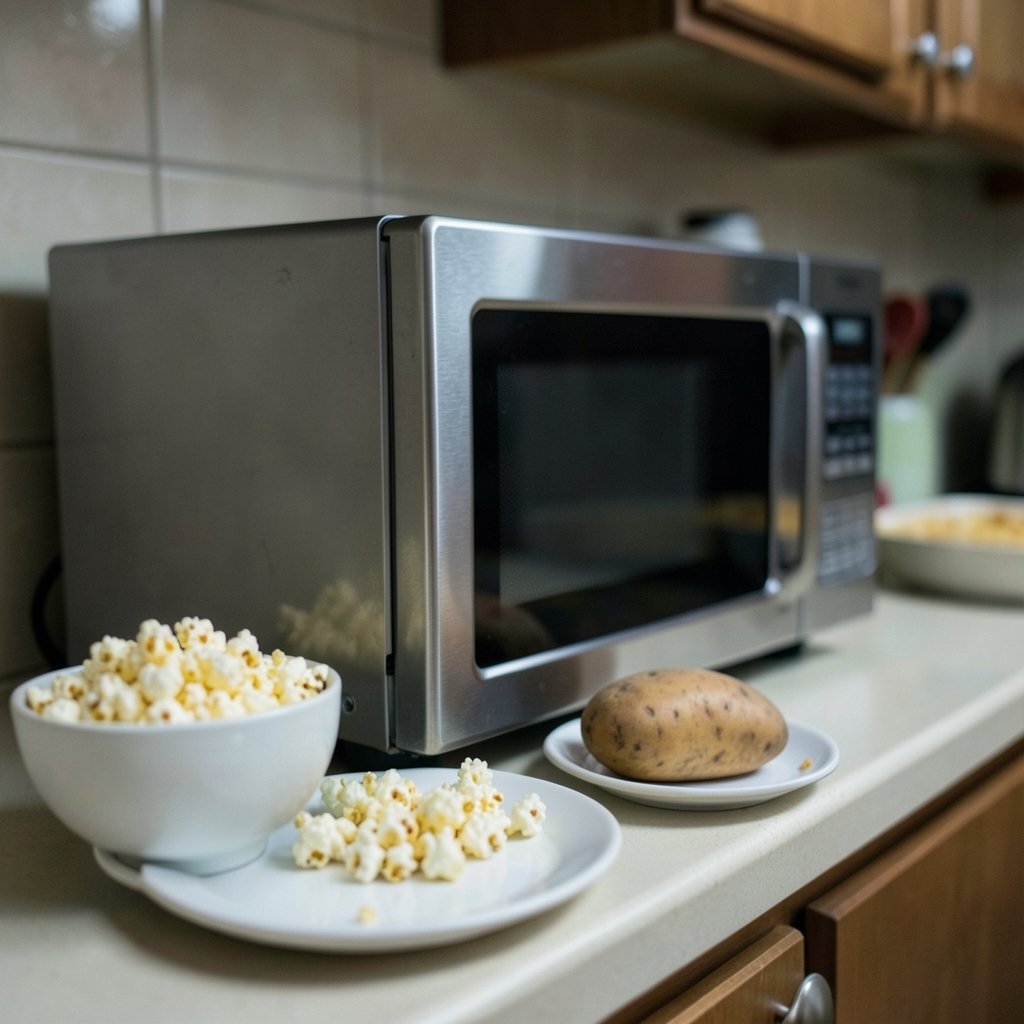
What if the most-used appliance in your kitchen is also the one you’ve thought about the least? That’s the quiet reality for most people: the countertop microwave reheats coffee, defrosts chicken, and rescues dinner on busy nights, yet it rarely gets the same research treatment as a fridge or a range. The good news is that lab testers have done the hard work. Testing panels have run dozens of models through popcorn, casseroles, baked potatoes, and frozen ground beef to find which ones heat fast and evenly, and which ones just look good on the box. Below is a shortlist of named models that consistently earn top marks, followed by a practical guide to matching one to your own counter and habits.
The Shortlist at a Glance
| Model | Best for | Standout strength | Watch out for |
|---|---|---|---|
| Toshiba 7-in-1 Countertop Microwave Oven | Small kitchens that want one appliance to do more | Combines microwave, air fry, and bake functions in a single footprint | Combo modes need a learning curve; not the cheapest option |
| Breville The Compact Wave Soft Close | Anyone who wants quiet, simple reheating | Soft-close door and quieter operation; strong at defrosting and reheating | Premium price for a compact cavity |
| Panasonic NN-SD47QS (0.9 cu. ft.) | Singles and couples | Right-sized for one or two people; sensor-style presets | Too small for family-sized dishes |
| A large 2.0 cu. ft., 1,200-watt model (e.g., Panasonic’s full-size line) | Families and batch cooking | Big cavity, 10 power levels, seven one-touch sensor cook settings | Nearly 24 inches wide, so it eats counter space |
| Magic Chef 1.1 cu. ft. Countertop Microwave | Tight budgets and first apartments | Cheap, intuitive, excellent popcorn results | Some cold spots; long-term durability is a question mark |
Toshiba 7-in-1 Countertop Microwave Oven

For anyone who wants the microwave to pull double duty, the Toshiba 7-in-1 is the model that keeps coming out on top. In a roundup of five countertop microwaves that prove you don’t need a built-in, testers named it the top-tested pick specifically for people trying to make the most of limited counter real estate. That’s the whole pitch: one box that microwaves, air fries, and bakes instead of three appliances fighting for the same square footage. (Microwaves built from magnetrons your kitchen counter)
It suits renters, small-kitchen dwellers, and anyone who has already given up on owning a separate air fryer. The limitation is honesty time: multi-function machines ask you to learn their modes, and results in combo settings vary more than in plain microwave mode. If all you do is reheat leftovers, you’re paying for capability you won’t use.
Breville The Compact Wave Soft Close
Some people want a microwave that disappears into the background, and the Breville Compact Wave does exactly that. It won a head-to-head equipment review of microwave ovens, and the details that pushed it ahead were almost anti-tech: a big vertical door handle instead of flat panel buttons that need a hard poke, and a soft-close door that cuts noise dramatically. Testers noted it runs about 50 percent quieter than other models and even includes a mute button for its beeps.
Its footprint is compact but the capacity is still generous, and it handles defrosting without drying out the edges of meat, plus one-touch buttons for popcorn, beverages, pizza, and potatoes. The limitation is price: this is a premium spend for a compact oven, and you’re paying for refinement rather than raw power. If your microwave sits in plain sight and you hate loud appliances, it earns its keep.
Panasonic NN-SD47QS 0.9 Cubic Foot
Not every kitchen needs a monster. The 0.9 cubic foot Panasonic is the pick for one or two people who mainly reheat plates, warm drinks, and steam vegetables. A smaller cavity heats faster and takes up less room, which matters if your counter is already crowded with a coffee setup or an ice maker. Speaking of which, if you’re juggling appliances, it helps to know how to choose the best countertop ice maker for your kitchen so the two don’t compete for the same outlet and sightline.
The trade-off is obvious: a 0.9 cubic foot cavity won’t fit a family-sized casserole dish or a big batch of leftovers. It’s a specialist, not a workhorse.
Full-Size 2.0 Cubic Foot, 1,200-Watt Models
For families, meal preppers, and anyone who cooks in batches, a big cavity with serious wattage is the answer. One widely cited full-size option offers 2.0 cubic feet of interior space, 1,200 watts of power, 10 adjustable power levels, and seven one-touch sensor cook settings covering bacon, fresh vegetables, frozen dinners, frozen vegetables, oatmeal, potatoes, and rice. The smooth-touch glass controls wipe clean easily, which matters more than you’d think once grease finds its way in.
The limitation is footprint: at nearly 24 inches wide, it may not suit a kitchen with limited counter space. Testers also flagged that its end signal isn’t as loud as some users would like, a small thing that becomes annoying if you wander off. Measure twice before buying this class of machine.
Magic Chef 1.1 Cubic Foot Countertop Microwave
Budget shoppers have a genuine option here. The Magic Chef 1.1 cubic foot is inexpensive, no-frills, and intuitive, and it did an excellent job reheating premade foods like burritos and breakfast sandwiches. The popcorn setting produced a much fuller bag than some far more expensive competitors, which is a real-world win.
Two honest caveats: testers occasionally found cold spots, which they solved by adjusting power levels and cooking times rather than trusting package instructions, and they worried about long-term wear. Steamed broccoli and mac and cheese came out mushy in testing, though potatoes were perfect. If you want a cheap second microwave for a basement or office, it’s a smart buy. If you want one appliance for a decade, look higher up this list.
How to Choose a Countertop Microwave
Now that you’ve seen the shortlist, here’s how to narrow it down without overthinking.
- Measure your counter first. Width matters most, but so does clearance for the door swing and ventilation. A 24-inch-wide model is a non-starter in a narrow galley kitchen.
- Match wattage to your habits. Higher wattage heats faster and more evenly, which matters for dense foods like frozen ground beef. Lower-wattage units can still work well if you adjust times.
- Decide whether you want a combo. Air fry and convection modes add versatility but also complexity and cost. Be honest about whether you’ll use them.
- Check the finish. Shiny black glass and stainless trim show every fingerprint. Matte and white finishes looked fresher after heavy use in testing.
- Look for an end signal and a real handle. A clear “END” display stops you from discovering yesterday’s coffee, and a large vertical handle beats flat buttons that demand a hard poke.
- Think about placement. If the microwave lives in plain sight, quiet operation and clean lines matter as much as power.
One practical tip from testing labs: don’t blindly follow package cooking instructions. Testers got consistent results from budget models by experimenting with power levels and times, and the same habit will serve you with any microwave you buy. Another mistake people make is buying for the biggest dish they might cook once a year instead of the plate they reheat daily. And if your kitchen is a work in progress, sorting out how to pair a kitchen countertop backsplash without visual clutter will do more for the room than upgrading from 1,000 to 1,200 watts.
It also pays to think about what sits beside the microwave. A cluttered counter makes even a good appliance feel like a compromise, so clearing space, or choosing a compact model, changes how the kitchen feels day to day. If you’re building out a small appliance corner, the same logic applies to how you choose an espresso machine that fits your counter, since both machines want the same prime real estate near an outlet.
If a kitchen’s appearance matters as much as how it works, the appliance finish and the surrounding surfaces should be considered together. Shiny black microwaves and glossy counters can double the visual noise in a small space. Learning to clean quartzite countertops without dulling the finish is a good reminder that maintenance matters as much as the purchase.
Conclusion
The best countertop microwave isn’t the most expensive one. It’s the one that fits your counter, matches how you actually cook, and doesn’t annoy you every time you press start. If you want one appliance to do more, the Toshiba 7-in-1 earns its top-tested reputation. If you want quiet simplicity in plain sight, the Breville Compact Wave is the refined choice. If you’re cooking for one, the 0.9 cubic foot Panasonic is right-sized. If you feed a family, a 2.0 cubic foot, 1,200-watt model with sensor presets is the workhorse. And if the budget is tight, the Magic Chef delivers surprising popcorn and reheats well for the money. Measure, be honest about your habits, and pick the one you’ll actually use every day.
Frequently Asked Questions
How many watts do I need in a countertop microwave?
Most households do fine with 1,000 to 1,200 watts. Higher wattage heats faster and more evenly, which helps with dense frozen foods. Lower-wattage models work well too, but you may need to add time and stir more often.
Is a combo microwave air fryer worth it?
It depends on whether you’ll use the extra modes. A 7-in-1 model like the Toshiba is ideal for small kitchens that can’t fit a separate air fryer, but combo settings require a learning curve and results vary more than in plain microwave mode.
Why do lab testers care about door handles and end signals?
Because small annoyances add up in daily use. Large vertical handles are easier to open than flat buttons that need a hard poke, and a clear “END” display stops you from discovering a forgotten mug of coffee hours later.
Do expensive microwaves heat food more evenly?
Not always. In testing, an inexpensive Magic Chef produced a fuller bag of popcorn than some pricier competitors, though it had occasional cold spots. Price buys refinement, quiet operation, and better finishes more reliably than raw heating performance.
What size microwave fits one or two people?
A 0.9 cubic foot model is a good fit for singles and couples. It heats faster, takes less counter space, and handles plates and mugs easily. It won’t fit a family-sized casserole, so size up if you batch cook.
How do I keep a countertop microwave looking clean?
Choose a matte or white finish if fingerprints bother you, since shiny black glass and stainless trim show every touch. Wipe the exterior weekly and the interior after splatters, and keep the surrounding counter clear so the appliance doesn’t become a shelf.
Final Word on Matching Machine to Kitchen
The through-line across every model here is fit: fit to your counter, fit to your cooking style, fit to your patience for noise and fingerprints. A premium Breville earns its price only if the soft-close door and quiet hum genuinely improve your day. A budget Magic Chef earns its keep only if you’re willing to adjust power levels and accept shorter service life. Neither is the “right” answer in the abstract.
Before you buy, spend a week noticing how you actually use your current microwave. Count the reheats, the popcorn nights, the defrost jobs. That log will tell you more than any spec sheet. Then measure your counter, check the door swing, and confirm the outlet placement. A microwave that fits the space and the habit is the one you’ll still be glad you bought a year from now.











