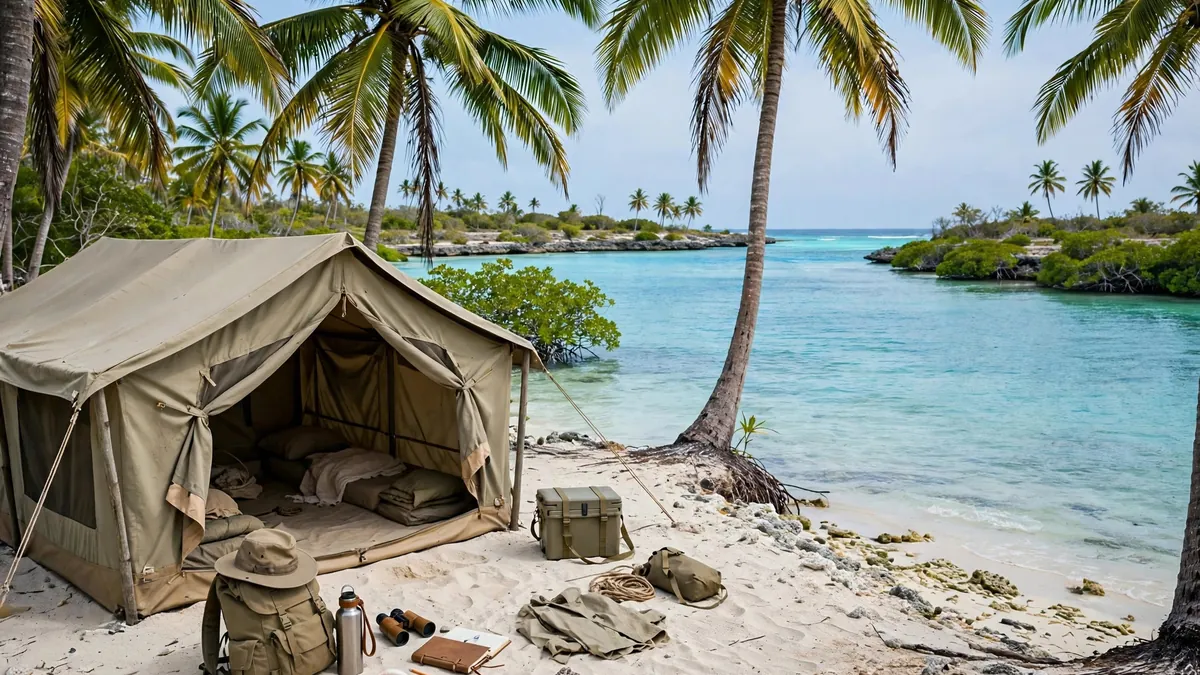

Aldabra Atoll is the most remote place in the Seychelles, and one of the most remote in the world. It sits about 1,100 kilometres south-west of Mahé, a vast raised coral atoll that is a UNESCO World Heritage Site, home to around 100,000 giant tortoises, and closed to casual visitors. There is no resort here, no hotel, and no airstrip for tourists. The only way in is by liveaboard expedition ship, or by a rare authorised visit, with a permit, and that scarcity is exactly what keeps the atoll so wild.
For a solo traveller, that is both the challenge and the reward. You do not book a day trip from a beach. You join an expedition, usually a small ship sailing from Mahé, and you spend days crossing open ocean to reach an atoll that very few people ever see. On arrival, the safaris are guided walks, snorkels and dives in a place where the wildlife has had almost no contact with people, and where the rules are strict because the ecosystem is so fragile.
Below are nine luxury safaris worth considering in 2027, from lagoon snorkelling to a tortoise walk among thousands. Each one is described by what it is good at, what to watch for, and who it suits best, and each one is framed honestly, as part of an expedition, not as a resort activity.
Key takeaways
- Aldabra is a UNESCO World Heritage atoll about 1,100 km from Mahé, with no resort, no hotel, and no casual access.
- Visits are by liveaboard expedition ship from Mahé, or by rare authorised visit with a permit, and places are limited.
- A safari here means a guided walk, snorkel or dive in a near-pristine ecosystem, not a game drive.
- Single travellers should confirm the single-cabin price in writing, because expedition ships often charge a supplement.
- There is no Big Five, no safari lodge, and no medical facility on the atoll, and the season is short and weather-dependent.
What Aldabra Atoll actually offers
Aldabra is the largest raised coral atoll in the world, a ring of four main islands around a shallow lagoon, with a coastline of limestone cliffs, mangroves and white sand. It was protected early, and that protection has worked. The giant tortoise population is the largest in the world, the reefs are among the least disturbed in the Indian Ocean, and the birdlife includes the flightless white-throated rail, the last flightless bird in the Indian Ocean, along with frigatebirds, boobies and tropicbirds in huge colonies.
The Seychelles Islands Foundation manages the atoll, and it keeps a small research station there. Visitors are few, and every visit is supervised. That means you will not find crowds, queues or souvenir shops. You will find a place where the tide decides the day, where the tortoises outnumber the people by thousands to one, and where a guided walk feels less like a tour and more like a privilege.
What Aldabra does not offer is equally important. There is no phone signal, no internet, and no shop. The crossing from Mahé takes days by sea, and the weather can delay both the arrival and the departure. A solo trip works best when you are comfortable with expedition travel, happy with a small ship, and prepared for days when the plan changes with the wind.
How we chose these safaris and what to look for
Look first at the expedition. A good Aldabra trip is run by a reputable expedition operator, with a naturalist guide, a clear itinerary, and a permit from the Seychelles Islands Foundation. Ask how many days are spent at the atoll, how many landings are planned, and what happens if the weather keeps the ship offshore. The crossing itself is part of the trip, and a good operator will be honest about how rough it can be.

Look next at the cabin. Expedition ships are small, and solo travellers often pay a single supplement for a cabin of their own. Ask for the single-cabin price in writing, and check whether a shared cabin is offered as a cheaper option. Some operators run single departures with no supplement, and those places go quickly, so book early.
Finally, look at what is included. A luxury expedition should include all meals, guided landings, snorkelling and diving gear, and a naturalist guide on every outing. Our guide to chartering a luxury yacht is a useful companion here, because an expedition ship is, in practice, a small yacht with a research purpose, and the same questions about price, inclusions and weather apply.
The 9 best luxury safaris in Aldabra Atoll for solo travellers 2027
Lagoon Snorkelling Safari
What we like: A guided snorkel in the shallow lagoon, with turtles, rays, reef fish and the occasional shark, in water so clear it feels like glass. What to consider: The lagoon is tidal, so the trip runs on the tide table, and the current can be strong at the passes. Location: The lagoon inside the atoll ring. Best for: Confident swimmers and snorkellers. Price range: Included in most expedition fares, from about $12,000 per person for a full voyage. Standout feature: Snorkelling over a lagoon that almost no one else has seen.
Giant Tortoise Walk for One
What we like: A guided walk among thousands of giant tortoises, grazing, resting and moving slowly across the grassland, with a naturalist explaining how the population recovered. What to consider: The walk is on uneven limestone, the sun is strong, and you must keep a respectful distance from the animals. Location: The grasslands of Grande Terre. Best for: Wildlife lovers and patient walkers. Price range: Included in most expedition fares. Standout feature: More tortoises in one place than anywhere else on Earth.
Outer Reef Dive for One
What we like: A guided dive on the outer reef wall, with sharks, manta rays, turtles and vast schools of fish, in water that is among the clearest in the Indian Ocean. What to consider: You need a dive certification and experience in currents, and the dive may be paired with another diver for safety. Location: Dive sites on the west and south reef. Best for: Experienced divers travelling alone. Price range: Included in most expedition fares, or from about $200 per dive. Standout feature: A reef wall dropping into deep blue, untouched by mass tourism.
White-Throated Rail Birdwatching Walk
What we like: A dawn walk looking for the flightless white-throated rail, the last flightless bird in the Indian Ocean, along with frigatebirds and boobies in the colonies. What to consider: The rail is shy and best seen at dawn, so the start is early, and a long lens helps. Location: The scrub and mangroves of Picard Island. Best for: Birdwatchers and early risers. Price range: Included in most expedition fares. Standout feature: A bird found nowhere else in the world.
Mangrove Kayak Safari
What we like: A calm, guided paddle through mangrove channels, with herons, crabs and juvenile fish in the roots, and the lagoon opening up beyond. What to consider: The channels are tidal, so the trip is timed to the tide, and mosquitoes can be present at dusk. Location: The mangroves on the lagoon edge. Best for: Solo travellers who want a quiet hour on the water. Price range: Included in most expedition fares. Standout feature: Kayaking through a mangrove forest that has never been cut.
Sunset Boat Safari around the Atoll
What we like: A slow boat trip around the atoll rim at sunset, with frigatebirds returning to roost, the light turning gold on the limestone, and the sea going calm. What to consider: The trip depends on the sea state, and it may be shortened if the wind rises. Location: The outer rim of the atoll. Best for: Photographers and quiet evenings. Price range: Included in most expedition fares. Standout feature: The atoll at sunset, with thousands of birds coming home.
Reef Flats Walk at Low Tide
What we like: A guided walk across the reef flat at low tide, looking at corals, starfish, octopus and small reef fish in the pools, with a naturalist explaining the reef. What to consider: The reef flat is sharp underfoot, so reef shoes are essential, and the walk is timed strictly to the tide. Location: The reef flat off Picard Island. Best for: Curious walkers and tide-pool lovers. Price range: Included in most expedition fares. Standout feature: A living reef, exposed by the tide, at your feet.
Night Sky and Turtle Nesting Walk
What we like: A guided night walk on the beach, under a sky with almost no light pollution, watching for nesting turtles in season. What to consider: Nesting is seasonal, the walk is in the dark, and torches are kept low so as not to disturb the turtles. Location: The beaches of Grande Terre. Best for: Night owls and stargazers. Price range: Included in most expedition fares. Standout feature: A sky full of stars, and a turtle coming ashore in the dark.
Island-Hopping Day Cruise
What we like: A day by boat between the atoll’s islands, with a snorkel stop, a beach landing, and a picnic lunch on a beach that has no footprints. What to consider: The cruise is weather-dependent, and the sea between islands can be choppy. Location: Between Grande Terre, Picard and Malabar. Best for: Travellers who want a full day on the water. Price range: Included in most expedition fares. Standout feature: A beach landing on an island almost no one visits.
Which Aldabra safari is right for you
If you want the classic Aldabra day, start with the tortoise walk and the lagoon snorkel. Together they give you the two things the atoll is known for, the tortoises and the reef, and they work in most conditions. Pair them with the mangrove kayak if you have the energy, because the kayak shows you the quiet side of the atoll that most visitors miss.
If you are a diver, the outer reef dive is the trip to plan around, and it is worth telling the operator before you book, because dive places are limited and currents decide the day. If you are a birdwatcher, the rail walk at dawn is the one to set your alarm for, and if you are a photographer, the sunset boat safari and the night sky walk will give you the strongest images. A luxury hotel guide to Santorini may seem an odd companion for an expedition, but the notes on seasons, sea conditions and packing for a remote island are just as useful when your hotel is a ship.
The crossing itself deserves a word, because it is part of the experience. The sail from Mahé takes several days, and the sea can be rough, especially in the trade-wind season. Most solo travellers find the crossing becomes a highlight in its own right, with whales and dolphins alongside the ship, lectures from the naturalist in the evening, and a small group that quickly becomes familiar. If you are prone to seasickness, speak to your doctor before you book and bring medication, because there is no pharmacy at sea.
Whatever you choose, remember that the expedition is the trip, not just the transport. The days at sea, the lectures from the naturalist, and the evenings on deck are part of what you are paying for, so pick an operator whose ship and whose guides you trust.
The caveats that matter
Aldabra is not a holiday in the usual sense. There is no medical facility on the atoll, and the nearest hospital is days away by sea, so the expedition ship carries its own medical kit and the operator will ask about your health before you board. Tell the ship’s crew about any condition that matters, carry any medication you need, and be honest about your fitness, because the walks are on uneven ground and the landings are by small boat.
| Detail | What is known |
|---|---|
| Where it is | About 1,100 km south-west of Mahé, a UNESCO World Heritage atoll |
| How you get there | By liveaboard expedition ship from Mahé, or rare authorised visit with a permit |
| What a safari means here | A guided walk, snorkel or dive in a near-pristine ecosystem, not a game drive |
| Single-traveller pricing | Confirm the single-cabin price in writing; supplements are common |
| Wildlife to expect | About 100,000 giant tortoises, white-throated rails, seabirds, sharks and rays |
| What to bring | Reef-safe sunscreen, a hat, reef shoes, binoculars, and a charged camera |
| Health and safety | No medical facility on the atoll; ship carries a medical kit; landings by small boat |
| What it does not offer | No resort, no hotel, no phone signal, no shops, no overnight safari camp |
Finally, respect the rules. Do not touch the tortoises, do not feed any animal, do not take shells or sand, and stay with your guide at all times. Aldabra has survived because it is protected, and a single careless visit can do damage that lasts for years.
Checklist: booking an Aldabra safari honestly
Use these checks before you book, and again before you board.
- Check the operator: reputable expedition company, naturalist guide, and a permit from the Seychelles Islands Foundation.
- Check the price: confirm the single-cabin price in writing, and ask what is included.
- Check the season: expeditions run in limited windows, and places go quickly, so book early.
- Check your health: tell the operator about any condition, carry medication, and be honest about fitness.
- Check your kit: reef-safe sunscreen, a hat, reef shoes, binoculars, and swim gear that fits.
- Protect the atoll: stay with your guide, do not touch wildlife, and never take shells or sand.
Frequently asked questions
How do I get to Aldabra Atoll?
By liveaboard expedition ship from Mahé, usually as part of a voyage lasting a week or more. There is no regular public transport, no tourist airstrip, and every visit needs a permit, so your expedition operator arranges the access.
Can I visit Aldabra as a solo traveller?
Yes. Expedition ships suit solo travellers well, because meals and landings are shared, and the group is small. The main thing to check is the single-cabin supplement, because some ships charge a large premium for a cabin of your own.
Is there a Big Five safari on Aldabra?
No. Aldabra has no lions, elephants or game drives. Its wildlife is tortoises, seabirds, turtles, sharks and rays, and the safaris here are guided walks, snorkels and dives in a protected atoll.
When is the best time to visit Aldabra?
Expeditions usually run in the calmer months, often between October and May, when the sea allows landings. The exact window depends on the operator and the weather, and places are limited, so book well ahead.
How much does an Aldabra expedition cost?
Expedition voyages are expensive, often from about $12,000 per person for a full voyage, before flights to Mahé. The price usually includes meals, landings, guides and gear, but the single-cabin supplement can add a large amount, so confirm the total in writing.
What should I pack for an Aldabra safari?
Reef-safe sunscreen, a hat, reef shoes, binoculars, swim gear, and a charged camera. Our guide to honeymoon destinations covers similar remote-island packing, because the kit for a coral atoll is much the same wherever you go.
The bottom line
The best luxury safari on Aldabra Atoll for a solo traveller in 2027 is the one that respects what the atoll is. The tortoise walk and the lagoon snorkel give you the clearest sense of the place, the outer reef dive rewards experienced divers, and the rail walk, the mangrove kayak and the night sky walk suit anyone who prefers a slow, quiet day in a wild place that very few travellers ever reach.
Book early, confirm the single-cabin price in writing, be honest about your health and fitness, and let the weather decide the order of your days. Aldabra rewards patience, and a solo traveller who arrives ready for expedition travel will see one of the last truly wild places on Earth, and come home with stories no one else at the table will have.