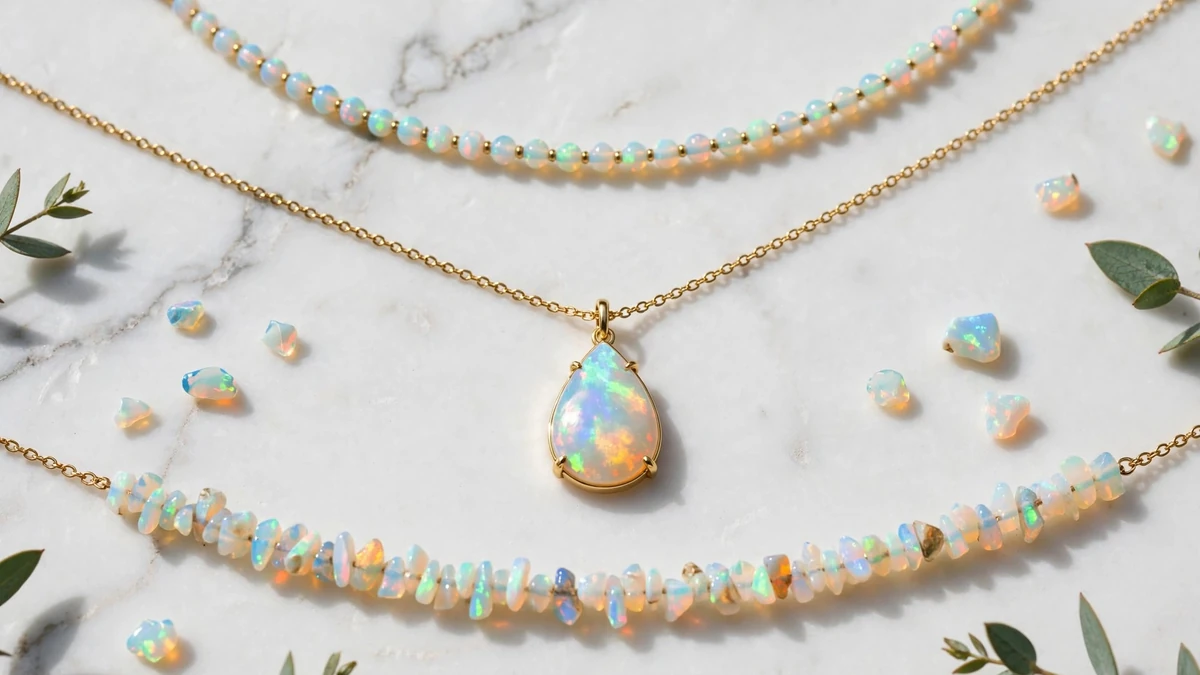

Opal necklaces are the most changeable jewellery you can own. No two opals look alike, and the same stone can flash green in one light and blue in another, then go quiet in a dim room. That play of colour is what makes opal so loved, and it is also what makes it so easy to buy badly. A good opal necklace shows colour that moves as you move, set in a way that protects a soft stone. A poor one looks flat, cloudy, or worse, turns out to be glass or a glued-together doublet sold as a solid stone.
That is why this guide is organised by opal type and setting, not just by price. Australian black opal, white opal and boulder opal are different stones with different prices and different care needs, and Ethiopian opal is different again. A bezel setting matters more for opal than for most gems, because opal is soft and chips easily. Price is a poor guide on its own. Some of the most beautiful opals are modest in price, and some of the most expensive are the hardest to wear every day.
Below are nine opal necklaces worth considering in 2027, from a classic white opal pendant to bold black opal and boulder styles. Each one is described by what it is good at, what to watch for, and who it suits best, so you can choose with your wardrobe in mind, not just a bestseller list.
Key takeaways
- Play of colour is the most important quality in an opal necklace: look for colour that moves and changes as the stone turns, not a flat or painted look.
- Australian black opal is the most prized and the most expensive, white opal is the classic choice, and boulder opal offers bold colour at a fairer price.
- Opal is soft, around 5.5 to 6.5 on the Mohs scale, so it needs a bezel setting and gentle care, and it must never go in an ultrasonic or steam cleaner.
- Ethiopian opal is beautiful but hydrophane, which means it absorbs water and can change colour or crack if it gets wet or dries out suddenly.
- No opal necklace is an investment that will hold its purchase price, and a stone sold as solid opal that is actually a doublet, triplet or glass imitation should be returned.
What opal actually is
Opal is not a crystal. It is silica and water, laid down in tiny spheres that bend light into flashes of colour. That structure is called play of colour, and it is what separates precious opal from common opal, which has no colour play at all. The body tone of the stone matters too. Black opal has a dark body that makes the colour flash brightly. White opal has a light body that makes the colour softer. Boulder opal is a thin seam of precious opal still attached to its brown ironstone host rock, which gives it a dramatic, natural look.
Most opal comes from Australia, which produces the finest black, white and boulder opal in the world. Lightning Ridge is famous for black opal, Coober Pedy for white opal, and Queensland for boulder opal. Ethiopia is the other major source, producing Welo opal, which is usually white or crystal with bright colour play. Ethiopian opal is hydrophane, which means it absorbs water. A wet Ethiopian opal can go transparent and lose its colour until it dries, and sudden drying can crack it, so it needs more careful handling than Australian opal.
Opal contains between 3 and 10 percent water, and it is soft, around 5.5 to 6.5 on the Mohs scale. That means it scratches and chips more easily than most gems, and it dislikes heat, chemicals and rough handling. It also means that assembled stones are common. A doublet is a thin slice of opal glued to a dark backing. A triplet adds a clear glass or quartz cap. Both are legitimate jewellery if they are sold honestly, but they are not solid opal and should never be priced as if they were.
How we chose these necklaces and what to look for
Look first at the play of colour. Turn the stone slowly under a light and watch the colour move. Good opal shows broad flashes that change as the angle changes, not a single static patch of colour. Look next at the body tone. A dark body makes colour look brighter and is usually more valuable, while a light body makes colour look softer and more delicate. Avoid stones that look cloudy, milky or dull, which usually means thin colour or poor quality.
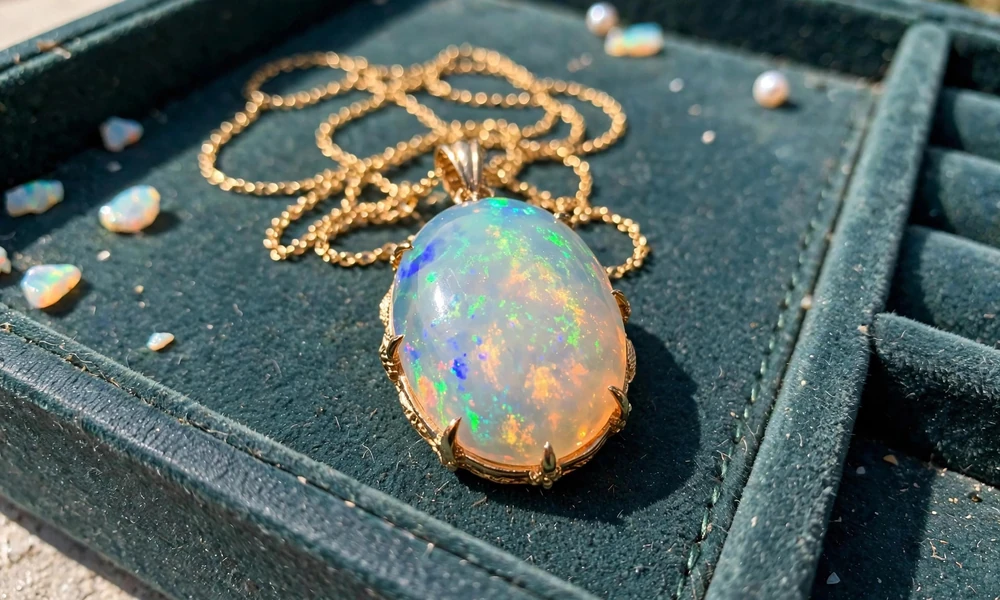
Look next at the setting. Opal needs protection, so a bezel setting that wraps the edge of the stone is the safest choice, especially for a pendant worn daily. A prong setting leaves the edges exposed and is riskier for a soft stone. Ask whether the stone is solid opal, a doublet or a triplet, and ask for that in writing. A seller who will not say is a seller to walk away from.
Finally, look at the chain and the length. A fine chain suits a small pendant, while a bolder opal needs a chain with enough weight to balance it. Sixteen to eighteen inches suits most necklines for a pendant. Our guide to diamond necklaces explains the same length logic, because a necklace that fights your wardrobe is a necklace you will not wear.
The 9 best opal necklaces of 2027
Tiffany & Co. Opal Pendant Necklace
What we like: A classic white opal cabochon in a clean gold bezel, with bright colour play and the brand’s careful finishing. What to consider: Premium price for the name, and the white body tone is softer than black opal. Stone: Australian white opal, 10 x 8 mm cabochon. Setting: 18k yellow gold bezel, fine chain. Best for: Everyday wear, a first opal, classic styling. Price range: $1,500 to $2,500.
Cartier Opal Pendant Necklace
What we like: A black opal with vivid green and blue play of colour, set in a slim gold bezel that lets the stone do the talking. What to consider: Black opal is expensive, and the stone is smaller than some rivals at this price. Stone: Australian black opal, 9 x 7 mm cabochon. Setting: 18k yellow gold bezel, fine chain. Best for: Evening wear, special occasions, a statement piece. Price range: $3,000 to $5,000.
David Yurman Opal Pendant Necklace
What we like: A boulder opal with bold, natural colour in a sculptural gold setting, each stone different from the next. What to consider: Boulder opal is irregular by nature, so no two pendants look alike. Stone: Queensland boulder opal, 12 x 10 mm. Setting: 18k gold bezel with cable detail. Best for: Statement styling, collectors, a unique piece. Price range: $1,800 to $3,200.
Mejuri Opal Pendant Necklace
What we like: A well-chosen Ethiopian opal at a fair price, with bright colour play and a simple gold vermeil bezel. What to consider: Ethiopian opal is hydrophane, so it must be kept dry and away from chemicals. Stone: Ethiopian Welo opal, 9 x 7 mm cabochon. Setting: Gold vermeil bezel, fine chain. Best for: Everyday wear, a first opal, gifting. Price range: $180 to $350.
Monica Vinader Opal Pendant Necklace
What we like: A small white opal in a clean bezel, modern and relaxed, with a price that invites daily wear. What to consider: The stone is small, so the colour play is subtle rather than dramatic. Stone: Australian white opal, 7 x 5 mm cabochon. Setting: 18k gold vermeil bezel, fine chain. Best for: Daily wear, layering, a first opal. Price range: $140 to $280.
Missoma Opal Pendant Necklace
What we like: A fresh, slightly irregular opal with a contemporary feel, good colour play, and a gold vermeil bezel that is easy to wear. What to consider: The stone is Ethiopian opal, so it needs the same dry, gentle care. Stone: Ethiopian Welo opal, 8 x 6 mm cabochon. Setting: Gold vermeil bezel, fine chain. Best for: Younger wearers, casual styling, layering. Price range: $160 to $320.
Maria Black Opal Pendant Necklace
What we like: A dark, moody opal in a short pendant with a clean gold setting, designed to sit high on the neck and layer with longer chains. What to consider: The dark body tone suits some skin tones and outfits better than others, so try it on first. Stone: Australian black opal doublet, 10 x 8 mm. Setting: 14k gold bezel, sold honestly as a doublet. Best for: Layering, evening looks, a modern edge. Price range: $400 to $700.
Astrid & Miyu Opal Pendant Necklace
What we like: A fine chain with a single small opal, delicate and affordable, with a clasp that adjusts to two lengths. What to consider: Very delicate, so it needs gentle handling and is not an everyday workhorse. Stone: Ethiopian opal, 6 x 4 mm cabochon. Setting: Gold plated bezel, adjustable chain. Best for: Delicate styling, weddings, first opals. Price range: $80 to $160.
The most affordable entry point in this guide, and a good one. It is light, pretty and easy to wear, and the adjustable length makes it more versatile than it looks.
Thomas Sabo Opal Pendant Necklace
What we like: A classic white opal pendant with a sterling silver bezel, solid value, and a length that suits most collars. What to consider: The silver setting will need occasional polishing, and the colour play is softer than black opal. Stone: Australian white opal, 9 x 7 mm cabochon. Setting: Sterling silver bezel, fine chain. Best for: Everyday wear, gifting, a first opal on a budget. Price range: $150 to $300.
Which opal necklace is right for you
Start with the colour you want. Black opal is the right choice if you want the brightest, most dramatic colour play, and you are willing to pay for it. White opal is the right choice if you want a classic, softer look that suits most outfits. Boulder opal is the right choice if you want bold, natural patterns and a stone that no one else owns. Ethiopian opal is the right choice if you want bright colour at a fair price and are willing to keep it dry.
Consider the setting next. A bezel setting is the safest choice for opal, because it protects the soft edges of the stone. A prong setting shows more of the stone but leaves it exposed, which is risky for a gem that chips easily. If the seller cannot tell you whether the stone is solid, a doublet or a triplet, walk away. Our guide to opal jewellery covers earrings and rings too, because opal works best when every piece is set with the same care.
Skin tone matters less than people think. White opal suits most skin, black opal flatters warm and cool skin alike because the colour play is so bright, and boulder opal suits anyone who likes bold jewellery. The honest test is to hold the pendant against your neck in daylight and turn it slowly. If the colour moves and your skin looks healthy, the stone is right.
The caveats that matter
Opal is soft and needs gentle care. It scratches and chips easily, it dislikes heat, chemicals and sudden temperature changes, and it should be put on last and taken off first. Wipe it with a soft, damp cloth after wearing and store it in a soft pouch, not loose in a jewellery box where harder gems can scratch it. Never put opal in an ultrasonic cleaner or a steam cleaner, and never use harsh jewellery dip on it.
| Detail | What is known |
|---|---|
| Most important quality | Play of colour: broad flashes that move and change as the stone turns |
| Most prized opal | Australian black opal, dark body tone, brightest colour, highest price |
| Classic choice | Australian white opal, soft colour play, suits most outfits |
| Best value for bold colour | Boulder opal: natural patterns, each stone unique, fairer price |
| Needs the most care | Ethiopian opal is hydrophane: keep it dry, away from water and chemicals |
| Safest setting | Bezel setting, which protects the soft edges of the stone |
| What to avoid | Undisclosed doublets, triplets and glass imitations sold as solid opal |
| What they are not | An investment: opals do not hold their purchase price, so buy to wear |
Ethiopian opal deserves a special note. Because it absorbs water, a wet stone can turn transparent and lose its colour until it dries, and repeated wetting and drying can crack it. Keep it away from water, perfume and hand cream, and store it in a stable, moderate humidity. Australian opal is more forgiving, but it still dislikes heat and chemicals.
Checklist: choosing an opal necklace honestly
Use these checks before you buy, and again when the necklace arrives.
- Check the play of colour: turn the stone slowly and look for broad flashes that move, not a flat patch.
- Check the body tone: dark bodies show brighter colour, light bodies show softer colour.
- Check the setting: a bezel is safest, and the stone should sit firmly with no wobble.
- Check the disclosure: the seller should state in writing whether the stone is solid opal, a doublet or a triplet.
- Check the origin: Australian black, white or boulder opal, or Ethiopian Welo opal, with the care needs explained.
- Check the care: buy a soft pouch, plan to wipe the stone after wearing, and never use an ultrasonic cleaner.
Frequently asked questions
Is opal too soft for a necklace?
Not if it is set well. Opal is soft, around 5.5 to 6.5 on the Mohs scale, but a pendant is protected by its setting and does not face the knocks a ring does. A bezel setting, gentle handling and no ultrasonic cleaning are enough to keep an opal pendant safe for years.
What is the difference between a doublet and a triplet?
A doublet is a thin slice of precious opal glued to a dark backing, usually black potch or ironstone. A triplet adds a clear glass or quartz cap on top. Both are legitimate if they are sold honestly as assembled stones, but they are not solid opal and should cost far less than a solid stone of the same size.
Can I get an opal necklace wet?
Australian opal can handle brief contact with water, but it is still best to keep it dry. Ethiopian opal must be kept dry, because it absorbs water, can go transparent, and can crack when it dries. Take any opal necklace off before swimming, showering or applying hand cream. Our guide to non-diamond engagement rings follows the same care logic, because soft stones need the same gentle handling whatever the piece.
Why has my opal lost its colour?
It may be an Ethiopian opal that has absorbed water, in which case the colour usually returns as it dries slowly in a stable room. It may also be a doublet or triplet whose glue has failed, or a stone that has dried out and crazed. If the colour does not return after a day of drying, take it to a jeweller who works with opal.
Are opals unlucky?
No. The superstition that opals are unlucky comes from a nineteenth-century novel and has no basis in fact. Opal is the birthstone for October, and it has been worn and loved for centuries. The only real risk with opal is buying a poor stone, not bad luck.
Can I wear an opal necklace every day?
Yes, with care. A well-set pendant worn with care will last for years. Put it on last, take it off first, keep it away from perfume and chemicals, wipe it after wearing, and store it in a soft pouch. If you work with your hands or play contact sport, take it off first.
The bottom line
The best opal necklace in 2027 is not the most expensive or the largest. It is the one with bright, moving play of colour, an honest disclosure of what the stone is, and a bezel setting that protects a soft gem. For the brightest colour, black opal is the right choice. For a classic look, white opal is the right choice. For bold value, boulder opal is the right choice.
Choose one necklace, wear it often, care for it gently, and keep it dry. Opal rewards regular wear and simple care, and a stone that flashes as you move is worth far more than a stone that stays in its box.