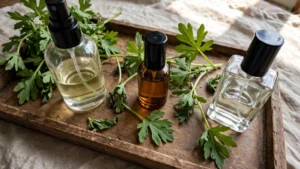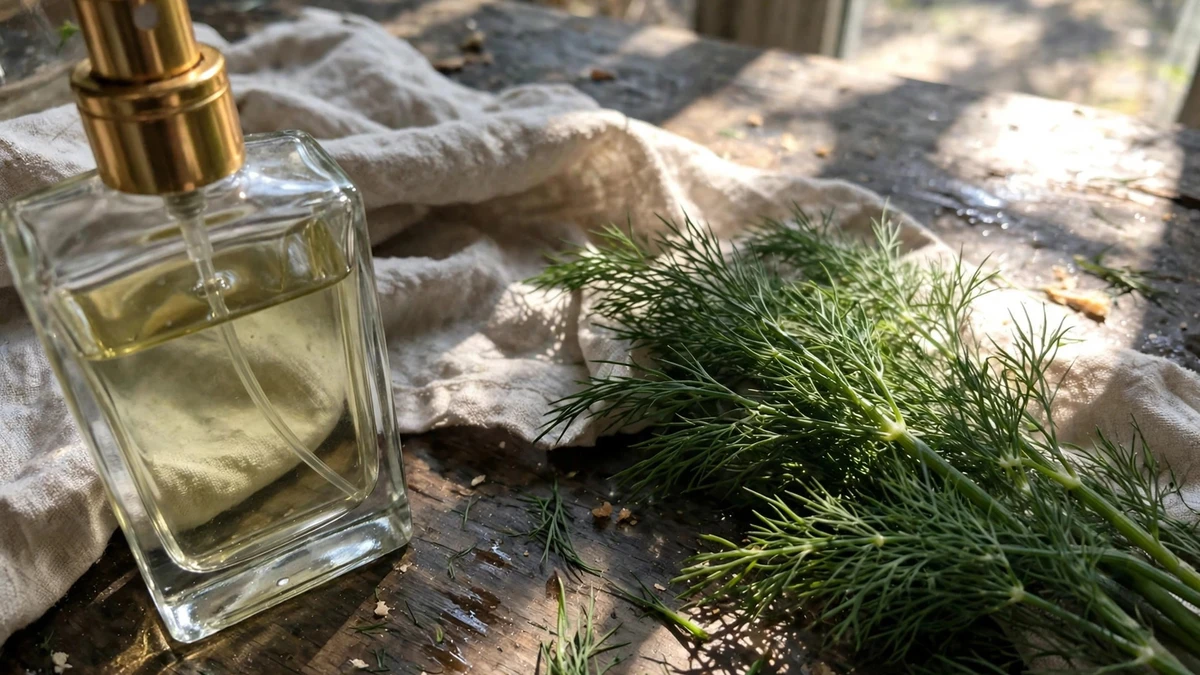
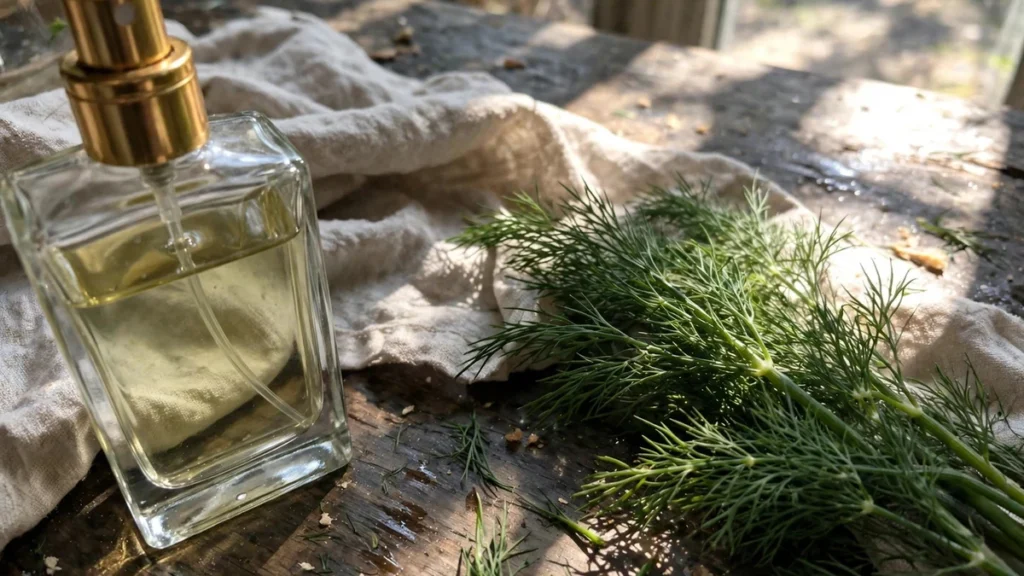
A dill perfume is a perfume that lists dill among its notes, and that simple definition hides a surprising amount of confusion. Dill smells green and faintly sweet, a little like aniseed and a little like fresh parsley, and most people meet it first in a pickle jar, which is the worst possible introduction to a perfume note.
The confusion starts in the kitchen. Dill is a herb, a seed and a spice all at once, and the oil a perfumer uses comes from the seeds or from the feathery leaves, not from the pickle brine. This guide explains what dill actually is and what it does inside a bottle.
Key takeaways
- A dill perfume lists dill as a named note, usually in the top, where it adds a green, fresh and faintly salty lift.
- The oil comes from dill seeds or dill leaves, steam-distilled, and the two oils smell noticeably different.
- Most of dill’s smell comes from carvone, the same molecule that gives caraway and spearmint their character.
- Dill is a supporting note far more often than a leading one, because it is very intense in small doses.
- No dill perfume smells exactly like the kitchen herb, and none of them smells like a pickle jar for long.
What a dill perfume actually is
A dill perfume is a perfume in which dill is a named note, and that is the whole definition. It does not have to smell of dill above all else, and most of the time it does not. The note usually works in the background, sharpening citrus or keeping a floral from turning sugary.
That is what separates a dill perfume from a dill-scented product. A perfume uses the note as one colour in a larger picture, and dill is a bridge: green enough to sit with the herbs and salty enough to sit with the woods.
How to read a dill note list
Read the position first, because position tells you how long the dill will last. A dill top note will be obvious for the first twenty minutes and then mostly gone. A dill heart note will stay with you for hours.
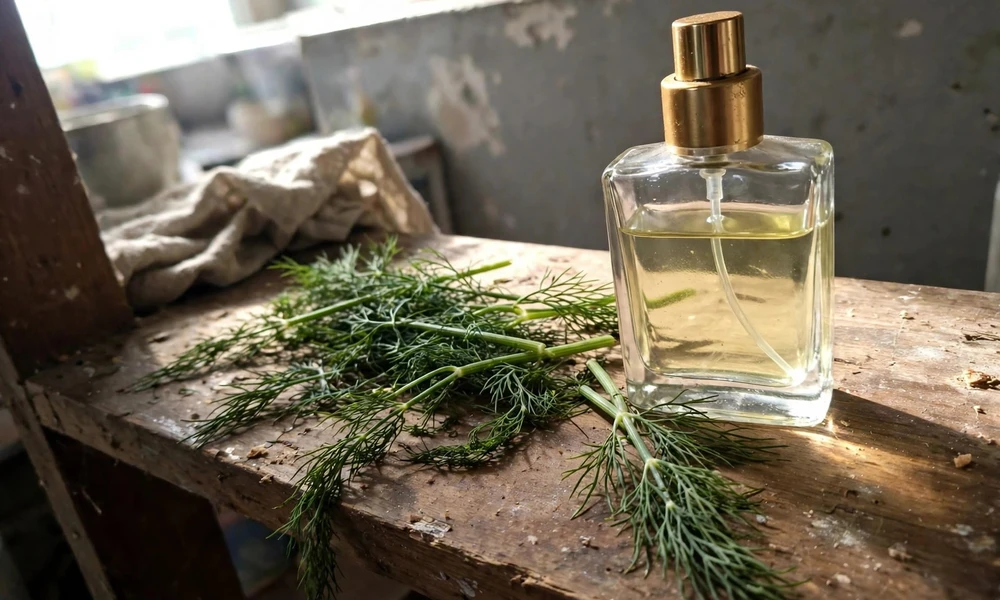
Read the neighbours next. Beside lemon and bergamot it reads as fresh and herbal. Beside rose and raspberry it reads as romantic and slightly playful. Beside pine and leather it reads as dark and rugged.
Read the concentration last, because it tells you how loud the dill will be. In an eau de toilette the note is bright and brief, and in an eau de parfum it is softer and stays longer. Our guide to what a cardamom perfume is reads a note list the same way.
Nine things worth knowing about dill in perfume
The dill in a bottle starts life as a feathery garden herb
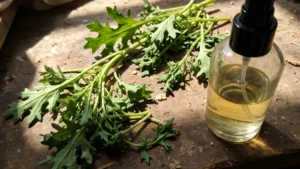
Dill is a tall, feathery herb in the carrot family, and it grows in gardens and fields all over the world. The plant has soft, thread-like leaves and small brown seeds, and the oil comes from the seeds or the leaves.
What It Shows: The note is a herb oil, not a vegetable, which is why it smells dry and concentrated rather than watery and green. What to Consider: A perfume that promises fresh dill leaves will still smell of the distilled oil, because that is the only dill material perfumers actually use. Best For: Anyone who wants to understand why a green note can smell so salty. Material: Steam-distilled oil from dill seeds or dill leaves. Price Range: The raw oil is inexpensive, which is why dill appears in affordable bottles as well as niche ones. Standout Feature: The oil is far stronger than the plant, and one drop can take over a blend.
Two oils, two dills: seed and leaf
Dill produces two kinds of oil, and they are different materials with different characters. Seed oil is warmer and spicier, with a caraway-like edge, and it is the one most perfumers use when they want depth. Weed oil, distilled from the fresh leaves, is greener and fresher, with a lighter, almost grassy character.
What It Shows: The variety matters as much as the note itself, and two dill perfumes can smell different because they use different oils. What to Consider: A bottle that smells warm and spicy is probably leaning on seed oil, while a bottle that smells freshly cut is almost certainly using the weed oil. Best For: Anyone choosing between a warm dill and a fresh one. Material: Seed oil from Anethum graveolens seeds, or weed oil from the fresh leaves. Price Range: Both oils are cheap, so pick by character rather than by price. Standout Feature: One note name can hide two very different smells.
Dill’s smell comes mostly from carvone
Dill oil is a mixture, and most of its character comes from one molecule called carvone, about a third of the seed oil. The rest is what makes dill different from its relatives: limonene, which adds a citrus brightness, and a small amount of anethole, which adds the faint aniseed sweetness.
What It Shows: The shared molecule explains the family resemblance, and the remaining compounds explain why dill is greener and saltier than its cousins. What to Consider: A synthetic carvone can imitate the minty warmth, but it cannot imitate the green, herbal character that comes from the whole oil. Best For: Anyone who keeps mistaking dill for caraway or spearmint. Material: Carvone, limonene and a small amount of anethole. Price Range: Natural dill oil is inexpensive, so a real oil is no guarantee of a luxury price. Standout Feature: A single molecule carries the note, and the rest of the oil adds the detail.
Dill reached the kitchen centuries before the bottle
Long before anyone distilled dill oil, people cooked with the herb. It appears in Egyptian and Roman kitchens, in Scandinavian pickles, and in Indian and Middle Eastern cooking, where the seeds are used as a spice. Perfumers inherited that association, and it is one reason dill reads as savoury and familiar even when it sits in a dark, heavy composition.
What It Shows: The note carries a cultural memory of food, and that memory shapes how we perceive it in a bottle. What to Consider: The savoury character is real, but it is a herbal savouriness, not a food smell, and it will not make a perfume smell like a meal. Best For: Anyone who wants a savoury note that is not smoky or leathery. Material: Whole dill seeds and fresh leaves, used in kitchens for millennia before they were distilled. Price Range: The herb costs almost nothing, which is why the note appears in bottles at every price. Standout Feature: A kitchen herb that became a perfume material without ever changing its character.
Next to rose, dill sharpens instead of softening
A small dose of dill oil beside a rose accord adds a green, salty edge that makes the rose smell lighter and more modern.
What It Shows: Dill is a tool for fixing florals, not just a scent in its own right. What to Consider: A rose perfume that smells fresh and a little sharp is very likely using dill, even if the note list hides it behind a vaguer term. Best For: Rose lovers who find most rose perfumes too sweet. Material: Dill seed oil with rose absolute and a touch of raspberry. Price Range: Rose and dill appear together at every price, from affordable florals to niche bottles. Standout Feature: The note that makes a rose smell modern without making it smell cold.
Dill belongs to the first hour
Dill oil is light and volatile, and it evaporates faster than the woods and musks underneath it. In the opening minutes it is bright and green, and after an hour it has softened into something salty and faintly herbal. After three hours it has mostly left, and the drydown underneath is what remains.
What It Shows: The note is a guest, not a resident, and it departs long before the base notes do. What to Consider: A bottle that promises all-day dill is promising something the material cannot deliver, and the drydown will always belong to the woods and musks. Best For: Anyone who judges a perfume by its first hour rather than its last. Material: Volatile dill oil over longer-lasting woods and musks. Price Range: The fading happens at every price, because it comes from the oil itself. Standout Feature: A note that arrives loudly and slips away quietly.
The drydown of dill is salty, not sweet
Fresh from the bottle it is bright and green, with a cool herbal edge. As it dries down it softens, the greenness recedes, and a salty, faintly savoury warmth takes its place.
What It Shows: The note has two faces, green and salty, and the second face is the one that lasts. What to Consider: A dill perfume that smells only sweet after an hour is using a different material, because real dill always turns salty as it settles. Best For: Anyone who loves savoury, salty scents but wants a green opening. Material: Dill seed oil, which turns salty as its volatile top notes evaporate. Price Range: The salty drydown appears at every price, because it is a property of the oil. Standout Feature: A green note that ends up smelling salty, which is the opposite of what most green notes do.
Dill and fennel are related, not identical
Dill and fennel come from different plants, but they are close relatives in the carrot family, and they share a small amount of the same chemistry. Fennel is sweeter and more anisic, and it is the note that makes a perfume smell like a sweet shop. Dill is greener and saltier, with a caraway edge and a herbal bite, and it is the note that makes a perfume smell like a herb garden.
What It Shows: The family resemblance is real, but the differences are what matter, and dill is the greener, saltier cousin. What to Consider: A bottle that lists fennel but smells green and salty is probably using dill as well, because fennel alone cannot produce that saltiness. Best For: Anyone who keeps buying fennel perfumes and wondering why they smell too sweet. Material: Dill oil beside fennel oil, both from the carrot family. Price Range: Both notes appear at every price, so choose by character rather than by cost. Standout Feature: Two notes that share a family and smell like different gardens.
Dill does its best work in the background
Perfumers reach for dill when a blend needs sharpening, not when it needs a theme. A rose that is too sweet, a citrus that is too flat, a woody masculine that is too heavy: a few drops of dill oil fix all three, and in each case the dill is doing a job rather than taking a bow.
What It Shows: The note is a tool, and its value is in what it does to the other notes. What to Consider: A perfume that puts dill in the name is making a promise the material rarely keeps, because dill is at its best when it is not the loudest thing in the bottle. Best For: Anyone who wants to understand why a rare note is rare. Material: Dill oil in small doses, beside citrus, rose or woods. Price Range: The supporting role appears at every price, because it is a property of the note. Standout Feature: A note that is most valuable when you barely notice it.
How dill behaves on skin
Dill behaves differently on skin than it does on paper, and the difference is worth knowing before you buy. On a paper strip the note stays bright and green longer, because no warmth hurries it through its changes. On skin it moves faster: the green opening lasts twenty minutes, the salty heart lasts two hours, and after that the base notes take over.
Skin chemistry changes the note too: warm skin brings the sweetness forward, and cool skin keeps the greenness longer. Our guide to what a saffron perfume is makes the same point about spice notes on skin.
The caveats that matter
Dill suits most skin, but it splits opinion sharply. The pickle link splits noses in two: some find it fresh and green, others find it like a condiment, with almost no middle ground. If green herbal scents are new to you, try a sample before buying a full bottle.
| Detail | What is known |
|---|---|
| What dill is | A seed oil or weed oil from Anethum graveolens, not the pickle |
| What it smells like | Green, fresh, faintly sweet and a little like aniseed |
| Where it sits | Usually the top, lifting citrus, herbs and florals |
| Seed vs weed oil | Seed oil is warmer and spicier; weed oil is greener and fresher |
| Key molecule | Carvone, about a third of the seed oil |
| How it changes | Bright and green at first, then salty as it dries down |
| Who should sample first | Anyone who dislikes pickles or aniseed |
| What it does not do | It does not anchor a perfume like woods do, and it does not last all day |
There is also a practical caveat about shortcuts. Because pure carvone is cheap, some perfumes that smell green and herbal contain no dill oil at all, only the synthetic molecule. Our guide to what a star anise perfume is warns about the same shortcut.
Checklist: reading a dill perfume honestly
Use these checks before you buy, and again after a full day of wearing.
- Check that dill is actually named in the note list, not only hinted at by a green herbal smell.
- Check the placement: a top note fades quickly, while a heart note stays for hours.
- Check the company it keeps: citrus and herbs keep it fresh, rose and raspberry make it romantic, pine and leather make it dark.
- Test it on skin, never only on paper: the green opening and the salty drydown smell like two different scents.
- Wait a full hour before judging: the opening is the loudest and least honest part.
- Trust your own nose: if the pickle character bothers you in the first hour, it will not grow on you.
Frequently asked questions
Could a dill perfume make me smell like pickles?
Not quite. Dill shares its smell with pickles, so the association is familiar, but a perfume uses the oil in small doses beside citrus, rose or woods, and the result is green and herbal rather than vinegary.
What sets dill apart from fennel?
No. They are different plants in the same family, with different key molecules: carvone for dill, anethole for fennel. Dill is greener and saltier, fennel is sweeter and more anisic, and perfumers use them for different jobs.
Does dill suit hot weather?
Yes, if you choose the right one. Citrus and marine dill perfumes are built for heat, with fresh notes that keep the dill from turning sharp. The heavier leather and pine bottles are better saved for cooler weather.
Why does dill vanish so fast on my skin?
Dill oil is very light, and the first spray is always the loudest. Judge it after an hour, never after a minute.
Can dill stretch a perfume’s wear?
Not on its own. Dill is a top note, so it fades within a few hours. What it does is make the opening memorable, while the woods and musks underneath carry the scent through the day.
What base should sit under a dill scent?
A plain unscented moisturiser is the safest base, because it holds the scent without adding character of its own.
The bottom line
A dill perfume lists dill as a named note, and the note is a green, fresh and faintly salty seed or leaf oil that usually works in the top. It sharpens citrus, lifts rose and cools leather
Try it, wear it all day, and judge it on the drydown, not the first spray. Start with a bottle where the dill is an accent, and if the green, salty character suits you, move on to a dill-forward bottle.