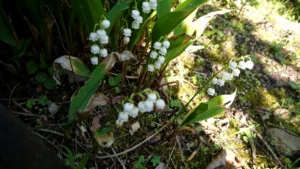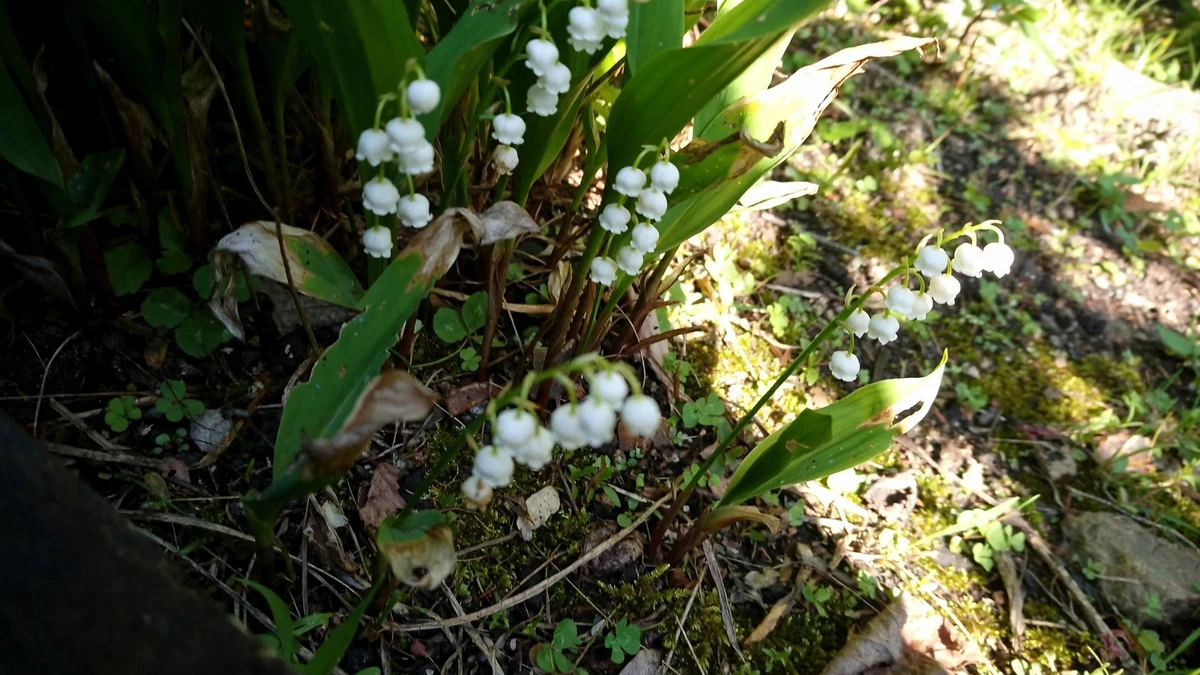
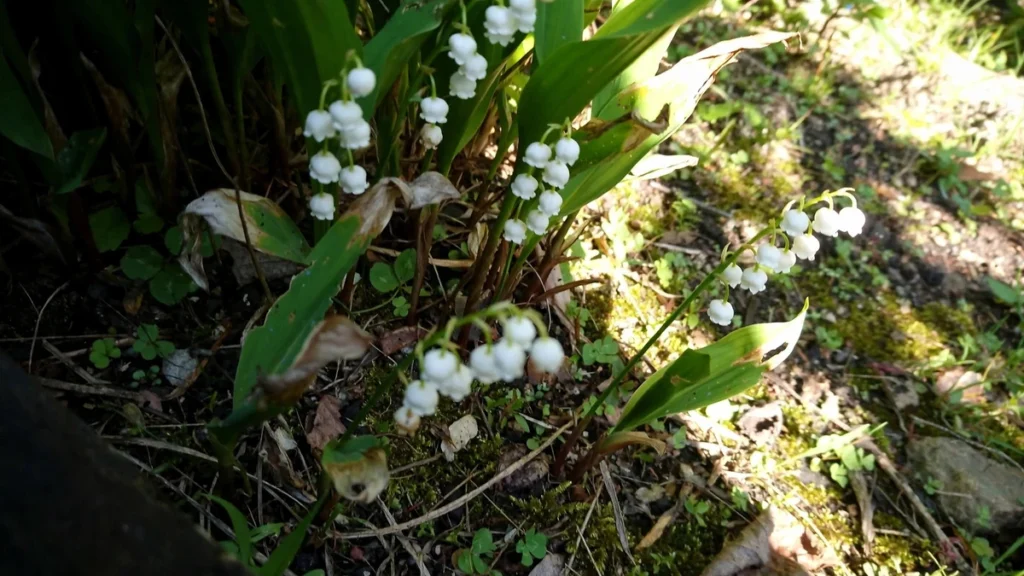
A lily of the valley perfume is a fragrance built around the scent of a small white flower, the blossom of Convallaria majalis. It is not a perfume made from lilies, and it is not a perfume that smells of lilies in the everyday sense. What it smells of is cool green stems, dew on white bells, and a clean sweetness that stays close to the skin.
It is one of the hardest-working notes in perfumery, and also one of the easiest to misunderstand. It appears in everything from a $15 Yardley spray to a $245 Dior soliflore, and in each it does a different job: sometimes it carries the whole composition, sometimes it softens the heart. The name on the pyramid changes too, from lily of the valley to muguet, which is why two people can be wearing the same note and never know it.
This guide explains what lily of the valley is, where it comes from, how it reaches a bottle, and how to tell it from lily and jasmine. The nine facts below cover the plant, the reconstruction, the history, and how it behaves on skin, plus the cautions worth knowing.
Key takeaways
- A lily of the valley perfume is built around the blossom of Convallaria majalis, and it smells of green stems, dew, and clean white bells.
- The flower yields no essential oil, so every muguet note is a reconstruction built from other materials.
- Muguet and lily are different flowers entirely, and lily of the valley and jasmine are different flowers too.
- Diorissimo made the note famous in 1956, and it has sat at the heart of classic French perfumery ever since.
- The note is gentle on its own, but the flower itself is poisonous, and the reconstruction can turn soapy on some skins.
What a lily of the valley perfume is, in plain terms
A lily of the valley perfume is any fragrance in which the scent of the lily of the valley blossom plays a named, deliberate part. That sounds tighter than it really is, because the note rarely takes the lead. It often sits in the heart, where it softens what is around it, cools what is underneath, and adds a clean, dewy glow that no other floral can quite match.
Once you have met it, the smell is easy to recognise. Think of a cool morning in May, green stems after rain, and white bells that smell freshly washed rather than sweet. The green is not the sharp green of crushed leaves, and the sweetness is not the sugary sweetness of a ripe fruit. Underneath it all there is a faint soapiness that keeps the note clean rather than rich.
Our earlier guide to frangipani perfume explained that note in the same plain way, and the same approach fits here. A lily of the valley perfume is not a perfume that smells of lilies in any everyday sense. It is a perfume that borrows the blossom’s green, dewy, clean character to cool the rest of the composition.
How lily of the valley ends up in a bottle
The blossom gives perfumers nothing to distil, so the note is rebuilt from scratch. A perfumer does not press lily of the valley flowers and pour the result into a bottle. Instead, they combine green, floral, and faintly soapy materials until the blend recalls the flower, and each house builds its version differently, which is why two muguet perfumes can smell so unlike each other.
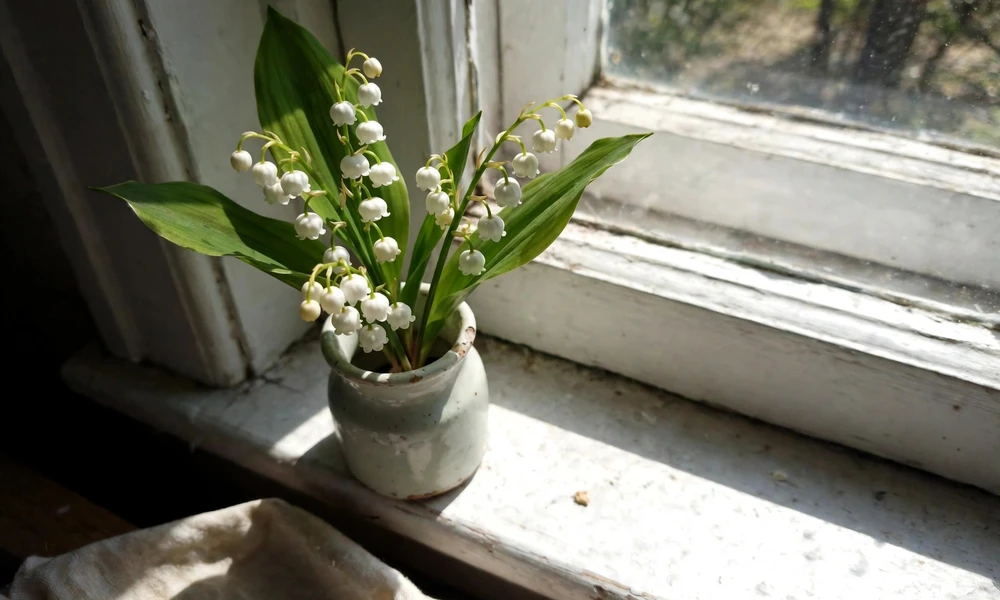
The reconstruction is then placed in the pyramid, usually in the heart. In the heart it gives the middle its cool green freshness and holds the composition together while the top notes evaporate. It is almost never placed in the opening, because it is too quiet to announce a perfume, and rarely in the base on its own, because it needs musk or woods underneath to last.
Its place in the pyramid matters more than how much of it there is. A cologne with muguet in the heart will carry it for hours, while an extrait with muguet in the top will lose it within the hour. That is why one bottle can lose the note in an hour while another carries it all afternoon.
Nine facts about lily of the valley perfume
Muguet is the French name for the same flower
What it shows: Muguet is simply the French word for lily of the valley, and it names the blossom of Convallaria majalis, a low woodland plant that grows across Europe and Asia. The name is the one perfumers use most, because the note’s history is French, and a pyramid that says “muguet” is naming the same flower as one that says “lily of the valley”.
What to consider: The name is spelled one way on pyramids. “Muguet” and “lily of the valley” are the same note, and “muguet des bois” is the woodland form of the same flower. A perfume that lists any of these names the same blossom.
The note is built in a lab, never pressed from the flower
What it shows: Lily of the valley cannot be steam-distilled or pressed into an essential oil, so every muguet note is a reconstruction built from other materials. The classic rebuilders were hydroxycitronellal, lilial, and lyral, and each house blends them differently, which is why no two muguet perfumes smell exactly alike.
What to consider: A perfume that claims “natural muguet oil” is not telling the truth. The flower yields nothing, so the note is always made, never extracted, and the quality of the rebuild is what you are paying for.
France gives muguet on May 1 for good luck
What it shows: In France, the first of May is the Fête du Muguet, when small bunches of lily of the valley are given for good luck. The tradition dates to 1561, when Charles IX was given a sprig and began the custom, and it is why the flower is tied to spring more tightly than any other note in perfumery.
What to consider: The May 1 connection is also why Guerlain releases a new Muguet edition every year on that date. A perfume bought in May is often the freshest muguet of the year, and the limited editions sell out fast.
Diorissimo made the note famous, in 1956
What it shows: The note has two histories. Lily of the valley had been used in perfumery for decades, but Diorissimo, from 1956, was the first major perfume to put the note at the heart of a modern classic. Edmond Roudnitska built it for Christian Dior, who considered the flower his lucky charm and sewed it into his hems.
What to consider: Diorissimo is still made today, and it is the best way to smell the note’s past. For the most classic muguet, try Diorissimo; for the most modern, try Dior Lucky. Neither appears as a pick in our roundup, because both already feature in earlier guides, but both are still worth smelling.
The flower is poisonous, all of it
What it shows: Every part of the lily of the valley plant is poisonous if eaten, including the berries and the water from a vase, because it contains cardiac glycosides. The perfume is safe, because it contains no part of the plant at all, only a rebuilt accord, but the fresh flower is not a garnish and not a tea.
What to consider: Keep fresh sprigs away from children and pets, and never put the stems in drinking water. The danger is in the plant, not the bottle, and a perfume that lists muguet carries none of it.
Muguet is not lily, and the two smell nothing alike
What it shows: Lily of the valley is Convallaria majalis, a low plant with small white bells, while lily is Lilium, a tall flower with large trumpets. Muguet smells green, dewy, and clean, while lily smells richer, heavier, and almost narcotic, and a perfume that names one is not a perfume that names the other.
What to consider: The names cause most of the confusion around this note. If a pyramid says “lily”, it means Lilium; if it says “lily of the valley” or “muguet”, it means Convallaria. Our guide to ylang ylang perfume warns about the same trap: names that look alike yet mean different things.
Lilial and lyral were restricted, so modern muguet was rebuilt
What it shows: Lilial, one of the classic muguet rebuilders, was banned in the European Union in 2022, and lyral was restricted before it, so every modern muguet accord had to be rebuilt without them. The rebuilds are greener and less powdery than the old ones, which is why a vintage muguet and a current one can smell so different.
What to consider: Do not judge a current muguet against a bottle from twenty years ago. The materials changed, the accord changed with them, and the modern versions are greener by necessity rather than by choice.
Muguet works from the middle of the blend
What it shows: Muguet is too quiet and too clean to open a composition, so perfumers place it in the heart, where it can do its work and then stay. In the heart it gives the middle its cool green freshness, and in the base it holds the drydown together while the lighter notes evaporate.
What to consider: Do not expect muguet to greet you in the first spray. If you love the note, choose a heart placement like Diorissimo over a top placement; the heart lasts hours longer.
Three pictures that capture the smell: green, dewy, soapy-clean
What it shows: The three comparisons capture different parts of the note. Green stems give the cool, leafy edge, dew gives the watery freshness, and a faint soapiness gives the clean, freshly washed finish. Together they describe a smell that is floral without being heavy, sweet without being sugary.
What to consider: Take those comparisons as a guide, not a guarantee. With citrus it smells brighter than with woods, and with musk it smells warmer than with spice, and on some skins the soapy side is all that shows.
Lily of the valley vs lily vs jasmine
The three names cause most of the confusion around this note, so it is worth setting them out plainly. Lily of the valley is the blossom of Convallaria majalis, and it smells green, dewy, and clean. Lily is the flower of Lilium, and it smells richer, heavier, and more narcotic. Jasmine is the flower of Jasminum sambac, and it smells warmer, greener, and more animalic than either.
The three materials do different jobs: muguet cools and freshens, lily fattens and deepens, and jasmine warms and intoxicates. A perfume that names muguet will smell cool and clean, while one that names lily will smell rich and heavy. Our guide to osmanthus perfume warns about the same trap: names that look alike yet mean different things.
When you are unsure, check the rest of the pyramid: green notes, lilac, and soft musk point at muguet. If the other notes are tuberose and dark woods, the lily is more likely doing the work. And if the pyramid says “muguet” outright, it is definitely the flower, not a stand-in.
The caveats that matter
Muguet is gentle, but buying it well takes care: the name changes from pyramid to pyramid, the note is a reconstruction rather than an extract, and the scent can turn soapy on some skins. The table below lays out what is worth knowing before you spend anything.
| Detail | What is known |
|---|---|
| What it is | A fragrance built around the blossom of Convallaria majalis, smelling of green stems, dew, and clean white bells |
| What it is not | Not lily or jasmine, which come from different flowers and smell richer and heavier |
| How it is made | Always a reconstruction, because the flower yields no oil; modern accords were rebuilt after lilial was restricted |
| Where it sits | Heart in most perfumes; it cools the middle and stays for several hours |
| Best season | Spring, when its cool green character feels natural |
| Who should sample first | Anyone who finds soapy florals overpowering should wear it for a full day before buying |
| Price range | $12–$18 at the low end, $230–$260 at the high end, for standard bottles in our roundup |
| What it does not do | It does not make a perfume last longer, and it does not suit every skin chemistry |
If your skin reacts easily, test any new perfume on a small patch first and wait a day. The blossom is gentle, but the green and soapy notes beside it can irritate, and the fresh flower itself is poisonous if eaten.
Checklist: telling a true lily of the valley perfume from the rest
Work through these before you buy.
- Look at the pyramid first: it should name lily of the valley or muguet in full, not just “white flowers” or “spring bouquet”.
- Smell the heart, not the opening: muguet sits in the middle, so give it twenty minutes on skin before you judge it.
- Wear it from morning to night before you decide: the green facet arrives early, and the soapy turn, if it comes, shows up later.
- Compare it with lily and jasmine side by side: the three white florals smell alike at first, and the differences show up after an hour.
- Ask whether it is a soliflore or a supporting note: a soliflore shows the flower plainly, a supporting note hides it behind rose or peony.
- When you are still deciding, buy the smallest bottle: a 50 ml you empty beats a 100 ml left sitting on the shelf.
Frequently asked questions
What does lily of the valley smell like in a perfume?
Green, dewy, and clean, with a soft sweetness and a faint soapy edge. It smells like cool stems and white bells after rain, rather than like a rich or sugary floral, and it stays close to the skin.
Is a muguet perfume the same as a lily perfume?
No. Lily of the valley is Convallaria majalis, a low plant with small white bells, while lily is Lilium, a tall flower with large trumpets. They are different plants, different notes, and they smell different: muguet is green and clean, lily is rich and heavy.
Why is there no real lily of the valley oil?
Because the flower yields nothing to distil or press. It cannot be turned into an essential oil, so perfumers rebuild the scent from other materials, and every muguet note in a bottle is a reconstruction rather than an extract.
How long does a lily of the valley perfume last?
Most muguet perfumes last three to five hours on skin, with the soliflores on the shorter end and the muskier compositions on the longer end. A lighter concentration fades faster, so an eau de toilette will usually need a midday refresh.
Can lily of the valley perfume give you a headache?
Yes, on some people. The note is clean but persistent, and a strong dose in a warm room can feel overpowering. If it gives you a headache, try a lighter dose, a greener pairing like the Molinard, or a smaller spray on the wrist rather than the neck.
What is the difference between muguet and lily of the valley?
Nothing. Muguet is the French word for lily of the valley, and both point at the blossom of Convallaria majalis. A pyramid that says “muguet” is naming the same flower as one that says “lily of the valley”, not a different note.
The bottom line
A lily of the valley perfume is a fragrance built around the blossom of Convallaria majalis, and it smells of green stems, dew, and clean white bells. The note is always a reconstruction, it sits in the heart, and it goes by two names, while lily and jasmine are different flowers entirely.
Whatever you pick, check that the pyramid names the flower in full, wear it on skin for a full day, and judge it by how the green, dewy heart grows over hours, not by the first minute. That is how you find a muguet you will actually finish to the very last drop.