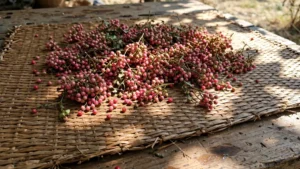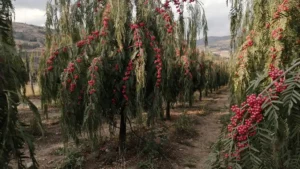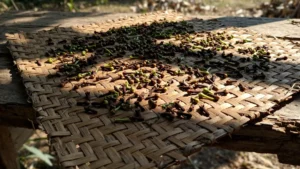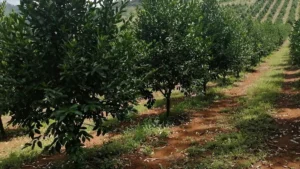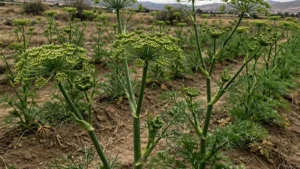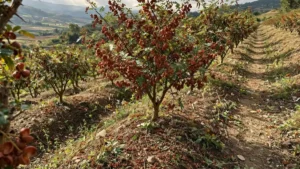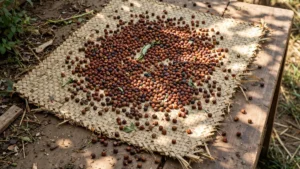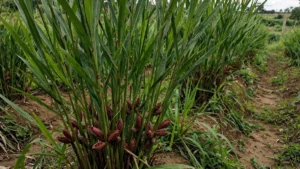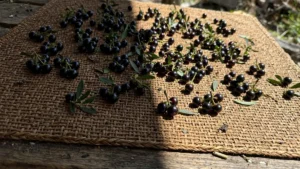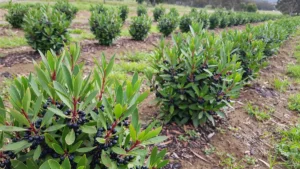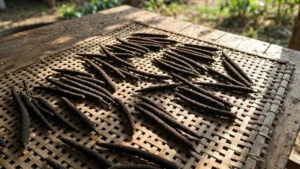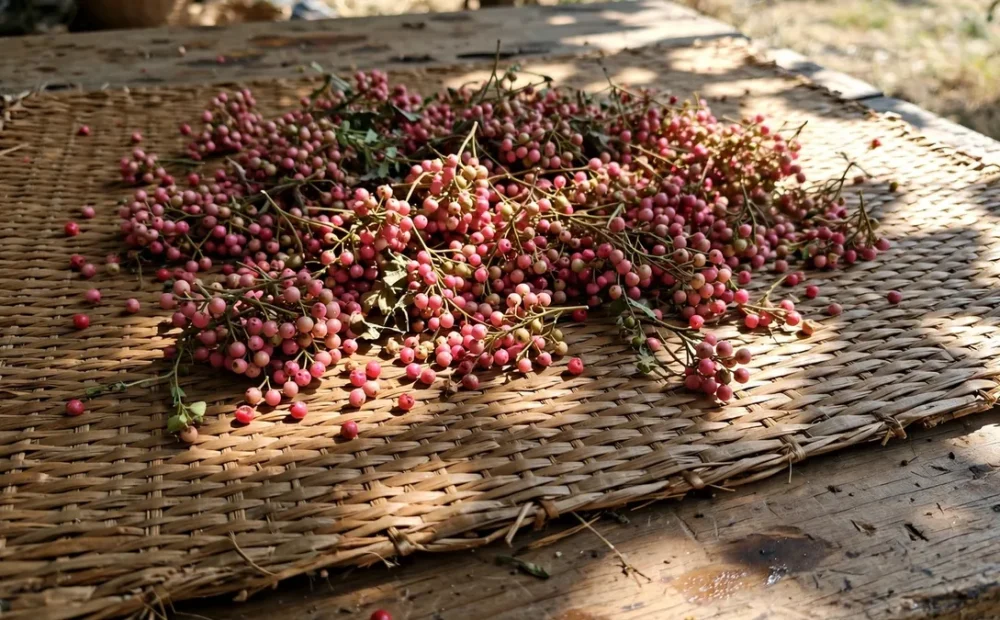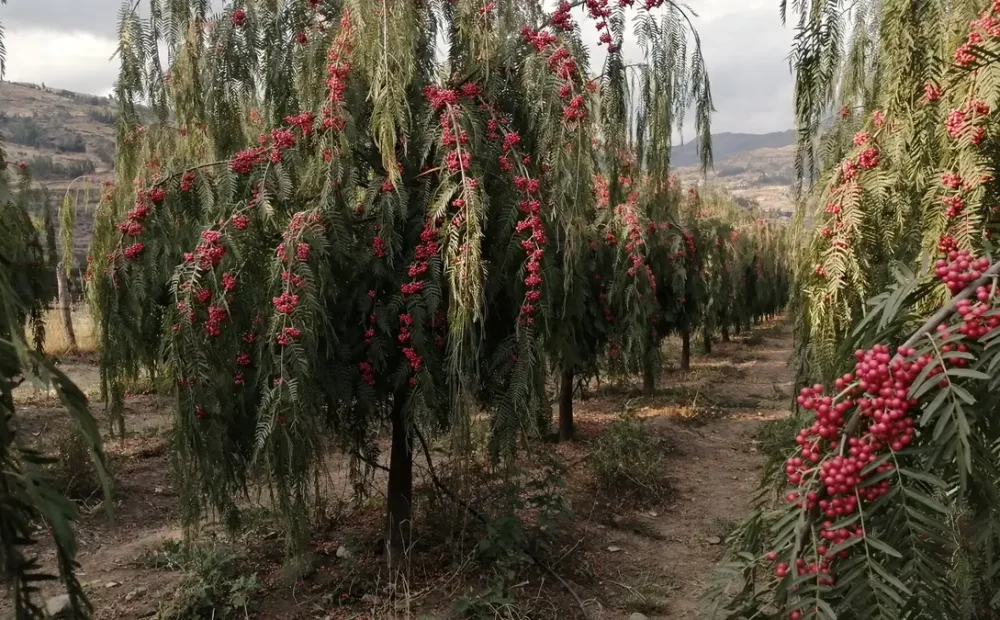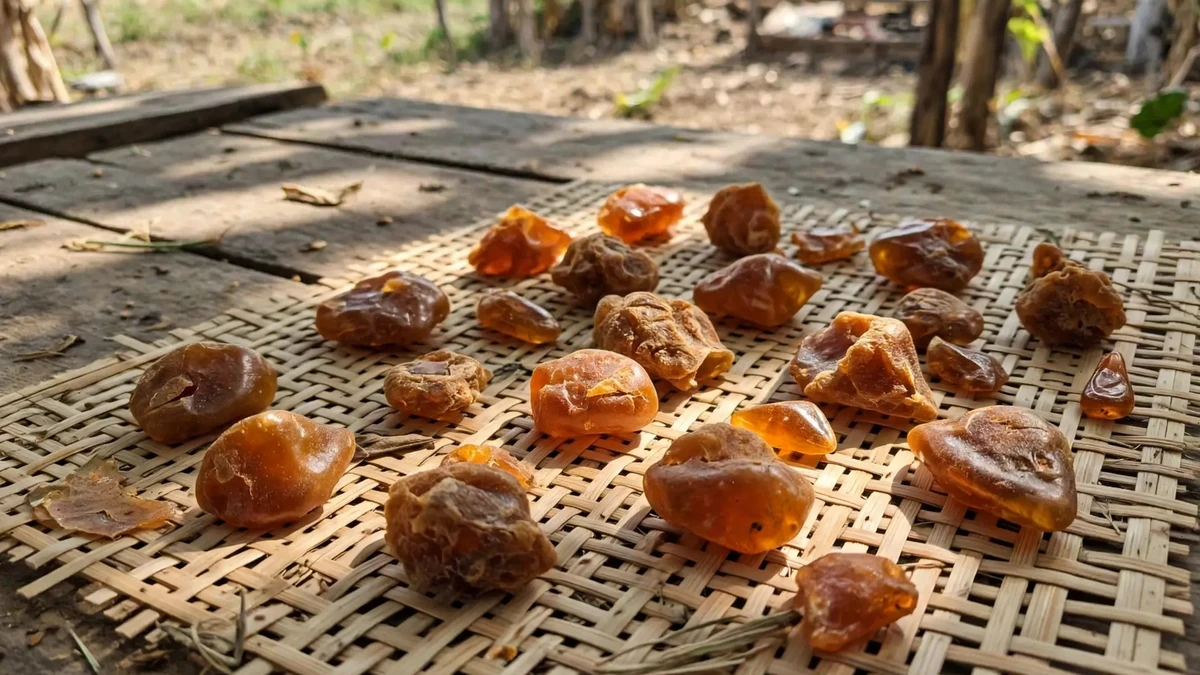
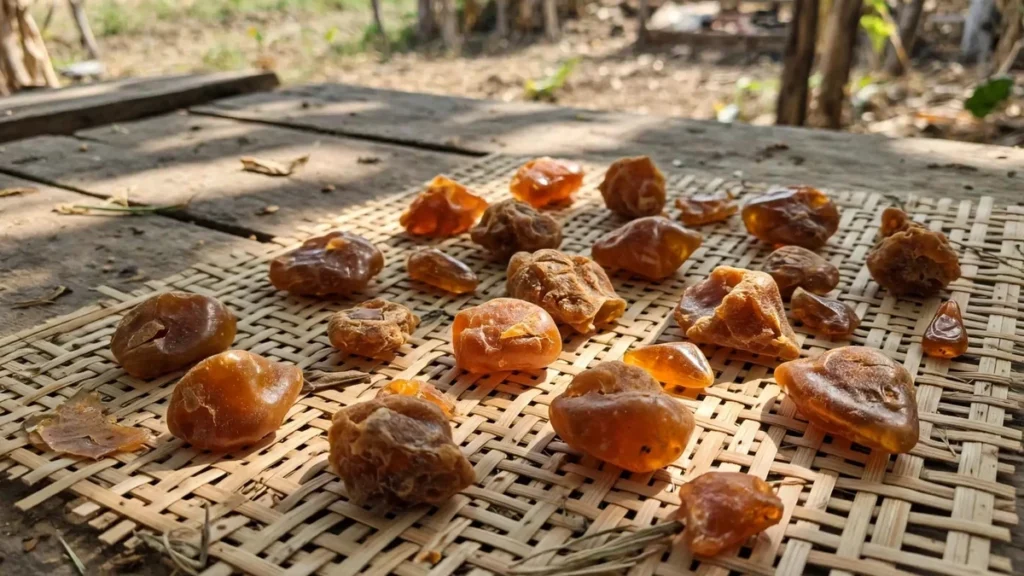
An asafoetida farm escape is a short stay on a working resin farm in the dry season, timed to the few weeks when the tapper cuts the roots, the sap hardens into tears, and the kitchen fries the resin in ghee. The plant is a slow perennial, so the farm waits four or five years before a root is ever cut, and the work happens by hand: the tapper slices the crown of the root, the milky sap oozes out, and the tears are gathered once the sun has dried them. If you arrive a fortnight early, the terraces are still quiet. If you arrive a fortnight late, the tears are already bagged.
That brief window is the whole point of the trip. You are not visiting a show farm or a display garden. You are standing on the terraces while a resin that flavours half of India’s vegetarian cooking is gathered, and you are eating it in the farm kitchen the same evening, in the dal, the rice, and the vegetables. The farms that do this well are small, dry-country places, and they host only a handful of guests at a time.
Below are the nine steps to plan an asafoetida farm escape in 2027, from picking the valley to bringing the tears home in your bag. Each step is described by what to do, what to avoid, and how long it takes, so you can plan around the tapping instead of guessing at it.
Key takeaways
- Asafoetida is a slow perennial with a short tapping season, so the whole trip hangs on the fortnight the farm names a few weeks ahead.
- Book nothing until the farm fixes its dates, because a Ferula root is ready only in its fourth or fifth year and the tapping lasts weeks.
- Learn the resin grades by sight before you travel, and the farm will show you tears, mass, and powder side by side.
- Stay on the farm itself, eat in the farm kitchen, and carry the whole dried tears home, never the ground spice.
- Pure resin is naturally gluten-free, but much shop powder is cut with wheat flour, so tell the farm when you book.
What an asafoetida farm escape involves
An asafoetida farm escape is a stay of three to five nights on a working resin farm during the tapping season, with a room on the farm and meals from the farm kitchen. The days follow the root: out to the terraces in the early morning to watch the tapper make the day’s cuts, back to the yard to gather the tears as they harden, and an evening meal where the resin appears in almost everything on the table. The work is slow and careful, and guests are expected to watch closely and help with the gathering if they want to, under the tapper’s direction.
You will not find a hotel here. The rooms are farmhouse bedrooms or converted storehouses, the supper is served at the family’s long table, and the farm’s own resin is in the dal, the rice, and the vegetables. The best escapes are the ones where the farm treats you as a guest of the tapping, not as a customer of a tour.
How to plan it, and what to ask first
Start with the tapping, not the map. Asafoetida is tapped only once the plant is four or five years old, and the exact fortnight depends on the spring weather, so no farm can promise a date months ahead. Pick two or three valleys from our list, write to the farms, and ask when they expect to cut. The farm that answers clearly, with a fortnight and a backup fortnight, is the farm to book.
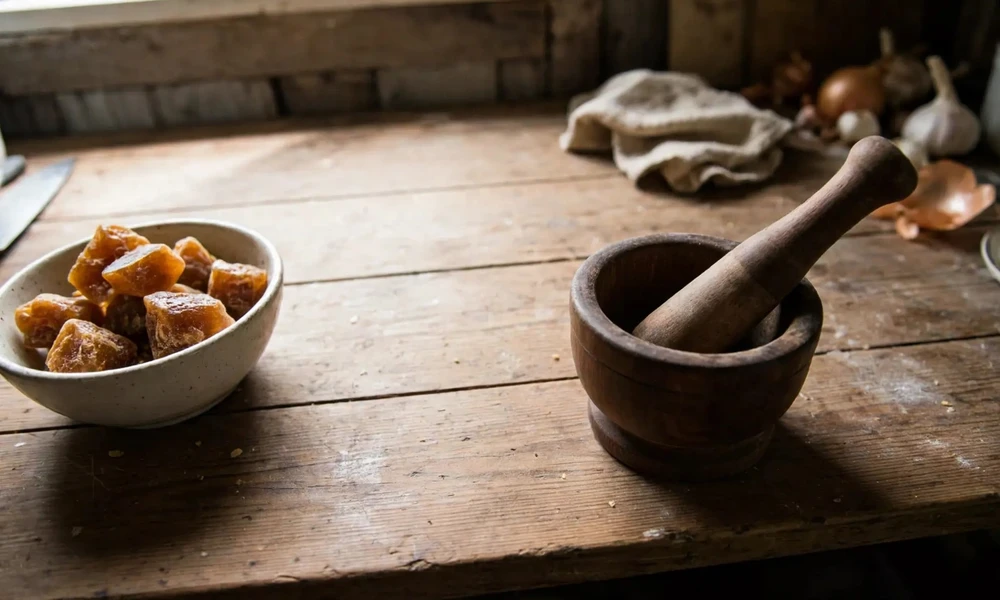
Before you book, ask three questions. First, which fortnight the farm taps the roots, and whether the dates can move if the weather turns, because a Ferula root is ready only in its fourth or fifth year. Second, whether the cook fries the resin in ghee each morning, or reaches for a shop-bought powder, because a kitchen that fries its own tears will show you the real flavour. Third, how the farm copes with flour in its powder, if you eat gluten-free, because much shop-bought asafoetida powder is cut with wheat flour and the farm should be able to say plainly what is in its own. Our guide to the cumin farm escape follows the same three questions, and they work just as well here.
The 9 steps to plan an asafoetida farm escape
Let your own kitchen pick the valley
What to do: Choose the valley whose cooking matches your own kitchen, whether that is the lentil dals of Khorasan or the vegetarian dishes of Kashmir, because the farm’s food is the trip. What to avoid: Picking a valley for the photograph and eating food you do not enjoy for five days. Best for: Travellers who cook with asafoetida at home and want to see where it comes from. Time needed: One evening with the farm’s menus and your own spice shelf. Standout tip: The farm whose dishes you already love is the farm whose tapping you will enjoy most.
Book nothing until the tapping fortnight is fixed in writing
What to do: Write to the farm, ask when it expects to cut, and wait for a firm fortnight before you book anything else. What to avoid: Booking a cheap flight first and finding the farm taps a fortnight later. Best for: Travellers who would rather shift a flight than miss the tapping. Time needed: A week of messages while the fortnight settles. Standout tip: Ask the farm to hold the room until the tapping fortnight is fixed, and most will.
Tell tears, mass, and powder apart before you travel
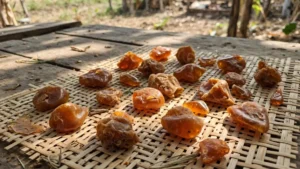
What to do: Learn the look of a hard amber tear, a soft lump of mass, and a pale powder, so you can tell them apart at a glance before you buy any. What to avoid: Arriving unable to tell tears from mass and paying tear prices for a flour-cut powder. Best for: Travellers who want to buy well in the farm shop. Time needed: An hour with pictures of tears, mass, and powder before you pack. Standout tip: The farm will lay all three out once, at the kitchen table, and after that you will never forget them.
Stand beside the tapper for the morning’s first cut
What to do: Watch the tapper slice the crown of the root in the early morning, when the sap runs milky and slow, and stand back while it oozes. What to avoid: Crowding the tapper, or touching a fresh cut before the sap has hardened. Best for: Travellers who want to see the resin at its source. Time needed: An hour on the terrace with the tapper each morning. Standout tip: The tapper cuts once a day for a reason, and the reason is the sap.
Pick up the tears only after a full day in the sun
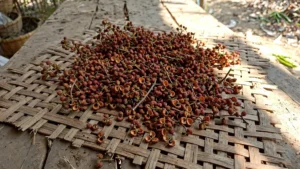
What to do: Gather the tears in the afternoon, once the sun has dried the sap hard, and lay them thin on a cloth so they finish drying evenly. What to avoid: Gathering soft tears, which stick together and lose their shape in the bag. Best for: Travellers who enjoy the slow work of the drying yard. Time needed: An afternoon of gathering and spreading, then a day of waiting. Standout tip: Hard tears keep for a year, soft tears go sticky in a week.
Smell the resin raw, then taste it fried in ghee
What to do: Smell a raw tear first, then taste the same resin fried in a spoonful of hot ghee, so you learn the difference in one sitting. What to avoid: Judging asafoetida by the raw smell alone, which is sharp enough to put anyone off. Best for: Travellers who travel for taste as much as for terraces. Time needed: Half an hour at the kitchen stove with the cook. Standout tip: The raw smell is a warning, and the fried flavour is the reward.
Make the first night’s meal the tapping supper
What to do: Eat the farm’s cooking the night of the tapping, when the resin is freshest, and ask the cook how much goes into each dish. What to avoid: Eating in town and missing the one meal where the tapping is on the table. Best for: Travellers who plan a trip around what they will eat. Time needed: One long supper at the family table. Standout tip: Fresh resin tastes deeper and rounder than the jar at home, and you will notice it at once.
Ask what the farm blends into its powder
What to do: Ask the farmer to show you how the powder is made, and whether any wheat flour goes into it, before you buy a single packet. What to avoid: Buying powder in a market without knowing how much of it is flour. Best for: Travellers who eat gluten-free, and anyone who wants pure resin. Time needed: Half an hour at the kitchen table with the farm’s own powder. Standout tip: Pure powder smells sharp, and flour-cut powder smells faintly of nothing.
Bring the tears home sealed tight in glass
What to do: Take dried whole tears home in a sealed glass jar, and grind them only when you cook, because whole tears keep their scent for months. What to avoid: Buying ground asafoetida at the market, which loses its scent within weeks, or carrying tears loose, which will scent everything in your bag. Best for: Travellers who cook with asafoetida every week. Time needed: A quick stop at the farm shop before you leave. Standout tip: A sealed jar in a dry cupboard keeps the trip alive longer than any photograph.
Picking the right season and region
Asafoetida is a slow perennial, so the tapping falls in late spring or early summer in most valleys, and the exact fortnight moves with the spring rain. Khorasan and Balkh tap earliest, in the warm lowlands, while Badakhshan and Himachal Pradesh tap later, on the higher ground. Ask the farm for its fortnight, not the valley’s average, because a single storm can move the whole tapping by a fortnight.
For a first escape, Khorasan is the simplest choice: the farm is used to guests, the tapping fortnight is generous, and the kitchen cooks with asafoetida at every meal. If you want the high valleys, choose Badakhshan, where the roots grow in the Hindu Kush. If you want the valley kitchens, choose Kashmir, where the resin ends up in the vegetarian dishes. Our guide to the fenugreek farm escape uses the same first-timer logic, and it holds here too: pick the farm that cooks with its crop daily, and the rest of the trip follows.
The caveats that matter
Asafoetida farming is at the mercy of the weather, because the tapper cuts the root in the heat and the sap has to dry in the sun. A rainy fortnight can wash the sap away before it hardens, and a fierce wind can scatter the drying tears before they are gathered. One storm can take a farm’s tapping fortnight away, and a late spring can hold the season back a fortnight. A good farm calls you the day the dates move. Pick a stay that lets you move the fortnight without forfeiting the deposit, and follow the farm’s own weather sense rather than the national forecast.
| Detail | What is known |
|---|---|
| Best time to go | Late spring into summer, when the roots are full of sap and the sun is strong |
| How long to stay | Three to five nights, covering the cutting, drying, and cooking |
| When to book | Only after the farm names the tapping fortnight, usually a few weeks ahead |
| What to pack | Gloves, a hat, a scarf for dust, and sturdy shoes for the terraces |
| Tears versus powder | Tears are the purest form; much shop powder is bulked out with wheat flour |
| Who should check first | Anyone with a celery-family allergy, and anyone avoiding gluten |
| What to bring home | Whole dried tears in a sealed glass jar, never loose powder |
| What to avoid | Booking after the tapping fortnight, when the drying yard is already empty |
Asafoetida is also easy to mix up with its Ferula cousins, and with the cheap powders sold in the markets, which are often mostly wheat flour. The resin looks the same in a jar, yet pure tears are hard and amber with a sharp sulphur smell until they hit hot ghee, while a flour-cut powder is pale and soft with a faint smell of nothing at all. A farm that grows asafoetida will show you the difference at the drying tray, and it pays to learn it, because the two cook very differently. Our guide to the coriander farm escape carries the same warning about lookalike crops: the farmer’s eye beats the photograph.
Checklist: before you book an asafoetida farm escape
Run through these checks before you pay, and once more in the week before you travel.
- Check the fortnight: ask the farm which fortnight it taps the roots, and whether the dates can move.
- Check the work: ask whether guests may gather the tears, or only watch the tapper.
- Check the pan: ask whether the farm fries its own resin in ghee, or buys ground spice in.
- Check the flour: ask how the kitchen keeps wheat flour and flatbread apart from your plate, if you eat gluten-free.
- Check the bed: make sure your room is on the farm itself, not in a guesthouse an hour’s drive away.
- Check the move: make sure you can shift the fortnight without forfeiting the deposit if the season runs late.
Frequently asked questions
How far ahead should I book an asafoetida farm stay?
Only a few weeks ahead, once the farm names the tapping fortnight. Asafoetida is a slow perennial with a short tapping season, and the dates depend on the spring weather, so a farm cannot promise a fortnight months in advance. Write early, wait for the dates, then book everything in one go.
What goes in the bag for asafoetida country?
Gloves for the terraces, a hat for the sun, a scarf for the dust, and sturdy shoes that can take dry soil. The farms sit in hot, dry country, so carry water on every walk in the heat, and pack a light layer for the cool evenings once the sun drops.
Can children join in on an asafoetida farm?
Yes, on most of these farms, so long as the children are old enough to follow the tapper’s directions. The work is gentle, gathering tears and laying them on cloths, but the terraces are hot and the days are long, so plan a shorter day for younger children, with a shaded rest at noon and plenty of water.
What should you carry home from an asafoetida farm?
Whole dried tears in a sealed glass jar, from the farm’s own tapping. Whole tears keep their scent for months, while ground asafoetida loses it within weeks. Buy from the farm shop, not the market, and grind the tears only when you cook.
Can you eat gluten-free and still enjoy an asafoetida farm?
Yes, as long as you warn the farm when you book. Pure asafoetida resin is naturally gluten-free, and the rice, lentils, and vegetables are usually safe. The worry is the flatbread baked every morning, and any powder the farm buys in, so ask how the farm keeps flour away from your plate.
How much does a week on an asafoetida farm run to?
Most of these stays run from $65 to $380 a night, depending on the valley, with meals from the farm kitchen included. The cheapest stays are the hillside farmhouses of Khorasan, and the dearest are the high terraces of Himachal Pradesh, where the rooms are fewer and the views are wider.
The bottom line
An asafoetida farm escape suits travellers who like their food to come from the root they are standing beside, and who are happy to let the farm set the day. The resin is plain, the season is brief, and the best escapes are the ones that tap it, dry it, and cook with it without fuss.
Pick a farm whose kitchen cooks like yours, wait for the farm to name its tapping fortnight before you book anything else, and take the whole tears home in a sealed jar. The tears you take home will keep the trip alive longer than any photograph.