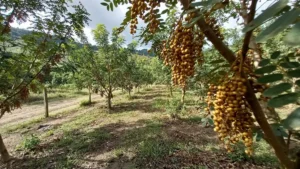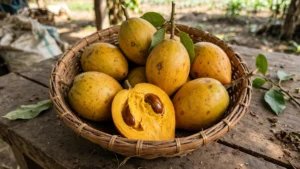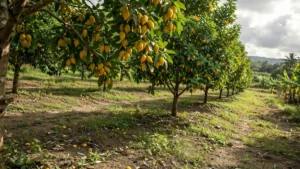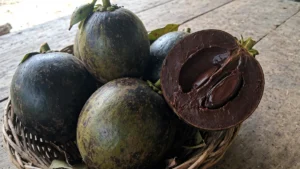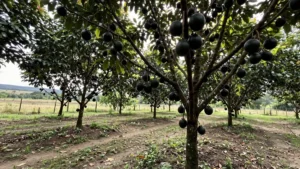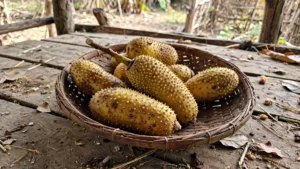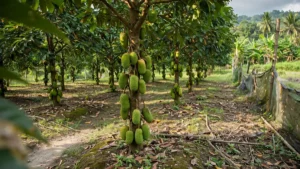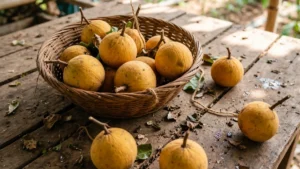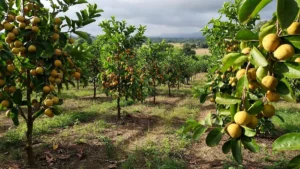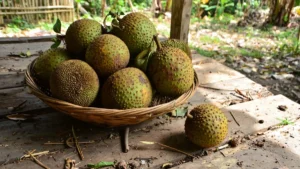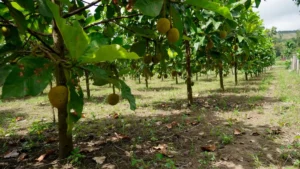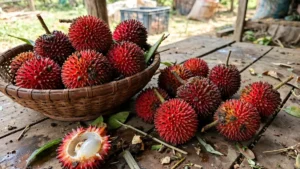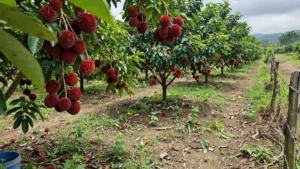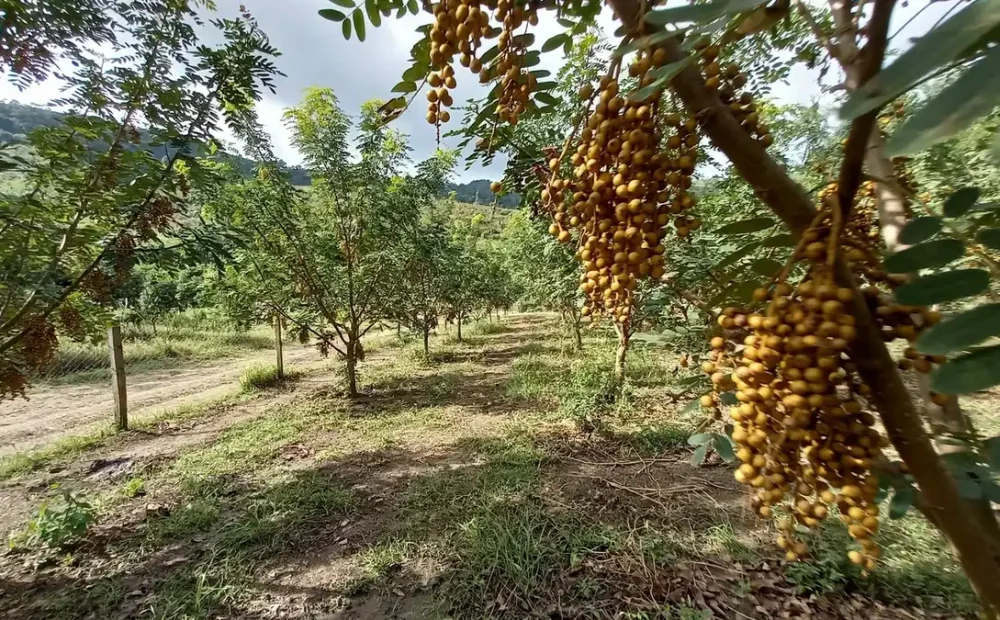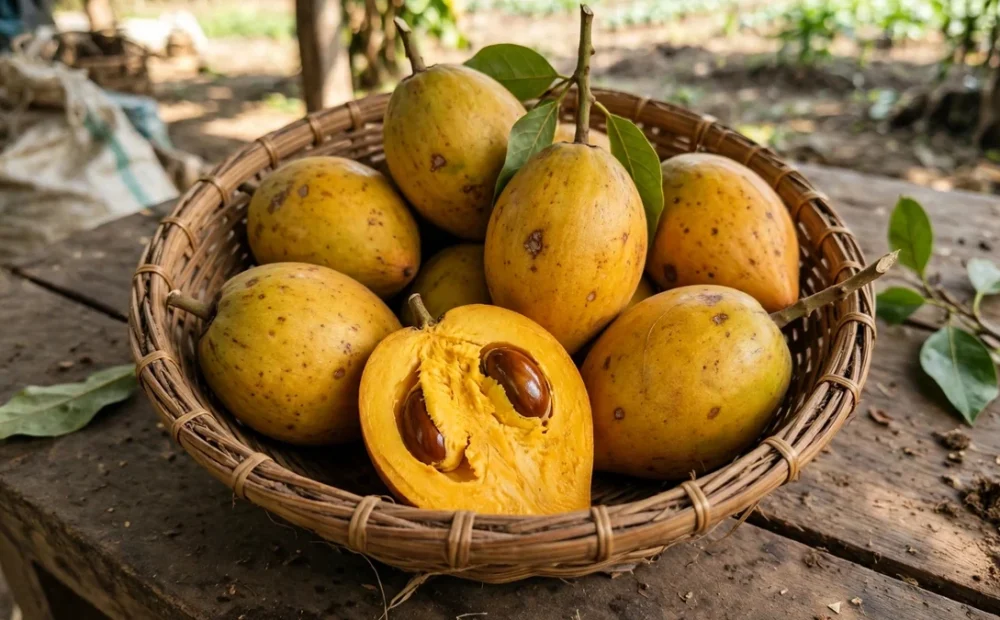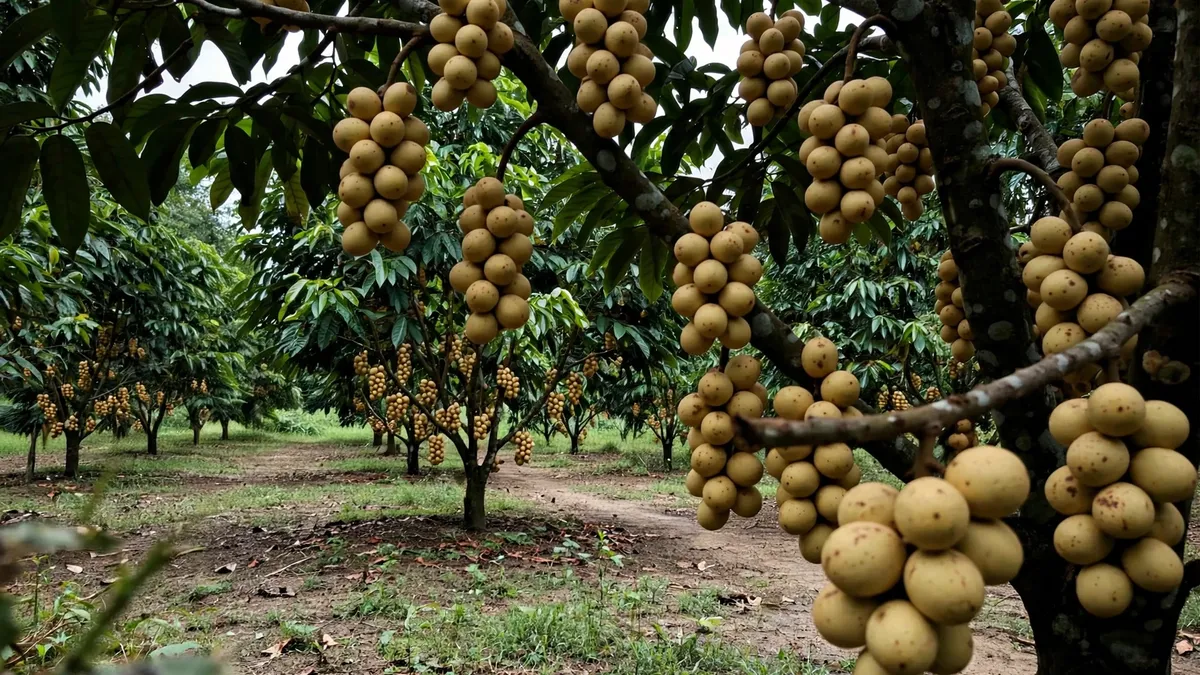
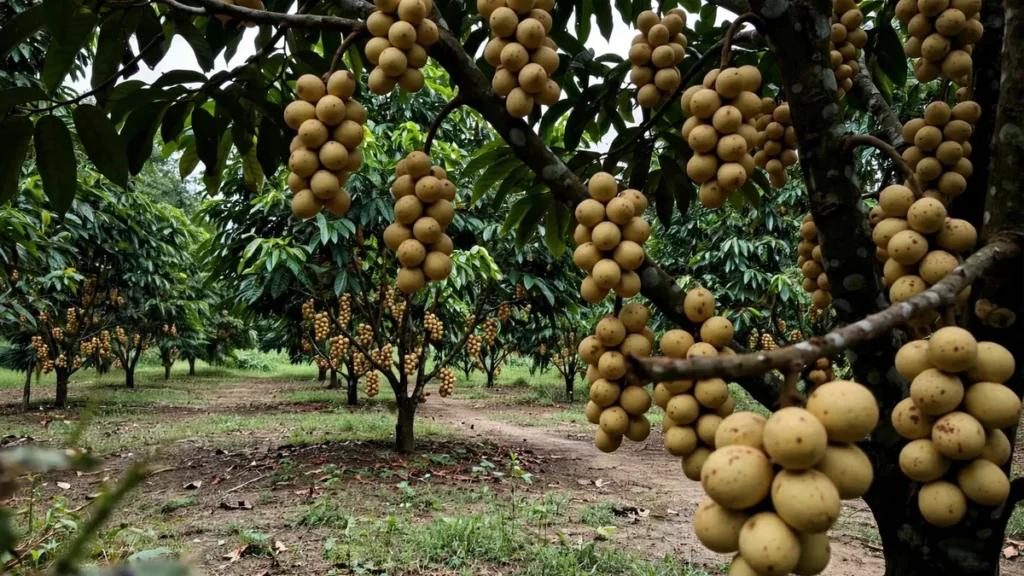
The first sign you are in langsat country is the stall at the roadside: shallow trays of pale yellow orbs, each no bigger than a marble, piled beside a hand-painted sign that says lanzones. This place does not shout luxury — that is precisely why it works.
A stay built on this fruit runs on a calendar no hotel can print. The trees bear in bursts of a few weeks, the finest clusters fall in the middle of the burst, and a farm that looked generous on Monday can stand bare by the following Sunday. Book around the bearing, and the trip cooks itself: dawn walks, baskets at breakfast, jam on the stove by afternoon.
Nine stays made this list, from a $65-a-night orchard cottage outside Los Baños to a $380-a-night rainforest farm above Kota Kinabalu. Each one grows its own crop, walks guests through the grove, and is honest about the weeks when nothing fruits.
Key takeaways
- Bearing lasts a few weeks and the calendar moves with the country, so settle the dates before a single flight is paid for.
- Langsat peels in seconds and duku keeps for days; the two ripen weeks apart on the same ground.
- Breakfast and the morning walk usually sit inside the nightly rate, while cooking lessons, further meals, and airport lifts usually sit outside it.
- The fruit is gluten-free; the dawn ovens are not — wheat-free guests should say so in the first message.
- A farm can be open, booked out, and fruitless all at once — ask for bearing dates in writing before money moves.
What a langsat farm retreat actually is
Think of it as lodging inside someone’s livelihood: the bedroom shares a fence with the trees that pay the bills, and the person who hands you the key is usually the person who pruned them. Two or three nights is enough to learn the grove, with the fruit kept centre stage throughout. The day opens before the heat, walking the rows with a basket passed from hand to hand.
The rooms themselves are plain on purpose. A bed, a fan, a window over the trees, and a bathroom that works — the money went into the orchard, not the plasterwork. Dinner is whatever the trees gave that day, served at a shared table where the host will tell you which row your pudding came from. Travellers who want their food to arrive from the field they stand in will be happy here; travellers who want a menu, a timetable, and a turndown service should look elsewhere. The luxury longan farm retreats roundup puts the same three tests — own trees, a walk in the rate, honest bare weeks — to nine stays built on longan instead.
First-timers settle quickly: the orchards are small, the hosts welcome strangers, and one bite explains the fruit. What the trip will not give you is nightlife, brisk service, or a schedule packed hour by hour — the grove sets the pace, and the grove does not hurry.
How we picked these stays, and what to ask first
Three things sorted the list: trees the farm planted and tends, a walk or tasting folded into the stay, and a host who names the bare weeks unprompted. Any stay failing even one of those three tests stayed off the list, whatever its photographs promised.

Before you book, settle three questions: breakfast in the rate or not, garden shared or private, and a host whose language you can follow. Each of those three pleasures can carry its own price: the walk, the tasting, and the lesson are billed apart more often than together. Lychee plays the same game in a louder colour; the luxury lychee farm retreats piece lists nine stays where the same three tests were applied.
Then the fruit itself: the bearing weeks, whether guests cut clusters on the walk, and what the kitchen cooks once the flush ends. Mangosteen is the quiet rival — purple rind, white flesh — and our luxury mangosteen farm retreats roundup covers nine stays for travellers who want the same orchard calm with a different fruit on the plate.
The 9 best luxury langsat farm retreats of 2027
Laguna, Philippines — Old Groves below the Volcano
What we like: Outside Los Baños, an hour from Manila, a grove the host’s grandfather planted, where the trees lean over a shaded garden and the morning walk ends at a table of clusters, rice cakes, and strong coffee.
Style: A low timber house under mango shade, veranda facing the langsat rows and the volcano beyond.
Best for: Travellers who want the Philippine harvest at its most old-fashioned, with a host who remembers each tree’s planting year.
Price range: $65–$95 nightly; room, breakfast and a dawn walk inside that figure, jam at the gate for a few dollars a jar.
Standout feature: Saturday in the garden — jam, syrup and fresh clusters, all three side by side.
What to consider: An hour through cane fields on the Los Baños road, and rooms vanish fast once the flush opens.
Davao, Philippines — Langsat beneath the Volcano
What we like: Beneath Mount Apo, a wide orchard in volcanic soil, fruit heavy and honeyed, the host’s wife turning the morning’s cutting into sauce before lunch.
Style: A cool concrete house shaded by the grove, wide veranda, kitchen smelling of fruit on the simmer.
Best for: Travellers after langsat at its richest, happy to drive a long way from Davao City.
Price range: $95–$125 nightly; dinner added for a modest sum, the farm breakfast and the grove walk ride inside.
Standout feature: Sauce from the morning’s cutting, ladled into jars with the recipe written out by hand.
What to consider: Book early — rooms vanish once the fruiting months open, the valley climb is steep, and afternoons are hot.
Camiguin, Philippines — Langsat on a Small Island
What we like: A volcanic island an hour by ferry from Mindanao, a small orchard beside lanzones stalls, the kitchen folding fruit into desserts for breakfast.
Style: A whitewashed island house among fruit trees, garden at the back, veranda built for slow evenings.
Best for: Anyone pairing fruit with an island break, who likes a ferry ride and a quiet road.
Price range: $125–$160 nightly; island walk included, breakfast and dinner covered, ferry times on the kitchen wall.
Standout feature: Langsat desserts at breakfast — puddings, syrups, fresh clusters — from the host’s mother’s recipes.
What to consider: Rough weather stops the ferries, midday sun softens the fruit, and picking happens at dawn.
Hat Yai, Thailand — Langsat Groves near the Border Hills
What we like: Southern hills near the Malaysian border, langsat in rich soil under the canopy, pale and slow to ripen, the surplus dried for winter.
Style: A house on the hillside, stall at the gate, herb garden under the veranda, bedrooms above the valley.
Best for: Anyone after fruit and southern heat, who enjoys a border town and a night market.
Price range: $160–$195 nightly; dinner covered and the morning walk included, a market run with the cook costs a little more.
Standout feature: Langsat dried on the farm, sold in paper bags at the gate stall.
What to consider: Early heat, a city an hour off by road, and afternoon rain off the border hills — pack a light jacket.
Penang, Malaysia — Langsat between Orchard and Coast
What we like: An island farm where langsat grows beside durian trees, puddings made each afternoon, George Town’s hawker stalls twenty minutes down the hill.
Style: A polished cottage, white walls and dark timber, garden at the back, breakfast arriving with the fruit still cool.
Best for: Anyone wanting weeks of fruit in green hills, the city minutes away.
Price range: $195–$230 nightly; every meal and the tasting ride inside, George Town a short taxi ride away.
Standout feature: Puddings in the afternoon, cooked from the morning’s cutting and brought to the table warm.
What to consider: A narrow island road, few rooms, and durian season overlapping the flush — the garden smell is not for everyone.
Johor, Malaysia — Southern Langsat Groves
What we like: An hour across the causeway from Singapore, the farm’s long rows ripen early under a wide southern sky, fruit gathered into baskets for the gate stall.
Style: A farmhouse ringed by orchard trees, wide garden, shaded veranda, rooms facing the rows.
Best for: Short-hop fruit hunting from Singapore.
Price range: $230–$265 nightly; breakfast, dinner and the grove walk ride inside, stall open before the heat.
Standout feature: Warm-bottled syrups from the farm kitchen, sold at the stall.
What to consider: The dearest of the nine, the city a drive away — for travellers content to stay put.
Sumatra, Indonesia — Langsat above the Lake
What we like: Western highlands above Lake Toba, langsat on steep ground, the flush running while lowland orchards rest, Batak kitchen serving rice cakes from a neighbouring village.
Style: A hillside house of timber and tin, with a stall by the gate.
Best for: Anyone after warm hill air and fruit, who likes a long drive and a vast lake.
Price range: $265–$300 nightly — the lot: meals, tastings, lake walk, and Medan a day’s drive off.
Standout feature: Rice cakes from the next village at breakfast, poured over with langsat syrup.
What to consider: Hard rain in the fruiting months, a wet week splitting skins before picking, and a long road from Medan — arrive by daylight.
Sabah, Borneo — Langsat in the Rainforest Hills
What we like: Hornbills cross the valley at dusk, over a farm where langsat grows in cool, damp air beneath the canopy, and baskets of fruit wait at the gate stall.
Style: An old island house among fruit trees, rebuilt in timber and glass, veranda looking into the canopy.
Best for: Anyone after a long flush in green hills who wants rainforest at the window.
Price range: $300–$340 a night; full board in the rate, rainforest walk included, farm car meeting guests at Kota Kinabalu airport.
Standout feature: Guests pick at dawn, baskets in hand, the host naming each tree as you pass.
What to consider: Afternoon wind off the lake, a city a drive off, leeches on wet paths — closed shoes, always.
Cairns, Queensland — Langsat on a Small Tropical Farm
What we like: Hills behind Cairns, langsat in neat rows behind an old shed, a polished cottage with a garden view, the host running picking mornings for guests who want to work.
Style: A concrete house in grove shade, white walls and a tin roof, garden at the back.
Best for: Anyone chasing langsat at its Australian best, who likes a small farm a short drive from Cairns.
Price range: $345–$380 a night; the lot in the rate — meals, tastings, walks, airport lift — nothing extra at checkout.
Standout feature: Weekly tastings in the garden: the fruit fresh, as jam, and as syrup, three ways in one sitting.
What to consider: A long winding road from Cairns, rooms that go quickly in the picking months, and wet-season storms that argue for a morning drive.
Which langsat region fits your trip
Laguna is where first-timers usually land: Los Baños sits an hour from Manila, strangers are welcomed without fuss, and langsat has been folded into desserts there for a generation.
Sabah is the wildest of the nine, its farm set in rainforest hills where hornbills and mist own the mornings. Penang and Johor put the same fruit within a short flight of Singapore and Kuala Lumpur, and the island pace is gentler than the mainland. Weigh the travel against the fruit: the best langsat is the one you actually reach while it bears.
The calendar slides south as the year wears on: the Philippines picks from late summer into autumn, with Laguna ahead of Davao, Thailand and Malaysia follow as the rains deepen, and Queensland takes its turn while the northern orchards stand empty.
The caveats that matter
Some travellers will love a langsat retreat; others will wish they had booked a hotel, and the split usually comes down to season, distance, and honesty about both.
| Detail | What is known |
|---|---|
| Best time to visit | The late wet season, while the trees are bearing; the window shifts by country |
| The two main kinds | Thin-skinned langsat peels in a moment and is eaten fresh; thick-skinned duku keeps longer and travels better |
| How ripe fruit looks | Pale yellow all over, soft to the touch, and easy to peel, with clear flesh and no green on the skin |
| What is usually included | Room and breakfast with a grove walk or tasting; cooking lessons and transfers often cost extra |
| Who should go | Slow travellers, food lovers, and families with older children |
| Who should think twice | Travellers chasing nightlife, fast service, or a packed daily schedule |
| Transfers | Usually an hour or more from the nearest airport; arrange the lift before you arrive |
| What is not guaranteed | Fruit on your dates; harvests lean on rain, season, and the tree itself |
The fruit itself is free of gluten, which is the easy half of the story; the harder half is the oven, fired before sunrise for bread and buns, and the flour that settles on every surface by breakfast. Before paying, weigh the practical side — clinic distance, last spray date, path safety for little feet — especially with a health condition, a pregnancy, or small children along.
Checklist: booking a langsat farm stay honestly
- Ask for the bearing calendar in writing before you pay a cent — an open gate tells you nothing about what hangs on the branches, and a farm can be booked out and fruitless at once.
- Put the rate in writing: walks, tastings, meals and lifts — which are covered, which cost extra.
- Count the airport drive in minutes, not miles, and settle the farm car before you land.
- Find out whether the bedroom faces the trees or the tarmac, and how the room stays cool at night.
- Ask how many trees the farm keeps, what it sprays with, and the date of the last treatment.
- Read guest notes from the same month you plan to travel, because a January rave says little about an August flush.
Frequently asked questions
Which part of the year brings the langsat harvest?
It moves with the country. In the Philippines the picking runs late summer into autumn, Laguna first, then Davao. Late in the rains, Thailand and Malaysia gather; Queensland picks while the northern orchards stand empty.
What does langsat taste like, fresh from the tree?
Sweet at first, sharp after — grapefruit’s edge in a clear, soft flesh. Pale yellow and scented means ripe; green, hard, and sour means wait.
May visitors cut their own clusters?
Ask it in your first message, not at the farm gate. Flag it when you book, and keep your arms covered — the branches catch bare skin.
Where is the best place to start with langsat?
Laguna is the easy opening: a short drive, a long season, and farms long used to strangers. Strangers are welcomed, the harvest runs for weeks, and langsat reaches the table at every meal.
How does a wheat-free guest eat safely here?
Raise it when you book. Neither the fruit nor the rice carries gluten; only the morning baking brings any risk. The ovens are the real risk, not the fruit: get the farm to explain its flour routine, and hand over money only when the answer sounds genuine.
Who needs to go easy on langsat?
The peel carries a bitter sap that can unsettle a sensitive stomach, so peel fully, rinse, and keep portions modest on day one. Anyone with a fruit allergy should warn the farm ahead of time and ask what the kitchen can serve instead.
The bottom line
Book this trip if you would rather eat beneath the tree than admire it from a balcony, and if a holiday that bends around a harvest sounds like a pleasure rather than a risk.
Laguna’s old groves, Sabah’s rainforest hills, Camiguin’s island orchards — pick by taste, and seal the jam, never the clusters, for the journey home.