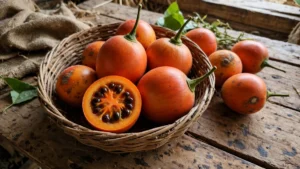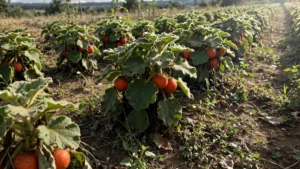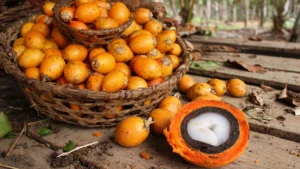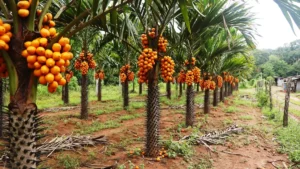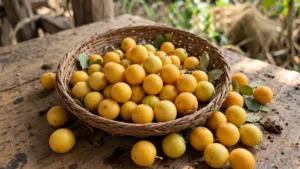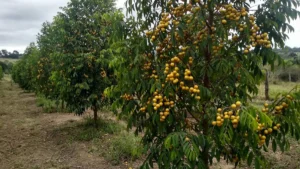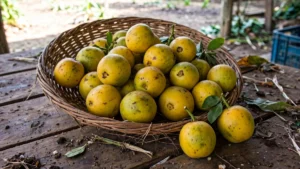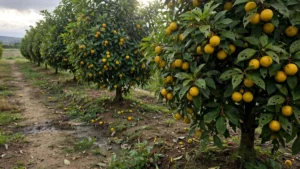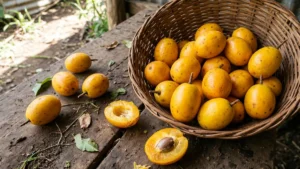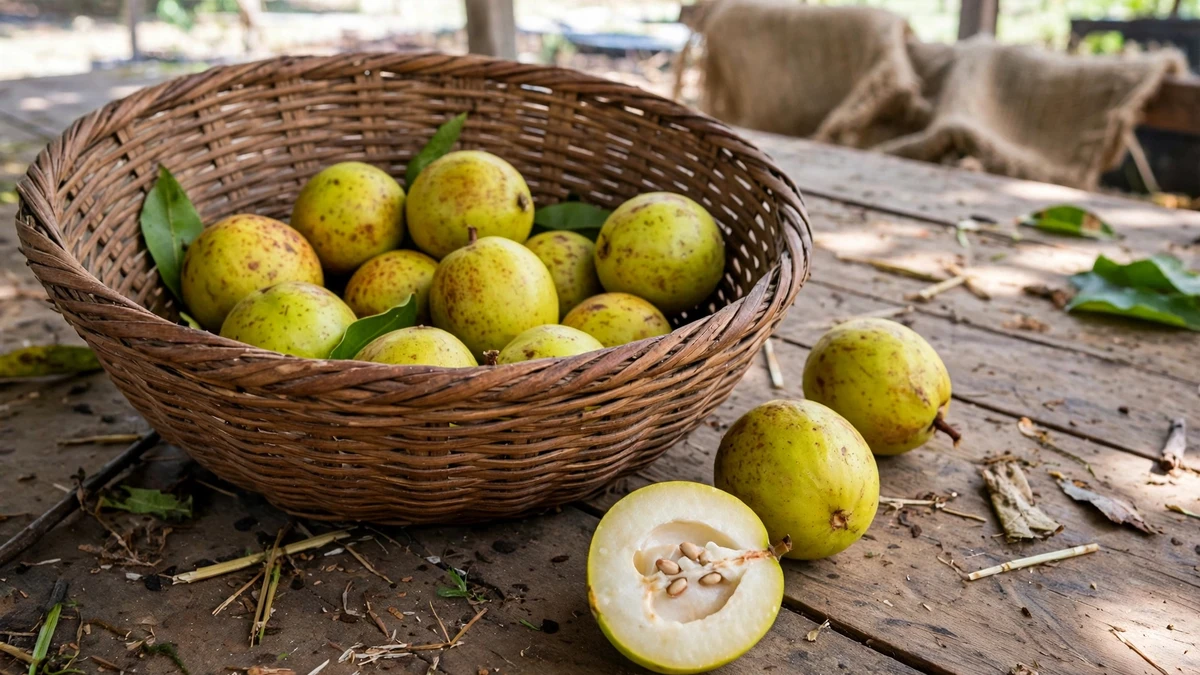

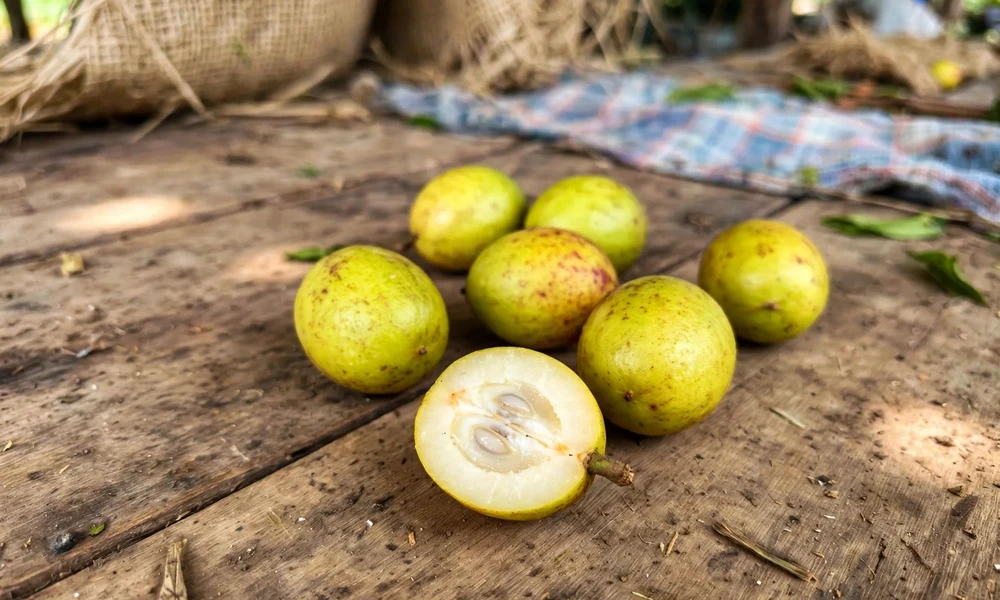
Mangaba is Brazil’s own fruit, and most of the world has never tasted it. It grows small and yellow-green on the twisted trees of the cerrado, and under the thin skin the flesh is soft and pale, sweet in the way honey is sweet, with a sharp edge that wakes the mouth. People in Goiás scoop it out with a spoon, press it into juice, and churn the pulp into ice cream that turns up in cafés from Brasília to Salvador.
A mangaba farm escape is a slow holiday built on one tree. The days run from an early walk among the rows to a tasting at noon and ice cream after dinner, with the kitchen folding the pale flesh into juices and sorbets in between. The rooms are plain, the host is out at sunrise, and the season sets the pace, while the deep shade under the trees keeps the hottest hours easy.
What follows are nine steps, from fixing your dates to bringing the pulp home. Take them in order and each one makes the next easier: the dates choose the region, the region chooses the farm, and the farm takes care of the rest.
Key takeaways
- Mangaba, Hancornia speciosa, turns pale gold when ripe and gives a little under the thumb, with soft flesh that tastes sweet and sharp at once.
- The harvest falls in the rainy season, roughly November to April, so the calendar matters more than the map.
- Ask about the room, the meals, and the lifts each on their own. Each one can carry its own charge.
- Mangaba is not guava: Hancornia speciosa is a cerrado fruit with milky sap in its unripe skin, while Psidium guajava is a rounder, muskier fruit grown across the tropics.
- Tell the farm about wheat in your first message. The morning table is built around bread and cakes, and flour drifts through a small kitchen.
What a mangaba farm escape involves
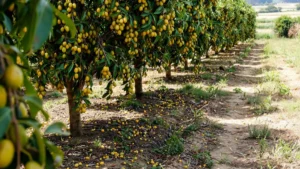
A mangaba farm escape is a holiday spent in the shade of a working orchard. The trees are low and wide-branched, the fruit ripens a few at a time through the wet months, and the farm gathers what fell overnight. Hands do the gathering, and the farm kitchen uses most of what comes in.
The days move at the fruit’s own slow pace. Dawn means a walk between the rows, midday means a tasting of fruit gathered that morning, and the evening ends with ice cream or sorbet. Bedrooms stay plain, the host works the trees, and the trees’ own calendar, rather than any printed timetable, decides the hours. Visitors who expect a packed programme usually let it go by day two, once the orchard’s rhythm takes hold.
Find out what the nightly price includes before you pay. Some farms put the orchard first: simple rooms, a host gathering at dawn. Others are comfortable guesthouses among the trees, with more comfort and less farm work on show. Either can make a fine holiday, but they are different holidays, and the nightly rate usually tells you which one you are buying. Our guide to planning a guava farm escape argues the same point from another fruit: check what is included before the photographs choose for you.
How to plan it, and what to check first
Put the fruit ahead of the room. A strong mangaba escape grows its own crop, folds a walk or a tasting into the stay, and is frank about the months when nothing is fruiting.
Start with the season. Mangaba ripens across the rainy months, the peak shifting with region and rain. The warm north gathers first; the high plateaus come later and end sooner, while the coast carries on after the inland orchards rest.
Then work out what the rate includes. At some stays the walk, the tasting, and the cooking session are charged one by one. Before booking, ask about breakfast times, the shared garden, and the languages the farm speaks. Farms that lay out every charge in plain words are usually run with care. If passion fruit tempts you, the guide to planning a passion fruit farm escape we covered earlier runs on the same small-stay idea.
The 9 steps to plan a mangaba farm escape
1. Book around the weeks the fruit falls
What to do: Message the farm and ask which weeks the trees will be dropping fruit, then plan your flights around the reply. Rain moves the harvest, so a date the farm confirms is worth more than a guidebook window.
What to avoid: Do not book flights first and hope the trees cooperate. A farm without ripe fruit is still a pleasant place, but it is not the trip you came for. Best for: Travellers chasing the fruit at its best. Time needed: A single afternoon of messages before paying anything. Standout tip: Ask for the gathering dates in writing, not a rough season.
2. Pick interior cerrado or Atlantic coast
What to do: Choose Pirenópolis or the Veadeiros for dry plateau fruit, Chapada Diamantina for mountain air, or the Sergipe coast for sea breezes. Every region ripens on its own calendar, so the place you pick fixes your dates. Ask the farm how long its season lasts, because a region with a short window punishes a late booking. The north gathers first in most years, while the high plateaus stretch the season furthest.
What to avoid: Do not pick a region for the flight price alone. A cheap flight to a farm out of season leaves you with bare branches. Best for: Travellers who know whether they want heat or a breeze. Time needed: One evening spent comparing regions and seasons. Standout tip: Let the month choose the region, not the other way round.
3. Check whether visitors may gather fallen fruit
What to do: Find out whether guests may gather, whether a guide walks with you, and how many fruits you may take. Some farms hand you a basket; others leave the gathering to the crew, since the fruit bruises fast.
What to avoid: Do not plan to gather all day. The branches snap easily and the fruit is soft, so gathering is usually a short morning walk rather than a full day’s work. Best for: Guests who want to hold the fruit in their own hands. Time needed: Ten minutes, part of your first message. Standout tip: Ask who carries the basket while you gather.
4. Ask for a room with the orchard outside
What to do: Ask whether the window faces the rows or the garden, and whether there is shade, a fan, or cooling. Orchard-side rooms wake you to birdsong; roadside rooms wake you to traffic.
What to avoid: Do not take whatever room is left and spend your mornings facing a plain brick wall. The cheapest room is usually the one nobody wanted, and you will spend your mornings in it. Best for: Travellers who want their mornings quiet. Time needed: A single message sent before the deposit. Standout tip: Ask for the view you want, not the price you want.
5. Flag the wheat problem when you first write
What to do: Put the allergy note in your first message, and ask what the farm does to keep flour away from your plate. The oven runs every morning, so the kitchen needs time to plan around you.
What to avoid: Do not leave it until you sit down to eat. By then the bread is baked, the flour has settled everywhere, and the cook has little left to offer. Best for: Anyone who eats gluten-free. Time needed: Five minutes, part of the booking message. Standout tip: Write the wheat warning down; a phone call is easy to forget.
6. Try the fruit in three forms before you leave
What to do: Eat it halved and fresh at noon, pressed into juice the next morning, and churned into ice cream by the end of the week. The same fruit tastes different in each form, and the juice is where most guests change their minds about it. Ask the cook to hold the sugar in one glass, so you taste the fruit itself first.
What to avoid: Do not judge mangaba on one hard, unripe fruit. An unripe mangaba is full of milky sap and tells you nothing about the ripe one. Best for: Travellers who taste with care and take their time. Time needed: Three tastings spread across the stay. Standout tip: Try the juice before deciding you dislike the fruit.
7. Know the milky sap before you gather anything
What to do: Ask the host how to tell ripe from unripe before you gather anything. Ripe mangaba is pale gold and soft; unripe fruit is green, firm, and weeps a milky sap that must never be eaten. Gather only what has fallen, or what the host hands you.
What to avoid: Do not pull fruit from the branch. What you pick green will not ripen sweet, and the sap sticks to your hands and your clothes. Best for: Guests who want to gather safely. Time needed: Ten minutes with the host, on your first morning. Standout tip: If it has not fallen, leave it on the tree.
8. Walk the red-earth trails with a guide
What to do: Spend a morning on the farm trails with the host. The paths run red between the trees, the termite mounds stand taller than you, and the guide will point out which trees carry the sweetest fruit.
What to avoid: Do not wander the cerrado alone in the heat. The paths branch and fade, the sun is strong by ten, and a guide knows where the shade and the water are. Best for: Walkers and slow travellers. Time needed: One morning, two hours. Standout tip: Bring a hat and a bottle of water.
9. Stock up on pulp and jam before you leave
What to do: Spend your last morning at the farm shop. The frozen pulp travels home sealed, the jam keeps for weeks, and both carry the flavour better than fresh fruit ever will.
What to avoid: Do not carry fresh fruit home in your bags. It bruises on the journey, softens in the heat, and comes home as pulp. Best for: Guests who want the flavour to last beyond the trip. Time needed: Half an hour, spent in the farm shop. Standout tip: Take the tub home, not the fruit.
Picking the right season and region
Pirenópolis and Serra do Cipó grow the most traditional fruit, on working orchards where the crop lands on the table daily. Chapada Diamantina gives you the wildest setting, with a farm on terraces above the river. Brasília brings the longest season, with fierce sun and a heavy crop. The Veadeiros suits a short trip from the capital, since the drive is brief and the farms welcome weekend guests.
Start in Pirenópolis if you are new to this: the farm knows its guests, and the kitchen cooks with the fruit daily. Our guide to the jackfruit farm escape lands on the same advice: choose the farm that cooks with its crop daily, and the rest of the trip mostly sorts itself out.
The caveats that matter
Mangaba farm escapes are lovely, but they suit some travellers better than others. The harvest sets the dates, the farms sit a long way from town, and the honest ones tell you plainly what is ripening and what is not.
| Detail | What is known |
|---|---|
| Best months | Rainy season, roughly November to April, while the trees drop ripe fruit; the window shifts by region |
| Telling ripe from raw | Skin pale gold throughout, a little give under the thumb, sweet scent at the stem, no hard patches |
| Usually in the rate | Bed and breakfast, plus a walk or tasting in the orchard; cooking sessions and lifts are usually billed on top |
| Made for | Unhurried travellers, keen eaters, and families with children old enough to walk the rows |
| Skip it if | You want nightlife, fast service, or a programme that fills every hour |
| The journey | Usually an hour or more from the nearest airport, so arrange the lift before you travel |
| What to pack | Long sleeves for the snapping branches, sturdy shoes for red-earth paths, and repellent for still evenings |
| No guarantees | Ripe fruit on your dates; the harvest answers to weather, season, and the tree’s own timing |
Mangaba holds no gluten by itself, yet bread and cakes leave the farm oven every morning, so ask how the kitchen keeps flour off your plate. The fruit is soft and perishable, so eat it on the day it is gathered and carry frozen pulp home rather than fresh fruit. Unripe fruit carries a milky sap and should never be eaten, so gather only what has fallen. Expecting a child, living with a health condition, or travelling with small children all change what the trip needs, so check how far the nearest clinic is, when the orchard was last sprayed, and how steep the paths are before you book.
Checklist: before you book a mangaba farm escape
Work through these checks before you pay, then again in the week before you travel.
- Ask if the trees will be dropping fruit on your dates, not just whether the farm is open.
- Ask what each part costs: the walk, the tasting, the meals, the lifts.
- Ask how long the airport drive takes, and whether the farm runs a pickup.
- Ask whether the window faces the rows or the garden, and whether shade, a fan, or cooling is provided.
- Ask how the trees are cared for: how many the farm holds, whether it is organic, and when it was last sprayed.
- Look at the reviews: find guests who visited in the same season you plan to travel.
Frequently asked questions
How many nights does a mangaba escape need?
Three nights hits the mark. Day one settles you in, day two brings the gathering walk and tasting, and day three leaves room for the trails and farm shop. One night feels rushed, and a week is worth it only when the harvest is at its peak.
Is a car needed to reach a mangaba farm?
Usually yes, unless the farm arranges a lift. Most mangaba farms sit an hour or more from the closest airport, down roads where buses run rarely. Ask about pickups before you book, and have the price put in writing. Driving yourself? Leave early: the last stretch is often unpaved and slower than the map suggests.
Can children join the fruit walk?
Older children, yes. The walk is gentle, the fruit sits easy to reach, and most hosts enjoy showing a child how the harvest works. Small children are harder to manage: branches snap easily, paths are dusty, and the heat builds fast. Ask the farm what ages it welcomes.
What should I pack for a mangaba farm?
Long sleeves for the snapping branches, sturdy shoes for red-earth paths, and repellent for still evenings. Bring a hat for the midday sun, a light layer for the cool mornings, and a small bag for the farm shop. Leave the smart clothes at home.
How is mangaba different from guava?
They are different species from different places. Mangaba is Hancornia speciosa, a cerrado fruit with soft, sweet-tart flesh that is often pressed into juice, and its unripe skin carries a milky sap. Guava is Psidium guajava, grown across the tropics, with firmer, muskier flesh and seeds through the middle. The two look nothing alike on the plate.
Can I buy mangaba products to take home?
Yes, and the farm shop is the place. The frozen pulp travels home sealed, the jam keeps for weeks, and both hold the flavour better than fresh fruit. Fresh fruit bruises in transit, so buy the tub, not the fruit.
The bottom line
A mangaba farm escape suits anyone who likes food from the tree beside them and is glad to let the harvest run the day. The fruit is sweet, the season is kind, and the best stays gather it, serve it halved, and freeze the rest into pulp without making a fuss of it. The quiet is deliberate, and it is the point: the orchard gives you hours the city never will. You leave with the fruit’s taste in your mouth and the orchard’s shape in your head.
Pick your region by what you want most: the quartz hills of Pirenópolis, the high plateaus of the Veadeiros, or the terraces of Chapada Diamantina — and bring the pulp home frozen, not the fruit itself. A tub of it will outlast any photograph.