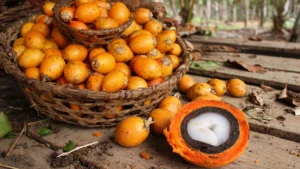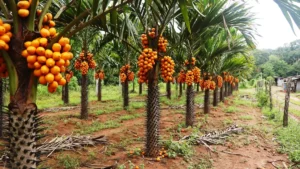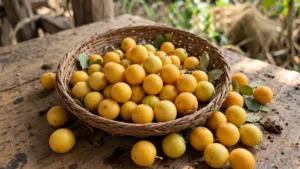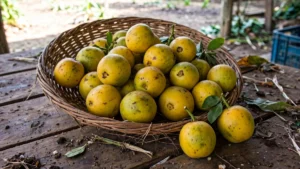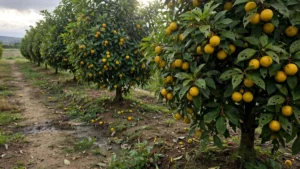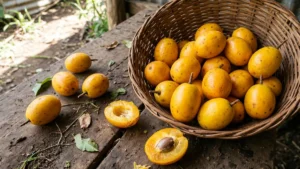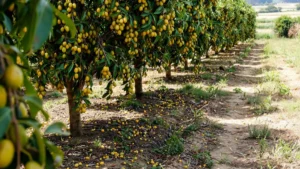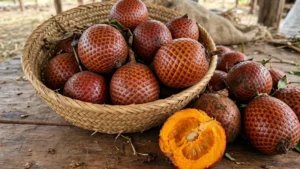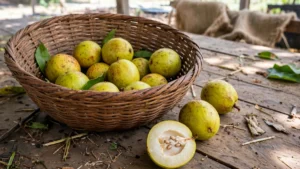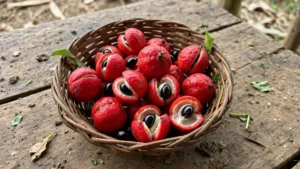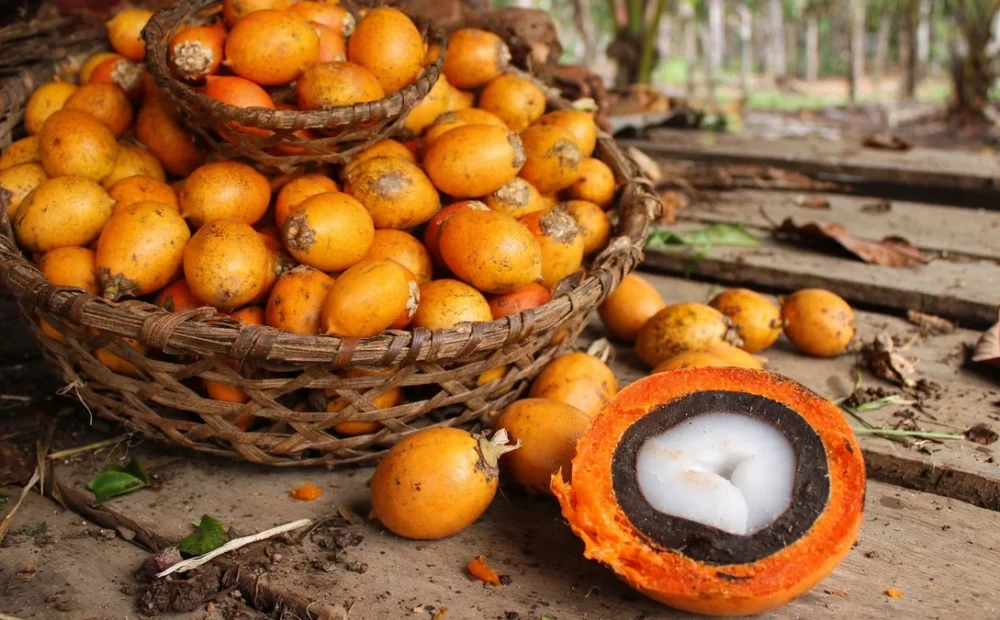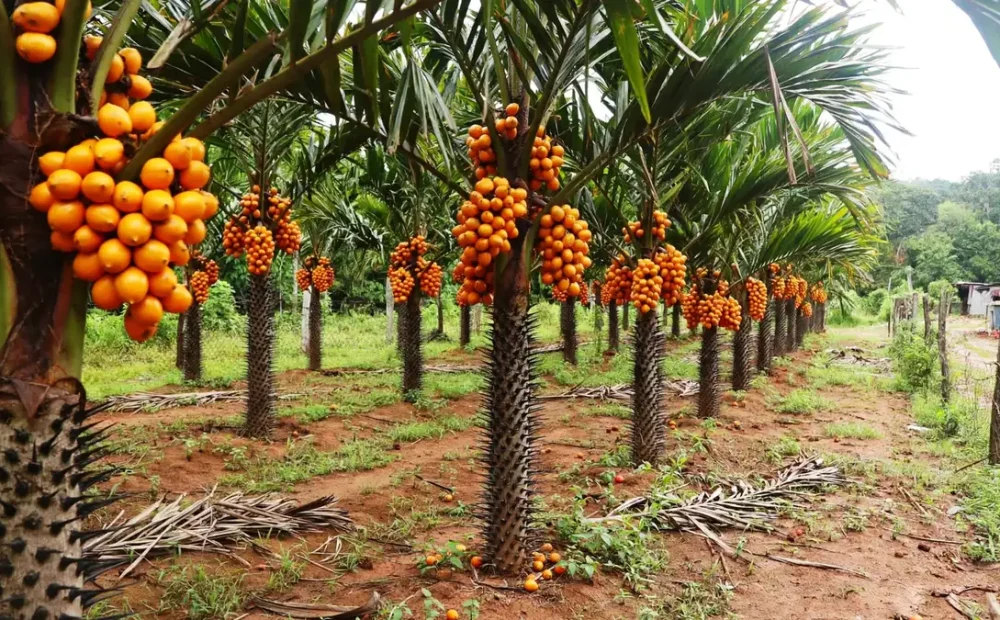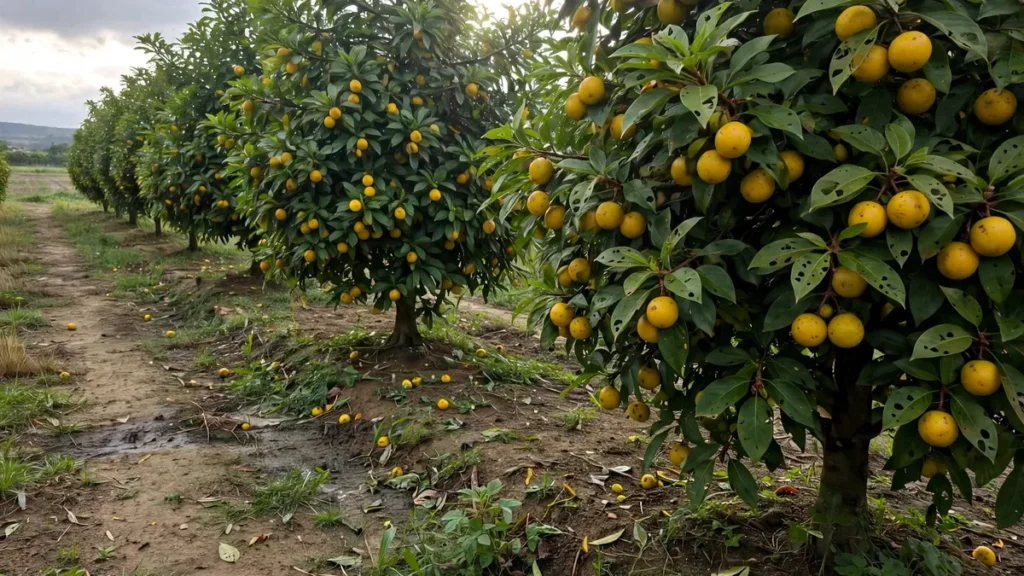
Arazá is the Amazon fruit most travellers have never heard of, and the one they remember longest once they have tasted it. It is small, round, and yellow, and it is so sour that nobody eats it straight from the tree. What it becomes instead is the sharp juice poured over breakfast, the tart sorbet after a river swim, and the ice cream regulars in Iquitos ask for by name. A farm stay built around arazá is therefore not a tasting of a sweet fruit. It is a slow few days in the wet lowlands, walking rows of small trees, watching fruit turn from green to gold, and learning how a sour harvest feeds a whole kitchen.
The retreats in this guide sit close to the rivers where arazá grows best, from the Loreto lowlands of Peru to the Colombian Amazon and the Brazilian floodplain. Some are working farms with a handful of guest rooms and a cook who has made arazá juice for twenty years, while others are quiet lodges where the orchard walk shares the day with a dawn boat ride and a long lunch. All nine were chosen because the fruit is real, the trees are on the property, and the stay is built around the harvest, not a photo of it.
Below are nine luxury arazá farm retreats worth considering in 2027, each described by what it does well, what to watch for, and who it suits best.
Key takeaways
- Arazá is a small, round, yellow Amazon fruit, far too sour to eat fresh, and at its best as juice, sorbet, and ice cream.
- The fruiting season falls in the wet months, roughly December to March, when the orchards, the tastings, and the farm kitchens are at their liveliest.
- Most of these retreats are reached by a short boat ride or a rough road after the nearest river town, so plan the transfer as carefully as the room.
- Book the fruiting weeks first, then the flights: a stay outside the harvest is a different, quieter trip.
- Tell the farm about wheat and gluten in your first message, and ask what the kitchen can cook without it: rural Amazon kitchens run on bread, noodles, and battered fish.
What an arazá farm retreat actually is
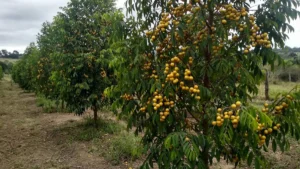
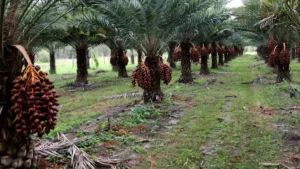
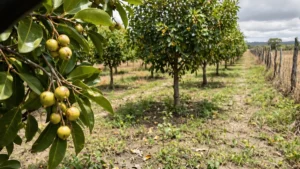
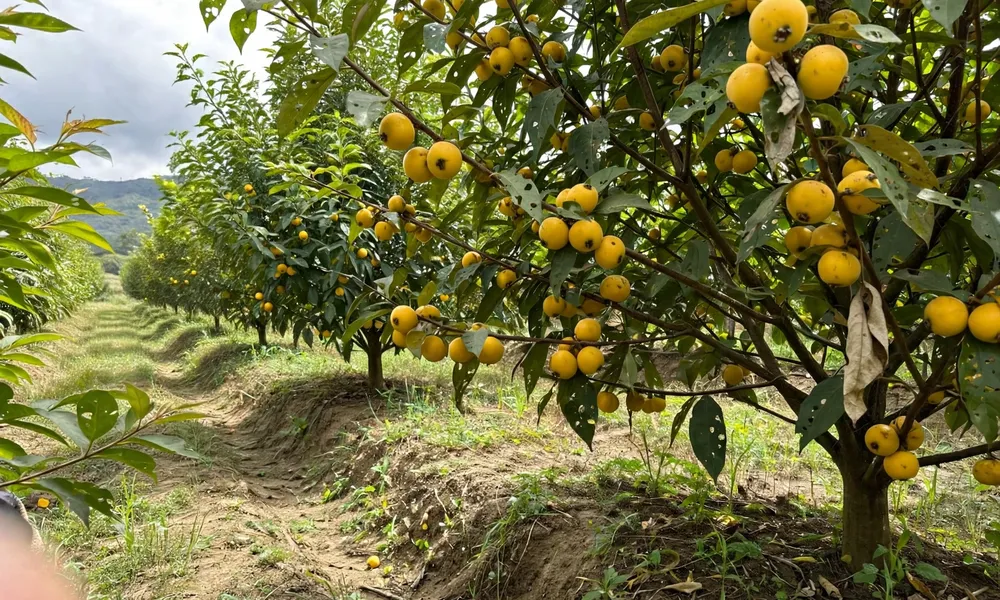
An arazá farm retreat is a working orchard stay in the Amazon lowlands where the fruit is the reason for the trip but not the whole of it. The trees are small, usually three to five metres, growing in neat rows on raised ground near a river, because arazá likes wet feet in the rainy season and dry roots the rest of the year. Guests walk the rows in the morning with a farm worker, pick the yellow fruit fallen overnight, and carry it to a kitchen where it is pressed, strained, and sweetened into juice within the hour.
The day around that walk is unhurried. Breakfast is fruit, eggs, and bread, with arazá juice refilled before you ask. Midday is for the river, a swim or a slow boat ride to a nearby lake, and the afternoon is for the farm: grafting, pruning, or sitting under a tree while the cook prepares sorbet from the morning’s pick.
What separates a real arazá retreat from a lodge that happens to have a tree is the harvest itself: the fruit you taste was picked that morning, the person who shows you the orchard also tends it, and the kitchen can say which trees fruited this week. Before you book, ask when the last pick was, and whether the breakfast juice came from the farm’s own trees.
How these nine retreats were picked
Each retreat here was chosen on three grounds: the arazá grows on the property and is harvested while guests are there, the stay is small enough that the farm team knows its guests, and the rooms suit the heat and the rain, with fans or air conditioning, a proper bed, and a working bathroom. A place that buys its arazá from a market, or that lists the fruit on a menu without an orchard to show, did not make the list.
Price was weighed against what is actually included. A higher nightly rate is fair when the boat transfer, the orchard walks, the meals, and the tastings are all in the price, and poor value when each is charged separately. The ranges below are per night for two people, including breakfast and farm activities, at the rates the farms were quoting for the 2027 fruiting season.
Our guide to camu camu farm retreats follows the same approach, and it is useful if you are weighing one sour Amazon berry against another, since the two fruits share river towns, boat routes, and kitchens.
The 9 best luxury arazá farm retreats of 2027
Iquitos, Loreto, Peru
What we like: The oldest arazá orchard here, trees planted in the 1990s, the region’s best arazá sorbet, and a dawn boat ride to a pink-dolphin lake in the rate. What to consider: The road from the river landing is rough after rain, and the rooms are simple, with fans rather than air conditioning. Best for: Travellers who want the deepest orchard experience. Style: Working farm with six guest rooms. Price range: $215–$285 a night. Standout feature: A sorbet tasting at sunset, made from fruit picked that morning.
Pucallpa, Ucayali, Peru
What we like: A newer orchard on higher ground, so paths stay walkable in heavy rain, plus a riverside deck serving arazá juice with grilled river fish at lunch. What to consider: The farm is a forty-minute boat ride from town, and the last boat leaves at four in the afternoon. Best for: Couples who want a quiet base with good food. Style: Riverside lodge with an orchard. Price range: $190–$260 a night. Standout feature: Arazá juice pressed at the table, from fruit you picked yourself.
Leticia, Amazonas, Colombia
What we like: A three-country setting on the Amazon, arazá trees beside a small lake, a guide who knows birds by call, and an ice-cream workshop in the farm kitchen each afternoon. What to consider: You will need a passport for the boat trips across the border, and the rooms book out early in the fruiting season. Best for: Families and first-time Amazon travellers. Style: Family-run farm and lake lodge. Price range: $240–$315 a night. Standout feature: A hands-on ice-cream workshop using the farm’s own arazá.
Tefé, on the lake shore, Amazonas
What we like: A remote orchard at the edge of a flooded forest, reached by slow boat through black water, its arazá trees fruiting heavily and its kitchen turning surplus into jam. What to consider: The journey takes most of a day, the phone signal is patchy, and the farm runs on generator power in the evening. Best for: Travellers who want to feel properly far away. Style: Remote farm stay with four rooms. Price range: $165–$230 a night. Standout feature: Arazá jam made in the farm kitchen, sold only to guests.
Manaus, on the Rio Negro, Brazil
What we like: The most comfortable rooms here, air conditioning and a pool, an orchard tended daily, and a chef pairing arazá sauce with grilled tambaqui. What to consider: The farm sits outside the city, so the boat and road transfer adds an hour each way, and the price reflects the comfort. Best for: Travellers who want luxury first and the farm second. Style: Comfortable lodge with a working orchard. Price range: $310–$420 a night. Standout feature: Arazá sauce over grilled tambaqui at dinner, made to order.
Belém, at the river market, Pará
What we like: A farm at the edge of the great river market city, its arazá orchard beside cacao and cupuacu trees, and the morning market visit the best food walk here. What to consider: The city heat is heavy, the farm is busier than the others, and the fruiting window here is shorter. Best for: Food lovers who want markets as well as farms. Style: Farm and market stay near the city. Price range: $205–$275 a night. Standout feature: A dawn visit to the Ver-o-Peso market with the farm cook.
Belém is the place to understand arazá as a food, not just a fruit: the market shows how the city buys it, the farm shows how it grows, and the cook connects the two over lunch.
Yurimaguas, Loreto, Peru
What we like: A small orchard run by a cooperative, arazá, camu camu, and guava side by side, and a guesthouse where the farmers’ families cook. What to consider: The rooms are basic, the English is limited, and the road from town is unpaved. Best for: Budget-conscious travellers who want a genuine farm stay. Style: Cooperative farm guesthouse. Price range: $120–$175 a night. Standout feature: Three sour fruits in one orchard walk, with tastings of each.
Nauta, Loreto, Peru
What we like: A riverside farm an hour by boat from Iquitos, arazá trees along the bank, a shaded deck for slow afternoons, and a guide fishing with guests at dawn. What to consider: The boat timetable is fixed, so a late arrival means a night in town, and the rooms have no television or wifi. Best for: Slow travellers and anglers. Style: Riverside farm with a fishing deck. Price range: $175–$240 a night. Standout feature: Dawn fishing followed by arazá juice and fried fish for breakfast.
Requena, Loreto, Peru
What we like: The quietest orchard here, old arazá trees, a small chapel nearby, and an owner who has kept planting records for thirty years. What to consider: Requena is a long way from any airport, the guesthouse has only three rooms, and the farm asks guests to book at least four nights. Best for: Writers, birdwatchers, and long-stay guests. Style: Old family farm with three rooms. Price range: $150–$210 a night. Standout feature: Thirty years of planting records, shown to guests over coffee.
Book Requena if you want time rather than variety. Four nights is the minimum: the first day is the journey, the second is the orchard, and the rest is the slow pleasure of a farm with nothing to prove.
Arazá, plainly explained
Arazá, Eugenia stipitata, is a small tree in the myrtle family, the same family as guava, and it grows wild and farmed across the western Amazon in Peru, Colombia, and Brazil. The fruit is round, roughly the size of a small plum, and it ripens from green to a soft yellow. The flesh is pale, juicy, and intensely sour, with a sharp bite and a scent somewhere between citrus and unripe mango. It is rich in vitamin C, and it is eaten almost entirely as juice, sorbet, ice cream, jam, and sauce, because the raw fruit is too tart for most people.
It is not guava, although first-time visitors often confuse the two. Guava is sweeter, softer, and eaten fresh, while arazá is firmer, sharper, and needs sugar and water to become a drink. The trees differ too: guava spreads wide and open, while arazá stays smaller and denser, with fruit hanging low enough to pick without a ladder. Our roundup of cupuacu farm retreats covers another Amazon fruit also eaten processed rather than fresh, and the two stays pair well, since cupuacu and arazá orchards often grow in the same districts.
The harvest matters more than the variety. Arazá fruits in the wet months, roughly December to March, and a tree in full fruit drops yellow fruit daily, which is why farm kitchens press juice every morning. Outside that window the tastings are thinner and the kitchen leans on frozen pulp, so book inside the season: the fruit you taste should have been on the tree that week, not in a freezer since February.
The caveats that matter
An arazá farm stay is a rural Amazon trip, and it should be planned like one. The heat is heavy, the rain is sudden, the roads are rough, and the boats run on river time. None of that is a reason to stay away, but it is a reason to pack properly, confirm transfers in writing, and leave slack for a boat that arrives an hour late.
| Detail | What is known |
|---|---|
| Scientific name | Eugenia stipitata, a small tree in the myrtle family, related to guava |
| The fruit | Small, round, yellow when ripe, intensely sour, eaten as juice, sorbet, ice cream |
| Best season | The wet months, roughly December to March, when trees drop ripe fruit daily |
| Where it grows | Western Amazon lowlands in Peru, Colombia, and Brazil, near rivers |
| How to eat it | Pressed into juice, churned into sorbet or ice cream, or cooked into jam and sauce |
| What to watch for | Raw fruit is too tart for most people, and unripe fruit is harder and sharper still |
| Getting there | Fly to a river town, then a boat or rough road to the farm, often an hour or more |
| Gluten note | Rural kitchens rely on bread, noodles, and battered fish, so warn the farm about wheat in advance |
The other caveat is the sourness itself. Travellers who expect a sweet fruit are disappointed, and children sometimes refuse the juice on the first taste. Ask for a small glass first, or the sorbet, the gentlest introduction. The soursop farm retreats on our site make a useful contrast, since soursop is creamy and sweet where arazá is sharp, and many travellers find they prefer one clearly over the other.
Checklist: before you book an arazá farm retreat
Use these checks before you pay a deposit, and again a week before travel.
- Check the fruiting window: confirm the farm expects ripe fruit in your travel week, not just trees in leaf.
- Check the transfer: get the boat or road time, the departure point, and the cost in writing.
- Check what the price covers: boat, meals, orchard walks, and tastings should be listed, not assumed.
- Check the kitchen: tell the farm about wheat and gluten in your first message, and ask what it can cook without them.
- Check the room: ask about fans or air conditioning, mosquito nets, and hot water before you arrive.
- Check the return: confirm the boat or car back to town the night before you leave, not on the morning itself.
Frequently asked questions
Can I eat arazá straight off the tree?
You can, but most people do not enjoy it. The ripe fruit is intensely sour, at its best as juice, sorbet, or jam. Try a small piece first, then move to the juice, which is how the farms serve it.
When is the best month to visit an arazá farm?
The wet months, roughly December to March, are when the trees drop ripe fruit daily and the kitchens press juice every morning. Outside that window the orchards are still worth visiting, but the tastings are thinner and the kitchen may use frozen pulp.
How do I reach an arazá farm retreat?
Fly to the nearest river town, such as Iquitos, Pucallpa, Leticia, or Manaus, then take a boat or a car to the farm. Most transfers take forty minutes to three hours, and the farm should confirm the time, the meeting point, and the price in writing.
Is arazá the same as guava?
No. Arazá and guava are in the same family but are different species. Guava is sweeter and eaten fresh, while arazá is smaller, sharper, and almost always eaten as juice, sorbet, or ice cream, and its trees stay lower and denser.
What should I pack for an arazá farm stay?
Light, quick-drying clothes, a rain jacket, closed shoes that can handle mud, insect repellent, sunscreen, and a small bag for fruit and jam. Leave the smart luggage at home.
Can the farm kitchen cook without wheat or gluten?
Usually yes, if you warn them in advance. Rural Amazon kitchens rely on bread, noodles, and battered fish, so a first-message note about wheat lets the cook plan rice, plantain, grilled fish, and fruit desserts for you.
The bottom line
The best arazá farm retreat in 2027 is the one where the fruit was picked that morning, the kitchen knows what to do with it, and the transfer was confirmed before you left home. Iquitos has the deepest orchard, Leticia the best family setting, and Manaus the most comfortable rooms, but any of the nine will show you a fruit most of the world has never tasted, where it grows.
Book inside the wet-season fruiting window, tell the farm about wheat in your first message, and leave a morning free for the orchard walk. That is the whole plan: the fruit, the river, and a kitchen that turns something very sour into something worth travelling for.