Planning an arazá farm escape is simpler than it looks, once you know the order to do things in. The fruit sets the calendar, the river sets the route, and the kitchen sets the meals, so book the fruiting weeks first, sort the boat second, and leave the packing until last. Get those three right and the rest of the trip mostly looks after itself.
This guide walks through the whole plan in nine steps, from choosing your dates to getting back to town, with the practical details farm stays rarely put on their websites: how the boats run, what the kitchens can and cannot cook, and how much cash to carry when the nearest cash machine is a river away. It is written for first-time Amazon travellers as much as for people who have done a farm stay before, because arazá country has its own habits, and they are worth knowing in advance.
Follow the steps in order, keep the farm’s messages in one place, and give yourself a spare half-day at each end. The Amazon rewards travellers who arrive unhurried, and an arazá farm is the wrong place to rush.
Key takeaways
- Book the fruiting window first, roughly December to March, because the harvest decides whether the trip is a tasting or just a walk among trees.
- Pick a river town you can reach easily, then let the farm arrange the boat or road transfer, and get the time and price in writing.
- Warn the kitchen about wheat and gluten in your first message, because rural Amazon cooking leans on bread, noodles, and battered fish.
- Pack light and pack for rain and mud, with closed shoes, a rain jacket, and repellent, and leave the smart luggage behind.
- Confirm the return boat the night before you leave, because river timetables shift with the weather and a missed boat can cost you a flight.
What an arazá farm escape involves
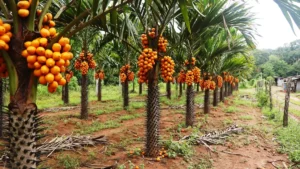
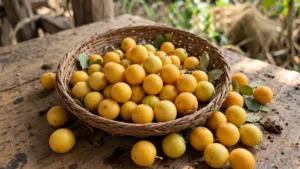
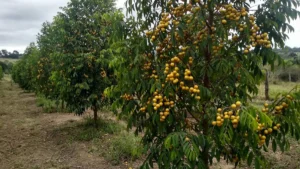
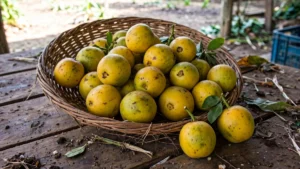
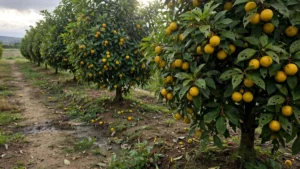
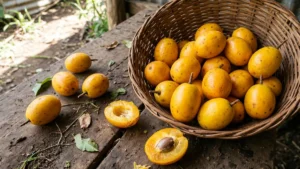
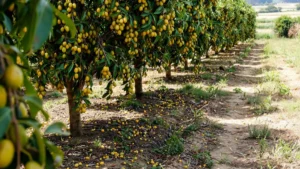
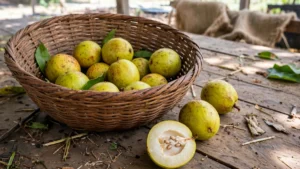
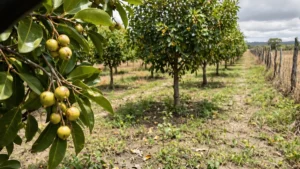
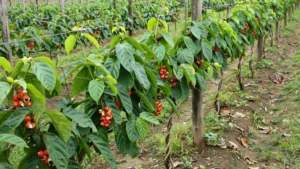
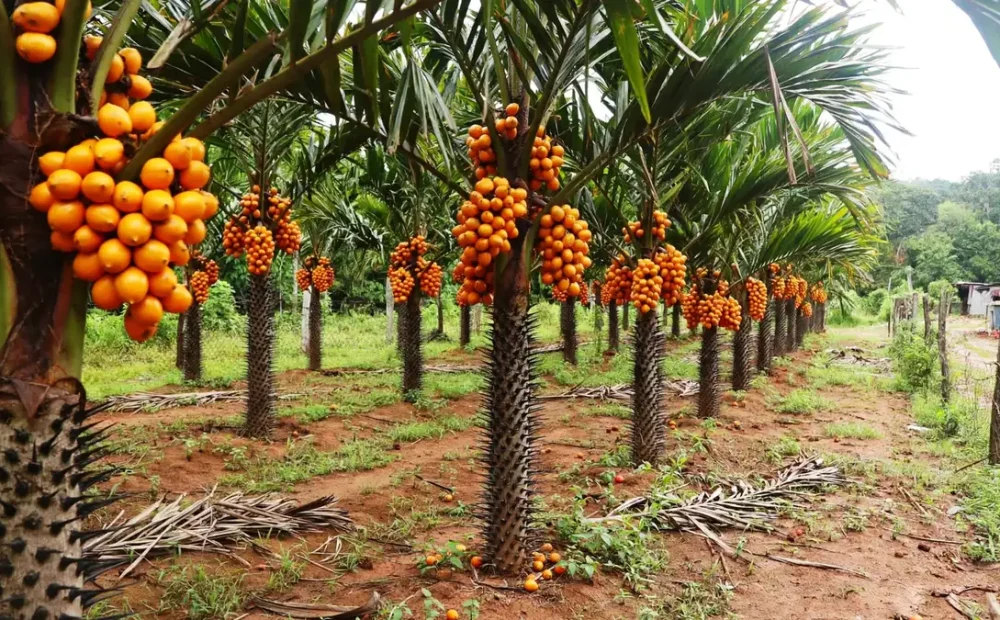
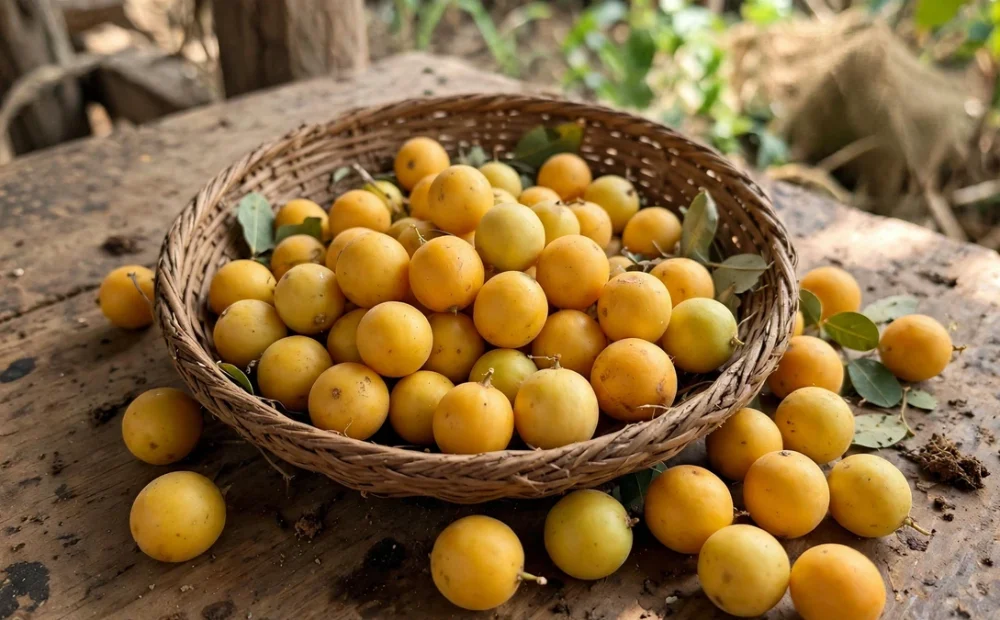
An arazá farm escape is a few slow days on a working orchard in the Amazon lowlands, built around a small yellow fruit that is too sour to eat fresh and wonderful as juice. You stay in a guest room on the farm, walk the orchard rows in the morning, watch the fruit being pressed, and eat meals cooked from what the farm grows and the river gives. The days are shaped by the heat and the rain: early starts, a long midday rest, and evenings on a deck with the forest loud around you.
The farm itself is usually small, with a handful of rooms, a kitchen, and an orchard of arazá beside other crops such as cacao, cupuacu, or plantain. The people who show you the trees are the people who tend them, and the cook is often a family member who has made arazá juice for years. That closeness is the point of the trip, and it is why a farm stay feels different from a lodge: you are a guest in a working place, not a customer in a resort that happens to have trees.
Expect the basics to be comfortable but not polished: a good bed, generous food, a possibly cold shower, and maybe no wifi. None of that is a problem if you arrive expecting a farm, and all of it is a problem if you arrive expecting a hotel. Read the farm’s description carefully, ask what is included, and choose a stay whose level of comfort matches your own.
How to plan the trip, at a glance
The whole plan fits on one page: choose the fruiting weeks, choose a river town, ask the farm about the transfer and the kitchen, book the room, arrange flights around the boat, pack for mud and rain, and confirm the return journey the night before you leave. Each step below turns that outline into something you can actually do, in the order that causes the least trouble.

The one habit that saves the most trouble is keeping every confirmation in writing, in a single thread with the farm. Boat times, prices, meal notes, and room details all change more easily on the phone than in a message, and a written record is what you rely on when a boat is late or a price is disputed. Our guide to planning a camu camu farm escape uses the same approach, and the two trips share river towns, boat routes, and kitchen habits, so the planning notes transfer well.
The 9 steps to planning your arazá farm escape
Choose your dates from the fruiting calendar first
Arazá fruits in the wet months, roughly December to March, and the exact weeks shift with the rains. Write to the farm first and ask which weeks it expects ripe fruit, how heavy the drop is, and whether the kitchen will press juice daily. Book the room only once you have an answer you trust, because a stay outside the harvest is a quieter trip with thinner tastings. If your dates are fixed and the fruit will be gone, change the farm, not the dates, or accept a river stay rather than a fruit stay.
Let your travel style pick the river town
Iquitos and Manaus have the best flight connections and the most comfortable hotels for a night before and after the farm, while Pucallpa, Leticia, and Tefé are smaller, slower, and closer to the orchards. Choose the town that matches how you travel: a big city for restaurants and a proper bed at each end, a small town to reach the river sooner. Check the flight days too: some towns have fewer flights than you expect, and a farm stay starting Tuesday may need a Monday flight.
Warn the kitchen about wheat in your opening note
Tell the farm about wheat and gluten before you ask about anything else: rural Amazon kitchens run on bread, noodles, and battered fish, and a cook warned in advance can plan rice, plantain, grilled fish, and fruit desserts safe for you. Say plainly what you can and cannot eat, ask what the kitchen can cook without wheat, and repeat the note a week before arrival. A guest who mentions it at the table on the first night will eat less well than a guest who mentioned it in the first message.
Arrange the boat and the road together in one message
Ask the farm to arrange the transfer, and get the departure point, time, duration, and price in the same message as the booking. Most farms use a driver and a boatman they trust, and the price is usually fair, but it is often left out of the room rate, so confirm it rather than assuming it. If the transfer involves a boat, ask what happens in heavy rain, and if it involves a road, ask whether a normal car can manage it or whether you need a four-wheel drive.
Pack light, pack for mud and rain
Take light, quick-drying clothes, a rain jacket, closed shoes with grip, repellent, sunscreen, and a small dry bag for phone and documents. The paths are muddy, the boats are open, and the rain arrives without warning, so everything you carry should survive getting wet. Leave the smart luggage and the white shoes at home, and carry a spare set of dry clothes in your day bag for the boat ride back to town.
Try a small glass of juice before the first full meal
Arazá juice is sharp, and not everyone loves it on the first glass. Ask for a small glass at your first breakfast, or try the sorbet, the gentlest introduction, before you ask the kitchen to build a meal around the fruit. If you love it, the cook will happily make more, and if you find it too sour, the farm will have other fruit, such as cupuacu or passion fruit, to fill the gap. Knowing your own taste early makes the whole stay better, for you and for the kitchen.
Buy your jam and pulp on the last morning
Most arazá farms sell jam, frozen pulp, and sometimes sorbet to take home, and the best of it goes to guests who ask early. Keep the last morning free, visit the farm shop or the kitchen before the boat leaves, and buy what you want while the cook packs it. Frozen pulp travels well in a small cool bag, and jam is the easiest souvenir, since it needs no cold chain and survives a long journey home.
Keep cash for the market stalls
The farm will usually take a card or a transfer, but market stalls, boatmen, and small shops often take cash only, and the nearest cash machine may be a boat ride away. Carry enough local currency for meals in town, tips, market fruit, and a spare boat fare, and keep it in two places rather than one wallet. Change money in the river town before you leave for the farm, because the farm will not have change for a large note.
Confirm the return boat the night before
River timetables shift with the rain, the water level, and the boatman’s other work, so a boat due at eight may leave at ten, or the day before. Ask the farm to confirm the return boat on the evening before you leave, with the time, the meeting point, and the driver’s name, and leave a generous gap before your flight. A missed boat can cost you a flight, and a spare half-day in town costs you nothing.
When to go, and what the season changes
The wet months, roughly December to March, are the fruiting season, and they are also the rainiest months, which means muddy paths, high rivers, and sudden downpours. That is the trade at the heart of an arazá trip: the best fruit comes with the worst weather, and the dry months bring easier walking but thinner tastings. Most travellers find the trade worth it: the rain falls in short, heavy bursts with bright spells between, and the farm’s covered decks are made for exactly that weather.
Outside the fruiting season, around April to November, the orchards are still worth walking, the river is lower and clearer, and the farm is quieter, but the kitchen will lean on frozen pulp and the tastings will be smaller. If you travel then, ask the farm what it will serve, and choose a stay with other things to do, such as fishing, birdwatching, or a market visit, so the trip does not rest on a fruit out of season. Our guide to planning a cupuacu farm escape is worth reading alongside this one, since cupuacu fruits on a different schedule and the two trips combine across a longer stay.
The other seasonal question is the river level. In the wet months the river is high, boats reach the farm landing directly, and the flooded forest is at its most beautiful. In the dry months the river drops, the landing may be a walk from the boat, and the paths are drier but longer. Neither is better in itself, but the farm should be able to tell you which landing it will use in your week, and how far you will walk from the boat to the room.
The caveats that matter
An arazá farm escape is a rural trip, and should be planned like one. The heat is heavy, the insects are active at dusk, the power may come from a generator, and the phone signal may disappear for a day. Pack repellent, bring a torch, carry a power bank, and tell someone at home where you will be and when you expect to be back in signal. None of this is dramatic, but all of it is easier to handle when you have prepared for it.
| Detail | What is known |
|---|---|
| Best months | December to March, the wet-season fruiting window, when trees drop ripe fruit daily |
| How long to stay | Three to four nights is enough for the orchard, the river, and a slow day in between |
| Getting there | Fly to a river town, then a boat or rough road to the farm, usually forty minutes to three hours |
| What it costs | About $120 to $420 a night for two, usually including breakfast and farm activities |
| What to pack | Light quick-drying clothes, rain jacket, closed shoes, repellent, sunscreen, dry bag |
| Food and wheat | Kitchens rely on bread, noodles, and battered fish, so warn the farm about gluten first |
| Money | Cards work at the farm, but markets and boatmen need cash, changed in town first |
| Going home | Confirm the return boat the night before, and leave a generous gap before your flight |
The fruit itself carries one more warning: arazá is very sour, and unripe fruit is sharper still. Do not eat fruit still green and hard, and do not drink a large glass of juice on an empty stomach if yours is sensitive. The farms know this, and they will offer a small glass first, so take them up on it. The soursop farm escape guide makes a useful companion read, because soursop is creamy and sweet where arazá is sharp, and the planning steps are the same even when the fruit is different.
Checklist: planning your arazá farm escape
Work through this list in order, ticking each item off before you move on.
- Ask the farm which weeks it expects ripe fruit, and book the room only once you have an answer.
- Choose a river town with flights that fit your dates, and book a hotel there for the nights before and after.
- Tell the farm about wheat and gluten in your first message, and repeat the note a week before arrival.
- Get the transfer in writing: departure point, time, duration, price, and what happens in heavy rain.
- Pack for mud and rain, with closed shoes, a rain jacket, repellent, and a dry bag for documents.
- Confirm the return boat the night before you leave, and leave a generous gap before your flight.
Frequently asked questions
How many nights does an arazá farm stay need?
Three to four nights is right for most people. The first day is the journey and the orchard walk, the second is the river and the tastings, and the third is the slow day that makes a farm stay different from a tour. Shorter, and you spend more time travelling than tasting.
Do I need a car or a boat of my own to reach the farm?
No. The farm will arrange a driver, a boat, or both, and the price is usually fair. Ask for the departure point, the time, and the cost in writing when you book, and check whether the transfer is included in the room rate or charged separately.
Can I visit an arazá farm outside the fruiting season?
Yes, but the trip is different. The orchards are still worth walking, the river is lower and clearer, and the farm is quieter, but the kitchen will use frozen pulp and the tastings will be smaller.
Is arazá safe to eat if I have a sensitive stomach?
Usually yes, in small amounts, as juice or sorbet rather than raw fruit. Start with a small glass, eat something with it, and avoid unripe fruit, which is sharper. If you have a medical condition, ask your clinician before travelling, and tell the farm kitchen what you need.
What does an arazá farm stay cost?
About $120 to $420 a night for two, usually including breakfast and farm activities, with the boat transfer sometimes separate. The most comfortable stays are at the top of that range, the simplest cooperative farms at the bottom.
Can the farm cook for a gluten-free diet?
Usually yes, if you warn them early. Tell the farm about wheat in your first message, repeat the note a week before arrival, and ask what the kitchen can cook without it. Rice, plantain, grilled fish, and fruit desserts are all straightforward once the cook has planned for them.
The bottom line
An arazá farm escape comes down to three decisions in the right order: the fruiting weeks first, the river town and the boat second, and the kitchen note about wheat third. Get those right and the trip is slow days of orchard walks, cold juice, river swims, and long lunches, in a part of the Amazon most travellers never see.
Book three or four nights inside the wet-season window, keep your confirmations in one written thread with the farm, and confirm the return boat the night before you leave. That leaves you free to enjoy the part that matters: a small yellow fruit, picked that morning, turned into something worth travelling for.