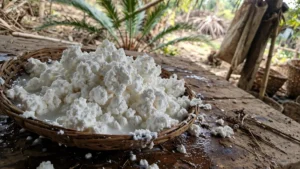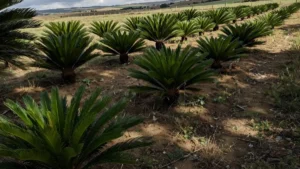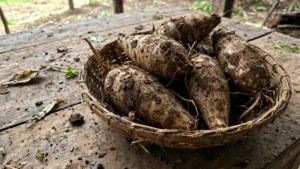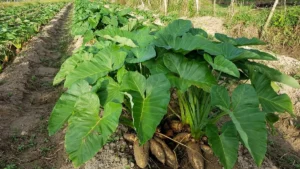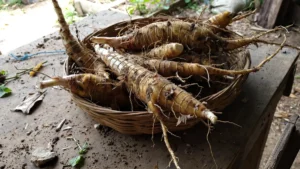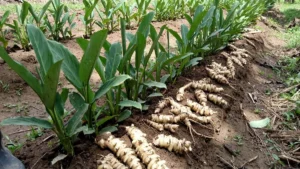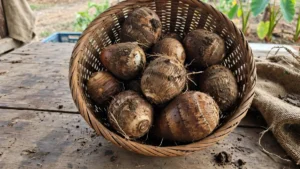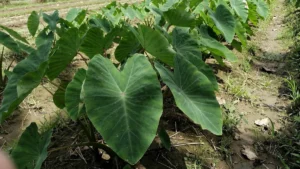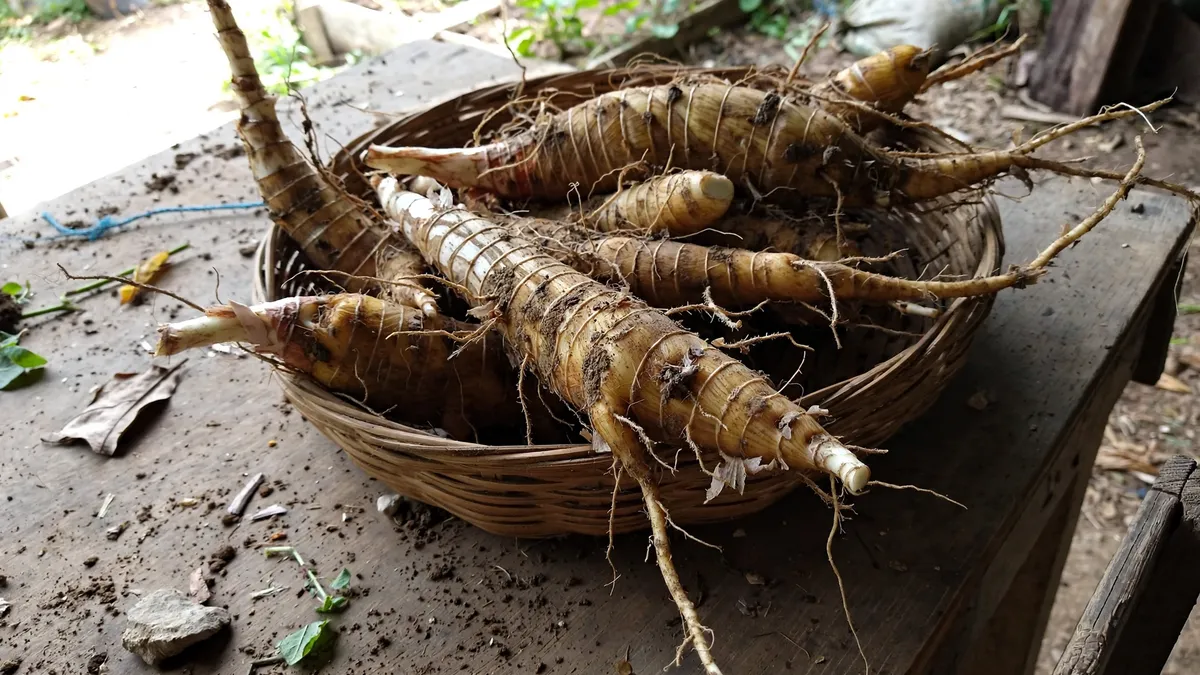
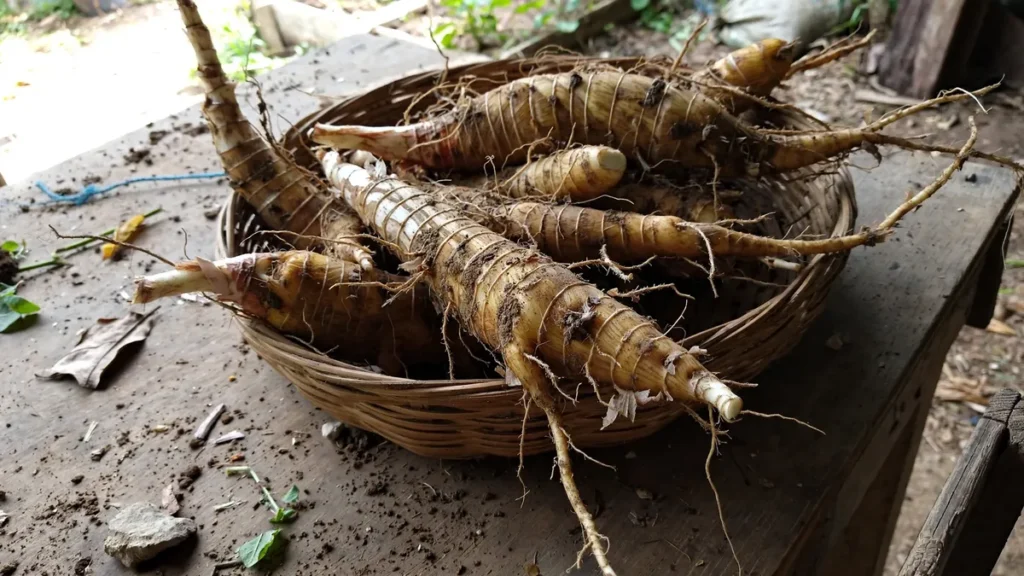
An arrowroot farm escape is a slow, hands-on trip built around a crop most people have only met in a biscuit tin. The plant, Maranta arundinacea, grows in the shade of Caribbean hills and Pacific valleys, and its rhizomes are dug by hand, washed in a trough, peeled, grated and rinsed until a fine white starch settles out of the water. On a farm stay you do not just read about that process. You stand in the field, you hold the rhizomes, and by the evening you are eating a sauce thickened with the starch you helped to settle.
That is a very different kind of holiday from a resort week, and it asks for a different kind of planning. The farms are small, the digging happens in a short season, the kitchens are family kitchens, and the best stays have only a handful of rooms. Book the wrong week and the fields are quiet.
This guide walks you through the nine steps that make an arrowroot escape work, from picking your digging week to buying powder at the farm gate. It also covers when to go, how long to stay, and what to ask the farm before you pay, so the trip you plan is the trip you actually get.
Key takeaways
- Arrowroot escapes work best in the dry season, when rhizomes are dug after ten to twelve months in the ground.
- Choose a farm that settles its own starch by hand, so you see the whole craft rather than just the fields.
- Tell the farm in writing what you cannot eat, because kitchens that bake with wheat flour can cross-contaminate.
- Three nights is the minimum for a good stay, and four or five nights lets you visit a second farm and a market.
- If you avoid gluten, ask the farm before you book: arrowroot itself is gluten-free, but shared bowls, shared oil and shared ovens can carry wheat flour into your food.
What an arrowroot farm escape actually covers
An arrowroot farm escape is a short stay on a working farm where the crop is the centre of the day. You sleep in a farmhouse room or a small lodge, you eat food cooked in the farm kitchen, and you join the work: digging rhizomes, washing them in a trough, watching the starch settle in a basin, and tasting the powder in sauces, porridge and biscuits. The days are shaped by the farm, not by a schedule printed in a brochure.
Most escapes include a bed, breakfast and dinner, a guided walk through the fields, and at least one cooking session. Some farms add a visit to a neighbouring grower, a market trip, or a biscuit-baking morning. Our guide to planning an arracacha farm escape covers a similar rhythm in the Andes, where the root must always be cooked before it is eaten, while arrowroot is valued for the starch it yields, so the days on the two farms feel quite different even though the shape of the trip is the same.
What an escape does not cover is a resort. There is no pool with a bar, no spa, and no entertainment programme. The pleasure of the trip is the work itself, the food, the quiet, and the company of people who know their crop.
How to plan the escape, step by step
Start with the digging season, not with the flight. Arrowroot rhizomes are ready after ten to twelve months in the ground, and the farms dig in the dry season, when the leaves die back and the soil is workable. In the eastern Caribbean that is usually between December and May. A farm that is not digging is still a pleasant place to stay, but you will miss the heart of the trip.
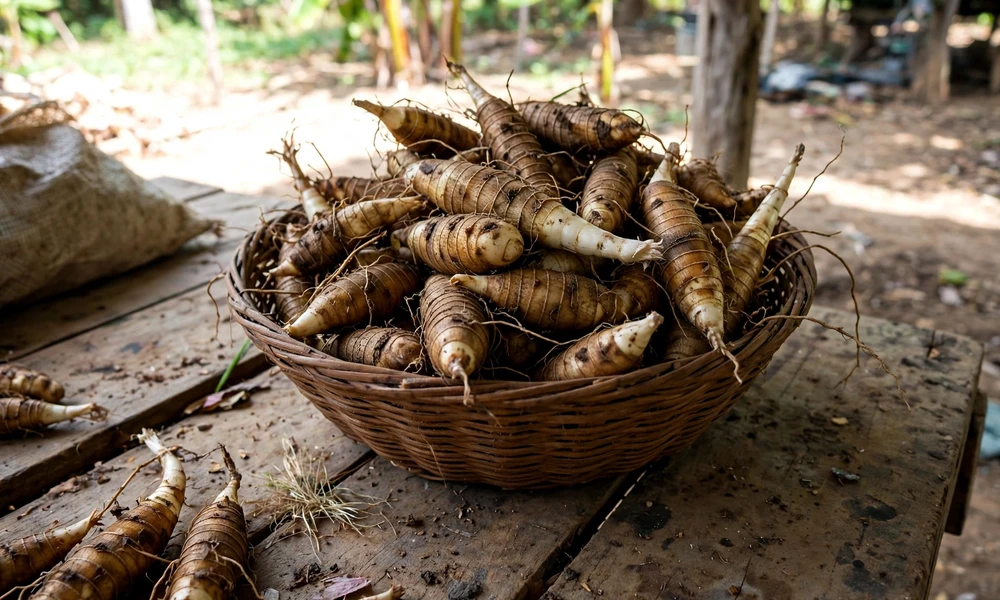
Once you have a week in mind, write to the farm, not to a booking site. Small farms answer slowly, and a direct message gets you honest answers about digging dates, room availability, food, and prices.
The 9 steps to planning your arrowroot farm escape
Pick a week when the rhizomes are being dug
What to do: Ask the farm for its digging dates before you book anything else, and choose a week in the middle of the digging window, when the work is steady and the drying yard is full. What to avoid: Do not book the first or last week of the season, when the digging may be thin or finished, and do not assume the farm digs all year round.
Best for: Anyone who wants the real work of the farm, not just a quiet stay. Time needed: An hour of messages with the farm before you book. Standout tip:
Choose a farm where the starch is still settled by hand
What to do: Pick a farm that washes, peels, grates and settles its own rhizomes, and that lets guests watch and help. The hand process is slower, but it is the craft you came to see. What to avoid: Do not choose a farm that only buys powder in and sells it on, because you will see fields and a shop, but not the making.
Best for: Travellers who want to understand the crop, not just photograph it. Time needed: One message to the farm, asking how the starch is made. Standout tip:
Book a room that faces the fields, not the road
What to do: Ask for a room with a view over the fields, a fan, and a bed that suits your back, and confirm that the room is quiet at night. What to avoid: Do not take a roadside room to save money, because farm trucks and morning traffic start early, and light sleepers will regret it.
Best for: Light sleepers and anyone who wants to wake to mist over the rows. Time needed: Ten minutes while you write to the farm. Standout tip:
Learn to wash and peel a rhizome before you cook with it
What to do: Join the morning washing session, learn to peel a rhizome with a short knife, and grate a few by hand, so you understand how much work sits behind a spoonful of powder. What to avoid: Do not skip the washing to get to the cooking, because the cooking makes little sense without it, and do not rush the peeling, because a cut finger ends the morning.
Best for: Hands-on travellers and anyone who likes to cook. Time needed: One morning, about two hours, with the grower. Standout tip:
Give the cook a written list of everything you cannot eat
What to do: Send the farm a short written list of everything you cannot eat, before you arrive, and hand a copy to the cook on your first evening. Written lists are remembered better than spoken ones. What to avoid: Do not rely on a note in a booking form that the cook may never see, and do not assume a small farm kitchen is gluten-free just because the starch is.
Best for: Anyone with a wheat allergy, a starch intolerance, or a restricted diet. Time needed: Fifteen minutes to write the list, once. Standout tip:
Taste the starch three ways: in a sauce, in a biscuit, and in a drink
What to do: Ask the cook to show you the starch in a sauce, in a biscuit, and in a hot drink, so you learn what it does in different cooking. A sauce shows its thickening, a biscuit shows its crumb, and a drink shows how cleanly it dissolves. What to avoid: Do not judge the starch from one dish, and do not taste the powder dry and decide it has no flavour, because it is not meant to be eaten that way.
Best for: Cooks and food lovers who want to take the starch home and use it. Time needed: One afternoon in the kitchen, about two hours. Standout tip:
Walk the rows with the grower in the cool of the morning
What to do: Go out with the grower before the sun is high, walk the rows slowly, and ask about the soil, the shade, and the rain, because the answers explain why the crop grows where it does. What to avoid: Do not walk the fields at midday in the heat, and do not wander into a field alone, because the rows are uneven and the ground can be soft after rain.
Best for: Early risers and anyone who wants to understand the farming, not just the food. Time needed: An hour before breakfast, with the grower. Standout tip:
Buy powder and biscuits at the farm gate on your last morning
What to do: Buy your powder and biscuits from the farm itself on the last morning, when the stock is freshest, and ask the host to pack them for the journey home. Farm-gate prices are usually fairer than market prices. What to avoid: Do not buy powder from a roadside stall on the way to the airport, because you cannot be sure it is pure arrowroot, and do not buy more than you can carry comfortably.
Best for: Anyone who cooks at home and wants the real thing. Time needed: Half an hour before you leave on the last morning. Standout tip:
Keep an afternoon free for the nearest town market
What to do: Leave one afternoon free for the nearest market town, where you can buy fruit, spices and bread, and see how arrowroot sits among the other root crops on the stalls. What to avoid: Do not fill every day with farm work, because the market is part of the trip, and do not plan a long drive on your last day, because island roads are slow.
Best for: Shoppers and anyone who wants a sense of the island beyond the farm. Time needed: One free afternoon, about three hours. Standout tip:
When to go, and how long to stay
The best time to visit an arrowroot farm is the dry season, when the rhizomes are dug and the roads are firm. In the eastern Caribbean that is roughly December to May, with the digging usually at its busiest in the middle of that window. The Pacific farms around Suva and Manila have a longer season, but the same rule holds: go when the farm is digging, not when it is waiting. Our guide to planning a camu camu farm escape makes the same point for the Amazon, where the berry season is even shorter, and the farms are honest about it when you ask.
Three nights is the minimum for a good stay. One day to arrive and settle, one day to dig and watch the starch being settled, and one day to cook with it and visit the nearest town. Four or five nights is better, because it lets you slow down, take a second farm visit, and buy powder at the market without rushing.
Book early if you want the dry season, because the best farms have only a few rooms and the digging weeks fill first. If you must travel in the wet season, ask the farm what the stay looks like then, and pack light rain gear, because island showers are quick but drenching.
The caveats that matter
An arrowroot escape is a gentle trip, but it still needs honest expectations. The work is outdoors, the weather decides the day, and the farms are small businesses with family kitchens, not hotels with room service. Read the table below before you book, and write to the farm about anything that matters to your health, your diet, or your plans.
| Detail | What is known |
|---|---|
| Best time to go | The dry season, when rhizomes are dug after 10 to 12 months in the ground |
| How long to stay | Three nights minimum, four or five nights for a slower trip |
| What the stay includes | A room, breakfast and dinner, field walks, and at least one cooking session |
| What to tell the farm | Everything you cannot eat, in writing, before you arrive |
| Gluten | Arrowroot itself is gluten-free, but shared kitchens can cross-contaminate |
| What to pack | Closed shoes with grip, light rain gear, sun protection, and a small bag for powder |
| Money | Small farms often prefer cash, and the nearest cash machine may be a drive away |
| What it does not cover | No pool, no spa, and no resort entertainment; the work and the food are the trip |
If you take medicine that affects digestion, or you follow a strict medical diet, check with your clinician before you plan meals around a farm kitchen.
Checklist: planning your arrowroot farm escape
Use these checks before you book, and again a week before you travel.
- Check the digging dates: write to the farm and book inside the digging window.
- Check the food: send a written list of what you cannot eat, and ask how the kitchen keeps it separate.
- Check the room: ask for a field view, a fan, a mosquito net, and a quiet night.
- Check the road: ask how the farm is reached, and whether a lift can be arranged.
- Check the money: ask what is included, what costs extra, and whether the farm takes cards.
- Check the packing: closed shoes, light rain gear, sun protection, and a bag for powder.
Frequently asked questions
Is arrowroot safe to eat every day?
Yes, for most people. Arrowroot starch is mild, easy to digest, and has been eaten daily in the Caribbean for generations, in porridge, biscuits and sauces. If you have a medical condition that limits starch, or you take medicine that affects digestion, check with your clinician first.
Can I cook with arrowroot starch at home?
Yes, and it is simple to use. Mix the powder with a little cold water first, then stir it into hot liquid, and it will thicken without clouding the sauce. It works well in fruit sauces, gravies and soups, and it gives biscuits a light, crisp crumb. Do not boil a thickened sauce hard for long, because the starch can thin again if it is overcooked.
Can I take arrowroot powder home on a flight?
Usually yes, in your checked luggage, sealed and labelled. Powder in hand luggage can attract extra checks at security, so pack it in a sealed bag in your hold bag, and keep the farm’s label on it. If you are flying between countries, check the food rules for your destination, because some places restrict plant products.
Do I need to speak another language on an arrowroot farm?
English is widely spoken on the Caribbean farms on this list, and in Fiji and the Philippines most hosts speak English too. A few words of local greeting go a long way, and a smile covers the rest. If you visit a farm in a Spanish-speaking area, a little Spanish helps, but the work itself, digging, washing and cooking, needs few words.
What is the best time of year to visit an arrowroot farm?
The dry season, when the rhizomes are dug. In the eastern Caribbean that is roughly December to May, with the busiest digging in the middle of the window.
How do I keep my meals gluten-free on an arrowroot farm?
Tell the farm in writing before you arrive, and hand the cook a written list on your first evening. Ask which dishes are made without wheat flour, and ask the cook to use clean bowls, clean oil and a clean baking tray for your food. Pure arrowroot is gluten-free, but a shared kitchen can carry wheat flour into it, so the conversation matters more than the ingredient. Our guide to planning an acai farm escape covers the same kitchen conversation for a palm-berry stay, and the advice holds for any small farm kitchen.
The bottom line
An arrowroot farm escape works when you plan it around the digging, not around the flight. Pick a week when the rhizomes are being dug, choose a farm that settles its own starch by hand, tell the kitchen in writing what you cannot eat, and give the stay three nights.
Book early, pack light, and go with an appetite for slow days. You will leave with a bag of fine white powder, a recipe or two, and a clearer sense of the work behind a spoonful of starch.