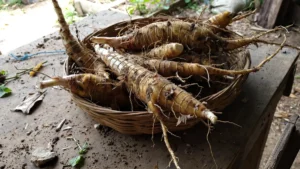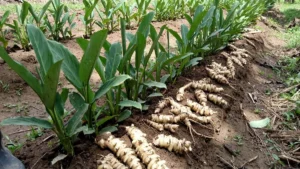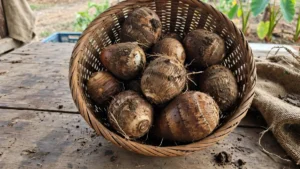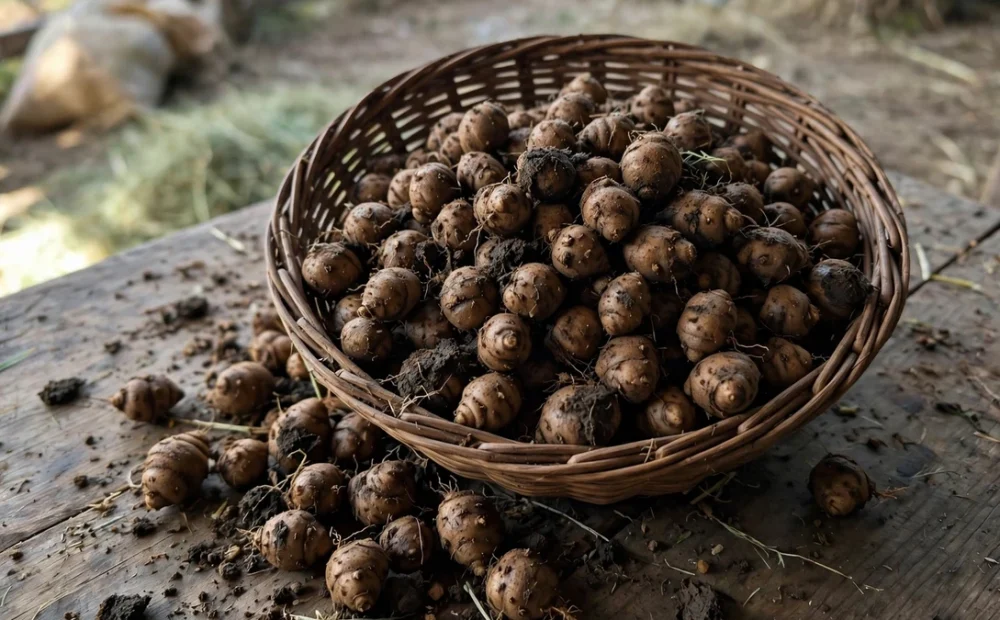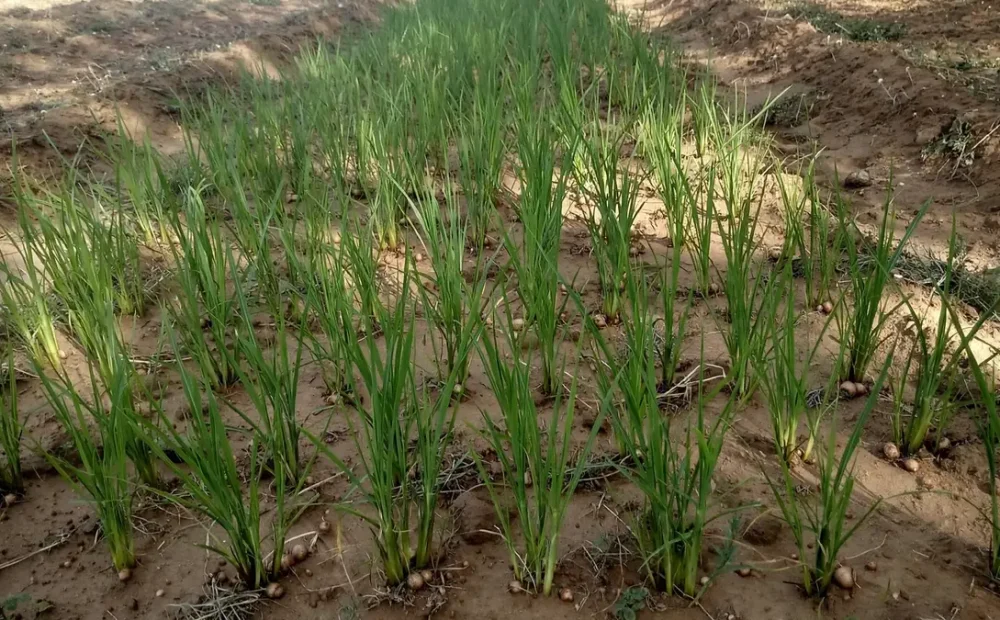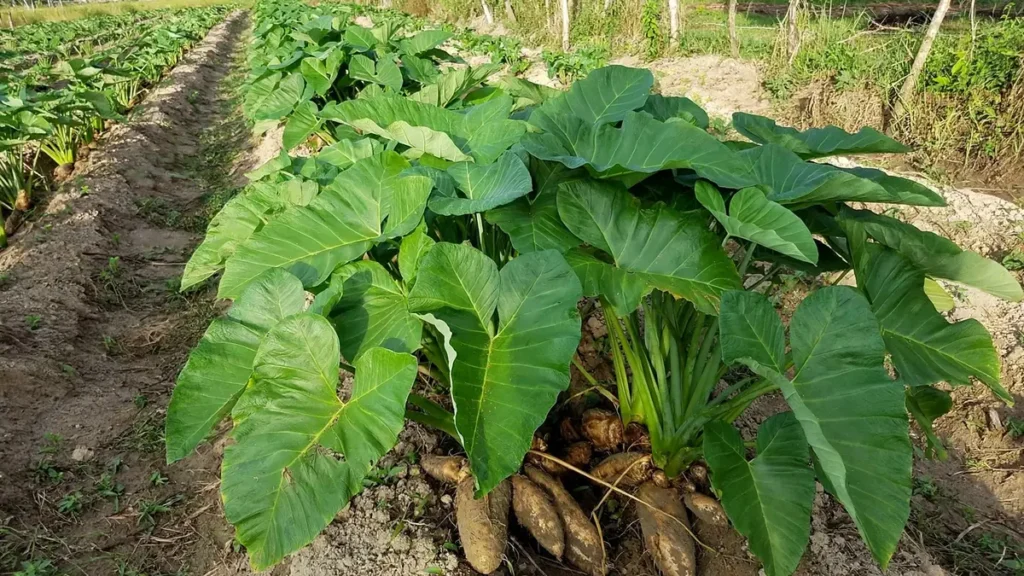
Yautía is the root that holds a Caribbean stew together. In Puerto Rico it goes into sancocho and pasteles, in the Dominican Republic it thickens a Sunday pot, in Cuba it simmers in ajiaco, and in Haiti it finds its way into soup joumou. The plant is Xanthosoma sagittifolium, a broad-leafed aroid grown across the Caribbean and tropical America, and it is better known in many markets under its other name, malanga.
A farm stay built around yautía is not a beach holiday with a farm visit bolted on. The days start early, in mud and drizzle or in dry heat, with a machete and a digging fork. Guests pull corms from ridges, wash them at a standpipe, peel them with a knife, and cook them the same day, usually over wood fire. The evenings are slow: a pot on the stove, a porch, a neighbour dropping by with plantains. It suits travellers who like to learn by doing, and who do not mind going to bed with soil under their nails.
Below are nine retreats worth considering in 2027, from small family plots in the hills above San Juan to a cocoa estate outside Port of Spain. Each entry covers what the stay does well, where it falls short, and who will get the most from it.
Key takeaways
- Yautía, also sold as malanga, is Xanthosoma sagittifolium, a Caribbean root crop grown for its starchy corms and cooked leaves.
- The corms must always be cooked. Raw yautía stings the mouth and throat, so never taste a corm straight from the soil.
- Digging season runs roughly from late summer into winter, when the corms are full and the leaves begin to yellow.
- Most yautía stays are small and family-run, with two to six guest rooms, so the best weeks book out months ahead.
- Yautía itself is naturally gluten-free, but ask the kitchen about flour, sauces, shared fryers and thickeners before you book, because cross-contact varies from farm to farm.
What yautia is, and why a farm stay suits it
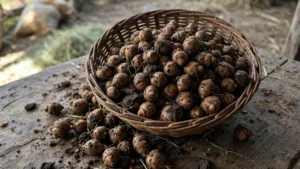
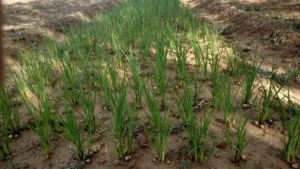
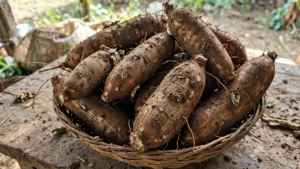
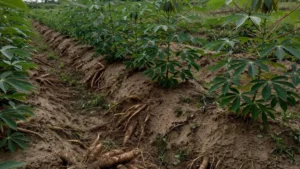
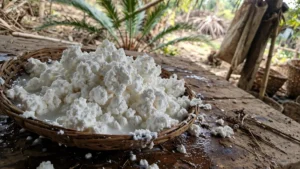
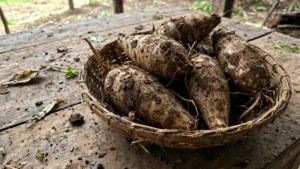
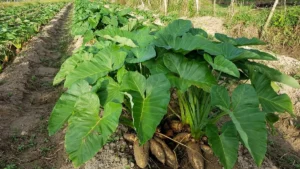
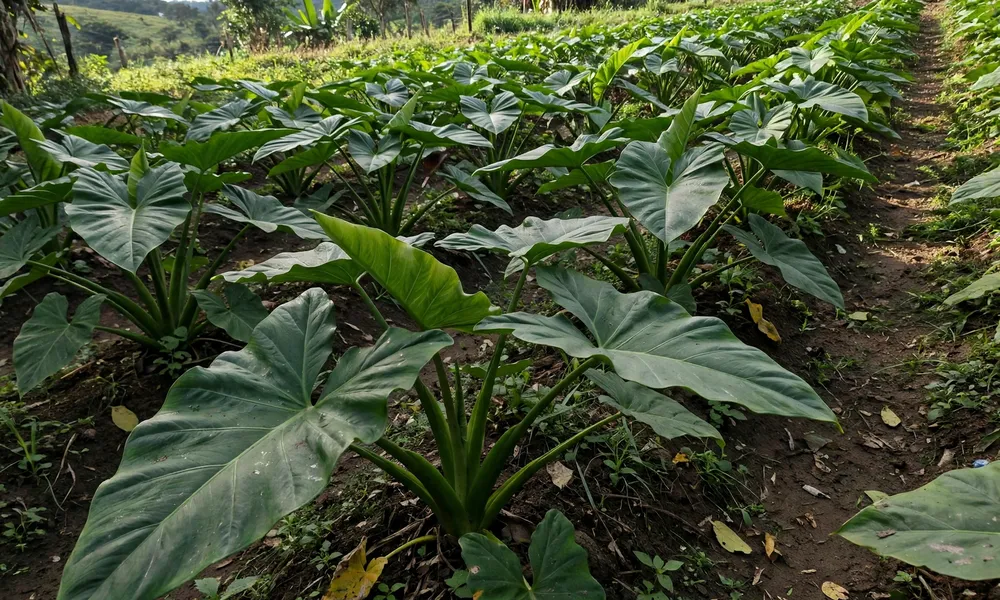
Yautía grows as a clump of tall, arrow-shaped leaves on a thick stem, with corms clustered underground like a hand of fat fingers. The most common kind is yautía blanca, with pale flesh that turns soft and creamy when boiled. Yautía amarilla has golden flesh and a slightly sweeter taste, and yautía lila has purple-streaked flesh that holds its colour in a stew. All three cook the same way: peeled, cut into chunks, and boiled, roasted, fried or pounded, and all three need thorough cooking before they are safe to eat.
The reason a farm stay works so well for this crop is that yautía is not a fruit you pick and eat. It is a root you dig, clean, peel and cook, and every one of those steps is a skill. A good host shows you how to read the leaves to judge whether a corm is ready, how to lift it without breaking it, and how to peel it without wasting half the flesh.
Travellers who came for the guarana harvest in the Amazon often ask what a Caribbean root trip looks like by comparison, and the honest answer is that it is smaller and slower. Our guide to the best guarana farm retreats covers big river lodges and long boat rides, while a yautía stay is usually a farmhouse, a garden, and a kitchen. If you want to spend a week learning one root properly, come to the Caribbean.
How we chose these nine retreats
We looked for farms where yautía is a real crop, not a garnish. That meant checking that the farm grows at least two kinds, that guests can dig and cook with the family, and that the kitchen cooks yautía in more than one way across a stay. A farm that only serves boiled corms once did not make the list, however pretty its rooms.
Price mattered too, but only as a range. The macauba stays in the Brazilian cerrado set a useful bar here: our guide to the best macauba farm retreats shows what honest farm pricing looks like, and the yautía farms below were judged the same way, on what you actually get for the night, not on how the place photographs.
Finally, we checked the practical details: how you get there from the nearest airport, whether the farm answers messages, and whether the kitchen can handle a gluten-free guest without fuss.
The 9 best yautia farm retreats of 2027
San Juan, Puerto Rico — Yautía blanca in the foothills of El Yunque
What we like: A family farm twenty minutes above San Juan, with yautía blanca in ridged rows and a wood-fired kitchen where guests cook sancocho on their first evening. What to consider: The road up is steep and narrow, the farm has no pool, and rain can cancel a digging morning, which means the schedule changes with the weather.
Best for: First-time visitors to Puerto Rico who want a farm stay close to the city. Style: Rustic farmhouse with a wide porch and a wood-fired kitchen. Price range: $95–$150 a night, including breakfast and one cooking session. Standout feature: A sancocho cooked over wood fire on your first evening, using corms you dug that morning.
Ponce, Puerto Rico — Yautía amarilla and pasteles in the dry southern hills
What we like: A small farm on the dry southern slopes near Ponce, where yautía amarilla grows sweet in thin soil. What to consider: The hills are hot and dry, shade is scarce at midday, and the farm is a forty-minute drive from the nearest town, so you will want a car.
Best for: Cooks who want to learn pasteles from scratch, not from a video. Style: Low white farmhouse with a shaded yard and an outdoor grating table. Price range: $85–$130 a night, including breakfast and the pasteles workshop. Standout feature: A full pasteles afternoon, from grating the corms to unwrapping them at dinner.
Santo Domingo, Dominican Republic — Yautía lila and a market morning
What we like: A farm an hour outside Santo Domingo that grows yautía lila alongside plantains and yuca. The market morning is excellent: you buy corms, herbs and pork with the host, then cook sancocho dominicano back at the farm. What to consider: The house is noisy in the morning, with roosters and a radio, and the bathroom is shared between two rooms.
Best for: Travellers who like markets as much as farms. Style: Bright country house with a big kitchen and a hammock yard. Price range: $80–$125 a night, including breakfast and the market trip. Standout feature: A market morning in Santo Domingo followed by a sancocho cooked with what you bought.
Port-au-Prince, Haiti — Malanga in the mountain gardens above the city
What we like: A mountain garden above Port-au-Prince where malanga grows between bananas and breadfruit. The host cooks soup joumou on Sundays, and guests help peel and chop. What to consider: The road is rough, power can cut out in the evening, and you should arrange transport with the farm rather than driving yourself.
Best for: Experienced travellers who want a working garden, not a resort. Style: Hillside garden house with a tin roof and a wood stove. Price range: $70–$110 a night, including breakfast and one shared dinner. Standout feature: Sunday soup joumou, cooked with malanga from the garden above the city.
Kingston, Jamaica — Malanga in the Blue Mountain foothills
What we like: A farm in the foothills above Kingston, where malanga grows in cool, damp soil and the coffee trees start just up the slope. What to consider: The climb to the farm is long, the nights are cool enough to need a sweater, and the kitchen closes early, so late arrivals go hungry.
Best for: Walkers and coffee lovers who like cool mountain air. Style: Timber mountain house with a veranda facing the valley. Price range: $90–$140 a night, including breakfast and one stew dinner. Standout feature: A run-down stew of malanga and coconut milk, eaten on the veranda as the mist lifts.
Havana, Cuba — Malanga in ajiaco and a day in Viñales
What we like: A farmstay outside Havana that grows malanga for ajiaco, the slow Cuban stew of roots, corn and meat. The pace is unhurried and the portions are large. What to consider: Internet is patchy, cash is king, and the farm books through a local contact rather than a website, so replies can take a day or two.
Best for: Slow travellers who do not mind being offline for a few days. Style: Colonial courtyard house with a shaded patio and a charcoal stove. Price range: $75–$120 a night, including breakfast and one ajiaco dinner. Standout feature: A pot of ajiaco that simmers all afternoon, with malanga from the farm’s own rows.
Port of Spain, Trinidad and Tobago — Malanga in callaloo on a cocoa estate
What we like: A cocoa estate outside Port of Spain where malanga grows under the shade trees and the leaves go into callaloo. The estate house is comfortable and the garden is beautiful. What to consider: The estate is busy at harvest, the callaloo class fills up fast, and the drive from the airport can take two hours in traffic.
Best for: Food lovers who want leaves and corms, not just roots. Style: Old cocoa estate house with a wide gallery and a walled garden. Price range: $100–$160 a night, including breakfast and the callaloo class. Standout feature: Callaloo made from the estate’s own malanga leaves, cooked with coconut milk and crab.
Bridgetown, Barbados — Malanga in cou-cou on the east coast hills
What we like: A hillside farm on the Atlantic side of Barbados, where malanga is pounded into cou-cou and served with flying fish. The rooms are small but bright, and the breakfasts are excellent. What to consider: The east coast is windy and the sea is rough for swimming, so this is a farm stay, not a beach stay, and the farm is a bus ride from Bridgetown.
Best for: Travellers who want the wilder, windward side of Barbados. Style: Whitewashed hillside cottage with a breezy terrace and a stone kitchen. Price range: $110–$175 a night, including breakfast and one cou-cou dinner. Standout feature: Cou-cou pounded from the farm’s own malanga, served with flying fish on the terrace.
Caracas, Venezuela — Malanga in sancocho in the Ávila foothills
What we like: A foothill farm above Caracas where malanga grows in terraced plots and the sancocho venezolano is cooked in a big pot on Saturdays. What to consider: Getting there needs planning, the farm asks for payment in advance, and the Saturday stew is the main event, so a short stay can miss it.
Best for: Travellers who want mountain air above a big city. Style: Terraced foothill farmhouse with a big Saturday pot and a view of the valley. Price range: $70–$115 a night, including breakfast and the Saturday sancocho. Standout feature: A Saturday sancocho venezolano, cooked in one big pot with malanga from the terraces.
Yautia, malanga and taro: telling them apart
Yautía and malanga are the same plant. The name changes by island and by market: Puerto Rico and the Dominican Republic usually say yautía, while Cuba, Jamaica and much of Central America say malanga. The plant is Xanthosoma sagittifolium either way, and a vendor who sells malanga is selling you yautía under a different label. If you have already seen the tucumã palms of the Amazon, you will recognise the pattern: our guide to the best tucumã farm retreats covers a fruit with several local names too.
Taro is a different plant, and the confusion is understandable because the two look alike in a market basket. Taro is Colocasia esculenta, a different genus in the same family, with round, heart-shaped leaves and a hairy, ringed corm. Yautía has arrow-shaped leaves, a smoother corm, and a drier, nuttier flesh when cooked. Both must be cooked thoroughly, because both carry the needle-shaped crystals that sting the mouth raw, but they cook differently: taro turns soft and almost slimy, while yautía stays firm and a little crumbly, which is why it works so well pounded into cou-cou or grated into pasteles.
The caveats that matter
Yautía is a forgiving crop and a forgiving food, but a farm stay still has a few things worth knowing before you book. The weather decides the digging, the kitchen decides the menu, and the road decides how long everything takes. Ask the right questions early, so the trip you book is the trip you actually get.
| Detail | What is known |
|---|---|
| Best season to dig | Late summer into winter, when corms are full and leaves begin to yellow |
| What must be cooked | Every corm and every leaf; raw yautía stings the mouth and throat |
| Who should ask first | Anyone with a latex or aroid allergy, and anyone on a restricted diet |
| What to wear in the rows | Boots, gloves and long sleeves; the soil is wet and the leaves are scratchy |
| How the price is set | Per night, usually with breakfast and one cooking session included |
| Getting there | Most farms need a car or an arranged lift; buses rarely reach the gate |
| Gluten-free eating | Yautía is gluten-free, but check flour, sauces, fryers and thickeners with the kitchen |
| What it does not include | Flights, airport transfers and most dinners are usually extra |
If you are pregnant, breastfeeding, or managing a food allergy, check with your clinician before a farm stay that centres on one root.
Checklist: planning a yautia farm stay honestly
Use these checks before you book, and again the week before you travel.
- Check the crop: ask which kinds of yautía the farm grows and whether guests can dig.
- Check the kitchen: ask how many ways yautía is cooked during your stay.
- Check the season: book the digging months, not the beach months, if the harvest matters to you.
- Check the room: ask about the bathroom, the bed and the noise before you pay.
- Check the food: tell the kitchen about gluten or allergies in your first message.
- Check the road: confirm how you get from the airport to the farm gate, and who arranges it.
Frequently asked questions
Is yautía the same as malanga?
Yes. They are two names for the same plant, Xanthosoma sagittifolium. Puerto Rico and the Dominican Republic usually say yautía, while Cuba, Jamaica and Central America usually say malanga.
Is yautía the same as taro?
No. Taro is Colocasia esculenta, a different genus in the same family. Yautía has arrow-shaped leaves and a smoother corm with drier, nuttier flesh. Taro has heart-shaped leaves and turns softer and almost slimy when cooked. Both must be cooked thoroughly.
Can I eat yautía raw?
No. Raw yautía contains needle-shaped crystals that sting the mouth and throat and can cause swelling. Peel it, cut it up and boil, roast or fry it until it is soft all the way through, and never taste a corm straight from the soil.
How many nights does a yautía farm stay need?
Three nights is a good minimum: one day to arrive and settle in, one full day to dig and cook, and one morning for the market and a last meal. Five nights lets you see the harvest properly and take a day trip without rushing.
How do I eat gluten-free on a yautía farm stay?
Yautía itself is gluten-free, so the corms, the stews and the pounded dishes are usually safe. The risk is in the extras: flour in a sauce, a shared fryer, a thickener in a stew. Tell the kitchen before you book, ask what is fried in the same oil, and
When is yautía dug up in the Caribbean?
The main digging runs from late summer into winter, roughly nine to twelve months after planting, when the leaves begin to yellow and the corms are full.
The bottom line
The best yautía farm retreat in 2027 is not the grandest house or the one with the longest list of activities. It is the farm where the crop is real, the kitchen cooks it well, and the host is honest about the weather, the road and the rooms. The stays above all meet that bar,
Pick an island, pick a season, and write to the farm before you pay. Ask what is growing, what is cooking, and what the kitchen can do for you. If the answers are clear and specific, book it. A week spent digging, peeling and cooking one root will teach you more about Caribbean food than a month of restaurant meals.