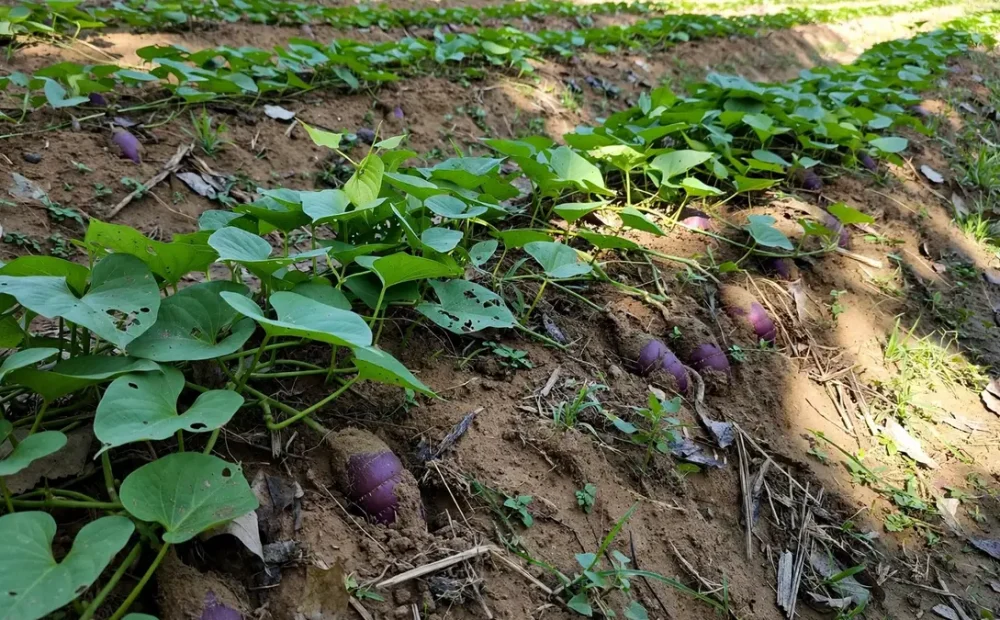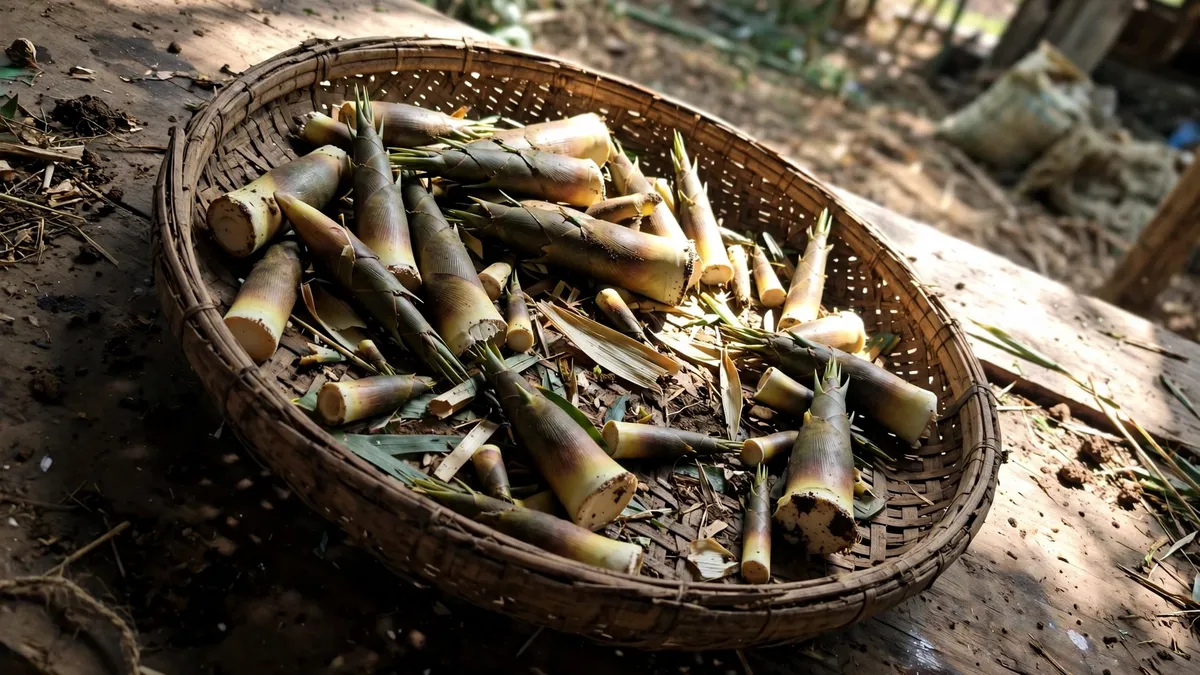

A bamboo shoot farm escape is a short spring holiday organised around a harvest that refuses to wait. You stay in a small farmhouse beside a bamboo stand, walk out at first light with a spade, and by evening eat what you cut that morning. The shoot is the young stem of the bamboo plant, taken while still below the ground or only just showing, and it carries a clock: tender on Tuesday, tough and woody by the weekend.
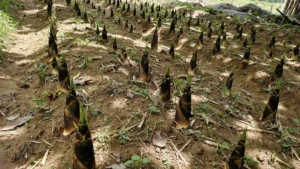
Each day has the same rhythm. Dawn is for the rows, where the host points out the faint cracks that mean a shoot is rising. Late morning is for peeling and boiling, drawing the bitter edge out in fresh water. Afternoon is for the kitchen, where the shoot turns into soup, stir-fry, pickle or dumpling filling. There is no room for a lie-in, and no need for one: the work is the holiday.
What follows are nine steps for turning the idea into a booking, from picking a region through to paying the bill. Work through them in order and you will turn up prepared, with the right dates, kit, and questions already asked. Skip them and you may find yourself on a pleasant spring break that happens to be near some bamboo, which is not the same trip.
Key takeaways
- A bamboo shoot escape is a hands-on spring stay: you cut, peel and boil the harvest, so plan on muddy boots, dawn starts and a busy kitchen.
- Choose the region and the flush together. The main harvest runs only a few weeks, and a stay booked a month late can find the season over.
- Most shoots need a proper boil before eating. Bitter compounds sit in the fresh stem, and eating one raw can leave you with a sore stomach.
- Ask the farm about its menu and its sauces before you pay, especially if you need gluten-free food or have an allergy.
- Boiled shoots are naturally free of gluten, yet soy sauce, oyster sauce, shared woks and thickeners are not, so get the kitchen’s answer in writing before you travel.
What a bamboo shoot farm escape really looks like
A shoot farm is usually a family place with three to eight rooms, a kitchen serving whatever the stand produced that day, and a host farming mornings and cooking afternoons. The timetable follows the crop: a rainy night can push up a flush and make the next morning busy, while a dry spell slows the harvest and puts pickles on the menu.
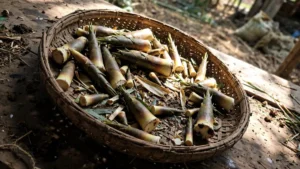
The cutting itself is easy to learn and hard to rush. The host shows you how to read the soil for the small cracks a rising shoot makes, how to take it low with the spade without harming the rootstock, and how to strip the tough outer leaves to the pale centre. Then the boiling begins, the step that decides whether dinner is good: a fresh shoot holds bitter compounds that only a proper boil in clean water removes. Our guide to planning a taro farm escape makes the same point about a root that must be cooked with care, and the lesson carries over here.
That gap between watching and doing is what separates a farm escape from a food tour. A tour serves you finished plates; a farm escape hands you a spade at dawn and a knife at noon, and the meal tastes better because you helped make it.
How to shape the trip before you book
Begin with the kind of week you want; the regions are not interchangeable. A Chengdu stay is built on fat moso shoots, clear soup and a wood fire. A Kyoto stay is built on slim madake shoots, charcoal grilling and quiet rooms. A Bangkok stay is built on quick stir-fries and a loud market morning. The crop is the same family everywhere, but the cooking, scenery and tempo change with the place, so settling the region first makes the rest straightforward.
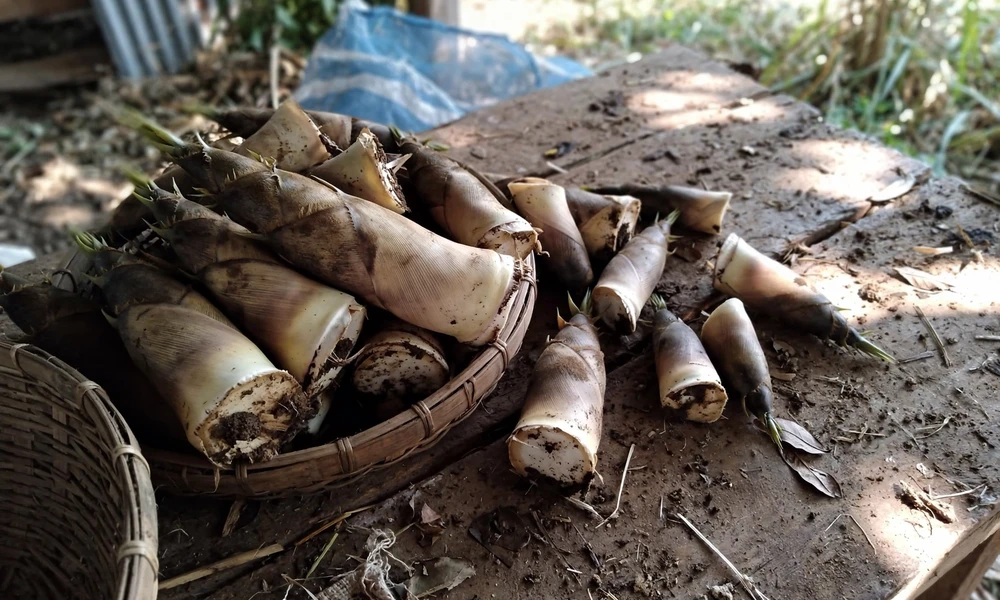
Next, settle how long you can stay. Two nights is too short to learn anything. Three nights gives you an arrival day, a full field-and-kitchen day, and a market morning. Five nights is better still, leaving space for a day out, a slow day, and the Saturday pickle session or market day you should not have to hurry. One night is not a farm escape at all; it is a room near a farm.
Last, think about the people travelling with you. Children who enjoy mud and cooking will have a wonderful time. Teenagers who need a pool and fast wifi will count the hours. Match the stay to the traveller, not to the photographs.
The 9 steps to planning your bamboo shoot farm escape
1. Let the bamboo variety choose the region
What to do: Pick the region by the variety it grows best. Chengdu and Hangzhou for fat, sweet moso, Kyoto for slim, crisp madake, Bangkok and Hanoi for tender ma bamboo, Taipei for mild mountain shoots. What to avoid: Choosing a farm for its pictures and then finding its bamboo is not the kind you wanted to cook with. Best for: First-time farm guests who want one clear starting point. Time needed: One evening of reading before you write to any farm. Standout tip: Name the dish you most want to learn, and let it pick the region.
2. Time the trip to the flush, not to the holiday
What to do: Aim for the main flush, when shoots come up every day. Ask the farm for its harvest dates and shape your travel around them, even midweek. What to avoid: Booking the big public holiday week, when the shoots may already be past their best and the farm is full. Best for: Visitors whose main reason for coming is the harvest. Time needed: A few days of flexibility in your travel dates. Standout tip: The finest farm weeks often fall just before the holiday crowds arrive, with kinder prices too.
3. Learn the farm’s boiling method before you pay
What to do: Ask how the farm boils its shoots: how long, in how much water, and whether bitter kinds get a second boil. A good farm answers in detail. What to avoid: Taking it for granted that every farm boils the same way. Some hurry the step, and the bitterness stays in the dish. Best for: Cooks who want the technique, not only the recipe. Time needed: A single message, with a day allowed for the reply. Standout tip: A farm that cannot describe its boiling is probably not a shoot farm.
4. Tell the kitchen your food needs up front
What to do: State your dietary needs in the very first message: gluten-free, allergies, or anything else the kitchen must know. Ask about soy sauce, oyster sauce, shared woks and thickeners. What to avoid: Raising it at dinner on the first night, when the food is already cooked and the host can no longer change it. Best for: Guests living with coeliac disease or a serious allergy. Time needed: About five minutes to write the note. Standout tip: Clear answers about gluten usually mean a kitchen that is run with care.
5. Give the closest market town a morning of your trip
What to do: Set aside one morning for the nearest town market, alone or with the host. Buy shoots, herbs and chillies, compare prices, and learn to judge a good shoot. What to avoid: Using the market only for photographs. The point is to buy things, ask questions, and carry something back for dinner. Best for: Travellers who enjoy shopping where local people shop. Time needed: A whole morning, with the drive included. Standout tip: Buy one shoot at the market and taste it against the farm’s cutting that evening.
6. Pack for wet rows and scratchy husks
What to do: Bring solid boots, work gloves, long sleeves and a hat. Spring rows are wet, the husks scratch, and the sun is strong even under grey skies. What to avoid: Packing white clothes, sandals, or anything you would mind ruining with mud. The farm will not pause while you change. Best for: Anyone who intends to cut rather than observe. Time needed: Ten minutes of packing, if you already own the kit. Standout tip: Gloves do two jobs: they guard your hands, and they keep the bitter sap off your skin.
7. Keep one day open for the hills or the town
What to do: Leave one day deliberately unplanned, for a nearby town, a tea garden or the hills. A farm stay feels fuller when the middle of the week brings a change of scene. What to avoid: Cramming farm work into every single day. By the third day you will be tired, and tired cooks learn nothing. Best for: Travellers staying five nights or longer. Time needed: A full day, kept empty on purpose. Standout tip: A tea garden or a hot spring is a good rest day after two mornings of cutting.
8. Cut beside the grower for a whole morning
What to do: Ask to work beside the grower for an entire morning, not only for a photograph. Watch how they spot the cracked soil, take the shoot low with the spade, and decide what to leave in the ground. What to avoid: Cutting alone before anyone has shown you how. A shoot taken too high is wasted food, and a spade in the wrong spot can harm the rootstock. Best for: Guests who want the farming itself, not only the cooking. Time needed: One morning, running from breakfast through to lunch. Standout tip: Reading the cracked soil is the real skill; once you can see it, you can cut on any farm.
9. Ask for the bill before the last dinner
What to do: Request the full bill before your final dinner: the room, the meals, the cooking sessions, the transport, and anything else, and go through it while the host is there to explain it. What to avoid: Finding an extra charge at the gate, when you are already late for a flight and nobody can explain it. Best for: Anyone paying cash or in a currency that is not their own. Time needed: Ten minutes over dinner on the final night. Standout tip: A clear, itemised bill is a sign of a well-run farm, worth asking for even when you trust the host completely.
Bamboo shoot varieties and the boiling rule
Moso, madake, ma bamboo and sweet bamboo are the four kinds most farm stays grow, and each cooks in its own way. Moso is fat and sweet, for braising and soup. Madake is slimmer and crisper, for grilling and pickling. Ma bamboo is tender and mild, made for quick stir-fries. Sweet bamboo, from the mountains around Taipei and the Cameron Highlands, is the mildest of the four and needs only the gentlest cooking. A farm that can name its variety understands its crop.
The boiling rule holds for all four. Most shoots hold bitter compounds that only a proper boil in clean water will take away, and a raw or undercooked shoot can be bitter and rough on the stomach. Very sweet mountain shoots may need only a short boil, but none should be eaten raw, so ask why if a farm skips the step. Our guide to planning a yacon farm escape covers a different Andean crop, but the habit is identical: learn the cooking rule before you eat anything the farm puts in front of you. The same care applies to other harvest crops, as our guide to planning an oca farm escape shows.
The caveats that matter
A bamboo shoot farm escape is a gentle holiday, but it is still a working farm in springtime. Rain can rewrite the day’s plan, the kitchen has its limits, and the road to the gate usually takes longer than the map claims. The shoots are safe once boiled properly, but they are not a food to improvise with, and a farm that skips the boiling step is a farm to walk away from.
| Detail | What is known |
|---|---|
| Best season to go | Early spring, during the main shoot flush, which lasts only a few weeks |
| How long to stay | Three nights minimum, five nights for a proper harvest and a day trip |
| What must be boiled | Most varieties, before eating; raw shoots can be bitter and hard on the stomach |
| What to pack | Boots, gloves, long sleeves, a hat, and clothes you do not mind getting muddy |
| How to get there | Most farms need a car or an arranged lift; buses rarely reach the gate |
| What to ask first | Gluten, allergies, the week’s menu, and what is included in the price |
| Money | Cash is common; confirm the currency, the deposit, and what is extra before you pay |
| What it does not include | Flights, most dinners and airport transfers are usually extra |
Food needs deserve a message before you pay, not a word at the table. Shoots are naturally free of gluten, yet soy sauce, oyster sauce, shared woks and thickeners are not, and a kitchen warned in advance can cook around them. A kitchen told too late cannot.
Checklist: planning a bamboo shoot farm escape honestly
Use these checks before you book, and again the week before you go.
- Ask which bamboo the farm grows, and when its main flush is due.
- Ask how the farm boils its shoots, and for how long, before you eat anything there.
- Ask for the week’s dishes, and look for three or four different ways of cooking the shoot.
- Confirm the harvest is really happening on your dates, not a month before or after.
- Put gluten, allergies and anything else in your first message, not at the table.
- Confirm how you reach the farm, and whether the farm can arrange a lift from the nearest town.
Frequently asked questions
Which month has the best shoots?
It depends on the region, but the main flush usually falls in early spring, when rain and warmth push the shoots up daily. The exact weeks move with the weather, so ask the farm for its own dates. A stay booked a month late can find the season already over.
What happens if the shoots are past their best?
The farm will usually lean on pickles, dried shoots and last week’s harvest, and the menu will be less exciting. That is not a disaster, but it is not the trip you booked, so confirm the harvest is happening on your dates before you pay.
Can I visit a bamboo shoot farm in autumn?
You can visit, but you will not see the main harvest. Autumn shoots are fewer and tougher, and most farms run simpler menus then. If the harvest is the reason for the trip, spring is the season to choose.
Must I speak the local language to enjoy a shoot farm?
It helps, but it is not essential. Most farm hosts speak some English, and a translation app covers the rest. Learn a few food words before you go, and write your dietary needs down in the local language so the kitchen can read them clearly.
Are bamboo shoot farms suitable for solo travellers?
Yes, and they suit solo travellers well. The shared table at dinner is a natural place to meet other guests, and the farm work gives you something to do together from the first morning. Tell the farm you are coming alone, so it can place you near the other guests.
What does a typical day on a bamboo shoot farm look like?
Dawn in the rows with a spade, late morning peeling and boiling, lunch from the morning’s cutting, a quiet afternoon, and dinner at a shared table. The pattern repeats each day, and by the third morning you will know the rows well enough to cut without being shown.
The bottom line
The finest bamboo shoot farm escape in 2027 is not the stay with the prettiest pictures. It is the farm that grows one variety well, boils it with care, and serves it three or four ways across the week. Chengdu and Hangzhou suit moso fans, Kyoto suits a quieter pace, and Bangkok and Hanoi suit bold, market-led cooking, so settle the region by its bamboo and ask about the menu before you pay.
Travel in spring, rise at dawn, learn to spot the cracked soil, and eat what you cut on the same day. That is the whole joy of a bamboo shoot farm, and the season is short, so book while the shoots are still underground.