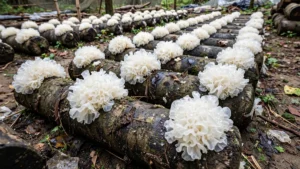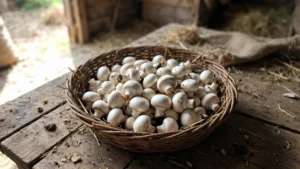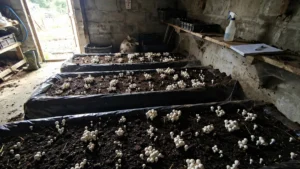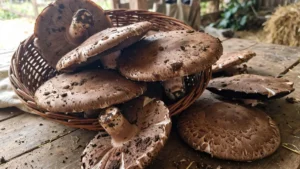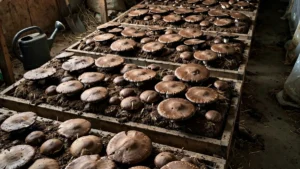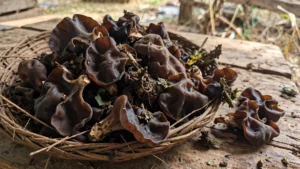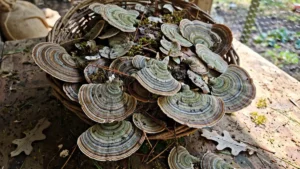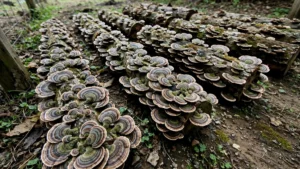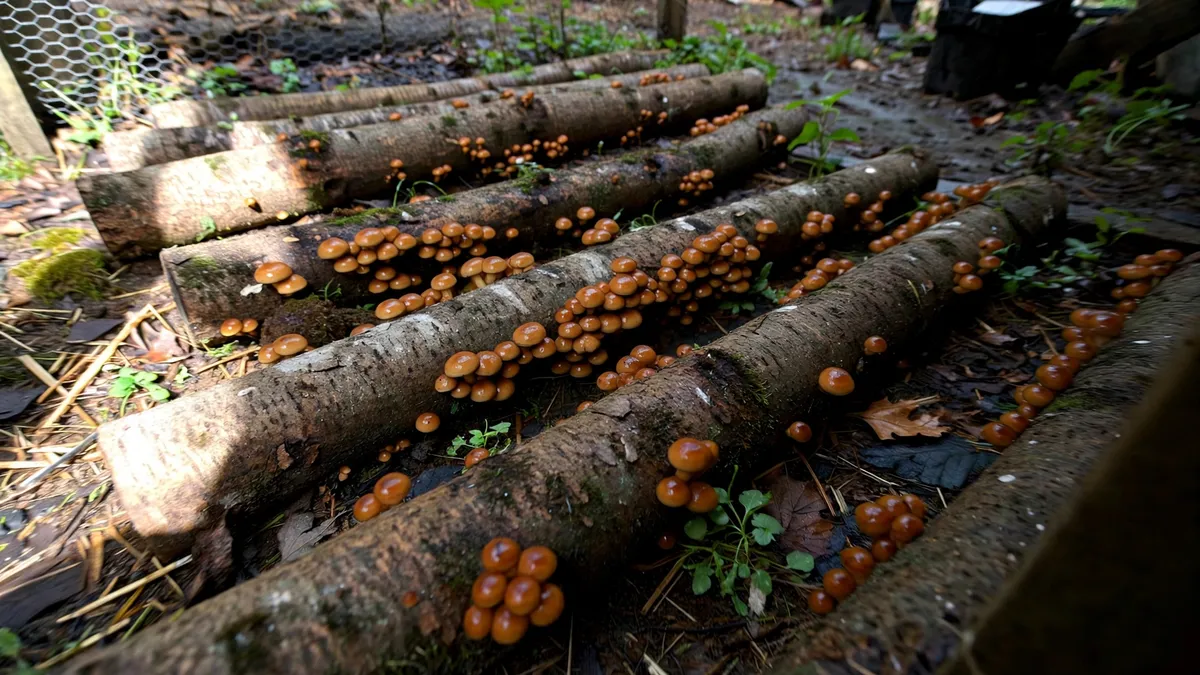
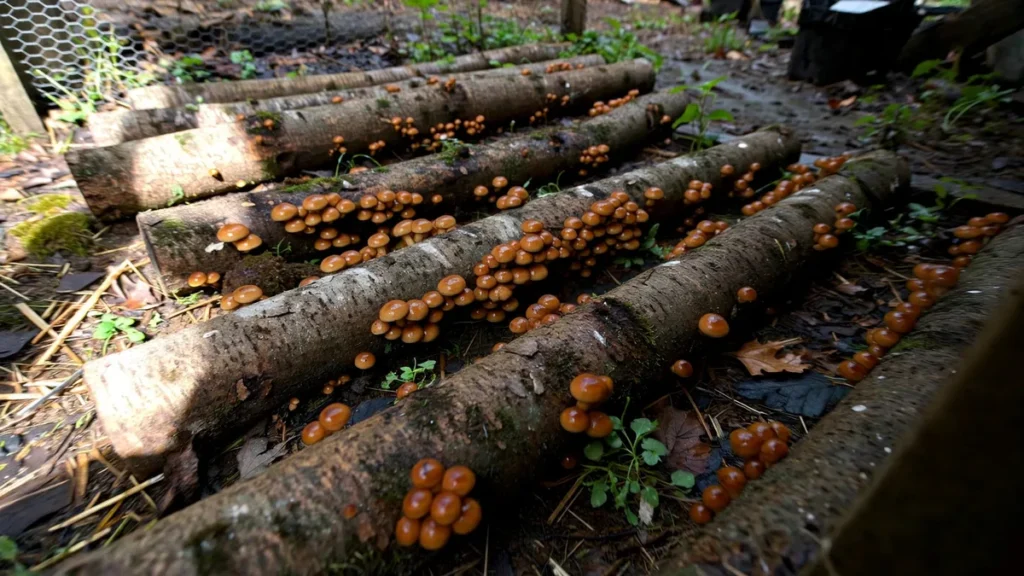
Nameko is the mushroom you notice by touch before you notice it by sight. Each small amber cap wears a glossy coat of natural jelly, so a fresh cluster feels slick and cool in the hand, like a mushroom dipped in thin syrup. It is Pholiota microspora, a woodland fungus from Japan that grows in tight clusters on logs, and its home is a bowl of miso soup, where the slippery caps thicken the broth and carry a mild, nutty flavour. Nothing else on a farm table behaves quite like it.
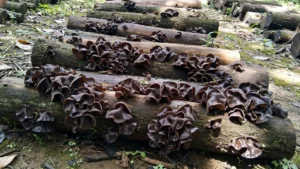
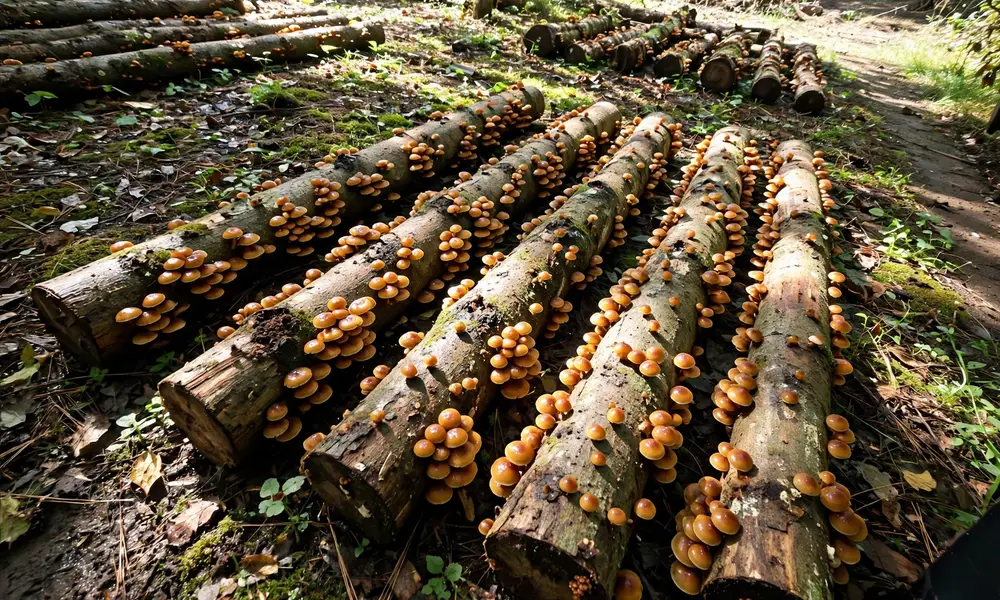
On a farm, nameko grows the slow way, on hardwood logs stacked in shaded sheds or damp woodland clearings. The logs are inoculated in spring, left to colonise through the summer, and then coaxed into fruiting by cool autumn air and a good soaking. When the flush comes, the caps push out in crowded bunches, amber-brown and shining, and the picking window is short: a day late and the jelly coat dries, the caps open flat, and the best of the texture is gone.
Below are nine nameko farm retreats worth considering in 2027, from a log farm in the hills outside Kyoto to a woodland stay near Hanoi. Each stay is described by what it offers, what to keep in mind, and which kind of traveller it fits, so you can pick on the strength of the farm, not the polish of its website.
Key takeaways
- Nameko is Pholiota microspora, a small amber-brown mushroom with a slippery jelly coating, grown in clusters on hardwood logs.
- Farms inoculate logs in spring and fruit them in the cool of autumn, when a good soaking brings on the flush.
- The best stays let you walk the log sheds, pick your own clusters, and eat them in miso soup the same evening.
- Plan two or three nights, since a single night can easily miss the short picking window.
- Nameko itself contains no gluten, but miso soup is often served with noodles and soy sauce, so ask about gluten before you book.
What nameko actually is
Nameko is Pholiota microspora, a mushroom that grows in clusters on dead hardwood, most often beech and oak. In the wild it appears on fallen logs in cool, damp forests across Japan, Korea and northern China. The caps are small, usually two to five centimetres across, amber-brown in the middle and paler towards the rim, and every one of them is coated in a clear, slippery jelly. That coating is the mushroom’s signature: the Japanese name means slippery mushroom, and the texture is the reason cooks prize it.
What makes it different from the mushrooms most people know is the mouthfeel and the use. There is no meaty bite, no deep savoury chew. The caps are soft, smooth and faintly sweet, and when they are simmered briefly they give a soup a gentle body, the way okra thickens a stew. The flavour is mild and nutty, with a woodland edge, and it sits in the background of a dish rather than taking it over. That restraint is the point: nameko is a texture mushroom, not a flavour bomb.
Farms like it because the log method is honest work with a clear rhythm. A log takes months to colonise, then fruits in flushes for two or three years, and the farm’s job is to keep the logs damp, shaded and cool. That slow pace is also why a visit works so well. You can walk the log sheds, learn to spot a flush that is ready, cut your own clusters with a small knife, and eat them in soup the same evening, which is a short, satisfying arc that most farm crops cannot offer. Our guide to maitake farm retreats follows a similar rhythm, but nameko is the quieter, slipperier cousin, and the farms that grow it tend to be smaller and more patient.
How we picked these nine farm stays
We looked for farms where nameko is the main crop, not a side project. Every stay on this list grows the mushroom on site, on hardwood logs, and lets guests walk through the log sheds with someone who tends them. A farm that buys its nameko in and only cooks it did not make the list.
We also sought kitchens that cook the harvest on the day it is cut. Nameko is at its best within a day of picking, when the caps are still glossy and firm. A kitchen that dries it all, or serves it from a jar, is missing the point of the trip. The stays below all cook fresh, most of them in miso soup or a hot pot, and several run a short cooking session where guests simmer their own clusters. Our enoki farm retreats guide uses the same test, and it is the one that separates a real mushroom farm from a country hotel with a nice menu.
Lastly, we looked at the rooms and the setting. Rooms here are plain and lanes can be tight, because these are working farms. What matters is a clean bed, a warm shower, and a short walk from your door to the log sheds. Prices below are per night with breakfast included, for 2027.
The 9 best nameko farm retreats of 2027
Kyoto Hills Nameko Log Farm, Kyoto
What we like: A small log farm in the hills above Kyoto, with five guest rooms, a shaded log shed and beech logs stacked along the lane. The morning picking session is unhurried, and the evening miso soup is generous. What to consider: The rooms are simple, the lane in is cramped, and there is no swimming pool. Best For: A first nameko trip from Kyoto. Style: Working hillside log farm. Price Range: $74–$116 a night, breakfast included. Standout Feature: The clusters are cut by hand at the farm table.
Osaka Bay Nameko Woodland Stay, Osaka
What we like: Beech woods above the bay, a small terrace, and a kitchen that turns the morning harvest into a hot pot. The evening light across the water beats every other stay on this list. What to consider: The walk up from the road is steep, and the nights are very quiet. Best For: Couples who want a harvest with a view. Style: Hillside woodland farm. Price Range: $86–$128 a night, breakfast included. Standout Feature: Beech woods overlooking the bay.
Seoul Ridge Nameko Forest Retreat, Seoul
What we like: A forested ridge outside Seoul, with a long log shed, a vegetable patch and a kitchen that serves nameko with garden greens. The pace is unhurried and the welcome is warm. What to consider: The log shed is cool and damp, so bring a layer, and the village shops close early. Best For: Travellers after a gentle first farm stay. Style: Forested ridge farm. Price Range: $79–$117 a night, breakfast included. Standout Feature: The garden fills the plate beside the mushroom.
Ask for the garden table at supper. The cook serves the nameko straight from the pot, and the greens on the plate were picked the same morning.
Busan Coast Nameko Log Farm, Busan
What we like: A coastal log farm near Busan, with sea air, a bright log shed and bicycles for the lanes. The soup session is thorough and the farm shop is well stocked. What to consider: The wind off the sea is strong, and the farm is a cycle ride from the nearest town. Best For: Cyclists and families who like wide-open land. Style: Open coastal log farm. Price Range: $69–$107 a night, breakfast included. Standout Feature: Bicycles for the coastal lanes.
Taipei Valley Nameko Woodland Stay, Taipei
What we like: Forested valley outside Taipei, with a large log shed, a wood-fired kitchen and a drying loft you can visit. The farm takes its craft seriously and gives its guests plenty of time. What to consider: The valley paths are muddy after rain, and the nearest station is a bus ride away. Best For: Travellers keen to learn the growing, not only eat it. Style: Valley farm with a wood-fired kitchen. Price Range: $73–$114 a night, breakfast included. Standout Feature: A wood-fired kitchen with a drying loft.
Give an hour to the drying loft if the farm offers one. The smell of warm hardwood and drying mushroom is the scent of the whole trip, and it stays with you.
Chengdu Plain Nameko Log Retreat, Chengdu
What we like: Flat farmland outside Chengdu, with a stone farmhouse, a cool cellar log room and a kitchen that cooks nameko with noodles. The fields are gentle and the walks are easy. What to consider: The cellar steps are steep, and the nearest town is a drive away. Best For: Food lovers after a generous farm table. Style: Stone farmhouse on flat farmland. Price Range: $90–$130 a night, breakfast included. Standout Feature: Nameko served with farm noodles.
Hangzhou Lake Nameko Forest Stay, Hangzhou
What we like: Tea hills and beech forest near West Lake, with a timber farmhouse, a misty log shed and a sauna for cold evenings. The forest walks are long and the air is clear. What to consider: Mist lingers late into the morning, and the sauna needs booking ahead. Best For: Walkers who like crisp forest air. Style: Timber farmhouse in tea hills. Price Range: $75–$116 a night, breakfast included. Standout Feature: A sauna for chilly forest evenings.
Take the forest track before breakfast, while mist still hangs in the trees. The log shed is warm and damp by contrast, and the shift between the two is part of the pleasure.
Hong Kong Hills Nameko Garden Stay, Hong Kong
What we like: A garden farm in the New Territories, with a neat log shed, a walled garden and a kitchen that simmers nameko with ginger. The lanes are pretty and the village market is near. What to consider: The garden rooms are small, and the market fills up on Saturday mornings. Best For: A short break from the city with good food. Style: Walled garden farm. Price Range: $98–$144 a night, breakfast included. Standout Feature: Nameko simmered with garden ginger.
Hanoi Hills Nameko Woodland Retreat, Hanoi
What we like: A woodland farm in the hills outside Hanoi, with a bright log shed, a wood stove and a kitchen that serves nameko with herbs and rice. The views run to the valley on a clear day. What to consider: The weather turns fast, and the hill road is cramped in rain. Best For: Travellers who like a Vietnamese farm table. Style: Hillside woodland farm. Price Range: $84–$126 a night, breakfast included. Standout Feature: Nameko with herbs and farm rice.
Which region suits which traveller
Kyoto and Osaka are the simplest first trip. The farms sit near cities with good trains, the stays are brief, and the food is familiar. If you have only two nights and want the mushroom without a long journey, start in Japan. The Kyoto Hills stay is the easiest of the nine to reach.
Seoul, Busan and Taipei suit travellers who like forested ridges, coastal air and long walks. The Busan farm is the most open and the most family-friendly, while the Taipei stay is the best for anyone who wants to understand the growing in detail. Chengdu and Hangzhou suit food lovers and walkers, with heartier kitchens and cooler forests. Hong Kong and Hanoi suit a short break, with garden farms, hill roads and a market at the end of the lane. Our guide to king oyster farm retreats uses the same regional logic: pick the region that matches your pace, and the mushroom will follow.
The caveats that matter
Nameko is a mild, well-known edible mushroom, but it is still a mushroom, and a few cautions apply. Never eat a wild mushroom you have not had checked by an expert, and never eat nameko raw. Farm-grown clusters are safe to eat once cooked, but raw nameko is slick, tough and hard to digest, and the farm will cook it for you. If you have a mushroom allergy, tell the farm before you book, and ask what the kitchen uses in its broths. Some farms also grow other fungi in the same sheds, so cross-contact is worth asking about.
| Detail | What is known |
|---|---|
| What it is | Pholiota microspora, a small amber-brown mushroom with a slippery jelly coat, grown in clusters on logs |
| Where it grows | On hardwood logs, usually beech and oak, in shaded sheds and damp woodland clearings |
| Can it be eaten raw | No, nameko must be simmered or cooked through, and only after a guide has checked the pick |
| Best-known dishes | Miso soup with nameko, nameko hot pot, nameko soba, nameko with rice and herbs |
| Who should ask first | Anyone with a mushroom allergy, and anyone avoiding gluten |
| What to pack | A warm layer for the cool log shed, closed shoes for damp floors, a basket or bag |
| How far ahead to book | Three to five weeks for the autumn season, two weeks outside it |
| What it is not | Not shiitake, not enoki, not oyster mushroom, despite the shared kitchen |
One more practical note: farm stays in this series are small, and autumn weekends fill first. If your dates are fixed, book early and ask the farm which weeks the clusters are fruiting, not just which weeks have rooms free.
Checklist: before you book a nameko farm stay
Use these checks before you book, and again the week before you travel.
- Check the farm grows nameko on site, on hardwood logs, and lets guests walk the log sheds.
- Check the kitchen simmers the harvest on the day it is cut, never from frozen stock.
- Check which weeks the logs are fruiting, not just which rooms are free, before you settle your dates.
- Ask about gluten and allergies, and what the kitchen puts in its broths.
- Pack a warm layer for the log shed, closed shoes for damp floors, and a basket for your pick.
- Book two or three nights, so a late flush and a cooking session both fit inside the stay.
Frequently asked questions
Is nameko the same thing as a shiitake mushroom?
No. Nameko is a small amber mushroom with a slippery jelly coating that grows in clusters on logs, while shiitake has a brown cap, a stem and gills, and a deep, savoury flavour. They are cooked differently too: nameko is simmered briefly in soup, while shiitake is usually fried, grilled or added to stir-fries.
How is nameko different from enoki?
Enoki has long, thin white stems with tiny caps and grows in bottles, while nameko has short stems, amber-brown caps and a jelly coat, and grows on logs. Enoki is crisp and mild in hot pots, while nameko is soft, slippery and best in miso soup.
Can I eat nameko raw?
No. Raw nameko is slick and tough, and hard to digest. Farm stays simmer it, usually in miso soup or a hot pot, and that is how it should be eaten.
When is the best month to visit a nameko farm?
Autumn, roughly October to November, when the log sheds are cool and the flushes are regular. Some farms fruit into early winter, so ask the farm which weeks are strongest before you book.
Do nameko farm stays suit children?
Most do, as long as children can walk the log sheds quietly and stay clear of the damp floors and the equipment. The picking session is usually the part children enjoy most, because the glossy caps are strange and fun to hold.
Is nameko gluten-free?
The mushroom itself contains no gluten. The risk is in the kitchen: miso soup is often served with noodles, and soy sauce may contain wheat, so ask the farm what it can serve a gluten-free guest before you book.
The bottom line
The best nameko farm retreat in 2027 is not the grandest or the most expensive. It is the one where the mushroom is grown on site, cut in the morning and simmered the same evening, with a clean room and a short walk between the two. For a first trip, the Kyoto Hills stay is the easiest to reach. For food lovers, the Chengdu farmhouse is the most generous table. For walkers, the Hangzhou forest stay is the most beautiful.
Choose one farm, book two or three nights, pack a warm layer, and judge the trip on the morning you cut your own glossy clusters and the evening you eat them in soup. That is the honest way to meet a mushroom that feels like nothing else, without turning the trip into a hotel stay with a mushroom on the menu.