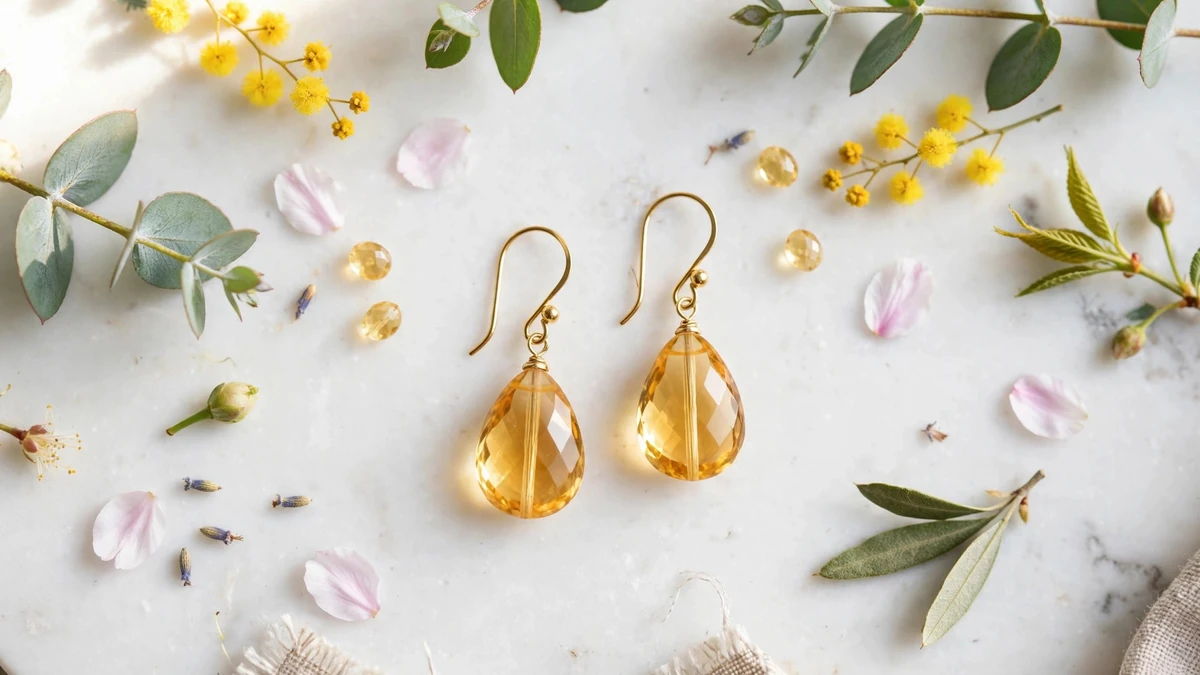
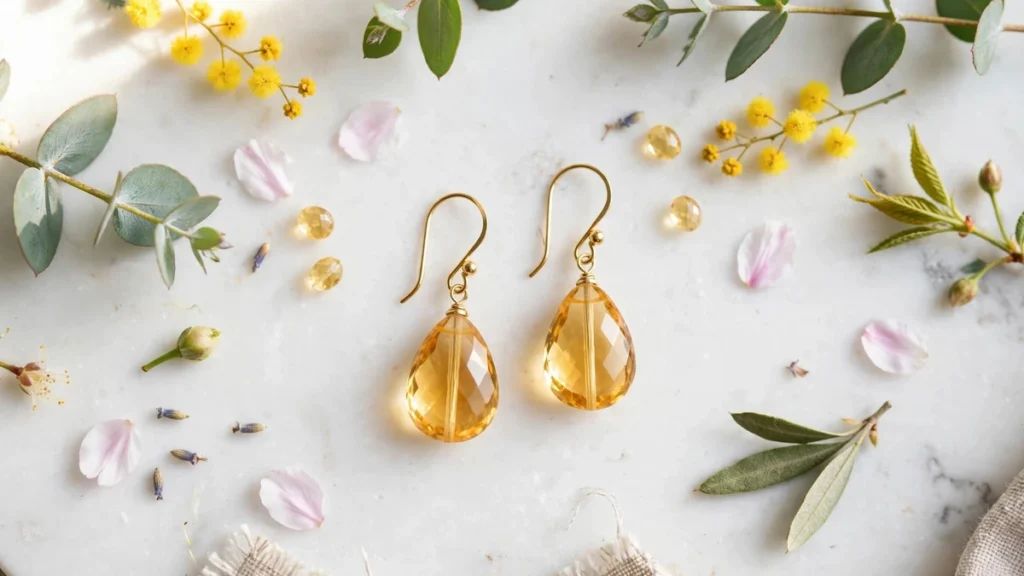
Citrine is spring’s warmest gemstone. It is the yellow to honey-orange variety of quartz, and in soft spring light it reads as sunshine in a setting: pale lemon in the morning, deeper amber-gold by evening. It suits the season’s palette of cream, sage, denim and soft pastels, and because it is quartz, it is hard enough to wear every day without the worry that comes with softer spring stones.
The problem is not finding citrine earrings. It is knowing what you are actually buying. Most of the citrine sold today is heat-treated amethyst, which turns purple quartz a golden yellow in a kiln. That treatment is stable and permanent, and the trade accepts it, but it should be disclosed, and it is not the same as natural citrine, which is rarer and usually paler. Colour also varies widely, from almost colourless yellow to a deep burnt orange, and the deepest colours are the ones most often treated.
Below are nine citrine earrings worth considering for spring 2027, from fine-jewellery studs to affordable drops for everyday wear. Each one is described by what it is good at, what to watch for, and who it suits best, so you can choose with the stone in mind, not just the colour in the photograph.
Key takeaways
- Citrine is yellow to orange quartz, hard enough for daily wear at Mohs 7, and one of the most practical coloured stones for spring.
- Most commercial citrine is heat-treated amethyst; the treatment is stable and permanent, but it should be disclosed and priced accordingly.
- Natural citrine is usually paler and rarer than treated material, and deep burnt-orange colour is the most common sign of treatment.
- Choose a secure setting and a size you will actually wear; small studs suit everyday wear, drops suit evenings and occasions.
- Citrine has no proven healing properties, and it is not an investment stone, so buy it for the colour and the wear, not for a return.
What citrine actually is
Citrine is quartz coloured by traces of iron. The same mineral family gives us amethyst, rose quartz and smoky quartz, and citrine sits at the warm end of that family. Its colour runs from pale lemon yellow through honey gold to a deep amber-orange, sometimes called Madeira citrine after the fortified wine it resembles. The pale stones are usually natural; the deep orange stones are usually heat-treated amethyst, and the difference matters more for price than for wear, because both are the same mineral with the same hardness.
At Mohs 7, citrine is a practical everyday stone. It will not scratch from normal contact with keys or a handbag clasp, and it does not need the careful handling that softer stones demand. It can be cleaned with warm soapy water and a soft brush, and it tolerates daylight without fading. That makes it a good choice for earrings you plan to wear often rather than save for occasions, and for spring, when jewellery comes out of winter storage and gets worn in sun and rain.
For spring styling, citrine works best as a warm accent against cool colours. It pairs well with white, cream, sage green, navy and denim, and it warms up grey and black without overpowering them. Small studs read as a quiet flash of gold; larger drops read as a statement. The stone’s colour is warm enough to flatter most skin tones, but the setting matters: yellow gold deepens the warmth, white gold and silver keep it crisp, and rose gold sits somewhere in between.
How we chose these earrings and what to look for
Look first at the colour and ask whether it is natural or treated. A pale, even lemon-yellow stone is most likely natural citrine. A deep, saturated orange is most likely heat-treated amethyst. Neither is a reason to walk away, but the price should reflect it: treated material should cost less, and any seller who will not say which it is should be treated with caution. A certificate is worth asking for on a fine-jewellery piece, and a clear description is the minimum on anything else.

Look next at the cut and the clarity. Citrine is usually clean, with few visible inclusions, so a cloudy or heavily included stone is a sign of lower quality. A well-cut stone should be lively in daylight, not flat or glassy. Our guide to the best diamond earrings sets out the same clarity and cut checks in more detail, and they apply here too, because a good cut matters as much for a coloured stone as for a diamond.
Finally, look at the setting and the back. Citrine is hard, so it does not strictly need a bezel, but a four-prong setting still protects the corners of a faceted stone, and a bezel is the safest choice for a larger drop. Screw backs or secure butterfly backs matter more than they seem: a lost earring is the most common way a good pair becomes a single earring, and spring is the season of scarves, coats and hair coming down, all of which catch on earrings.
The 9 best citrine earrings for spring 2027
Tiffany & Co. Citrine Studs
What we like: Classic four-prong studs in a fine-jewellery setting, with clean, well-matched stones and a secure screw back. What to consider: Premium price, and the colour is a pale, natural-looking yellow rather than a deep orange. Stone: Citrine, faceted round. Setting: 18k yellow gold, four-prong. Best for: Everyday fine jewellery. Price range: $900 to $1,800.
The benchmark for a citrine stud. The stones are matched for colour, the setting is neat and secure, and the pale yellow is the kind of colour that looks expensive rather than loud.
Cartier Citrine Studs
What we like: A refined setting with excellent finishing, and stones chosen for even colour and clarity. What to consider: The highest price in this roundup, and the design is deliberately understated. Stone: Citrine, faceted round. Setting: 18k yellow gold, four-prong. Best for: A lasting fine-jewellery purchase. Price range: $1,800 to $3,500.
For anyone buying one pair of citrine earrings to keep for years, this is the most considered choice. The understated design is the point: the stone does the work.
David Yurman Citrine Studs
What we like: A sculptural setting with the brand’s signature cable detail, and a warm, honeyed stone colour. What to consider: The cable detail suits some styles more than others, and the stones are modest in size. Stone: Citrine, faceted cushion. Setting: 18k yellow gold with sterling silver. Best for: Signature everyday luxury. Price range: $450 to $950.
A good middle ground between fine jewellery and fashion jewellery. The cable setting is distinctive without being fussy, and the honey colour is flattering in spring light.
Mejuri Citrine Stud Earrings
What we like: A clean, modern stud at a fair price, with a secure back and a clear, bright stone. What to consider: The stone is small, so it reads as a subtle accent rather than a statement. Stone: Citrine, faceted round. Setting: 14k yellow gold, four-prong. Best for: Everyday wear on a budget. Price range: $100 to $220.
The sensible everyday choice. Small, bright and well made, and the price leaves room for a second pair in a different stone.
Monica Vinader Citrine Studs
What we like: A neat, wearable stud with a warm gold setting and a clear stone, easy to pair with other jewellery. What to consider: The gold is vermeil rather than solid, so it needs gentler care. Stone: Citrine, faceted round. Setting: 18k gold vermeil on sterling silver. Best for: Everyday wear and layering. Price range: $110 to $260.
A strong option for anyone building a spring jewellery wardrobe. The warm gold and pale yellow sit well with the season’s soft colours.
Missoma Citrine Stud Earrings
What we like: A simple, well-proportioned stud with a bright stone and a comfortable back. What to consider: The gold is vermeil, and the stone is on the smaller side. Stone: Citrine, faceted round. Setting: 18k gold vermeil on sterling silver. Best for: Minimal everyday wear. Price range: $85 to $190.
Quiet and well made. This is the pair to reach for when you want a hint of colour without a statement.
Maria Black Citrine Studs
What we like: A slightly more architectural setting that suits the brand’s modern, sculptural style. What to consider: The design is more distinctive than a classic stud, so it suits fewer outfits. Stone: Citrine, faceted round. Setting: 14k yellow gold, bezel. Best for: Modern, sculptural styling. Price range: $150 to $380.
The bezel setting protects the stone well and gives the earring a clean, contemporary line. A good choice if classic prong settings feel too plain.
Astrid & Miyu Citrine Drops
What we like: A light, wearable drop with a warm stone and a secure hook, good for evenings and occasions. What to consider: Drops catch on hair and scarves more than studs, and the gold is plated. Stone: Citrine, faceted pear. Setting: Gold-plated sterling silver, hook. Best for: Spring evenings and occasions. Price range: $60 to $140.
The most affordable way to wear citrine as a statement. The pear cut catches the light well, and the drop length is flattering without being heavy.
Thomas Sabo Citrine Drops
What we like: A well-finished drop with a clear stone and a comfortable, secure fastening. What to consider: The setting is silver, which keeps the colour crisp but cooler than gold. Stone: Citrine, faceted pear. Setting: 925 sterling silver, hook. Best for: Occasions and spring events. Price range: $80 to $180.
A good occasion pair. The silver setting keeps the yellow crisp and bright, and the pear cut gives the drop movement.
Which citrine earrings are right for you
For everyday wear, choose small studs in a secure setting. A four-prong or bezel stud in yellow gold is the most practical combination: the stone is protected, the back is secure, and the colour works with most of what you already wear. A pale to medium honey colour is the most versatile, because it reads as warm rather than orange, and it sits well against both cool and warm skin tones.
For evenings and occasions, choose drops. A pear or oval citrine on a hook gives the stone room to catch the light, and the movement suits spring dresses and open necklines. Keep the rest of your jewellery simple when the earrings are the statement, and avoid pairing citrine drops with a busy necklace in the same warm tones. Our guide to gold jewellery for everyday wear is a useful frame here, because the same rules about balance and proportion apply to coloured stones as to plain gold.
For a first fine-jewellery purchase, ask about treatment and get it in writing. A seller who can tell you whether the stone is natural or heat-treated, and who will put it on the receipt, is a seller you can trust. The treatment does not make the stone worse, but it does change what it should cost, and a first purchase is the wrong time to pay a natural-stone price for treated material.
The caveats that matter
Citrine is an honest, practical stone, but it is not a rare one, and it should not be sold as if it were. Natural citrine is uncommon, most of what is sold is treated, and the price should reflect that. It is also a stone that photographs more vividly than it looks in person: a deep orange in a product photo is often a paler honey in daylight, so check the return policy before buying online, and look at the stone in natural light when it arrives.
| Detail | What is known |
|---|---|
| What it is | Yellow to orange quartz, coloured by traces of iron |
| Hardness | Mohs 7, hard enough for everyday wear |
| Most common treatment | Heat-treated amethyst, stable and permanent, should be disclosed |
| Natural citrine | Usually paler, rarer, and more expensive than treated material |
| Colour range | Pale lemon yellow to deep amber-orange, sometimes called Madeira |
| Cleaning | Warm soapy water and a soft brush; avoid harsh chemicals |
| Who should check first | Anyone paying a fine-jewellery price should ask for treatment disclosure in writing |
| What it is not | Not a rare stone, not an investment stone, and with no proven healing properties |
If you are buying citrine as a birthstone gift, note that citrine is the birthstone for November, alongside topaz. That makes it a thoughtful gift for a November birthday, but it also means November is the season when demand, and prices, tend to rise. Buying in spring, when the stone is out of season as a gift, is often the better time to find a good pair at a fair price.
Checklist: choosing citrine earrings honestly
Use these checks before you buy, and again when the earrings arrive.
- Ask whether the stone is natural or heat-treated, and get the answer in writing for a fine-jewellery piece.
- Check the colour in daylight, not just in the product photo, and confirm the return policy before buying online.
- Check the setting: prongs should be even and secure, and a bezel should sit flush with no gaps.
- Check the back: a screw back or a secure butterfly back is worth paying for, because a lost earring is the most common loss.
- Check the clarity: citrine is usually clean, so a cloudy or heavily included stone is a sign of lower quality.
- Match the size to the wear: small studs for every day, drops for evenings, and nothing so heavy it pulls at the earlobe.
Frequently asked questions
Is most citrine heat-treated amethyst?
Yes. Most of the citrine sold today is amethyst that has been heated until it turns yellow to orange. The treatment is stable and permanent, and the trade accepts it, but it should be disclosed, and treated material should cost less than natural citrine.
Is citrine durable enough for everyday wear?
Yes. At Mohs 7 it is hard enough for daily wear, and it does not fade in daylight. Clean it with warm soapy water and a soft brush, and store it separately from harder stones such as diamonds and sapphires, which can scratch it.
What colour of citrine is best for spring?
A pale to medium honey gold is the most versatile for spring. It works with cream, sage, navy and denim, and it reads as warm without overpowering a soft spring palette. Deep burnt-orange suits autumn better than spring.
Does citrine go with yellow gold or white gold?
Both work. Yellow gold deepens the warmth and suits a classic look, while white gold and silver keep the yellow crisp and modern. Rose gold sits in between. Choose the metal you already wear most, so the earrings fit your existing jewellery.
Is citrine a good birthstone gift?
Citrine is the birthstone for November, alongside topaz, so it is a thoughtful gift for a November birthday. Buy it for the colour and the wear, not as an investment: citrine is not a rare stone, and its value does not rise like a diamond’s. Our guide to spring accessory trends shows how citrine fits the season’s wider jewellery picture.
How do I clean citrine earrings?
Warm soapy water and a soft brush, then rinse and dry with a soft cloth. Avoid ultrasonic cleaners on treated stones if you are unsure of the treatment, and keep perfume and hairspray away from the setting, because they can dull the metal over time.
The bottom line
The best citrine earrings for spring 2027 are the ones that match the stone to the wear. Small, well-set studs in a secure setting are the everyday choice, and a pear-cut drop is the occasion choice. In both cases, the colour should be clear and even, the setting should protect the stone, and the seller should be able to tell you whether the stone is natural or treated.
Buy citrine for its warmth and its practicality, not for rarity or investment. A well-chosen pair in a honey gold will work through spring and well beyond it, and because the stone is hard and easy to care for, it is one of the few coloured stones you can genuinely wear every day.