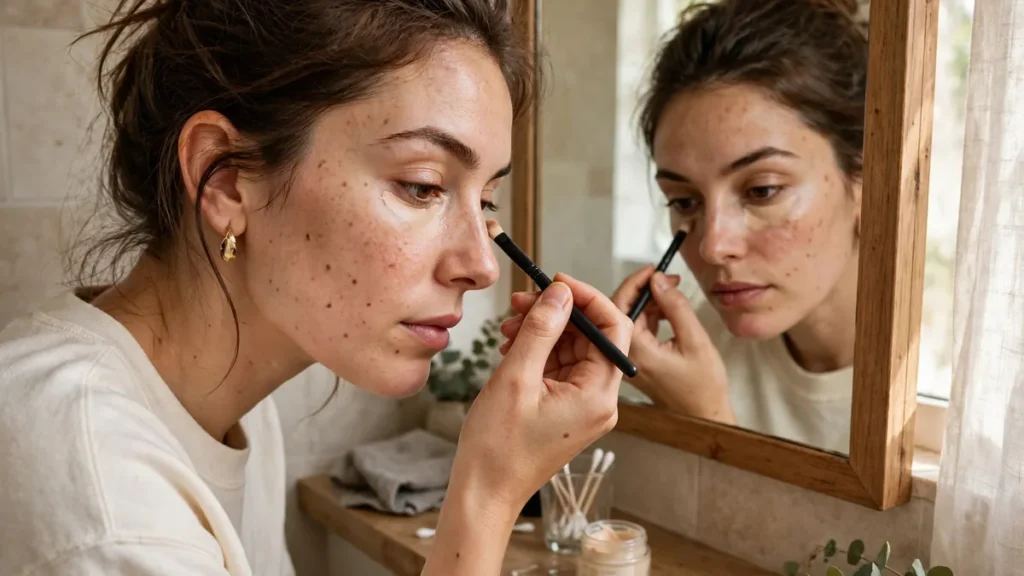
Dark circles are one of the most common makeup frustrations, and one of the most misunderstood. They are rarely a sign of tiredness alone. Thin skin under the eyes, visible blood vessels, natural shadowing in the tear trough, pigmentation, and loss of volume with age can all make the area look darker, and no single concealer can fix every cause. What a good concealer can do is far simpler, and far more useful: it can even out the colour, brighten the area, and make you look rested, without drawing attention to itself.
The difference between a concealer that works and one that disappoints is usually not the price. It is the shade, the undertone, and the finish. A shade that is too light turns grey or ashy. A shade that is too warm turns orange. A formula that is too dry settles into fine lines by midday, while one that is too dewy slides away. The best concealers for dark circles get all three right: a brightening shade with the correct undertone, a flexible texture that moves with the skin, and coverage that can be built up without looking heavy.
Below are nine concealers worth considering in 2027, from an affordable drugstore classic to a luxurious skin-care hybrid. Each one is described by what it is good at, what to watch for, and who it suits best, so you can choose for your skin tone, your skin type, and the kind of darkness you are covering, not just a bestseller list.
Key takeaways
- Choose a concealer one shade lighter than your foundation, with a peach or salmon undertone for blue or purple circles and a yellow undertone for brown circles.
- Hydrating, flexible formulas suit dry or mature under-eyes, while long-wearing, crease-resistant formulas suit oily skin and long days.
- Apply a thin layer with a warm fingertip or a damp sponge, let it sit for a minute, then blend the edges and set lightly with powder.
- Niacinamide, caffeine, hyaluronic acid and vitamin C are useful supporting ingredients, and a dry, chalky texture is the most common cause of creasing.
- No concealer removes dark circles permanently or fills a deep tear trough, and a shade that looks perfect in the shop may look grey or orange in daylight.
What this guide covers, and what dark circles really are
Dark circles have more than one cause, and the cause shapes the fix. Blue or purple circles usually come from thin skin showing the blood vessels beneath it. Brown or grey circles are more often pigmentation, and are more common in deeper skin tones. Hollow-looking circles come from shadowing where the under-eye area dips, and puffiness can cast a shadow that looks like darkness even when the skin itself is even-toned. Most people have a mix of two of these, which is why one product rarely solves everything on its own.
Colour correction matters because concealer works by cancelling colour, not just by covering it. Peach and salmon tones neutralise blue and purple, yellow neutralises violet and dullness, and orange is needed for deeper skin tones where a pale peach would turn ashy. That is why the right undertone often matters more than the brand. A concealer in the wrong undertone can be the right depth and still look wrong, while a well-chosen undertone can make a medium-coverage formula look flawless.
Texture matters just as much. The skin under the eyes is thin, moves constantly, and has almost no oil glands of its own. A formula that is too thick will crease. A formula that is too thin will fade by lunchtime. The best concealers for this area are creamy enough to blend without tugging, flexible enough to move when you smile, and pigmented enough that a thin layer is sufficient. Less product, well placed, almost always looks better than a thick layer spread over the whole under-eye.
How we chose these concealers and what to look for
Look first at the undertone, not just the shade name. Hold the concealer against your jaw and your under-eye in natural daylight, and check whether it brightens or turns grey. For fair to light skin, a light peach usually works best. For medium skin, a true peach or salmon is often right. For deep skin, an orange-toned corrector under a skin-toned concealer gives the most natural result. If you are unsure, choose the warmer option; a slightly warm concealer looks like healthy skin, while a cool one looks tired.

Look next at the finish and the wear. Dry or mature under-eyes need a hydrating, radiant finish that does not settle into lines. Oily skin and long days need a matte or satin finish that stays put without sliding. A concealer that creases in the first hour will not improve by the fifth, so test wear, not just colour. A good eye cream underneath helps too: our guide to the best eye creams for dark circles explains how hydration and gentle brightening ingredients prepare the skin so concealer sits more smoothly.
Finally, look at the applicator and the amount you actually need. A doe-foot wand suits quick, targeted application. A pot or tube suits precise work with a brush. A click pen suits travel and touch-ups. Whichever you choose, remember that a pea-sized amount is usually enough for both eyes. Building coverage in thin layers gives a smoother, longer-lasting result than one heavy layer.
The 9 best concealers for dark circles of 2027
NARS Radiant Creamy Concealer
What we like: A creamy, medium-to-full coverage formula with a radiant finish that brightens without looking shiny, blends easily, and suits most skin types.
What to consider: It can crease on very dry under-eyes without a light set, and the shade range needs careful matching. Key shades: Vanilla, Custard, Ginger, Biscuit. Finish: Radiant. Coverage: Medium to full. Best for: Most skin types.
This is the concealer other concealers are measured against. It is not the newest or the cheapest, but for everyday dark circles it is a dependable, flattering choice that most people will finish and repurchase.
Tarte Shape Tape Concealer
What we like: Very high coverage with a matte finish that lasts all day, covers strong pigmentation, and doubles as a spot concealer.
What to consider: It is full coverage and can look heavy if over-applied, so use a small amount and blend well. Key shades: Fair, Light, Medium, Tan. Finish: Matte. Coverage: Full. Best for: Strong darkness, long wear.
For dark circles that need real coverage, this is a strong choice. A little goes a long way, and a thin, well-blended layer looks far more natural than a thick one.
Maybelline Instant Age Rewind Eraser
What we like: An affordable, hydrating formula with a sponge applicator, a brightening finish, and a shade range that includes useful peachy brighteners.
What to consider: Coverage is medium rather than full, so very dark circles may need a corrector underneath. Key shades: Fair, Light, Medium, Brightener. Finish: Radiant. Coverage: Medium. Best for: Everyday wear, dry skin.
A sensible, no-fuss choice for daily use. It is inexpensive, easy to apply, and one of the best-value picks for mild to moderate dark circles.
Charlotte Tilbury Beautiful Skin Radiant Concealer
What we like: A skin-care-infused formula with a radiant, flexible finish that brightens, hydrates, and resists settling into fine lines.
What to consider: Premium price, and the radiant finish may be too dewy for very oily skin. Key shades: Fair, Light, Medium, Tan. Finish: Radiant. Coverage: Medium. Best for: Dry, mature skin.
For under-eyes that are dry or lined, this is a lovely option. It feels like skin care, looks like skin, and keeps the area looking fresh rather than made up.
Kosas Revealer Concealer
What we like: A creamy, skin-care-led formula with caffeine, hyaluronic acid and peptides, medium coverage, and a natural, healthy finish.
What to consider: It is not the longest-wearing option, so oily skin may need a light powder set. Key shades: Fair, Light, Medium, Deep. Finish: Natural. Coverage: Medium. Best for: Sensitive, dry skin.
This is the gentle, everyday option for skin that dislikes heavy makeup. It brightens gradually, feels comfortable all day, and suits a natural, no-makeup look.
Too Faced Born This Way Multi-Use Sculpting Concealer
What we like: Full, flexible coverage with a natural finish, a wide shade range, and a formula that works for under-eyes, blemishes and contouring.
What to consider: It is rich, so a little is enough, and very dry skin should prep well first. Key shades: Fair, Light, Medium, Deep. Finish: Natural. Coverage: Full. Best for: Versatile, full coverage.
For people who want one concealer for everything, this is a strong choice. It covers dark circles well, blends smoothly, and lasts through a long day.
Dior Forever Skin Correct Concealer
What we like: A long-wearing, crease-resistant formula with a natural matte finish, strong coverage, and a refined, skin-like look.
What to consider: It is a luxury price, and the matte finish suits oily and combination skin best. Key shades: Fair, Light, Medium, Deep. Finish: Natural matte. Coverage: Medium to full. Best for: Oily skin, long wear.
This is the polished option for days when makeup needs to last. It stays in place, resists creasing, and keeps dark circles covered without looking flat.
Hourglass Vanish Airbrush Concealer
What we like: A weightless, full-coverage formula with a soft, airbrushed finish that blurs darkness and fine lines without feeling heavy.
What to consider: It sets quickly, so blend promptly, and the price is premium. Key shades: Fair, Light, Medium, Deep. Finish: Satin. Coverage: Full. Best for: A flawless, filtered finish.
For a smooth, blurred under-eye, this is one of the most impressive options. A tiny amount covers a lot, and the finish looks polished rather than powdered.
e.l.f. Hydrating Camo Concealer
What we like: A budget-friendly, hydrating formula with full coverage, a satin finish, and a large shade range for the price.
What to consider: It can crease without powder on oily skin, and the doe-foot applicator dispenses a generous amount. Key shades: Fair, Light, Medium, Deep. Finish: Satin. Coverage: Full. Best for: Budget, full coverage.
This is the best-value full-coverage concealer here. It proves that effective coverage for dark circles does not need a luxury price, as long as it is applied thinly and set well.
Which concealer is right for your skin
Fair to light skin with blue or purple circles usually needs a light peach concealer, one shade lighter than foundation. A brightening shade in the inner corner adds lift, while the main shade should match the face so the under-eye does not look detached. Avoid shades that are too pale, which turn grey in daylight and draw more attention to the area.
Medium to deep skin with brown or grey circles often needs a warmer approach. A peach or orange corrector first, followed by a skin-toned concealer, gives a more natural result than a single pale concealer. Deep skin should avoid very light shades, which look ashy, and choose a concealer close to the foundation shade with a warm undertone. The same principle applies to the rest of the base: our guide to the best foundations for dry skin shows how a well-matched, hydrating base helps concealer blend seamlessly.
Dry or mature under-eyes need hydration first and coverage second. A rich eye cream, a creamy concealer, and a very light dusting of powder will look smoother than a matte formula applied to dry skin. Oily skin needs the opposite: a long-wearing, crease-resistant formula, blotted before application, and set with a fine powder. Either way, the goal is the same: a thin, flexible layer that moves with the skin.
The caveats that matter
Concealer is makeup, not treatment, and it has honest limits. It cannot remove pigmentation, fill a hollow tear trough, or reduce puffiness on its own. Those concerns need skin care, sleep, and in some cases a clinician, not a heavier layer of product. If dark circles appear suddenly, change quickly, or come with swelling, pain or a rash, speak to a clinician rather than covering them.
| Detail | What is known |
|---|---|
| Best shade rule | One shade lighter than foundation, with a peach undertone for blue circles and yellow for brown circles |
| How much to use | A pea-sized amount for both eyes, built in thin layers rather than one heavy layer |
| How to apply | Warm fingertip or damp sponge, let it sit for a minute, blend the edges, set lightly with powder |
| Who needs a corrector first | Strong blue, purple or brown circles, and deeper skin tones where pale concealer turns ashy |
| What causes creasing | Too much product, a dry formula on dry skin, or skipping powder on oily skin |
| Dry versus oily skin | Hydrating, radiant formulas for dry skin; long-wearing, matte formulas for oily skin |
| What concealer cannot do | Remove pigmentation, fill a hollow tear trough, or reduce puffiness on its own |
| When to see a clinician | Sudden dark circles, swelling, pain, a rash, or circles that do not improve with rest and care |
Shade matching in a shop is also unreliable. Artificial light flatters most concealers, so always check a shade in daylight before buying, and wear it for a few hours to see how it settles. A concealer that looks perfect at noon can look dry or orange by evening, and that is the real test.
Checklist: choosing a concealer honestly
Use these checks before you buy, and again after a week of wear.
- Check the undertone: peach for blue or purple circles, yellow for brown circles, orange for deeper skin tones.
- Check the shade in daylight: one shade lighter than foundation, never so pale that it turns grey or ashy.
- Check the finish: hydrating and radiant for dry skin, long-wearing and matte for oily skin.
- Patch-test first: wear a new concealer for a full day to check creasing, fading and irritation.
- Apply thinly: use a pea-sized amount for both eyes, let it sit, blend the edges, and set lightly.
- Prep the skin: moisturise well first, because concealer sits better on hydrated skin than on dry skin.
Frequently asked questions
What colour concealer is best for dark circles?
Peach or salmon for blue and purple circles, yellow for brown or dull circles, and orange for deeper skin tones. The corrector cancels the unwanted colour, so the skin-toned concealer on top can be thinner and look more natural.
Should concealer be lighter or darker than foundation?
Usually one shade lighter than foundation, for a gentle brightening effect. Much lighter looks grey or ashy, especially in daylight, while a shade that matches foundation exactly can still cover well if the undertone is right.
Why does my concealer crease under my eyes?
Usually because too much product was applied, or because the formula is too dry for the skin. Use less, let it sit for a minute before blending, and set with a very light dusting of powder. Well-moisturised skin creases less, which is why a good base matters: our guide to the best moisturisers for dry skin covers the hydration step that helps concealer sit smoothly.
Do I need a colour corrector before concealer?
Not always. Mild circles can be covered with a well-chosen concealer alone. Strong blue, purple or brown circles, and deeper skin tones, usually look better with a thin layer of corrector first, followed by a skin-toned concealer.
Can concealer make dark circles look worse?
Yes, if the shade is too light, too cool, or too thick. A pale, chalky layer draws attention to the area, and a heavy layer settles into fine lines. A thin layer in the right undertone, well blended and lightly set, is almost always more flattering.
How do I make concealer last all day?
Prep with moisturiser, apply a thin layer, let it sit before blending, set lightly with powder, and avoid touching the area. For very long days, a long-wearing formula and a light setting spray will help it stay in place without looking heavy.
The bottom line
The best concealer for dark circles in 2027 is not the most expensive or the highest coverage. It is the one in the right undertone, in a texture that suits your skin, applied thinly and blended well. For most people, a peach-toned, medium-coverage concealer with a flexible finish will do more than a full-coverage formula in the wrong shade.
Choose one concealer that matches your undertone and your skin type, learn the thin-layer technique, and wear it in daylight before deciding. That is the honest way to brighter, more rested-looking eyes, without spending more than you need to.
Note: This guide is general beauty information, not medical advice. Patch-test new products, and speak to a dermatologist if you have persistent dark circles, swelling, irritation, or a rash, or if your skin does not improve with regular care.