

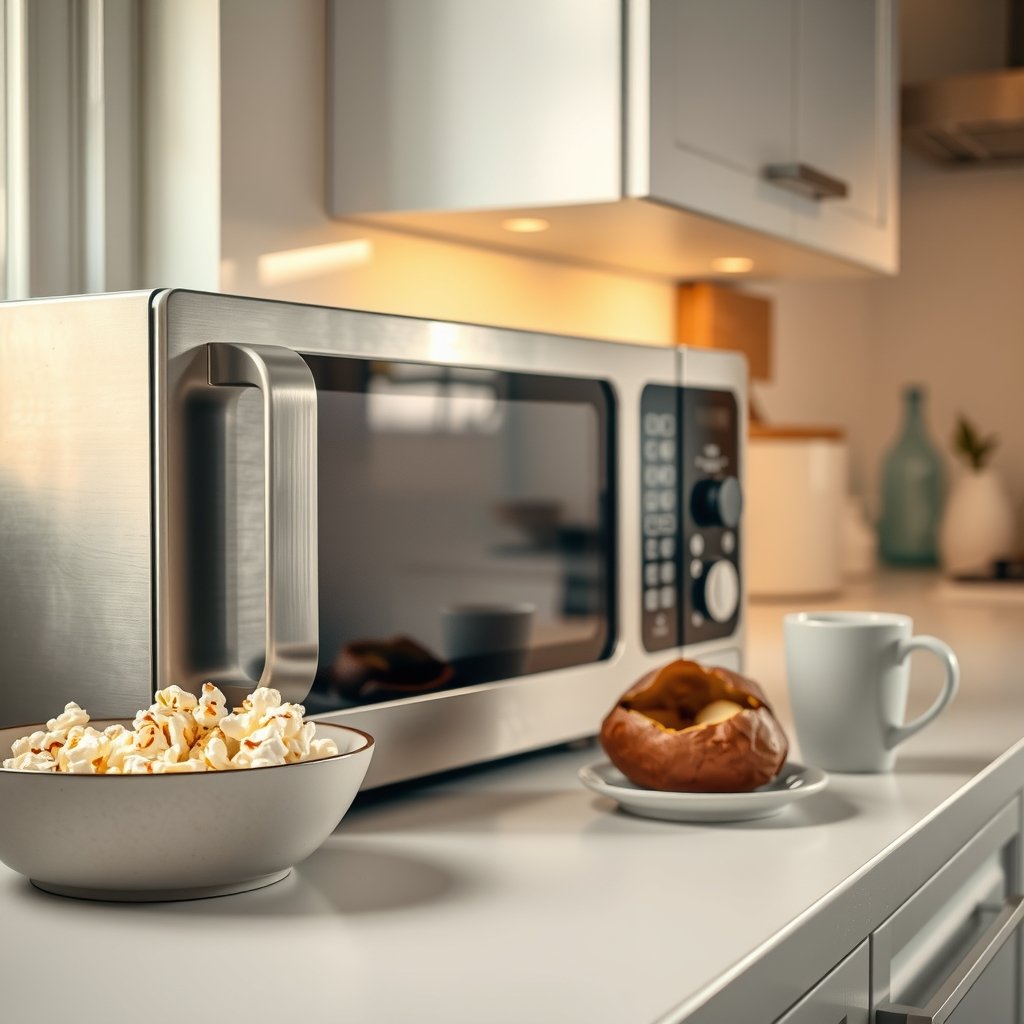
What if the most-used appliance in your kitchen is also the one you thought about the least? That’s the strange reality of the countertop microwave. It reheats your coffee, defrosts tonight’s chicken, pops the popcorn, and steams the broccoli, usually without a single complaint. Yet most people buy one in a panic after the old one dies, grabbing whatever box fits the gap.
That’s a mistake worth fixing. Lab testers have run more than 16 countertop microwaves through years of testing, checking how evenly they heat a casserole, how fast they pop popcorn, and how well they bake a potato. The differences are real. Some units leave cold spots in the middle of leftovers. Others run so quietly you forget they’re on. A few now air fry and bake, replacing two other appliances entirely.
Below is a shortlist of named models, matched to the kind of cook you are, followed by the practical details that actually matter when you’re standing in the store.
The Shortlist at a Glance
| Model | Best For | Capacity | Wattage | Standout Strength |
|---|---|---|---|---|
| Toshiba 7-in-1 Countertop Microwave Oven | Do-it-all cooking | Not stated | Not stated | Air fry, bake, and microwave in one box |
| Panasonic Genius Sensor Inverter NN-SN67HS | Even heating | 1.2 cu ft | 1,200 W | Inverter tech fights hot and cold spots |
| BLACK+DECKER EM720CB7 | Small kitchens and budgets | 0.7 cu ft | 700 W | Compact footprint, sensor presets, child lock |
| Breville countertop model | Looks and build quality | Not stated | Not stated | Premium finish that earns counter space |
| Magic Chef 1.1 cu ft Countertop Microwave | No-frills value | 1.1 cu ft | Not stated | Simple dials, strong popcorn results |
Toshiba 7-in-1 Countertop Microwave Oven: Best Overall
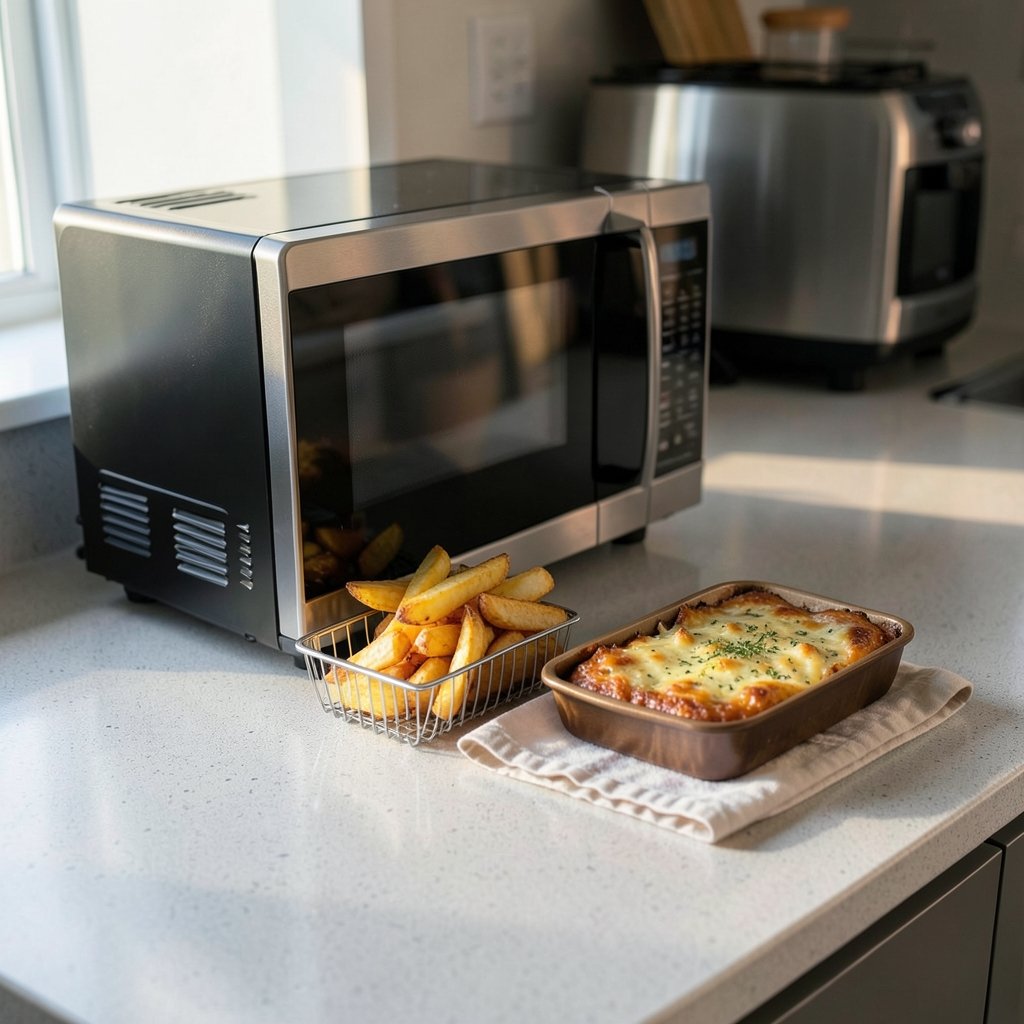
If counter space is precious and you’d rather not own three appliances, this is the model testers keep pointing to. The Toshiba 7-in-1 earned the top-tested spot in lab evaluations precisely because it does more than reheat. It air fries, bakes, and handles the standard microwave jobs, which means one footprint on your counter instead of a microwave plus a separate air fryer.
Who it suits: households that cook real meals and want versatility without a wall of gadgets. If you’ve already been thinking about how a best espresso machine can fit your counter alongside everything else, consolidating appliances is the same logic applied to cooking.
The limitation: multi-function machines ask more of you. There’s a learning curve, more presets to decode, and more that can go wrong down the road. If you only ever reheat leftovers, you’re paying for features you won’t touch.
Panasonic Genius Sensor Inverter NN-SN67HS: Best for Even Heating
Cold spots in the middle of a bowl of soup are the classic microwave frustration. Panasonic’s inverter technology is the fix. Instead of pulsing full power on and off, an inverter delivers steady, continuous power at lower levels, which is why this model is consistently flagged for even cooking. At 1,200 watts and 1.2 cubic feet, it has both the muscle and the room for family-sized dishes.
Who it suits: anyone who reheats dense foods like casseroles, roasts, or frozen blocks of ground beef and is tired of stirring around lukewarm centers.
The limitation: it’s a microwave, not a multi-cooker. No air frying, no baking. You’re buying heating performance, not versatility.
One practical note from real owners: some Panasonic units have been reported to interfere with Wi-Fi during use, and at least one user found the interior darker than expected. Neither is a dealbreaker, but if your router sits next to the microwave, factor that in.
BLACK+DECKER EM720CB7: Best for Tight Counters and Tight Budgets
Not everyone has two feet of counter to spare. At 0.7 cubic feet and 700 watts, this compact unit is built for small kitchens, dorm rooms, and offices. It still packs preprogrammed buttons for common foods, sensor technology that adjusts cook times, and a child-safety lock, which is more than you’d expect at this size.
Who it suits: singles, students, and anyone cooking for one. As a rough guide, up to 0.9 cubic feet is generally enough for one person, while families of four or more typically need 1.7 to 2.2 cubic feet.
The limitation: 700 watts is modest. Reheating takes longer, and dense foods may heat unevenly. It also won’t handle a large dinner plate. Measure your plates before you buy.
Breville Countertop Microwave: Best for Looks and Build
Here’s an honest truth from owner forums: most microwaves look cheap on a counter, and people notice. The Breville is the recurring exception. Owners describe it as the one model that doesn’t look out of place in a finished kitchen, and they call it expensive but worth it if the microwave has to sit in plain view.
Who it suits: open-plan kitchens, design-conscious buyers, and anyone whose microwave is the first thing guests see.
The limitation: price. This is a premium pick, and you’re paying partly for finish and feel rather than raw specs. If the microwave lives in a cabinet or a corner, that premium buys you very little.
Magic Chef 1.1 Cubic Foot Countertop Microwave: Best Simple Value
Sometimes you want dials, not a touchscreen menu. The Magic Chef 1.1 cubic foot model is inexpensive, intuitive, and surprisingly capable. Testers found it excellent at reheating burritos and breakfast sandwiches, and its popcorn setting produced a fuller bag than some far pricier competitors. Baked potatoes came out perfect.
Who it suits: buyers who want straightforward operation and don’t care about smart features or preset menus.
The limitation: consistency. Testers occasionally hit cold spots and got better results by adjusting power levels and cooking times themselves rather than following package instructions. Steamed broccoli and mac and cheese tended toward mushy. There are also reasonable concerns about long-term durability at this price.
How to Choose a Countertop Microwave
Once you’ve narrowed the field, these are the details that separate a good purchase from a regret.
Match capacity to your household. Up to 0.9 cubic feet suits one person. Two to three people generally need 1 to 2 cubic feet. Families of four or more should look at 1.7 to 2.2 cubic feet. Compact models typically measure 15 to 18 inches wide and 10 to 14 inches deep, so measure your gap and your largest plates before anything else.
Understand wattage. Higher wattage means faster, more even heating. A 700-watt unit works, but it will feel slow next to a 1,200-watt inverter model. If you cook from frozen often, spend up on power.
Decide whether you want a second appliance in disguise. Convection and air-fry modes genuinely work, but only if you’ll use them. Otherwise, you’re paying for complexity.
Check the small stuff. Can you mute the beeps? Is the interior light bright enough to see what you’re reheating? Do the buttons respond on the first press? These annoyances compound over years of daily use.
Think about placement before purchase. A microwave needs clearance for its vents and a dedicated outlet. If you’re rearranging the kitchen anyway, this is the moment to think about how surfaces work together, much like when you pair a kitchen countertop backsplash without visual clutter. A cluttered counter makes even a great microwave feel like a problem.
Verify current pricing and specs yourself. Prices shift constantly, and the figures floating around in reviews go stale fast. Check the manufacturer’s page for the model you want before you commit.
Mistakes People Make With Countertop Microwaves
The most common error is buying by size alone. A unit that fits the gap but leaves cold spots will annoy you every single day. The second is overbuying features. A 7-in-1 machine is wonderful if you air fry weekly and a waste if you don’t.
The third is ignoring the door and interior. A dark cavity makes it hard to check whether food is done, and a stiff door handle gets old fast. The fourth is skipping the manual. Many “uneven heating” complaints trace back to using the wrong power level, not a faulty appliance.
Finally, don’t forget maintenance. Splatters bake on and absorb energy, so wipe the interior regularly. The same principle applies to the surfaces around it: knowing how to clean quartzite countertops without dulling the finish keeps the whole setup looking sharp. And if you’re curious about what’s inside the box, the way microwaves are built from magnetrons explains why even heating is an engineering challenge, not a given.
Conclusion
The best countertop microwave isn’t the one with the longest feature list. It’s the one that matches how you actually cook. If you want one appliance to do the work of three, the Toshiba 7-in-1 is the standout. If even heating is your priority, the Panasonic inverter model earns its place. Small kitchens and tight budgets have a solid answer in the BLACK+DECKER, design lovers have the Breville, and no-frills shoppers have the Magic Chef.
Measure your space, decide what you’ll genuinely use, and check current specs before buying. Do that, and the most-used appliance in your kitchen will finally be one you chose on purpose.
FAQ
What is the best countertop microwave overall?
The Toshiba 7-in-1 Countertop Microwave Oven takes the top-tested spot in lab evaluations because it combines standard microwave heating with air frying and baking. It suits households that want one appliance to cover several jobs. If you only reheat food, a simpler model will serve you just as well for less.
How many watts should a countertop microwave have?
There’s no single answer, but higher wattage heats faster and more evenly. Compact 700-watt models work fine for light use, while 1,000 to 1,200 watts handles frozen and dense foods with fewer cold spots. If you cook from frozen regularly, prioritize wattage over extra presets.
What size microwave do I need for my household?
Capacity should match how many people you feed. Up to 0.9 cubic feet is generally enough for one person. Two to three people usually need 1 to 2 cubic feet, and families of four or more typically need 1.7 to 2.2 cubic feet. Always measure your counter gap and your largest plates first.
Do I need a microwave with an inverter?
Not necessarily, but an inverter is worth it if even heating matters to you. Standard microwaves cycle full power on and off, which can leave cold centers. Inverter models deliver continuous, lower power for steadier results. If you mostly reheat coffee and soften butter, the difference is minor.
Why does my microwave heat unevenly?
Often it’s technique, not a defect. Dense foods need lower power for longer, and stirring halfway through helps. Packaging instructions can also be off for your specific wattage. If problems persist, check that the turntable spins freely and that the interior is clean, since baked-on splatter absorbs energy.
Are 7-in-1 microwaves worth the extra cost?
They are if you’ll use the extra modes. Air frying and baking in one footprint saves counter space and appliance money. But multi-function machines bring more presets, a steeper learning curve, and more components that can fail. If you already own an air fryer you love, put the savings toward better heating performance instead.
For the Magic Chef, treat it as a capable reheater rather than a precision tool, and adjust power and time yourself for the best results. Whatever you choose, register the warranty promptly and keep the receipt; service coverage varies widely by brand, and a little paperwork now saves friction later. With the shortlist above, the measurements in hand, and a quick check of current pricing, you’re ready to buy with confidence rather than guesswork.











