Is your dog’s stomach the most drama-prone member of the household? One wrong treat, one sudden food switch, and you’re up at 2 a.m. with a dog who wants out and a carpet that may never recover. If that sounds familiar, you’re not alone. Lots of owners stand in the pet aisle squinting at bags, wondering which formula will finally calm things down.
Here’s the honest answer: there is no single “best” food for sensitive stomachs. There are, however, feeding strategies and formula types that work better than others, plus a handful of mistakes that quietly make things worse. This guide walks through what “sensitive stomach” really means, which ingredients and formats tend to help, and how to pick a food without falling for marketing noise.
What “Sensitive Stomach” Actually Means
Sensitive stomach is a marketing term. No regulatory body defines it, and no clinical test diagnoses it. When a bag says “gentle digestion” or “sensitive skin and stomach,” it’s a claim chosen by the manufacturer, not a medical category.
What owners usually mean by it is a pattern: soft stools, occasional vomiting, gas, gurgling, or a dog who gets loose after every new treat. Those signs can come from many places, including:
- A sudden diet change without a transition period
- Food allergies or intolerances, most often to a protein source
- Too much fat or too many rich treats
- Scavenging, garbage raids, or too many table scraps
- Stress, travel, or boarding
- Underlying medical issues such as chronic enteropathy or pancreatitis
That last point matters. If a dog has repeated vomiting, weight loss, or diarrhea lasting more than a few days, food shopping is not the fix. A veterinary exam comes first, and diet changes come after. For milder, occasional upset, though, the right food can genuinely help.
The Single Most Common Mistake: Switching Too Fast
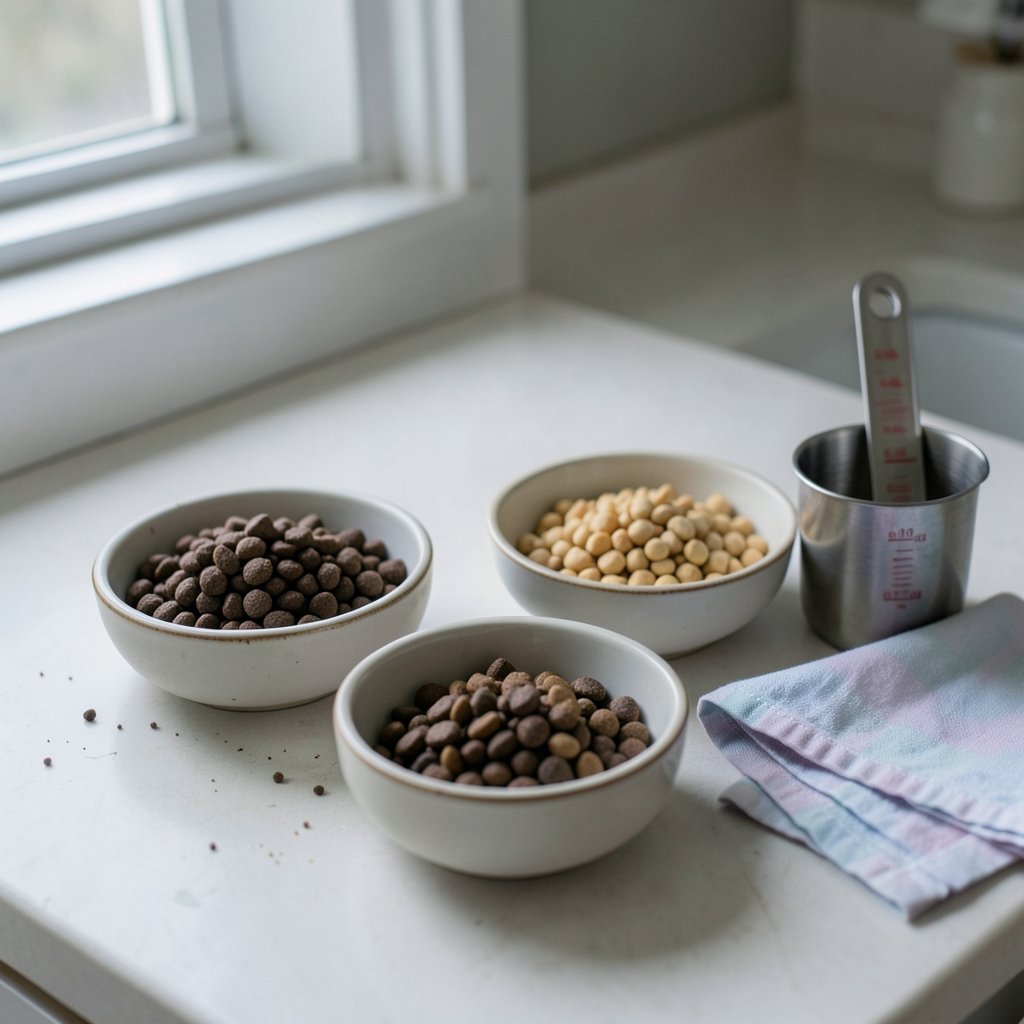
Before discussing formulas, the transition matters more than the bag. Sudden diet changes commonly cause GI upset, which is why gradual transitions are standard advice. The usual approach is to mix old and new food over roughly seven to ten days, shifting the ratio a little each day.
In practice, this is where most owners go wrong. They finish a bag, open a new brand the same evening, and then blame the new food when the dog has loose stools two days later. The new food may be fine. The abrupt switch was the problem. If a dog is already sensitive, stretching the transition to two weeks is reasonable.
A simple transition schedule looks like this:
- Days 1–2: 75% old food, 25% new food
- Days 3–4: 50% old, 50% new
- Days 5–6: 25% old, 75% new
- Days 7–10: 100% new food
If stools loosen at any stage, hold at that ratio for a few extra days before moving on. And keep treats consistent during the switch, because a new chew can undo a careful transition overnight.
What to Look For on the Label
Labels are confusing by design. In the US, the guaranteed analysis reports minimums and maximums, not exact values, so comparisons between bags are approximate. Still, a few numbers and statements are worth checking.
| Feature | What to check | Why it matters |
|---|---|---|
| Protein source | Named single or limited animal proteins | Fewer ingredients means fewer things to react to |
| Fat content | Lower-to-moderate fat in the guaranteed analysis | Rich, high-fat foods can trigger upset in susceptible dogs |
| Fiber | Moderate fiber, sometimes with pumpkin or psyllium | Supports stool quality |
| Nutritional adequacy | A statement saying the food is complete and balanced for the dog’s life stage | Prevents nutrient gaps |
| Probiotics or prebiotics | Named strains or fiber sources on the label | May support digestion, though evidence varies by product |
Two label habits pay off. First, look for a nutritional adequacy statement confirming the food meets requirements for the dog’s life stage, either by formulation or feeding trials. Second, treat terms like “holistic,” “premium,” and “gentle” as decoration. They carry no legal weight.
One more label trap: grain-free is not automatically better for a sensitive stomach. Grain is rarely the culprit in canine GI upset; protein sources are more often implicated. Grain-free diets also drew scrutiny after a possible link between some of them and canine dilated cardiomyopathy was flagged in 2018, though causation was never established. If a dog does well on a grain-inclusive food, there’s no digestive reason to avoid grains.
Formula Types That Tend to Help
Limited-Ingredient Diets
Limited-ingredient diets use fewer components and a single novel or familiar protein. They’re the practical first stop for suspected food intolerance, because they narrow the field. If a dog improves on a limited-ingredient food, the owner has learned something useful. If not, the problem likely isn’t the food.
Hydrolyzed Protein Diets
Hydrolyzed protein diets break proteins into fragments too small for the immune system to recognize. These are typically prescription foods, and they should be chosen with a veterinarian rather than picked off a shelf. They’re a tool for diagnosed or strongly suspected adverse food reactions, not a general upgrade.
Digestive-Support Formulas
Many mainstream brands sell “sensitive stomach” formulas with added fiber, prebiotics, or probiotics. Evidence for probiotics is strain-specific, meaning some products have support behind them and others don’t, so a fancy label doesn’t guarantee much. These foods are a reasonable middle path for dogs with mild, occasional looseness rather than a diagnosed condition.
Wet Food and Fresh Options
Some dogs simply do better on wet or gently cooked food, especially dogs with dental issues or low appetite. Others do fine on dry kibble. Format matters less than the transition, portion control, and consistency.
Ingredients People Ask About
Pumpkin and psyllium are common home additions for mild GI signs, and many owners swear by a spoonful of plain canned pumpkin. It’s cheap, low-risk, and worth trying, but it’s a supplement, not a fix for a real problem.
If a dog is vomiting or refusing water, dehydration becomes the urgent concern, and it’s worth knowing how to spot a dehydrated dog before it turns serious. That’s a veterinary conversation, not a food-aisle one.
Treats deserve equal scrutiny. A dog can eat a perfect diet and still have a wrecked stomach from table scraps, rawhide, or a handful of new chews. Owners who want to add safe, low-calorie variety can check whether dogs can eat raspberries in this safe feeding guide for dog owners, but the general rule holds: keep treats boring and consistent while troubleshooting digestion.
How to Choose Without Wasting Money
The practical method is unglamorous but effective. Start with a veterinary check if signs are frequent. Then pick one food, transition slowly, and keep everything else stable for at least three to four weeks. Change one variable at a time, and keep a simple log of stools, vomiting, and appetite.
Owners often skip the log and then can’t tell whether the food helped. A few notes on a phone are enough. This is also how to avoid the expensive cycle of buying a new bag every two weeks, which is common and rarely solves anything.
When comparing specific brands, it helps to understand what a bag actually delivers. A close look at one popular line shows what’s really in the bag and who it suits in this breakdown of Victor dog food and who it actually suits. Freeze-dried raw is another category owners ask about often, and this review of whether Dr. Marty dog food freeze-dried raw really delivers covers the practical trade-offs.
Breed and size also shape the decision. Large, deep-chested breeds have different considerations than small ones, and owners researching a giant breed may find this overview of the Tosa Inu, a Japanese fighting dog that baffles most owners, useful context for feeding a dog with specific needs.
Common Mistakes That Undo Good Choices
A few habits reliably sabotage even a well-chosen food:
- Free-feeding. Leaving food down all day makes it hard to spot appetite changes and encourages overeating.
- Treat overload. Treats can make up a large share of daily calories without anyone noticing.
- Rotating foods constantly. Variety sounds nice but makes reactions impossible to trace.
- Ignoring fat content. Rich, fatty foods can trigger upset or pancreatitis in susceptible dogs.
- Blaming the food for a medical problem. Chronic GI signs need diagnosis, not another bag.
There’s also a quieter mistake: assuming a sensitive stomach means a permanently restricted life. Many dogs stabilize on a consistent diet and stay stable for years. The goal is a boring, reliable routine, not a perpetual search.
When Food Isn’t the Answer
Some signs should send an owner straight to the vet rather than the pet store: vomiting that persists beyond a day or two, diarrhea with blood, weight loss, lethargy, or a dog who stops eating. Chronic enteropathy, pancreatitis, parasites, and other conditions can all masquerade as simple sensitivity.
Veterinarians typically take a diet history, which is why keeping that log pays off. They may recommend a prescription diet, a hydrolyzed trial, or diagnostics. Owners who arrive with notes on what the dog eats and how stools have changed get more out of the appointment.
Conclusion
The best dog food for a sensitive stomach isn’t a specific bag. It’s a consistent, moderately rich, complete diet built around a protein the dog tolerates, introduced slowly and fed without chaos on the side. Limited-ingredient formulas help narrow the field. Prescription hydrolyzed diets have a real place, but only with veterinary guidance. Grain-free claims and “gentle digestion” labels deserve skepticism.
Start with a slow transition, keep treats dull, log what happens, and give any change three to four weeks before judging it. If signs persist or worsen, stop shopping and book the vet visit. A calm stomach is usually the product of patience and consistency, not the most expensive bag on the shelf.
Frequently Asked Questions
What is the best food for a dog with a sensitive stomach?
There’s no universal best food. The most reliable approach is a complete, balanced diet with a single familiar protein, moderate fat, and a slow transition over seven to ten days. Limited-ingredient formulas are a sensible starting point, and prescription options should be chosen with a veterinarian.
How long does it take to switch dog food?
A gradual transition usually takes seven to ten days, mixing increasing amounts of the new food with the old. Dogs with a history of GI upset may need two weeks. If stools loosen, hold at the current ratio a few extra days before continuing.
Is grain-free food better for sensitive stomachs?
Usually not. Grain is rarely the cause of canine digestive upset, and protein sources are more often implicated. Grain-free diets also drew scrutiny over a possible link to a heart condition called dilated cardiomyopathy, though causation was never established. A grain-inclusive food is fine if the dog does well on it.
Should I try a hydrolyzed protein diet?
Only with veterinary guidance. Hydrolyzed diets break proteins into fragments too small to trigger an immune response, and they’re typically prescription products used for suspected or diagnosed food allergies. They’re not a general upgrade for everyday feeding.
Do probiotics help dogs with sensitive stomachs?
Sometimes, but evidence is strain-specific. Some probiotic products have research behind specific strains, while others don’t. Prebiotic fibers and plain canned pumpkin are low-risk additions for mild cases. Persistent signs still warrant a veterinary exam.
When should I see a vet instead of changing food?
See a vet for vomiting lasting more than a day or two, diarrhea with blood, weight loss, lethargy, or refusal to eat. These signs can point to conditions like chronic enteropathy or pancreatitis that food changes alone won’t fix. A diet history helps the vet get to the answer faster.