A good hair dryer does far more than blast your hair dry. It is the tool that decides whether your hair looks smooth or frizzy, whether a blowout lasts until the evening or falls flat by lunchtime, and whether your ends survive years of styling or gradually turn brittle. Yet most of us choose a dryer the way we choose a kettle: we grab the one on offer, plug it in, and put up with whatever it does.
The difference between a good dryer and a mediocre one is real, and it comes down to a few things that are easy to check once you know them. A steady, well-controlled airflow dries hair faster without roasting it. Even heat stops hot spots from cooking one section while another stays damp. An ionic or ceramic element helps smooth the cuticle, and a cool shot button locks in shine once the shape is set. None of these features needs to cost a fortune, but a dryer that lacks them will show up in your hair every single day.
Below are nine hair dryers worth considering in 2027, from a premium icon to a budget workhorse and a brush dryer that does the styling for you, each described by what it is good at, what to watch for, and who it suits best.
Key takeaways
- A good hair dryer pairs strong, even airflow with controlled heat, so hair dries faster without being cooked in hot spots.
- Fine hair needs lower heat and a gentle airflow, while thick or curly hair benefits from a powerful motor and a diffuser.
- Ionic and ceramic technology help smooth the cuticle and reduce frizz, but they cannot replace heat protection or good technique.
- A cool shot at the end of drying sets the shape and adds shine, and it is worth using every time.
- No hair dryer repairs damage on its own, and even the gentlest dryer will dry hair out if used daily on the highest heat without protection.
What this guide covers
This guide covers the nine dryers that stood out for the way they dry, the way they feel to hold, and the way hair looks afterwards: premium dryers, mid-range favourites, a budget option that punches above its price, and a hot-air brush for people who want styling built into the drying step. There is something here for fine, thick and curly hair, and for hair that frizzes at the first sign of humidity.
Every dryer below is described the same way, so you can compare them fairly: what it is good at, what to watch for, key features, who it suits, and practical details such as weight and cord length. Prices change with the seasons, so the focus is on what each dryer does and who it is for.
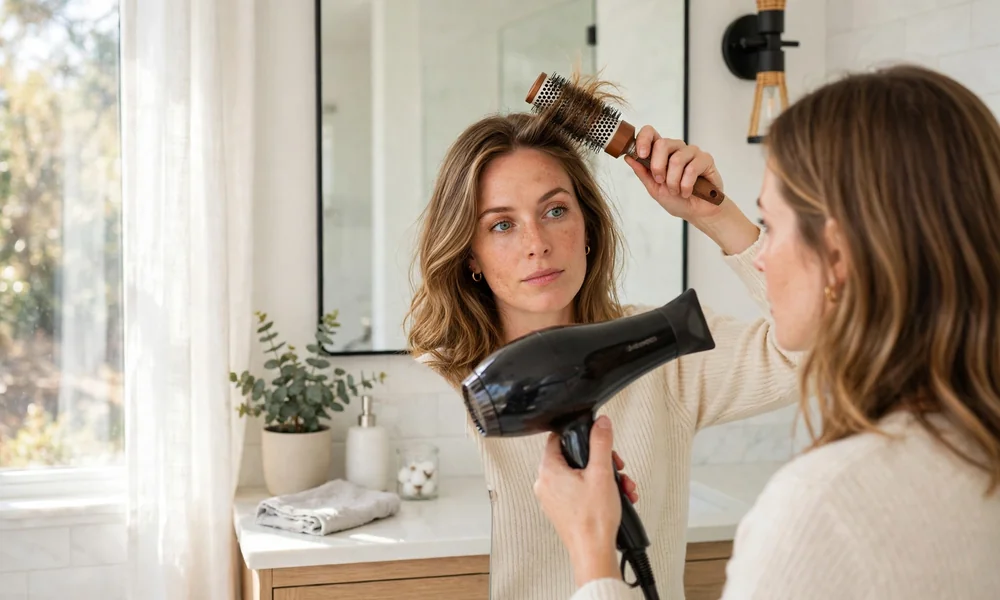
If you are new to blow-drying, the advice is simple: start on a lower heat, keep the dryer moving, hold it about fifteen centimetres from your hair, and always finish with the cool shot. A good dryer makes those habits easy, because it dries fast enough that you are not tempted to crank the heat to maximum.
How we chose these hair dryers and what to look for
Look first at airflow and heat control. A dryer with a strong motor dries hair in less time, which means less heat exposure overall, and a dryer with at least two or three heat settings lets you match the temperature to your hair. Fine hair should stay on low or medium heat, while thick hair can take more, and everyone benefits from a cool setting for the final pass.
Look next at the technology inside. Ionic dryers release negative ions that help water evaporate faster and lay the cuticle flat, which is why they are so popular for frizz-prone hair. Ceramic and tourmaline elements spread heat more evenly, so there are fewer hot spots. Neither technology is magic, and both work best alongside a heat protectant. If your hair frizzes easily, pairing a good dryer with the right leave-in care matters: our guide to the best face oils covers the same smoothing, sealing principles for skin, and the idea carries over to hair — a light, sealing layer after drying helps keep frizz down.
Finally, look at weight, balance and noise. A dryer you hold above your head for ten minutes should feel light, and a long cord makes it easier to move around a mirror. A heavy or very loud dryer will be used less often, however good its motor is, so the one you reach for happily will give you the best results.
The 9 best hair dryers of 2027
Dyson Supersonic
What we like: A powerful digital motor, precise heat control that measures temperature many times a second, magnetic attachments that snap on easily, and a light, balanced feel that makes long blow-dries comfortable.
What to consider: Premium price, and the attachments are proprietary, so they cannot be swapped with other brands. Key features: Digital motor, intelligent heat control, magnetic styling attachments, cool shot. Hair type: All hair types. Weight: Around 660 g. Cord length: 2.8 m.
The dryer other dryers are measured against. It is not the cheapest, but for speed, control and the way hair looks afterwards, it sets the standard.
Shark SpeedStyle
What we like: A lightweight design, a rapid-air mode for fast drying, and attachments that cover smoothing, volumising and curl definition, all at a price well below the premium icons.
What to consider: The styling attachments take a little practice to use well, and the motor is louder than some rivals. Key features: Rapid-air mode, IQ heat and airflow settings, smoothing and diffuser attachments. Hair type: All hair types, especially thick or wavy hair. Weight: Around 700 g. Cord length: 2.4 m.
A strong all-rounder that does most of what premium dryers do for noticeably less money.
ghd Helios
What we like: A professional-grade motor, a long-life AC motor with even airflow, a precision nozzle for sleek styling, and a lightweight body that stays comfortable through a full blow-dry.
What to consider: It is a salon-style dryer, so it is louder than the quietest home dryers, and it has fewer attachments than some rivals. Key features: Aeroprecis technology, ionic system, variable power and temperature controls, cool shot. Hair type: All hair types, especially straight and wavy hair. Weight: Around 780 g. Cord length: 3 m.
For people who love a salon-smooth finish: even, powerful airflow, real control from the nozzle, and a sleek, shiny blowout that holds.
T3 AireLuxe
What we like: Digital ion technology that smooths frizz, a volume boost switch for extra lift at the roots, five heat and three speed settings, and a wide, gentle airflow that feels kind to hair.
What to consider: Premium price for a dryer without the very fastest drying time, and it is best suited to regular home use rather than salon work. Key features: Digital T3 IonAir technology, volume boost switch, auto-pause sensor, cool shot. Hair type: Fine to medium hair, frizz-prone hair. Weight: Around 480 g. Cord length: 2.7 m.
For fine or frizz-prone hair, one of the most flattering dryers available: gentle drying, volume at the roots, and smooth hair without the flat, over-dried feeling.
BaBylissPRO Nano Titanium
What we like: A powerful 2000-watt motor, nano titanium technology that distributes heat evenly, six heat and speed settings, and a light, compact body that is easy to handle.
What to consider: It runs hot on the highest setting, so fine hair should stay on medium, and the design is practical rather than luxurious. Key features: Nano titanium, ionic technology, 2000-watt motor, concentrator nozzle, cool shot. Hair type: Thick, coarse or curly hair. Weight: Around 460 g. Cord length: 2.7 m.
A salon favourite for a reason: powerful, light, very good at taming thick or coarse hair, and far cheaper than the premium icons.
Conair Infiniti Pro
What we like: Excellent value, a ceramic and tourmaline system that reduces frizz, three heat and two speed settings, and a diffuser included for curly hair.
What to consider: It is heavier and louder than premium dryers, and the highest heat setting is very hot for fine hair. Key features: Ceramic and tourmaline, ionic conditioning, 1875-watt motor, diffuser and concentrator. Hair type: All hair types, especially curly hair. Weight: Around 900 g. Cord length: 1.8 m.
The budget pick that genuinely competes: fast drying, frizz smoothing, and a diffuser included.
Revlon One-Step Volumizer
What we like: A dryer and round brush in one, so it dries and styles at the same time, with an oval barrel that adds volume and smooths ends, and a very easy learning curve.
What to consider: It is not a traditional dryer, so it dries more slowly than a dedicated dryer on very thick hair, and the barrel can be too wide for very short hair. Key features: Ionic technology, ceramic coating, three heat and speed settings, cool tip, oval brush design. Hair type: Medium to long hair, wavy hair. Weight: Around 900 g. Cord length: 1.8 m.
For anyone who struggles with a brush and a dryer at once, this is a game changer: a smooth, bouncy blowout in one step.
Drybar Buttercup
What we like: An ionic system that cuts frizz, a lightweight body, a powerful motor, and a sleek design that feels like a salon tool in the hand.
What to consider: Premium price, and it has fewer heat settings than some rivals, so fine hair needs care on the higher settings. Key features: Ionic technology, 1875-watt motor, concentrator nozzle, cool shot, lightweight design. Hair type: All hair types, especially fine to medium hair. Weight: Around 570 g. Cord length: 2.7 m.
A stylish, well-made dryer that delivers a smooth, shiny blowout with very little fuss.
Harry Josh Pro Dryer 2000
What we like: A professional AC motor, cool shot, two speeds and three heat settings, a lightweight build, and a reputation among stylists for smooth, long-lasting blowouts.
What to consider: It is a salon-style dryer with a premium price, and it comes with fewer attachments than some home-focused rivals. Key features: Professional AC motor, 1875 watts, cool shot, concentrator nozzle, lightweight design. Hair type: All hair types, especially thick hair. Weight: Around 500 g. Cord length: 2.7 m.
The stylist’s dryer: fast, light, and leaves hair smooth and full of body.
Which hair dryer is right for your hair
Fine hair needs gentle heat and a lower airflow, because fine strands heat up quickly and are easily damaged. Use medium heat and keep the dryer moving. A light dryer with ionic technology helps here, smoothing without adding weight, and a round brush gives volume without extra heat.
Thick or coarse hair needs power. A strong motor and a high airflow will cut drying time dramatically, which means less heat exposure overall, and a diffuser is essential if the hair is curly. Hair that is well cared for dries better and holds a style longer, so a good moisturising base matters. Our guide to the best moisturisers for dry skin covers barrier care for the face, and the idea is the same for hair — hydrated, healthy strands respond far better to styling than dry, stripped ones.
Curly hair needs a diffuser and low heat. Diffusing on a low speed lets curls dry in their natural pattern instead of being blown apart, and a cool shot at the end helps set the shape. Avoid brushing curly hair while it is dry, and use a light leave-in product before drying. For very dry or damaged hair, a sealing oil can help: our guide to the best squalane products explains how a light, non-greasy oil locks in moisture, and a drop smoothed over the ends after drying calms frizz without weighing hair down.
The caveats that matter
A hair dryer is a styling tool, not a treatment, and it cannot repair damage on its own. Heat damage builds up slowly: split ends, hair that feels rough or looks dull, and styles that fall flat within hours. If your hair is already damaged, lower the heat, use a heat protectant every time, and give your hair regular breaks from styling.
| Detail | What is known |
|---|---|
| Best drying habit | Keep the dryer moving, hold it about fifteen centimetres away, and use medium heat |
| Fine hair | Low or medium heat, gentle airflow, ionic technology to smooth without weight |
| Thick hair | A powerful motor and high airflow to cut drying time and heat exposure |
| Curly hair | A diffuser on low speed and low heat, to dry curls in their natural pattern |
| Frizz control | Ionic or ceramic technology, plus a cool shot and a light sealing product after drying |
| Heat protection | Use a heat protectant every time you blow-dry, on damp hair before drying |
| When to replace a dryer | When it overheats, smells of burning, or takes much longer to dry than it used to |
| When to seek advice | Excessive shedding, breakage or scalp irritation that does not improve with gentler styling |
If your dryer starts to smell of burning, overheats, or takes much longer to dry than it used to, it is time to replace it. A failing dryer can damage hair quickly, and a new one is cheaper than repairing the damage it causes.
Checklist: choosing a hair dryer honestly
Use these checks before you buy, and again after two weeks of use.
- Check the heat settings: at least two or three, so you can match the temperature to your hair type.
- Check the weight and balance: a light dryer you can hold comfortably for ten minutes will be used far more often.
- Check the attachments: a concentrator for sleek styling, a diffuser for curls, and a cool shot for setting the shape.
- Check the airflow: strong enough to dry your hair quickly, but with a low setting for fine or curly hair.
- Use a heat protectant: apply it to damp hair every time you blow-dry, before any heat touches your hair.
- Finish with the cool shot: it sets the shape, closes the cuticle and adds shine to every blow-dry.
Frequently asked questions
How often should I blow-dry my hair?
As often as you need to, as long as you protect it: use a heat protectant every time, keep the heat on medium, and let your hair air-dry sometimes. Daily blow-drying on the highest heat without protection is what causes damage, not the dryer itself.
Is an expensive hair dryer worth it?
It can be, if you blow-dry often: premium dryers dry faster, control heat more evenly, and are usually lighter and quieter. But a good mid-range dryer gives excellent results too, and the best dryer is the one that suits your hair and your budget.
What is the difference between ionic and ceramic dryers?
Ionic dryers release negative ions that help water evaporate and lay the cuticle flat, which reduces frizz and adds shine. Ceramic dryers spread heat more evenly, so there are fewer hot spots. Many dryers combine both, and either is a good choice for most hair types.
Should I use a diffuser on curly hair?
Yes. A diffuser spreads the airflow over a wider area, so curls dry in their natural pattern instead of being blown apart. Use it on low speed and low heat, cup the curls gently, and finish with the cool shot to set the shape.
Why does my hair still frizz after blow-drying?
Either the heat is too high, the dryer is held too close, or the hair needs more moisture before styling. Try a lower heat, keep the dryer moving, apply a heat protectant, and finish with the cool shot. A light oil or serum smoothed over the ends after drying can also help.
How do I make a blowout last longer?
Dry your hair fully, because even slightly damp hair will fall flat, and finish with the cool shot to set the shape. Avoid touching your hair during the day, sleep on a silk or satin pillowcase, and refresh volume with a little dry shampoo at the roots on day two.
The bottom line
The best hair dryer in 2027 is not necessarily the most expensive. It is the one that suits your hair type, dries quickly without overheating, and that you will actually enjoy using. For fine hair, a light, ionic dryer on medium heat. For thick or curly hair, a powerful motor with a diffuser. For anyone who wants styling built in, a hot-air brush is the easiest route to a smooth blowout.
Choose one dryer that fits your hair, use a heat protectant every time, keep the dryer moving, and finish with the cool shot. That is the honest way to get smooth, shiny hair, without spending more than you need to.
Note: This guide is general haircare information, not medical advice. Patch-test new products, and speak to a dermatologist or trichologist if you have excessive shedding, breakage or scalp irritation, or if your hair does not improve with gentler styling.