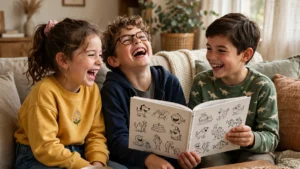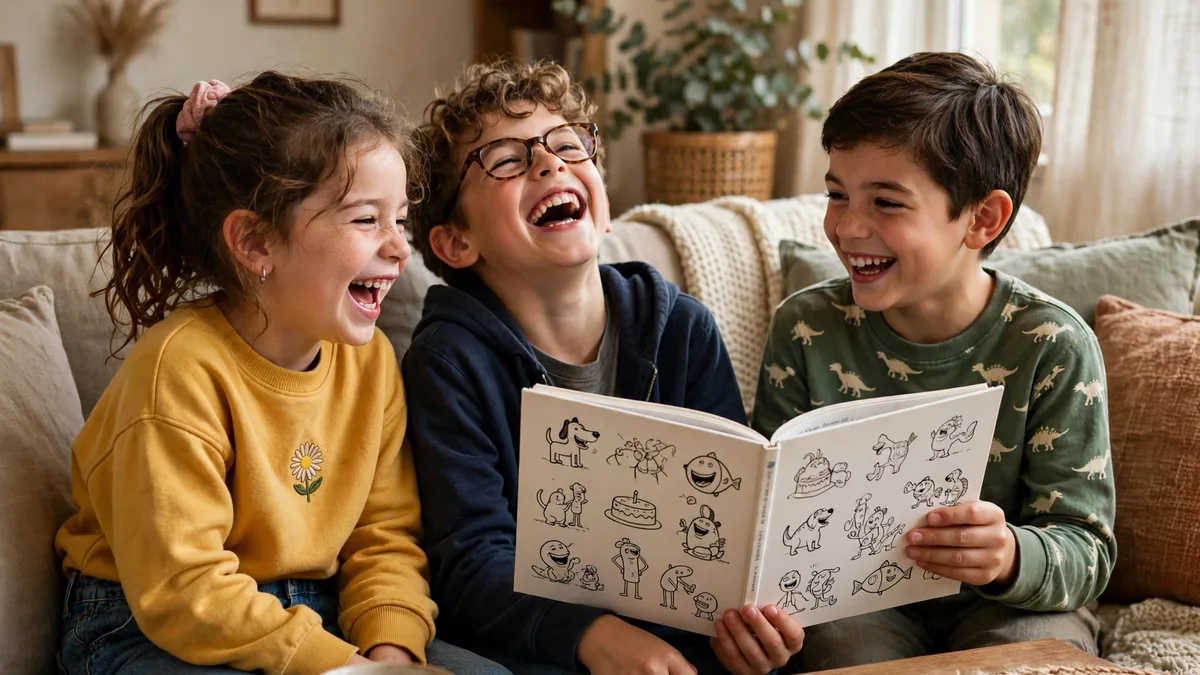
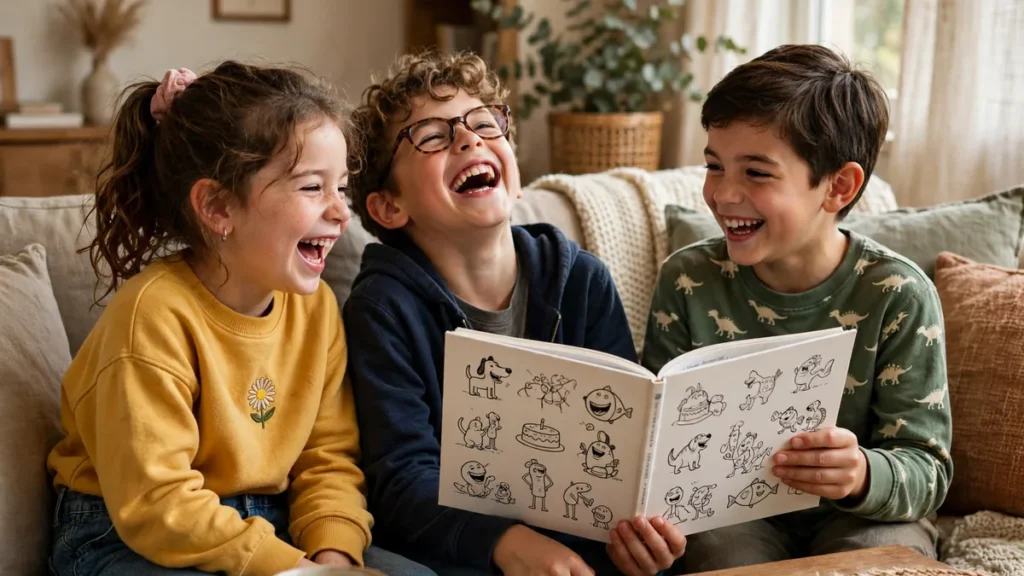
The best kids jokes are the ones children can remember, retell, and laugh at all over again. A good joke for a child is short, simple, and just a little bit silly, with a punchline that lands the moment it is spoken.
So what are the best kids jokes in 2027? The strongest picks are not single jokes at all, but collections and games built for children: joke books full of knock-knock gags, animal jokes, and riddles that suit different ages. This guide works through ten of them.
Each pick below is a book, a collection, or a game you can buy or use, rather than a list of jokes on a screen. A couple of example themes are described in words for each one, so you can judge the humour first.
Key takeaways
- The best kids jokes are short, simple, and easy for a child to retell.
- Match the humour to the age: knock-knock jokes for younger children, riddles for older ones.
- A joke book works best when a child can dip in and out of it on their own.
- Look for clear print, friendly pictures, and jokes grouped by theme.
- Sharing jokes together, at the table or in the car, is half the fun.
How to choose the best kids jokes
Start with the age of the child. Younger children love repetition and surprises, so knock-knock jokes and animal jokes with obvious punchlines suit them best. Older children enjoy wordplay, riddles, and jokes that take a second to work out.
Next, think about how the jokes will be used. A book for the dinner table needs short jokes that can be read aloud in seconds, while a book for a bedroom shelf can be longer and read alone. If you are shopping for a younger reader, our guide to the best baby books covers picture books for younger readers.
Finally, check the tone. The best collections keep the humour kind and clean, with no jokes that single anyone out. Flick through a few pages if you can, and choose a book whose jokes make you smile too.
The 10 Best Kids Jokes
1. A classic knock-knock joke book
Knock-knock jokes are where most children start, and a classic collection of them is the safest first buy. The format is always the same, so a child can learn it in minutes and then tell the jokes to anyone who will listen. Look for a book with plenty of variety, from food and animals to school and the seaside.
The best versions keep each joke to a few short lines and add a small picture beside it. A knock-knock book also makes a fine gift, because it works the moment it is opened.
Best for: younger children telling their very first jokes.
2. An animal joke collection
Animals are the easiest subject for a child to laugh at, and an animal joke collection leans into that. Expect jokes about dogs, cats, ducks, and dinosaurs, with punchlines built around animal sounds, habits, and silly names. Children who love pets usually love these first.
Choose a collection that groups the jokes by animal, so a child can flip straight to their favourite. Bright pictures help younger readers too.
Best for: animal lovers who laugh at anything with four legs.
3. A joke book for the dinner table
A dinner-table joke book is made for reading aloud between courses, with short jokes that land in a few seconds. These collections often mix knock-knock jokes, one-liners, and quick riddles, so everyone at the table gets a turn.
Look for a sturdy book that can survive spills and sticky fingers, with large print that is easy to read by lamplight. Keep it on the table for a week and it will become a family habit.
Best for: families who want laughter with their evening meal.
4. A riddle and brain-teaser book
Riddles suit children who like to think before they laugh. A riddle book asks a question, lets the reader puzzle over it, and then delivers an answer that feels clever once it clicks. These books build vocabulary and patience alongside the humour.
The best riddle books sort their puzzles from easy to tricky, so a child can feel progress as they go. Answers at the back keep the guessing honest.
Best for: older children who enjoy a puzzle with their punchline.
5. A joke-telling card game
A card game turns joke telling into something to play together. Each card carries a joke, a riddle, or a challenge to make up a punchline, and players take turns drawing and reading aloud. It suits rainy afternoons, holidays, and long journeys equally well.
Choose a set with clear, large cards that small hands can hold, and check that the jokes suit the age on the box. It also works well alongside other playthings, as our guide to the best baby toys shows for younger siblings.
Best for: children who like games as much as they like jokes.
6. A silly school jokes collection
School is a world every child knows, so jokes about teachers, homework, and lunchboxes land straight away. A school joke collection gathers gags about lessons, playgrounds, and school dinners, with punchlines that children can repeat to friends the next day.
These books work well as a term-time treat or a back-to-school gift. Choose one where the jokes are kind about teachers and classmates rather than mean.
Best for: school-age children swapping jokes in the playground.
7. A joke book for younger children
A joke book written for younger children uses short words, big pictures, and jokes a four or five year old can grasp. The punchlines are gentle and visual, often built around a funny picture or a familiar sound. These books are best read together, with an adult turning the pages.
Look for thick pages and a hard cover, since younger children are not gentle with books. A first joke book also pairs nicely with a first birthday present, as our guide to the best gifts for a one year old shows.
Best for: little ones hearing jokes for the first time.
8. A joke book for older children
Older children, around eight and up, are ready for jokes with a twist. A book aimed at this age uses wordplay, puns, and jokes about everyday life, from football to friendships, and the punchlines reward a reader who thinks for a moment. These books often feel more grown up, which matters to their readers.
Choose one with sections by theme, so a child can find jokes about their own interests quickly. It also makes a good holiday read, light enough to carry and easy to dip into.
Best for: confident readers who want jokes with a twist.
9. A joke-a-day book
A joke-a-day book gives a child one new joke every morning, which is a lovely routine to build. Each page holds a single joke, often with a small picture, and the format suits breakfast tables and bedtime alike. Over a year, a child collects hundreds of jokes without ever feeling overwhelmed.
Look for a book that starts on any page, rather than one tied to a calendar, so it can be opened at any time of year.
Best for: children who like a small daily treat.
10. A joke book to share on car journeys
Long car journeys are where joke books earn their keep. A collection made for travel has short jokes that can be read aloud from the back seat, with no need for props or pictures. Riddles work especially well here, since passengers can guess together.
Choose a compact paperback that fits in a door pocket or a small bag, with print large enough to read in a moving car. Children can tick off their favourites as they go.
Best for: families facing a long drive together.
The 10 Picks at a Glance
Find the kind of child you are shopping for below, then read the full pick above for more detail.
| Pick | Best for | Why it works | Keep in mind |
|---|---|---|---|
| Knock-knock book | First jokes | Easy format | Plenty of variety |
| Animal jokes | Animal lovers | Familiar subjects | Group by animal |
| Dinner-table book | Family meals | Quick laughs | Sturdy cover |
| Riddle book | Older children | Clever answers | Easy to tricky |
| Joke card game | Players | Shared fun | Age on the box |
| School jokes | School-age children | Known world | Kind tone |
| Younger children | First jokes | Gentle humour | Thick pages |
| Older children | Confident readers | Wordplay | Themed sections |
| Joke-a-day book | Daily routine | One a day | Start any page |
| Car journey book | Long drives | Read aloud | Compact size |
What a Good Joke Book Feels Like
A good joke book feels like an invitation, not a lesson. The cover promises fun, the pages are easy to open, and the first joke on the first page makes a child laugh within seconds.
It also feels owned by the child, not by an adult. Jokes they can read alone, pages they can mark, and a book they can carry around all make it theirs. When a child starts telling the jokes to grandparents, friends, and anyone else who will listen, the book has done its job.
What to Check Before You Buy
Check the age guidance on the cover before you buy, and read a few jokes if you can. A book aimed too young will bore an older child, while one aimed too old will leave a younger reader confused.
Check the binding and the paper too, since joke books get carried, dropped, and read in the car. A sturdy paperback or hardback lasts far longer than a flimsy one, and clear print is easier on young eyes.
Your Gift Checklist
- Note the age of the child and the humour they already enjoy.
- Read a few sample jokes before choosing a book.
- Check that the print is clear and the pictures are friendly.
- Choose a format that fits how it will be used, at the table or on the move.
- Confirm the jokes are kind, clean, and free of mean teasing.
- Wrap it well if it is a gift, and add a joke of your own inside.
- Keep the receipt until you know the book suits its reader.
Frequently Asked Questions
What age should a child start with joke books?
Most children enjoy simple jokes from around four or five, when they can follow a short setup and a punchline. Start with knock-knock and animal jokes, then move on to riddles as they grow older.
Are joke books good for learning?
Yes, in a gentle way. Jokes build vocabulary, teach wordplay, and show children how language can surprise. Reading aloud builds confidence, and retelling a joke is good practice in speaking clearly.
What is the best type of joke book for a car journey?
A compact book of short jokes or riddles works best, since it can be read aloud from the back seat without props. Riddles are ideal, because passengers can guess the answer together.
How do I help a shy child tell jokes?
Let them practise at home first, with family who will laugh kindly. Start with very short jokes they can remember easily, and let them read from the book rather than memorising.
Can I read joke books with a younger sibling too?
Yes, and younger children often enjoy listening even before they can read. Choose a book with big pictures and simple jokes, and let the older child do the telling.
The Bottom Line
The best kids jokes in 2027 are about finding the right collection for the child in front of you. Match the humour to their age, choose a book they can carry and share, and the laughter will take care of itself.