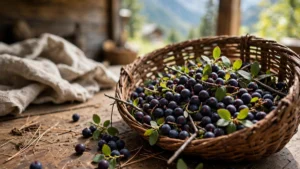
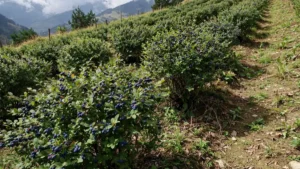
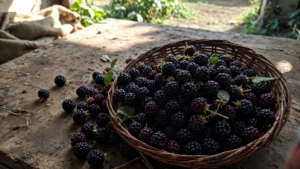
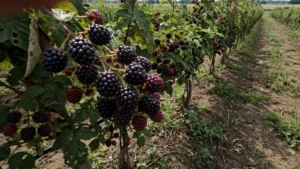
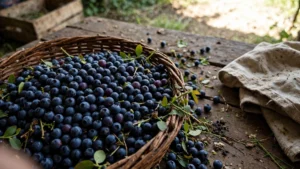
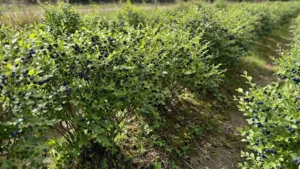
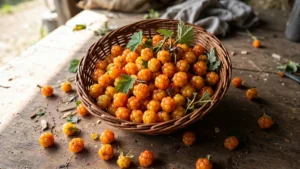
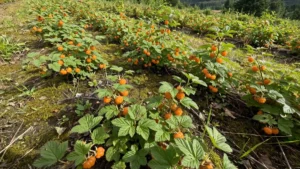
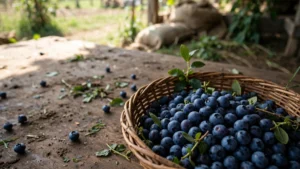
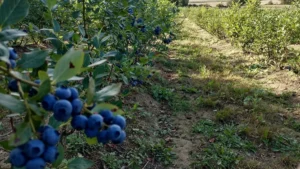
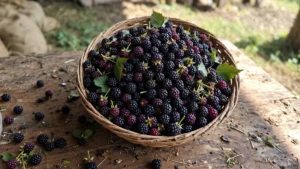
A bilberry is not a blueberry that got lost on its way to the supermarket. It grows wild, low to the ground, on heather moors and pine-forest floors across northern Europe, and nobody plants it in neat commercial rows. The berries are smaller than a blueberry, darker — almost black when fully ripe — and the juice stains your fingers a deep purple that does not wash off in one go. The flavour is sharper too: tart at first, then sweet, with a woodland edge that a farmed berry never quite reaches.
A bilberry farm retreat is built around that wildness. You stay on a small holding at the edge of the moor or the forest, sleep in a room that smells faintly of pine, and spend the mornings out with a basket and a berry comb while the dew is still on the bushes. Afternoons are for the kitchen: pies, jams, and sauces made from what you picked that morning. It is a slow holiday, and it suits people who would rather walk a hillside than queue for a spa treatment.
This list covers nine stays where the bilberries are genuinely wild and the hosts genuinely know the ground. Prices run from $65 to $380 a night, and every place below was chosen because the picking is real, the food is cooked on the farm, and the rooms are honest about what they are.
Key takeaways
- Bilberries are wild, not farmed: the best stays sit beside moors, heaths, and pine forests where the bushes grow on their own.
- Peak picking is short — roughly late July to early September in most regions — so the dates matter more than the room.
- Expect simple rooms, shared tables, and early starts; luxury here means quiet, space, and good cooking, not marble bathrooms.
- Ask before you book whether guests may pick, whether a comb is provided, and what the kitchen does with the harvest.
- Bilberries themselves are naturally gluten-free, but farm kitchens bake with wheat daily, so a coeliac traveller must warn the host in advance.
What a bilberry farm retreat actually is
A bilberry farm retreat is a working smallholding that opens a few rooms to guests during the short berry season. The farm is usually small — a stone house, a barn, a patch of woodland or open moor — and the bilberries grow wild on the surrounding ground rather than in planted beds. The host’s job in summer is part farmer, part guide: they know which slopes ripen first, which patches the deer have already visited, and where the best bushes hide under the pines.
The day has a shape that repeats across all nine stays below. You are up early, because bilberries pick best while the morning is cool and the berries are firm. After a couple of hours on the hillside, the baskets come back to the kitchen, and the rest of the day is cooking, walking, and resting. Dinner is served at one long table, and the berries you picked usually appear in it — folded into a pie, spooned over yoghurt, or simmered into a sauce for the evening meal.
What it is not: a hotel with a berry theme. There is no concierge, no room service, and often no mobile signal on the upper slopes. If that sounds like a drawback, this kind of holiday is not for you. If it sounds like the point, read on.
How we picked these stays, and what to ask first
We looked for stays where the bilberries grow wild within walking distance, where the hosts pick alongside guests, and where the kitchen cooks with the harvest rather than buying berries in. We left out places that only serve bilberry jam at breakfast and call it a farm retreat, and we left out stays that charge luxury prices for rooms that are plainly ordinary. Every stay below has real picking ground, a real kitchen, and a host who can tell you where the berries are today.

Before you book, ask three questions. First, can guests pick, and is a berry comb provided or should you bring your own? Second, what does the kitchen do with the harvest — is there a pie-making session, or do the berries simply go into jam jars? Third, what is the room actually like: is the bathroom shared, is there heating for a cold mountain night, and how far is the nearest shop? Those three answers reveal more than a dozen photographs ever could. If you are weighing other berry trips too, the strawberry farm retreats run on a similar shape but a sweeter, more lowland berry, while the blackberry farm retreats suit travellers who want brambles and hedgerows rather than high moors.
The 9 best luxury bilberry farm retreats of 2027
Scottish Highlands, Scotland — Dark Berries across the Heather Moorland
What We Like: The moor here is vast and genuinely wild, and the host walks it every morning before breakfast, so the picking advice is fresh. The house is an old stone croft with thick walls, a peat fire, and a kitchen that turns the morning’s baskets into pies by teatime.
What to Consider: The weather turns fast on the high moor, and the midges in late July are no joke — bring repellent and a head net. The nearest shop is a twenty-minute drive.
Best For: Walkers who want open ground and long views. Style: Stone croft, peat fire, shared table. Price Range: $65–$95. Standout Feature: A host-led dawn walk to the ripest slopes before the sun is high.
Snowdonia, Wales — Bilberries on the Misty Mountain Slopes
What We Like: The farm sits in a steep valley where bilberries grow along the old stone walls and up the lower slopes. The rooms are small but warm, the breakfasts are enormous, and the host’s bilberry tart is the best we found anywhere on this list.
What to Consider: The slopes are steep and the ground is uneven, so this is not a stay for anyone with bad knees. Rain is frequent, even in August.
Best For: Hardy walkers who like mountain weather. Style: Valley farmhouse, slate roof, wood-burning stove. Price Range: $95–$130. Standout Feature: A stone-walled garden where the berries grow right up to the kitchen door.
Lake District, England — Bilberries on the Quiet Fells above the Valley
What We Like: This is the gentlest stay on the list: the fells are walkable, the paths are marked, and the farmhouse has a proper library for rainy afternoons. The bilberries here grow on the open fell tops, and the host lends out berry combs and waxed baskets.
What to Consider: The picking ground is shared with walkers, so the best patches go early. The rooms are plain, and the bathroom is shared between two of them.
Best For: First-timers who want an easy introduction to wild picking. Style: Fell farmhouse, library, garden room. Price Range: $130–$165. Standout Feature: A marked fell trail that ends at a bilberry slope with a view over the lake.
Finnish Lapland, Finland — Bilberries in the Pine Forest under the Midnight Sun
What We Like: In late July the sun barely sets, and the forest floor is covered in bilberries as far as you can walk. The cabins are simple and spotless, the sauna is wood-fired, and the host smokes fish and bakes bilberry buns in the same outdoor oven.
What to Consider: The mosquitoes in the forest are relentless in still weather — pack repellent and long sleeves. Getting here takes a flight and a long drive.
Best For: Travellers who want true northern summer light. Style: Log cabin, wood-fired sauna, forest clearing. Price Range: $165–$200. Standout Feature: Picking at midnight in daylight, with the forest to yourself.
Jämtland, Sweden — Bilberry Bushes at the Edge of a Northern Lake
What We Like: The farm stands on a lake shore with a jetty, a rowing boat, and a forest that starts at the back fence. The bilberries here are large and sweet for the species, and the host’s bilberry soup — served warm with cream — is a local tradition worth the trip alone.
What to Consider: The season is short and the best weeks book out a year ahead. The kitchen is small, so dinner is one set menu each night.
Best For: Quiet travellers who like water as much as woodland. Style: Lakeside farm, jetty, rowing boat. Price Range: $200–$235. Standout Feature: A lakeside sauna followed by a swim, then warm bilberry soup.
Bavarian Forest, Germany — Bilberries in the Deep Green Border Hills
What We Like: The forest here is old and deep, and the bilberries grow thick under the spruce. The farmhouse has been in the same family for four generations, the rooms have proper beds and hot showers, and the host makes a bilberry liqueur that guests may taste but never buy.
What to Consider: The forest paths are dark and the slopes are long, so bring a head torch and good boots. English is spoken, but the village shops are German-only.
Best For: Travellers who like deep forest and old houses. Style: Family farmhouse, spruce forest, cellar liqueur. Price Range: $235–$270. Standout Feature: A cellar tasting of the host’s bilberry liqueur after dinner.
High Tatras, Slovakia — Bilberries on the Rocky Alpine Meadows
What We Like: The meadows above the farm are covered in bilberry bushes, and the views run to the high peaks. The rooms are bright and modern for a farm stay, the breakfasts include bilberry dumplings, and the host knows the mountain paths well enough to guide a full-day walk.
What to Consider: The altitude makes the mornings cold even in August, and afternoon storms are common. The road up to the farm is narrow and winding.
Best For: Mountain walkers who want altitude with their berries. Style: Alpine farm, bright rooms, mountain views. Price Range: $270–$305. Standout Feature: Bilberry dumplings at breakfast and a guided walk to the high meadows.
Transylvania, Romania — Wild Berries in the Forests of the Saxon Hills
What We Like: This is the wildest stay on the list: the foothills are empty, the forest is full of bilberries, and the farm keeps bees, goats, and a vegetable garden. The host cooks over a wood fire, the rooms are whitewashed and cool, and the nights are properly dark.
What to Consider: The roads are rough and the nearest town is an hour away. The farm has no wifi, and the mobile signal comes and goes.
Best For: Travellers who want to disappear for a few days. Style: Whitewashed farm, wood fire, beehives. Price Range: $305–$340. Standout Feature: A wood-fired dinner of goat cheese, garden vegetables, and bilberry sauce.
Vosges Mountains, France — Bilberries on the Sunny Ridges above the Vineyards
What We Like: The farm sits on a sunny ridge where the bilberries grow between the pines and the views drop down to the vineyard plain. The rooms are the most polished on this list — proper bathrooms, good linen, a terrace for breakfast — and the host’s bilberry tart with crème fraîche is worth every cent.
What to Consider: This is the priciest stay here, and the picking ground is smaller than the northern farms. Book the terrace room early; the others face the car park.
Best For: Travellers who want comfort with their wild berries. Style: Ridge farm, terrace, polished rooms. Price Range: $345–$380. Standout Feature: Breakfast on the terrace above the vineyards, with bilberry tart and crème fraîche.
Which bilberry region fits your trip
If this is your first wild-berry trip, start in the Lake District or Snowdonia: the ground is walkable, the hosts are used to beginners, and the season is forgiving. If you want the full northern experience — midnight light, endless forest, a sauna after picking — Lapland or Jämtland are the ones, but book a year ahead and pack for mosquitoes. The Tatras and Transylvania suit travellers who want mountains and emptiness, while the Vosges is the pick for anyone who wants a comfortable room at the end of a picking day.
Timing matters more than region. Bilberries ripen from late July to early September in most of these places, with the north running a week or two later than the south. A stay booked in mid-August is the safest bet almost everywhere. Ask the host, not the booking site, when the berries are at their best — the host walks the ground daily and will tell you honestly if you are a week early. For a sweeter, lowland berry holiday instead, the raspberry farm retreats run later into the summer and suit travellers who prefer hedgerows to high moors.
The caveats that matter
Wild berries come with wild conditions, and a bilberry trip rewards travellers who plan for them. The table below covers the points that catch people out most often.
| Detail | What is known |
|---|---|
| Best picking window | Late July to early September in most regions; northern farms run one to two weeks later. |
| How bilberries differ from blueberries | Bilberries are wild, smaller, darker, and tarter; blueberries are farmed, larger, and sweeter. |
| Picking method | Hand-picking or a berry comb; combs are faster but need a gentle hand to avoid stripping leaves. |
| Staining | Ripe bilberry juice stains skin, nails, and pale clothing a deep purple that lasts days. |
| Insects | Midges and mosquitoes are heavy on still, damp mornings in Scotland, Wales, and the Nordic forests. |
| Weather | Mountain and moor weather changes fast; rain and cold mornings are normal even in August. |
| Gluten in farm kitchens | Bilberries are naturally gluten-free, but farm kitchens bake with wheat daily — warn the host ahead. |
| Who should skip it | Anyone who cannot walk uneven ground, and anyone who wants hotel service rather than farm life. |
Checklist: booking a bilberry farm stay honestly
- Ask the host for the ripest week before you choose dates, and book around the berries, not the flights.
- Confirm whether guests may pick, and whether a comb and baskets are provided.
- Check the room: shared or private bathroom, heating, and how far the nearest shop is.
- Pack repellent, long sleeves, sturdy boots, and clothes you do not mind staining purple.
- Tell the kitchen about wheat or any allergy in the booking note, up front.
- Carry cash for the farm shop — many of these farms take no cards.
Frequently asked questions
Which weeks do bilberries ripen?
Late July to early September in most of Europe, with northern farms running later. Mid-August is the safest single week. Ask the host for the current state of the bushes before you book.
How would you describe the flavour of a wild bilberry?
Tart at first, then sweet, with a woodland flavour that is deeper than a blueberry. The flesh is dark purple all the way through, unlike a blueberry, which is pale inside.
Can visitors gather berries themselves during a stay?
On all nine stays above, yes — with a basket and, where the host provides one, a berry comb. Some farms limit picking to certain slopes so the bushes recover; follow the host’s guidance.
Who should be careful eating wild bilberries?
Bilberries are a well-known wild food and are safe for most people when ripe. Eat only berries you are sure about, wash them, and skip any that are unripe or mouldy.
Which bilberry stay suits a first visit best?
The Lake District or Snowdonia. The ground is gentle, the hosts are used to beginners, and the season is forgiving. Save Lapland and Transylvania for a second trip.
What do coeliac guests need to check before booking a bilberry farm?
Ask whether the kitchen can keep a separate board and pan for your food, and whether the pies and buns can be made with a gluten-free base. Warn the host in the booking note, not at the table.
The bottom line
A bilberry farm retreat is a holiday for people who like their luxury quiet: a stone house, a long table, a hillside full of wild berries, and a host who knows the ground. The berries are the point, but the pleasure is the pace — early mornings, slow afternoons, and dinners made from what you picked.
Pick your region by the walking you want and the weather you can stand, book around the berries rather than the flights, and warn the kitchen about wheat before you arrive. Do that, and you will come home with stained fingers, a jar of jam, and a reason to go back next August.