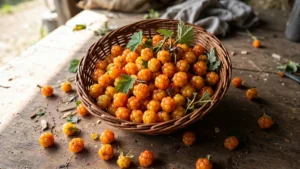
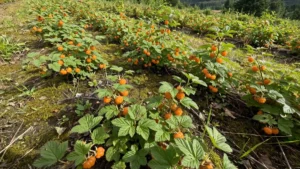
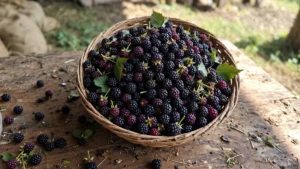
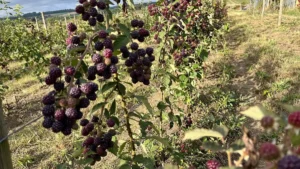
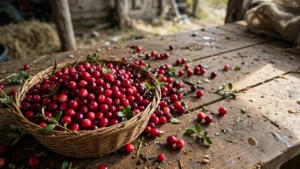
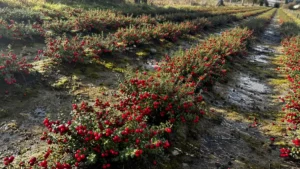
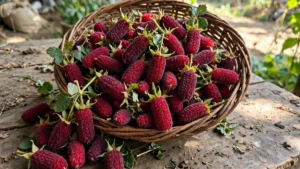
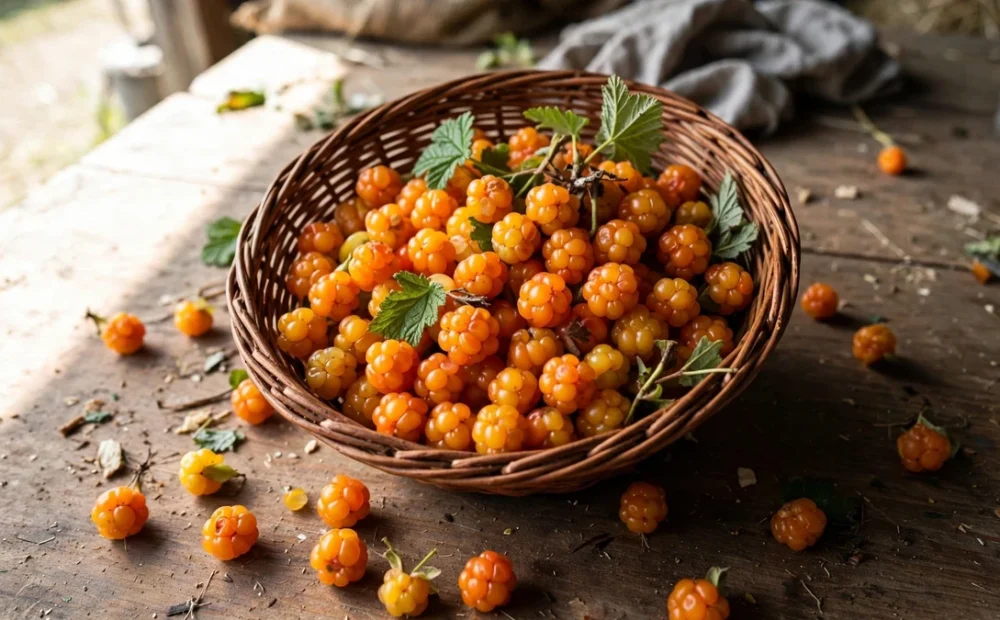
Cloudberry is the fruit that makes you work for it. The berries grow low on creeping plants in northern bogs, one amber jewel per stem, and the farms that welcome guests are small northern holdings where the harvest means wading out onto wet ground in rubber boots, bucket in hand, looking for the orange glow among the green leaves.
Unlike the fruit you buy by the punnet, cloudberries are picked soft and eaten the same day, or cooked down at once. That shapes the whole stay: the kitchen is the heart of the farm, the mornings smell of jam on the stove, and the day is built around the bog walk, the cream jug, and the jar.
Below are nine cloudberry farm stays worth considering in 2027, from the Arctic coast of Troms to a remote farm in Alaska. Each entry weighs what is good, what falls short, and the traveller each stay suits best.
Key takeaways
- Cloudberries grow one berry to a stem on low plants in northern bogs, and the best stays are working farms where the berries are the main crop.
- A ripe berry is amber-orange and soft enough to dent with a fingertip; pale or hard berries are not ready yet.
- Cloudberries spoil fast, so every farm on this list eats them fresh with cream or cooks them into jam and liqueur the same day.
- Most stays include a bog walk and a tasting, but meals, transfers, and jam-making sessions are often priced separately.
- People with a wheat allergy should tell the farm before booking, because the berries carry no gluten but the farm kitchen bakes bread each morning.
What a cloudberry farm retreat actually is
A cloudberry farm retreat is a stay on a working cloudberry farm in the far north. The plants are low and creeping, with white flowers in early summer and amber berries by late July. The fruit ripens unevenly, so the farm picks over several weeks, and the kitchen works through the harvest as it arrives.
The difference from a plain farm stay is the bog at the centre of everything. The berries set the rhythm, from the jam stirred at breakfast to the cream poured at tea and the liqueur sipped after dinner. The rooms are simple, the host works the bogs, and the day runs on the picking.
Knowing exactly what the nightly rate includes saves you a letdown later. Some of these stays are farms first and foremost, with plain rooms and a host who tends the bogs all year. Others are comfortable guesthouses set beside a cloudberry field, offering more ease and less visible farm work. Both kinds can be lovely, yet they are different holidays, and the nightly rate usually hints at which kind you are looking at. Our guide to luxury elderberry farm retreats follows the same idea: check the inclusions in writing before the photographs win you over.
How we picked these stays, and what to ask first
We looked for stays where the cloudberry bogs are real and central, not decorative. A good cloudberry retreat grows its own berries, offers a bog walk or jam session as part of the stay, and is honest about what happens outside the harvest season.

Look first at the season. Cloudberries ripen in late July and August, and the window moves by country. Norway and Finland pick from late July into August, while Alaska and Newfoundland can run a touch later. Outside those weeks the farm is still a pleasant place, but the berries will not be on the plants.
Ask next what the price covers. A walk through the bog, a tasting, and a jam-making session are three separate things, and some stays charge for each one apart. Find out whether breakfast is part of the room, whether the garden is shared, and whether the host speaks a language you can manage in. A farm that puts all of this in writing before you pay is usually run with care. The luxury sea buckthorn farm retreats we covered earlier follow the same shape: small stays where the booking details matter more than any star rating.
The 9 best luxury cloudberry farm retreats of 2027
Troms, Norway — Cloudberry on the Arctic Coast
What we like: Troms sits under the midnight sun, and the cloudberry here grows in the bogs between the fjords and the birch woods. The stay is a wooden farmhouse near the water, and the host walks guests out onto the bog with rubber boots and a bucket, showing which berries are amber and which need another week.
What to consider: The farm is a drive from the nearest town and the midges are out in the evening, so bring repellent and a head net. The rooms are plain, warmed by a wood stove, and the berries are soft and quick to spoil. Best for: Travellers who want cloudberry where Norway has grown it longest. Style: Wooden farmhouse near the fjord. Price range: $65–$95 a night, breakfast and a bog walk included. Standout feature: Morning bog walks under the midnight sun.
Lapland, Finland — Cloudberry among the Birch Woods
What we like: A quiet farm in the Finnish north where cloudberry grows in the bogs between the birch woods, and the kitchen turns the berries into jam every morning of the harvest. The house is timber-built, the air is clear and still, and the table serves cloudberry jam with porridge, yoghurt, and warm rye bread.
What to consider: The location is remote and the mobile signal is weak, so save your maps before you arrive. The rainy days bring heavy afternoon showers. Best for: Travellers who want a slow, wide corner of the north. Style: Timber farmhouse in the birch woods. Price range: $95–$125 a night, farm breakfast and jam tasting included. Standout feature: Jam stirred fresh each harvest morning.
Jämtland, Sweden — Cloudberry in the Mountain Valleys
What we like: A valley farm in the Swedish mountains where cloudberry is a serious crop, grown in the bogs for jam and liqueur, and the farm runs a proper kitchen that cooks with the berries all through the harvest. The rooms are comfortable, the garden is broad, and the host knows the ripening calendar by heart.
What to consider: The farm is a long drive from the nearest city and the valleys are steep, so a car helps. The evenings are cool enough to want a layer. Best for: Travellers who want cloudberry taken seriously as a crop. Style: Comfortable valley farmhouse. Price range: $125–$160 a night, breakfast and dinner both included. Standout feature: A kitchen that cooks with cloudberry all harvest long.
Trøndelag, Norway — Cloudberry beside the Fjords
What we like: A stone farmhouse in the fjord country where cloudberry grows along the bog edges and the farm keeps a small table for guests under the birches. The berries here are deep amber, and the host folds them into jams and a golden liqueur served with cream.
What to consider: The farm has only a few rooms, so book early, and Norwegian is the working language of the house. The coast is close enough for a day out, but the farm itself is quiet after dark. Best for: Travellers who want berries and Norwegian farm cooking in one trip. Style: Stone farmhouse in the fjord country. Price range: $160–$195 a night, dinner and a bog walk included. Standout feature: Golden cloudberry liqueur with cream.
Ostrobothnia, Finland — Cloudberry across the Western Marshes
What we like: A farm on the flat marshland of western Finland where cloudberry plants stand in wide bogs and the fruit is pressed into juice and cooked into a thick jam. The house sits beside a lake, the cranes pass overhead, and the kitchen uses the berries in cheese dishes as well as jams.
What to consider: The heat hangs heavy in late summer and the mosquitoes come out at dusk. Best for: Travellers who want berries and wide Finnish skies in one trip. Style: Farmhouse beside a lake. Price range: $195–$230 a night, breakfast, dinner, and a jam session included. Standout feature: Cloudberry served with baked cheese.
Scottish Highlands, Scotland — Cloudberry among the Highland Bogs
What we like: A moorland farm far from the main road, where cloudberry grows wild in the high bogs and the farm keeps just four rooms. The host is a retired teacher who gathers the berries for love rather than scale, and the meals are home cooking at a shared table with jam and cream.
What to consider: There is little to do beyond the moors, and the nearest town is a half-hour drive. Best for: Travellers after quiet days and a host with time to talk. Style: Small moorland farmhouse. Price range: $230–$265 a night, all meals and tastings included. Standout feature: Shared evening meals at the farmhouse table.
Karelia, Finland — Cloudberry by the Forest Lakes
What we like: A farm on the edge of the eastern forests where the Finnish cloudberry grows in damp hollows, and the farm serves the berries with cream at breakfast. The air is cooler than the lowlands, the walks are long, and the host arranges jam-making sessions as well as bog walks.
What to consider: The farm is a drive from the nearest town and the evenings are cool enough to want a layer. Best for: Travellers who want berries and forest air together. Style: Forest farmhouse with a jam kitchen. Price range: $265–$300 a night, full board and a jam morning included. Standout feature: Cloudberries served with cream at breakfast.
Newfoundland, Canada — Cloudberry on the Rocky Shores
What we like: A coastal farm where cloudberry grows beside the rocky shore and the fruit is cooked into jams and a dark preserve that guests take home. The locals call the berry bakeapple, the host is a second-generation grower, the harvest season is long, and the kitchen makes a jam that sells out every year.
What to consider: The road in turns rough after rain, and the farm books out in the harvest months. Best for: Travellers after a long season and a kitchen that takes its work seriously. Style: Coastal farmhouse with a jam kitchen. Price range: $300–$340 a night, full board plus a jam tasting included. Standout feature: Dark cloudberry jam made on the farm.
Alaska, USA — Cloudberry in the Northern Wilderness
What we like: A small farm on the edge of the Alaskan wilderness where cloudberry grows in the tundra bogs under the long northern light, and the stay is a polished cabin with a view out to the mountains. The berries are the amber kind, the farm runs a weekly tasting, and the kitchen folds the jam into breakfast pancakes.
What to consider: The price is the highest on this list, and the farm is a long drive from the nearest town. Best for: Travellers who want cloudberry without leaving the United States. Style: Wilderness cabin with a mountain view. Price range: $345–$380 a night, every meal and every session included. Standout feature: Weekly tastings with a view out to the mountains.
Which cloudberry region fits your trip
For the most traditional fruit, go to Troms or Jämtland, where the bogs are a working crop and the jam lands on the table at every meal. For the wildest setting, choose the Scottish Highlands, where the farm sits among the moors and the berries grow wild in the high bogs. For the biggest flavours, pick Ostrobothnia, where the kitchen cooks the berries into cheese dishes too.
For a first trip, Lapland is the simplest choice: the farm is used to guests, the season is generous, and the kitchen cooks with the berries every day. Our guide to the luxury goji berry farm retreats makes the same point: pick the farm that cooks with its crop daily.
The caveats that matter
Cloudberry farm retreats are lovely. The berries follow the seasons, the farms sit far from town, and the best stays say plainly what is ripe and what is not.
| Detail | What is known |
|---|---|
| Best time to visit | Late July into August, when the berries turn amber; the window moves by country |
| The two main kinds | Nordic cloudberry is amber and soft, North American cloudberry is a little firmer and sharper |
| How ripe berries look | Amber-orange all the way through, soft, and quick to slip off the stem |
| What is usually included | Room and breakfast plus a bog walk or tasting; jam sessions and transfers often cost extra |
| Who should go | Slow travellers, food lovers, and families with older children |
| Who should think twice | Anyone after nightlife, quick service, or a full daily programme |
| Transfers | Usually an hour or more from the closest airport; book the lift before you arrive |
| What is not guaranteed | Berries on your dates; the crop leans on weather, season, and the bog’s own rhythm |
Cloudberries carry no gluten themselves, yet farm kitchens bake bread each morning, so find out how the kitchen keeps flour away from your plate. Cloudberries spoil quickly once picked, so eat them fresh or cook them the same day, and tell the farm before booking if you take medicine or are expecting. Before you book, weigh the practical points if you have a health condition, are expecting, or travel with small children: how far the nearest clinic sits, when the farm last sprayed, and whether the bog paths suit little feet.
Checklist: booking a cloudberry farm stay honestly
Run through these checks before you pay, then once more in the week before you travel.
- Check the ripening: ask whether the berries will be amber on your dates, not just whether the farm is open.
- Check the inclusions: bog walk, tasting, meals, and transfers, and which of them costs extra.
- Check the distance: how long the drive takes from the airport, and whether the farm will collect you.
- Check the bedroom: does it face the cloudberry bogs or the garden, and does it have shade, a fan, or heating?
- Check the growing: ask how big the cloudberry bog is, whether it is organic, and when it last sprayed.
- Check recent reviews: look for guests who stayed in the same harvest weeks as your trip.
Frequently asked questions
When is cloudberry season?
It depends on the country. In Norway and Finland, the berries ripen from late July into August. In North America the window can run a little later, and in Alaska the season stretches further, so ask the host directly.
What does cloudberry taste like?
Sweet and tart at once, with a flavour between apricot and raspberry, sometimes honeyed, sometimes sharp. Fresh berries are soft and juicy; cooked berries are rich and deep, which is why every farm turns them into jam or liqueur.
Can guests pick cloudberries on the farm?
Yes, on most farms, provided you go with a guide and ask first. Some farms hand guests a bucket and rubber boots for a few berries, while others do the picking themselves because ripe berries crush easily. Mention it when you book, and wear long sleeves, because the bog plants can scratch.
Is cloudberry safe for everyone to eat?
Mostly yes. The berries themselves are gentle, but the liqueur is a strong preparation, so anyone who takes medicine or is expecting should ask a doctor first. Healthy eaters should still eat modest portions, because plenty of tart berries can unsettle the stomach.
Where does a first-time cloudberry visitor start?
Lapland, for the easiest journey and the longest season. The farm knows how to host guests, the berries come for several weeks, and the kitchen serves them at every meal.
Can someone who avoids gluten still enjoy a cloudberry farm?
Yes, if you flag it when you book. The berries themselves are free of gluten, and the rice dishes are usually safe. The risk is the bread baked each morning, so ask the farm how it keeps flour away from your food.
The bottom line
A cloudberry farm retreat suits travellers who like their food to come from the bog they are standing beside, and who are happy to let the harvest set the day. The berries are amber, the season is short, and the best stays are the ones that pick them, cook them down, and serve them without any fuss.
Choose the region by what you want most: the Arctic coast of Troms, the moors of the Scottish Highlands, or the wilderness light of Alaska — and carry the jam home sealed, not the fresh berries themselves. A jar of that jam will keep long after the photographs fade.