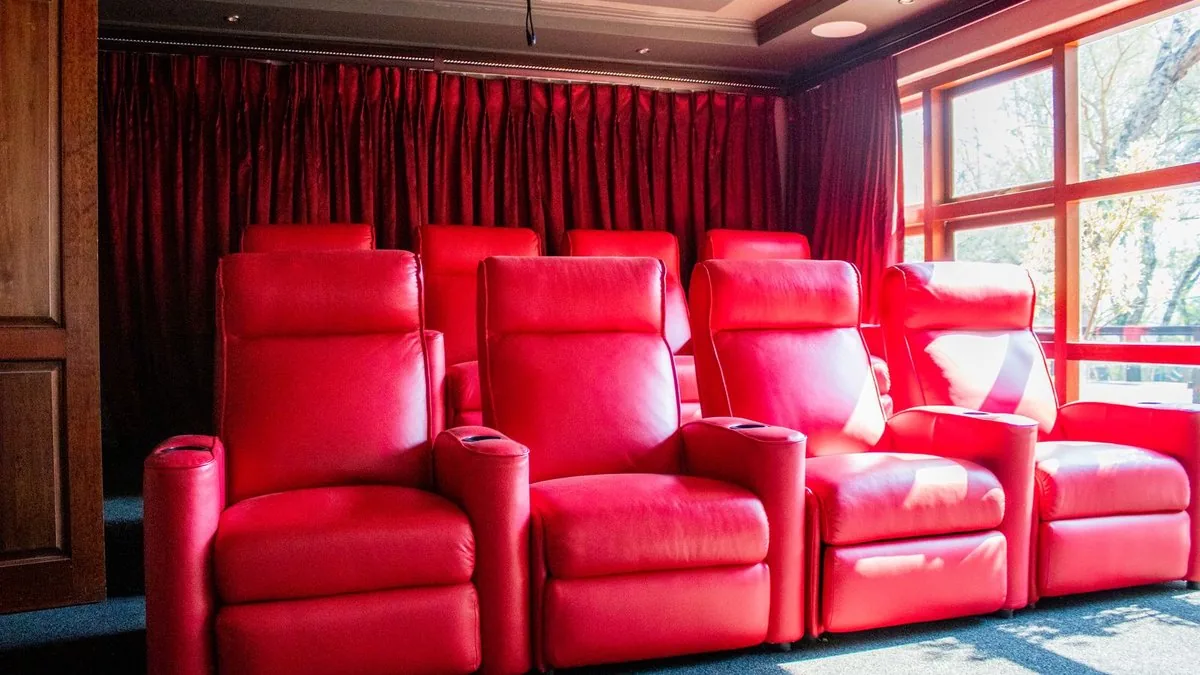
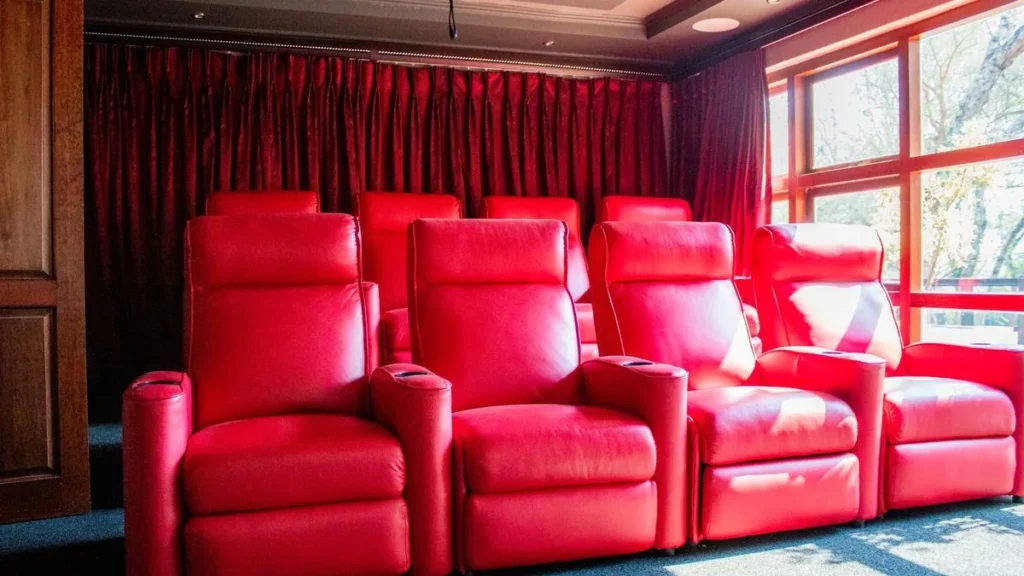
A luxury home cinema is not a large television in a dark living room. It is a room built around the film: a screen sized to the seating distance, a projector chosen for a light-controlled space, sound that arrives from every direction including above, and seats that stay comfortable through a three-hour epic. When those pieces are planned together, the result feels closer to a private screening room than to a living room with good equipment.
The best luxury home cinemas of 2027 start with the room, not the projector. A dedicated space of roughly 4 by 6 metres suits a 5.1.4 Dolby Atmos layout with a screen of 100 to 120 inches, while a larger room of about 6 by 8 metres can carry a full 7.1.4 layout. Ceiling height matters too: Dolby’s own guidance for Atmos rooms sets a minimum layout height of 2.4 metres and a recommended room volume above 50 cubic metres.
This guide compares the leading luxury home cinema systems for 2027 as complete rooms, not as isolated boxes. Prices are approximate starting figures from late-2026 listings,
Key takeaways
- A luxury home cinema is a designed room, not a big screen: room size, ceiling height, light control and acoustics decide the result before any equipment is chosen.
- JVC leads on native contrast and black levels for dedicated dark rooms, Sony leads on the all-round native 4K laser picture, and Barco leads on brightness for very large screens.
- A 5.1.4 Dolby Atmos layout suits a medium room of about 4 by 6 metres; a large room of about 6 by 8 metres can carry a full 7.1.4 layout with two subwoofers.
- Plan for a screen of 100 to 120 inches in a medium room, with the main seats roughly two-thirds of the way back from the screen wall.
- A full luxury cinema typically runs from about $25,000 to $75,000 fitted, and a designer-led build with acoustic treatment and tiered seating can reach $100,000 or more.
The Best Luxury Home Cinemas at a Glance
The table below compares the leading luxury home cinema projectors and the seating that completes the room, on what each is best for, what it costs to start, and what kind of room it suits.
| System | Best for | Approx. starting price | Room and notes |
|---|---|---|---|
| JVC DLA-NZ500 | Native 4K contrast in a dark room | Premium; check current listing | Native 4K 4096 x 2160, 2,000 lumens, 40,000:1 native contrast, laser |
| Sony VPL-XW5000ES | Compact native 4K laser picture | From about $5,998 | Native 4K SXRD 3840 x 2160, 2,000 lumens, 20,000-hour laser life |
| JVC DLA-NZ900 | Flagship film-first performance | Flagship; check current listing | Native 4K D-ILA, 3,300 lumens, 150,000:1 native contrast, 8K e-shiftX, HDR10+ |
| Sony BRAVIA Projector 9 | Bright native 4K for large screens | Premium; check current listing | Native 4K SXRD, up to 3,400 lumens, XR Processor for Projector |
| Epson QB1000 | Bright, calibrated colour and gaming | From about $7,999 | 3,300 lumens, HDMI 2.1 for 4K/120, 20,000-hour laser, motorised lens |
| Barco Heimdall | Very large screens and bright rooms | Flagship; check current listing | Native 4K single-chip DLP RGB laser, 4,500 ANSI lumens, HDMI 2.1, 25,000-hour laser |
| Fortress Seating | Luxury recliners and loungers | From about $3,300 per seat | Custom leather and fabric, power recline, heat and massage options |
The Projector Sets the Picture
The projector is the most expensive decision in most luxury cinemas, and the choice comes down to how dark the room can be. In a fully light-controlled room, contrast and black level matter more than brightness, which is why JVC’s native 4K D-ILA models lead for film-first buyers. The DLA-NZ500 pairs a native 4096 x 2160 panel with 2,000 lumens and a 40,000:1 native contrast ratio, and its laser needs no lamp replacements. The flagship DLA-NZ900 raises brightness to 3,300 lumens and native contrast to a rated 150,000:1, with 8K e-shiftX and HDR10+.
Sony’s native 4K SXRD projectors are the premium all-rounders. The VPL-XW5000ES delivers a native 3840 x 2160 picture from a compact chassis with a 2,000-lumen laser rated for 20,000 hours. The brighter BRAVIA Projector 9, with up to 3,400 lumens, suits screens of 150 inches and beyond. In practice Sony often wins the first ten minutes of a viewing, while JVC wins the hardest dark scenes once the lights are out.
Epson’s QB1000 is the value-led premium pick, with 3,300 lumens, HDMI 2.1 for 4K/120, a motorised lens and a 20,000-hour laser, from about $7,999. Its 4K picture uses pixel-shift rather than a native 4K panel, so its black floor trails the JVC in a fully dark room. Barco’s Heimdall sits above all of these for very large screens: a native 4K single-chip DLP RGB-laser projector with 4,500 ANSI lumens and a 25,000-hour laser.
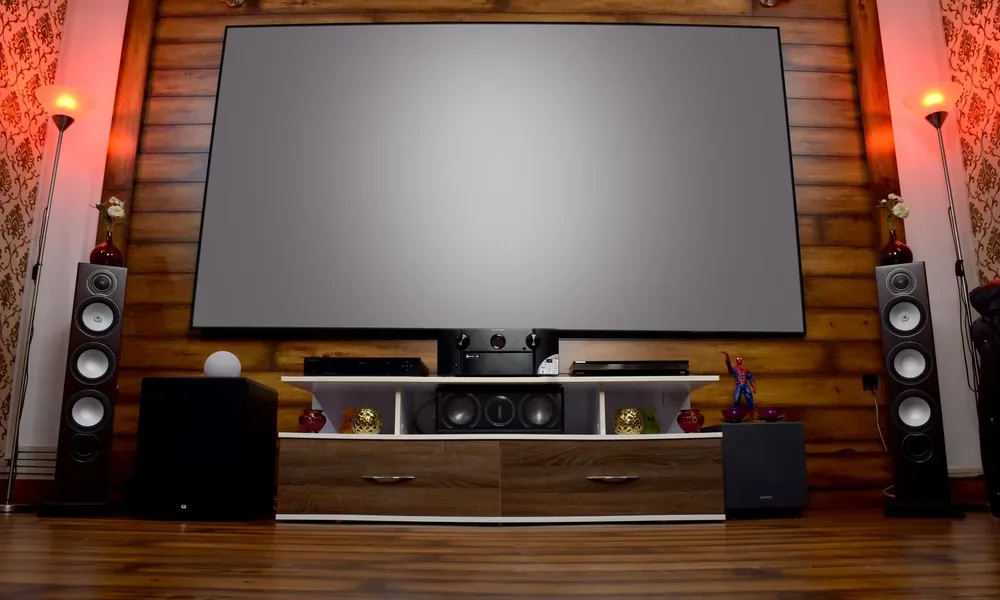
Screen choice matters as much as the projector. A fixed-frame screen of 100 to 120 inches suits most medium rooms, and an acoustically transparent screen lets the front speakers sit behind the picture, exactly where the sound should come from. Choose the screen size from the seating distance, not from the wall.
Sound Is Half the Cinema
Dolby Atmos is the standard to plan around: in a 7.1.4 system, seven ear-level speakers, one subwoofer channel and four height speakers. The preferred layout for a home Atmos room is 7.1.4, with 5.1.4 the right step for a medium room and 5.1.2 the sensible choice for a small room of about 3 by 4 metres.
Placement follows geometry, not guesswork. The front left and right speakers sit at seated ear height, roughly 0.9 to 1.1 metres from the floor, angled towards the main seats, and the centre speaker, which carries the dialogue, sits directly above or below the screen. Side surrounds sit at 90 to 110 degrees from the centre axis, and the four height speakers go in the ceiling, never on the wall and never firing upwards from the floor.
Bass needs its own plan. One subwoofer in a corner will boom in some seats and vanish in others, which is why larger rooms use two subwoofers to even out the response.
The Room and Its Acoustics
Acoustic quality is largely decided before any treatment is installed, by the room’s dimensions. A room of 5 by 4 by 2.5 metres has its first axial modes spread reasonably evenly, which is a good starting point. The classic proportion to aim for is a length-to-width-to-height ratio near 1.00 to 1.28 to 1.54, scaled up to a usable size.
The target for a finished cinema is a reverberation time, or RT60, of about 0.3 seconds. Most untreated domestic rooms measure 0.5 to 0.8 seconds, which is the difference between hearing every whispered word and reaching for the subtitles. Reaching 0.3 seconds takes moderate treatment: absorption panels at the first reflection points, bass trapping in the corners, and a thick carpet. Fabric-covered wall panels in a deep, dark colour do double duty, absorbing sound and killing the light reflections that wash out a projected picture.
Light control is the other half of the room. Blackout blinds or shutters, a door that seals properly, and no light leaking from a hallway will do more for the picture than a brighter projector.
Seating, Lighting and Design
Seating is where a luxury cinema earns its keep, and where the budget can quietly double. Fortress Seating, the custom American maker, lists its Matinee recliner from about $3,300 per seat, its Nova and Opus models from about $4,200, and its Metro from about $5,400.
Good cinema seating is built for reclining with feet up, a drink within reach and a clear view for three hours. Leather reads as the classic cinema choice and wipes clean, while velvet and performance fabric feel warmer and absorb more sound.
Lighting should be planned in layers and controlled from one panel or remote: recessed ceiling spots on a dimmer, wall sconces at low level, LED strips under the riser and along the steps, and a fibre-optic star ceiling, each dimming to near darkness without flickering. The same design thinking applies to the rest of the house: our guide to celebrity home decor shows how designers layer texture and light in luxury interiors.
How Much a Luxury Home Cinema Costs
Budgets fall into three clear bands. A well-planned single-row cinema in a converted spare room, with a good laser projector, a 5.1.2 or 5.1.4 sound system, a fixed screen and four quality recliners, typically runs from about $25,000 to $40,000 fitted. A two-row dedicated room with acoustic treatment, a flagship projector, a 7.1.4 system and a small bar typically runs from about $50,000 to $75,000. A designer-led build with custom joinery and bespoke seating can reach $100,000 or more.
The hidden costs are the ones to budget first. Acoustic treatment, a riser, blackout, ventilation and electrical work commonly add 20 to 30 percent to the equipment bill. A cinema is also a room that adds to the house, with the same sense of occasion as a luxury hotel in Paris or one of the best luxury yacht charters.
Your Luxury Home Cinema Checklist
Use this checklist before you order anything. Each item is a decision that is cheap to make early and expensive to change later.
- Measure the room and check the proportions: aim for a ceiling of at least 2.4 metres, a volume above 50 cubic metres, and a length that allows two rows if you want them.
- Choose the screen size from the seating distance, with the main seats about two-thirds of the way back from the screen wall.
- Pick the projector for the room’s light: native 4K laser for a dark dedicated room, a brighter model for a room with any ambient light.
- Plan the sound layout by room size: 5.1.2 for a small room, 5.1.4 for a medium room, and 7.1.4 with two subwoofers for a large room.
- Budget for acoustic treatment, a riser, blackout and ventilation before you budget for the projector.
- Order seating early, confirm the riser height against the seat dimensions, and plan lighting in layers that all dim to near darkness.
Frequently Asked Questions
How much does a luxury home cinema cost in 2027?
A well-planned single-row cinema typically runs from about $25,000 to $40,000 fitted, a two-row dedicated room with acoustic treatment and a flagship projector from about $50,000 to $75,000, and a designer-led build can reach $100,000 or more.
What size room do I need for a home cinema?
A medium room of about 4 by 6 metres suits a 5.1.4 Dolby Atmos layout with a screen of 100 to 120 inches. A large room of about 6 by 8 metres can carry a full 7.1.4 layout. Dolby’s guidance sets a minimum layout height of 2.4 metres and a recommended volume above 50 cubic metres.
Is a projector better than a large TV for a luxury cinema?
For a dedicated dark room, yes: a projector gives a 100 to 150 inch picture that no television matches at a comparable price. A large television is the better choice for a bright multi-purpose living room.
Which projector is best for a luxury home cinema?
For a fully dark, film-first room, JVC’s native 4K D-ILA models lead on contrast and black levels, with the DLA-NZ500 as the reference pick and the DLA-NZ900 as the flagship. Sony’s native 4K SXRD models are the premium all-rounders, and the brighter BRAVIA Projector 9 suits very large screens. Epson’s QB1000 is the strong value-led premium pick.
How many speakers do I need for Dolby Atmos?
A 5.1.4 system, five ear-level speakers, one subwoofer and four ceiling height speakers, is the right target for most medium rooms. A large room can use 7.1.4 with two subwoofers, while a small room is best with 5.1.2.
Do I need acoustic treatment in a home cinema?
Yes, if you want the sound to match the picture. The target is a reverberation time of about 0.3 seconds, while most untreated rooms measure 0.5 to 0.8 seconds.
The Bottom Line
The best luxury home cinemas of 2027 are rooms first and equipment second. Start with the dimensions, the light and the acoustics, choose a native 4K laser projector that suits the room’s darkness, and spend properly on seating, because that is where every film is actually watched.
Note: Prices and specifications are approximate starting figures from late-2026 listings and manufacturer specifications, and they change with sales and options. Check the current price before ordering, and confirm room dimensions and seating layout with your installer before building work begins.