A diamond ring is built to last, but it is not built to stay clean on its own. Every day it touches soap, hand cream, cooking oil, and dust, and each of those leaves a thin film on the stone and the setting. The film is invisible at first, and then one day the diamond looks dull, the sparkle is gone, and the ring looks older than it is. The good news is that most of that dullness is surface dirt, not damage, and it comes off with warm water, a little soap, and a soft brush.
Cleaning a diamond ring at home is safe when it is done gently and regularly. The mistakes people make are almost always about force: scrubbing too hard, using a harsh cleaner, or putting a ring with a fragile setting into an ultrasonic cleaner without checking it first. A diamond itself is the hardest natural material, but the metal holding it, the prongs, and any small side stones are not, and they are the parts that need care.
This guide walks through nine steps for cleaning a diamond ring, from the simple soak that restores most of the shine to the signs that mean a ring should go to a jeweller instead. It covers what to use, what to avoid, and how often to clean, so the ring keeps its sparkle without risking its setting.
Key takeaways
- Most dullness on a diamond ring is a film of soap, oil, and dust, and it comes off with warm water, mild soap, and a soft brush.
- Soak the ring for twenty to thirty minutes, brush gently, rinse under running water with the plug in, and dry with a lint-free cloth.
- Avoid harsh chemicals, toothpaste, abrasive cloths, and strong household cleaners, which can damage the metal and the setting.
- Check the prongs and the setting before every clean, and never use an ultrasonic cleaner on a ring with loose stones or a fragile setting.
- Home cleaning keeps a ring looking good, but it cannot fix loose prongs, a bent setting, or a damaged stone, and those need a jeweller.
Why a diamond ring loses its sparkle
A diamond sparkles because light enters the stone, bounces around inside it, and comes back out through the top. Anything that sits on the surface of the stone, or in the tiny gaps around the setting, blocks that light. Hand cream is the most common culprit, because it is applied several times a day and it coats the back of the stone, which is the part you never see. Soap leaves a similar film, especially soap with moisturisers in it, and cooking oil, sunscreen, and hair products add to it.
The setting matters as much as the stone. Prongs hold the diamond in place, and dirt collects underneath them, where a cloth cannot reach. A pavé setting, with many small stones set close together, has even more places for dirt to hide. White gold settings can also look dull for a different reason: the rhodium plating that gives white gold its bright finish wears away over time, and no amount of cleaning will restore it.
It is worth knowing what cleaning cannot do. It cannot repair a scratch on the metal, tighten a loose prong, or restore a stone that has chipped. It cannot bring back the rhodium finish on white gold. If a ring still looks dull after a careful clean, the cause is probably in the setting or the stone, not on the surface, and that is the moment to get a professional opinion.
What you need to clean a diamond ring and what to look for
You need very little: a small bowl, warm water, a few drops of mild dish soap or hand soap without moisturiser, a soft toothbrush with gentle bristles, and a lint-free cloth for drying. That is the whole kit, and it is enough for most rings. A soft brush matters, because a hard brush can scratch the metal and loosen small stones. A lint-free cloth matters, because a normal towel leaves fibres behind on the stone and in the setting.
Look for a soap that is mild and free of moisturisers, antibacterials, and strong fragrances, because those additives leave their own residue on the stone. Plain dish soap is usually the best choice. Avoid anything with bleach, acetone, or abrasive particles, and avoid toothpaste, which is far too abrasive for jewellery. If you want a dedicated product, a jewellery cleaning solution made for diamonds is fine, but check the label first: it should be safe for the metal your ring is made from.
Before you start, check the ring. Hold it up to the light and look at the prongs. Are any bent, worn, or missing? Shake the ring gently near your ear: do you hear a faint rattle, which can mean a stone is loose? If anything looks wrong, do not clean the ring at home. Take it to a jeweller first, because brushing or soaking a ring with a loose stone can make the problem worse.
The 9 steps to clean a diamond ring
Inspect the ring before you touch water
What to Do: Look at the prongs, the setting, and the band under good light, and gently shake the ring to listen for a loose stone. What to Avoid: Cleaning a ring with a bent prong, a loose stone, or a cracked band, which can let the stone fall out during the clean. Best For: Every ring, every time you clean it. Time Needed: Two minutes. Standout Tip: Do the inspection over a towel on a table, not over a sink, so a loose stone cannot fall down the drain.
Mix warm water and a few drops of mild soap
What to Do: Fill a small bowl with warm water, not hot, and add two or three drops of mild dish soap. Stir gently until the soap dissolves. What to Avoid: Using boiling water, which can loosen glue in some settings, or using too much soap, which leaves a film of its own on the stone. Best For: All diamond rings. Time Needed: One minute. Standout Tip: Use a bowl, never the sink, so the ring cannot slip away and so you control the water temperature.
Soak the ring for twenty to thirty minutes
What to Do: Place the ring in the bowl and leave it to soak, so the warm soapy water loosens the film of oil, soap, and dust on the stone and in the setting. What to Avoid: Soaking for hours, which does not help and can loosen some settings, or soaking a ring with soft side stones such as pearls, opals, or turquoise. Best For: Rings worn daily and rings that have not been cleaned in a while. Time Needed: Twenty to thirty minutes. Standout Tip: Soak the ring while you do something else, and set a timer so you do not forget it.
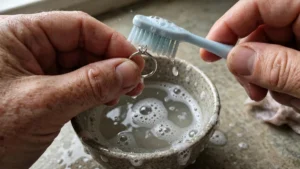
Brush gently with a soft toothbrush
What to Do: Lift the ring out of the bowl and brush it gently with a soft toothbrush, paying attention to the back of the stone and the gaps under the prongs, where dirt collects. What to Avoid: Pressing hard, using a hard-bristled brush, or scrubbing the same spot repeatedly, which can scratch the metal and loosen small stones. Best For: Every diamond ring, especially pavé and halo settings. Time Needed: Two minutes. Standout Tip: Use a toothbrush kept only for jewellery, with soft bristles, and replace it when the bristles splay.
Rinse under running water with the plug in
What to Do: Rinse the ring under lukewarm running water to wash away the loosened dirt and soap, with the sink plug in place or a strainer over the drain. What to Avoid: Rinsing over an open drain, which is how rings are lost, or using very hot water, which can shock some settings. Best For: Every ring after brushing. Time Needed: One minute. Standout Tip: Hold the ring by the band, not by the stone, while you rinse, so a loose stone cannot slip out unnoticed.
Dry with a lint-free cloth
What to Do: Pat the ring dry with a clean, lint-free cloth, then let it air-dry for a few minutes before putting it away or wearing it. What to Avoid: Rubbing hard with a rough towel, which can scratch the metal, or using a hairdryer, which can loosen glue and heat the setting. Best For: Every ring after rinsing. Time Needed: Two minutes. Standout Tip: A microfibre cloth made for glasses or jewellery works well, and it leaves no fibres on the stone.
Polish the band with a jewellery cloth
What to Do: Once the ring is dry, buff the band gently with a jewellery polishing cloth to restore its shine and remove light surface marks. What to Avoid: Using a polishing cloth on a matte or brushed finish, which will make it shiny, or polishing a ring with soft side stones, which the cloth can scratch. Best For: Polished gold and platinum bands. Time Needed: One minute. Standout Tip: Keep the polishing cloth in a sealed bag between uses, because it stops working once it is dirty or dried out.
Check the sparkle and repeat if needed
What to Do: Hold the ring up to the light and look at the stone. If it sparkles and the metal looks clean, you are done. If a film remains, repeat the soak and brush once more. What to Avoid: Repeating the clean many times in a row, which wears the metal, or switching to a stronger cleaner out of frustration. Best For: Rings that have not been cleaned in months. Time Needed: One minute to check, plus a repeat soak if needed. Standout Tip: Compare the ring with a photo taken before the clean, so you can see the difference clearly.
Know when to stop and see a jeweller
What to Do: If the ring still looks dull after two careful cleans, or if you notice a loose stone, a bent prong, or a thin band, take it to a jeweller for a professional clean and inspection. What to Avoid: Trying an ultrasonic cleaner, a steam cleaner, or a chemical dip at home on a ring you have not had checked, which can damage fragile settings. Best For: Any ring with a problem, and any ring you have not had checked in a year. Time Needed: A jeweller visit, usually under an hour. Standout Tip: Ask the jeweller to check the prongs and the setting at the same visit, because a professional clean is the right moment for a safety check.
How often to clean a diamond ring
A ring worn every day should be cleaned at home every two weeks, and a ring worn occasionally can be cleaned once a month. That sounds frequent, but the routine takes ten minutes once the soak is done, and it stops the film from building up to the point where the stone looks dull. Rings worn while cooking, gardening, or applying hand cream need cleaning more often, because those activities coat the stone faster.
A professional clean once or twice a year is a good complement to home cleaning, not a replacement for it. A jeweller can clean the places a toothbrush cannot reach, check the prongs under magnification, and tell you whether the band is wearing thin. A gold jewellery cleaning guide covers the same routine for gold pieces without diamonds, if you want one method for the whole collection, and our roundup of the best diamond tennis bracelets shows how the same care applies to other diamond pieces.
The caveats that matter
Home cleaning is safe for most diamond rings, but not for all of them. Rings with soft side stones, such as pearls, opals, emeralds, or turquoise, need different care, because those stones are easily damaged by soap, water, and brushing. Antique rings, rings with glued settings, and rings with a very thin band also need a gentler approach, and sometimes no home cleaning at all. If you are unsure what your ring is made of, ask a jeweller before you clean it.
| Detail | What is known |
|---|---|
| Best home method | Warm water, mild soap, twenty to thirty minute soak, soft brush, rinse, lint-free cloth |
| How often | Every two weeks for daily wear, monthly for occasional wear |
| What causes dullness | Film of hand cream, soap, oil, sunscreen, and dust on the stone and setting |
| What to avoid | Toothpaste, bleach, acetone, abrasive cloths, boiling water, harsh household cleaners |
| Ultrasonic cleaners | Only for sturdy settings with no loose stones; never for fragile or antique rings |
| Soft side stones | Pearls, opals, emeralds, and turquoise need different care and should not be soaked |
| White gold | Cleaning cannot restore worn rhodium plating; that needs a jeweller |
| When to see a jeweller | Loose stones, bent prongs, thin bands, or dullness that survives two careful cleans |
Never clean a ring over an open drain, never use a cleaner you would not put on your skin, and never force a brush into a tight setting. If a ring resists cleaning, the answer is a jeweller, not a stronger chemical. Our guide to storing diamond jewellery explains how to keep a ring clean between washes, so it needs cleaning less often.
Checklist: cleaning a diamond ring honestly
Use these checks every time you clean a ring, and again before you put it away.
- Inspect the ring first: look at the prongs, shake gently for a loose stone, and check the band for thin spots.
- Use warm water and a few drops of mild soap, in a bowl, never in the sink and never with boiling water.
- Soak for twenty to thirty minutes, brush gently with a soft toothbrush, and pay attention to the back of the stone.
- Rinse under running water with the plug in or a strainer over the drain, and dry with a lint-free cloth.
- Skip toothpaste, bleach, acetone, abrasive cloths, and strong household cleaners entirely.
- See a jeweller if the ring stays dull after two cleans, or if a stone feels loose or a prong looks bent.
Frequently asked questions
Can I clean a diamond ring with toothpaste?
No. Toothpaste is abrasive and it scratches the metal, dulls the setting, and can loosen small stones. Warm water, mild soap, and a soft brush are safer and work better.
Is an ultrasonic cleaner safe for a diamond ring?
It can be, for a sturdy ring with a secure setting and no loose stones, but it is not safe for every ring. Antique rings, rings with glued settings, pavé settings, and rings with soft side stones should not go in an ultrasonic cleaner. Have a jeweller check the ring first.
How often should I clean my diamond ring?
Every two weeks if you wear it daily, and once a month if you wear it occasionally. Rings worn while cooking, gardening, or using hand cream need cleaning more often, because those activities coat the stone faster.
Can I wear my diamond ring in the shower?
You can, but soap film builds up quickly, and the ring is more likely to slip off wet hands. Taking it off before a shower keeps it cleaner for longer, and it removes the risk of losing it down the drain.
Why does my white gold diamond ring look dull?
White gold is coated with rhodium, which gives it a bright white finish, and that coating wears away over time. Cleaning will not bring it back. A jeweller can re-plate the ring, which restores the finish and usually takes under an hour.
What should I do if a stone feels loose?
Stop wearing the ring and take it to a jeweller as soon as you can. Do not clean it, shake it, or try to push the stone back into place, because a loose stone can fall out and be lost. A jeweller can tighten the prongs, usually quickly and inexpensively.
The bottom line
Cleaning a diamond ring at home is simple: warm water, a little mild soap, a twenty-minute soak, a gentle brush, a careful rinse, and a lint-free cloth. Done every two weeks, that routine keeps the stone bright and the metal clean.
The part that matters most is the inspection before you start. Check the prongs, listen for a loose stone, and look at the band. If anything seems wrong, let a jeweller handle it. A diamond is hard, but the setting that holds it is not, and the best clean in the world cannot fix a ring that needs repair.