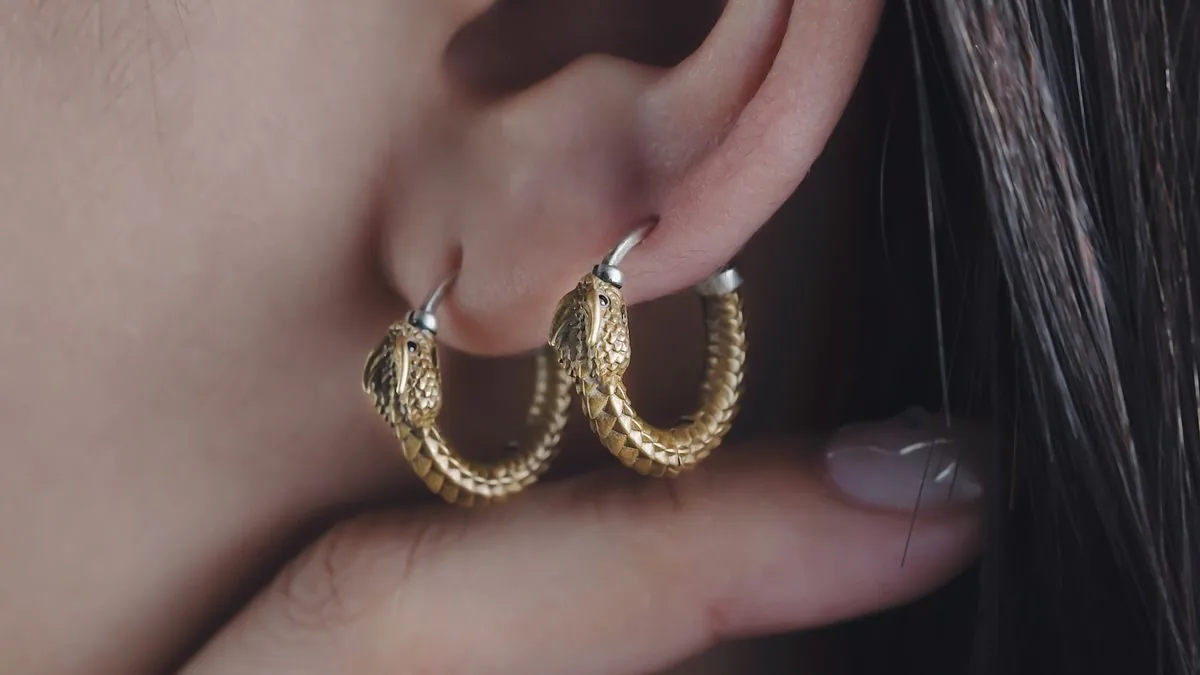
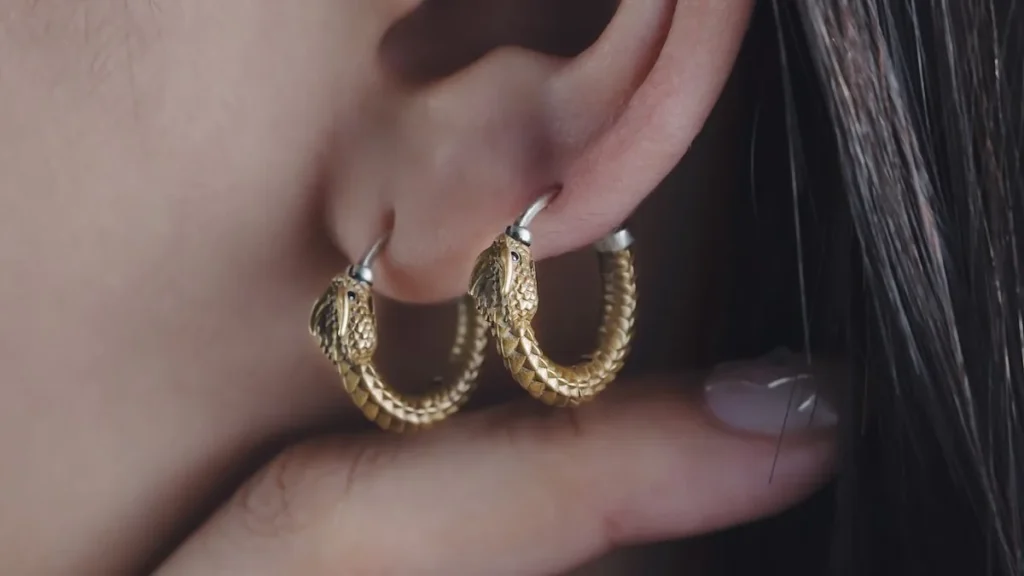
A gold earring looks like the simplest piece of jewellery you can buy: two small pieces of metal and a pair of posts. Yet two pairs that look almost identical in a shop window can be worlds apart in quality, comfort, and value. One pair glows every time you wear it and still looks new years later. The other feels heavy by lunchtime, irritates your ears, or loses its shine within a few months.
The difference is rarely the brand name on the box. It is a short list of things you can check in a few minutes: the karat, the colour, the construction, the weight, the backs, and the finish. Add the style, the way the pair suits your face and your life, and whether the metal agrees with your skin, and you have everything that decides whether a pair is a pleasure to wear or a regret.
Here is what to look for in a gold earring in 2027, from karat and colour to weight, backs, and budget.
Key takeaways
- For everyday wear, 14K gold is usually the best balance of durability, colour, and price, while 18K gold gives a richer, deeper colour for special pieces.
- Solid gold lasts far longer than gold-plated gold, and gold-filled gold sits in between, so always check the construction, not just the colour.
- Check the hallmark stamp for the karat, and ask for the gram weight, the alloy metals, and the returns policy in writing before you buy.
- Match the back to the style: screw backs for valuable studs, secure latch backs for hoops, and lever backs for drops that need to stay put.
- If your ears are sensitive, choose nickel-free gold, and make sure the posts and the backs are made from the same safe metal as the front of the earring.
Start with karat: how much gold is really there
Karat measures how much pure gold is in the alloy. Pure gold is 24 karat, or 99.9 per cent pure, but it is very soft, so jewellers mix it with copper, silver, zinc, or palladium to make it harder. The karats you will see most often are 10K at 41.7 per cent gold, 14K at 58.3 per cent, 18K at 75 per cent, and 22K at 91.7 per cent. Higher karat means more gold, a richer colour, and a higher price, but also a softer metal. For everyday wear, 14K gold is the practical default. Choose 18K gold when you want a deeper yellow and you are happy to take the earrings off for sport and sleep.
Compare karat and construction before you choose
Construction decides how an earring ages. A solid gold earring is gold alloy all the way through, so it can be polished and worn for decades. A hollow gold earring is gold alloy around an empty centre, so a large-looking pair is light and affordable, but easier to dent. A gold-filled earring has a thick layer of gold bonded to a base metal core, with at least five per cent gold by weight, and it can last for years with care. A gold-plated earring has only a very thin layer of gold over a base metal, and that layer can wear away within months. Vermeil is gold-plated silver, and it lasts longer than ordinary plating only when the gold layer is thick, at least 2.5 microns. Compare like with like, and ask the seller to state the karat and construction in writing. Be wary of any listing that says only gold colour or gold tone without naming a karat.
| Option | Gold content | Best for | Durability | Price |
|---|---|---|---|---|
| 10K gold | 41.7% gold | Hard-wearing everyday studs | Very hard | Lowest solid gold |
| 14K gold | 58.3% gold | Everyday hoops and studs | Strong | Moderate |
| 18K gold | 75% gold | Fine and special pieces | Good, softer than 14K | High |
| 22K gold | 91.7% gold | Ceremonial pieces | Soft | Very high |
| 24K gold | 99.9% gold | Collectable pieces | Very soft | Highest per gram |
| Gold-filled | At least 5% by weight | Everyday wear, smaller budget | Good for years | Low to moderate |
| Gold-plated | Thin surface layer only | Trend pieces, occasional wear | Low, wears in months | Low |
| Vermeil | Gold over sterling silver | Occasional wear, luxury look | Moderate if thick | Moderate |
Choose your colour: yellow, white, or rose gold
Gold colour comes from the metals mixed with the gold. Yellow gold, made with copper and silver, is the classic, warmest choice. White gold is usually coated with rhodium for a bright finish, and that coating wears over time and may need renewing every year or two. Rose gold gets its pink tone from extra copper. Look at the jewellery you already wear: if your chain, watch, and rings are yellow gold, a yellow gold earring will sit naturally with them. Check that the colour is even in daylight, because patchy spots can suggest worn plating.
Weight, size, and comfort matter more than you think
Solid gold feels substantial, because gold is dense. A very light pair that looks large is often hollow or plated, so ask for the gram weight before you pay. Heavy earrings can stretch a piercing and ache by the end of the day. As a rough guide, a comfortable everyday stud usually weighs well under two grams per earring. Try the pair on and wear it for a few minutes in the shop: a good pair should feel present but not heavy, and sit straight rather than drooping forward. Size matters too. Small huggies and studs suit everyday wear, medium hoops suit most faces, and large hoops and long drops are best kept for evenings.
Check the backs and closures before you fall in love
Butterfly backs are the standard push-on back for studs: easy to use, but they can loosen, so check that they grip firmly. Screw backs twist onto a threaded post and are the most secure choice for valuable studs. Lever backs are ideal for drops, and latch backs are the standard closure for hoops: a good latch should close with a clear click. Also check the post, usually about 0.8 millimetres thick. The post and back should be the same metal as the front, or titanium, because a cheap base-metal back can irritate the skin even when the front is solid gold.
Pick a style that fits your life, not just your wardrobe
Studs are the most versatile choice, working for work, travel, and everyday wear. Huggies are small hoops that hug the earlobe, comfortable enough for many wearers to sleep in. Medium hoops, usually 20 to 40 millimetres across, frame the face and suit casual and dressed-up outfits. Save long drops for evenings and weddings, and choose shorter drops for daytime. If you play sport, work with children, or wear a headset all day, a low-profile stud or huggie will serve you far better than a large hoop.
Sensitive ears: what to ask about nickel and allergies
If your ears itch, redden, or swell after wearing earrings, nickel is the most common culprit. It hardens gold alloys, especially white gold, and is a well-known cause of contact dermatitis. Pure gold is naturally hypoallergenic, but most earrings are alloys, so ask which metals are in the alloy. Higher karat gold usually contains less nickel, but that is not a guarantee. Ask whether the earrings are nickel-free, and check the posts and backs too, because those touch the piercing directly. If you have a known nickel allergy, consider 18K yellow or rose gold made with copper, silver, or palladium, or ask about titanium posts. Wear a new pair for a few hours at home first, and keep the receipt in case your ears react. For a closer look at how earrings compare, our guide to the best diamond earrings for 2027 shows how setting and metal choices affect comfort as well as sparkle.
Look for good craftsmanship and a real hallmark
The two earrings should match exactly in size, shape, colour, and finish, with a smooth, even polish and neat, secure joins. If the earring holds a stone, it should sit straight, with even prongs and no wobble. The hallmark is your best quick check: look for a stamp on the post, back, or clasp, such as 585 for 14K gold, 750 for 18K, 916 for 22K, and 999 for 24K. Be wary of prices far below the market price per gram: such a pair is almost certainly plated or hollow.
Set a budget and know what you are paying for
Prices depend on the weight of gold, the karat, the craftsmanship, and any stones. Think in cost per wear: a pair you wear three times a week for five years costs very little per wear, while a cheap plated pair you wear twice costs far more per wear. Solid 14K gold is usually the best value for everyday wear, and gold-filled gold is the best budget option. Gold-plated gold is best treated as a fashion purchase. Start with one versatile pair, such as a 14K gold stud or huggie. Our guide to the best gold jewellery for everyday wear in 2027 can help you plan that first pair.
Your buying checklist
- Karat confirmed: the stamp matches the listing, and 14K is your default for everyday wear, 18K for a richer colour.
- Construction confirmed: solid, hollow, gold-filled, or gold-plated is stated in writing, with the gram weight given.
- Colour checked in daylight: even, consistent, and matched to the jewellery you already wear.
- Backs tested: the closure clicks shut firmly, the post is straight and smooth, and the back is made from the same safe metal.
- Skin check done: nickel-free confirmed if your ears are sensitive, including the posts and the backs.
- Paperwork in order: receipt states karat, weight, and construction, with a clear returns policy and warranty.
Frequently asked questions
Is 14K or 18K gold better for earrings?
Fourteen-karat gold is better for everyday earrings: harder, more scratch-resistant, and more affordable. Eighteen-karat gold is better for a special pair, when you want a richer colour and you are happy to take the earrings off for sport and sleep.
How can I tell if gold earrings are real gold?
Look for a hallmark stamp, such as 585 for 14K gold or 750 for 18K gold, and ask for the karat, gram weight, and a written receipt. Real gold is not magnetic. For a valuable pair, ask a jeweller to test it with an acid test or an X-ray fluorescence test.
Are gold earrings good for sensitive ears?
Yes, provided the alloy is nickel-free. Ask which metals are in the alloy: nickel-free 14K and 18K yellow and rose gold made with copper, silver, or palladium are usually the safest choices. Check the posts and backs too.
What is the difference between solid gold and gold-plated earrings?
Solid gold earrings are gold alloy all the way through, so they keep their value for decades. Gold-plated earrings have only a thin layer of gold over a base metal, and that layer wears away within months. Gold-filled earrings sit in between, with a thicker layer that can last for years.
How heavy should gold earrings be?
There is no single right weight. A comfortable everyday stud usually weighs well under two grams per earring. Try the pair on: if it pulls, droops, or aches, it is too heavy for you.
What should I look for when buying gold earrings as a gift?
Choose a versatile style, such as a 14K gold stud or a small huggie hoop, in the colour the recipient already wears most, and choose nickel-free gold if you are unsure about sensitive ears. Keep the receipt and check the returns policy, so the recipient can swap the size or style. If you are also considering a ring, our diamond buying guide for 2027 explains how to check quality and value in a similar way.
The bottom line
The best gold earring is not the most expensive pair, the highest karat, or the largest hoop. It is the pair that matches your life: the right karat, the right construction for your budget, a colour that suits your other jewellery, a back that keeps it safe, and a metal that agrees with your skin. Check the hallmark, ask for the weight and the alloy, try the pair on, and test the closure before you buy.
Note: Gold prices change daily, and karat, weight, and construction vary between sellers, so use this guide as a general buying checklist and confirm the exact details, hallmark, and returns policy with the seller before you buy.