A pearl necklace looks effortless when it is worn, and that is exactly why it is so easy to clean it the wrong way. The pearls pick up skin oils, perfume, and dust every time they touch the neck, Knowing how to clean a pearl necklace properly is less about scrubbing and more about restraint.
A soft cloth, lukewarm water, and a drop of mild soap will do the job for almost every strand, The method matters more than the materials,
This guide walks through the full process, from inspecting the strand to drying it flat and checking the silk thread, so a pearl necklace keeps its lustre for years. It also covers what never to use on pearls, how often cleaning is needed, and when a strand should go to a jeweller instead of the bathroom sink.
Key takeaways
- Clean a pearl necklace with a soft, damp cloth and lukewarm water; never soak the strand.
- Use only a drop of mild, fragrance-free soap, and rinse the cloth so no soap stays on the pearls.
- Never use ultrasonic cleaners, steam cleaners, vinegar, baking soda, or abrasive cloths on pearls.
- Dry the necklace flat on a soft towel and let it rest before putting it away.
- Cleaning removes surface dirt only; it cannot restore worn nacre or a frayed silk thread, which need a jeweller.
What cleaning a pearl necklace actually involves
Cleaning a pearl necklace is a surface job. Pearls are made of nacre, a layered substance that gives them their glow, and that glow sits on the outside of the pearl. Dirt, body lotion, and perfume settle on that surface and dull it, but the pearl itself does not absorb grime the way a porous stone might. A gentle wipe lifts the film away and the lustre comes back.
That is why the whole method is built around a damp cloth rather than a bath. A pearl strand is threaded on silk, and silk weakens when it stays wet. Soaking a necklace can stretch the thread, loosen the knots between the pearls, and leave moisture trapped against the drill holes. The goal is to clean the pearls while keeping the thread as dry as possible.
It also helps to know what kind of pearls are on the strand before starting. Freshwater pearls are usually all nacre and slightly tougher, while saltwater pearls such as Akoya have a thinner nacre layer over a bead core and show wear sooner.
Most necklaces only need cleaning every few months of regular wear, or after an evening when perfume and hairspray were applied while the necklace was on. Readers who want the wider picture on pearl care can read our guide to how to clean pearl jewellery, which covers earrings, rings, and bracelets as well.
What to look for before you start cleaning

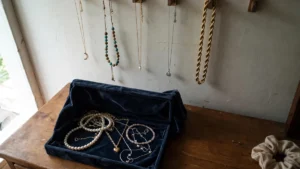
Before any water touches the strand, lay the necklace flat on a clean, soft towel in good light and look at it closely.
Look at the pearls themselves too. A patch that stays dull or looks rough is worn nacre, and no cleaning method will fix it. Knowing the difference before starting saves the disappointment of scrubbing at damage.
Check the clasp as well, since it is the part most often overlooked. A clasp that sticks, wobbles, or closes with a gritty feeling may have dirt in the mechanism or a bent tongue, and forcing it can break the thread. If the strand passes this inspection, it is ready to clean, and the whole job takes about fifteen minutes.
The 9 steps to clean a pearl necklace safely
1. Lay the necklace flat and inspect the strand
Spread a clean, dry towel on a table and lay the necklace in a loose curve, clasp undone, so every pearl is visible. Work in daylight or under a bright lamp, and run a finger lightly along the strand to feel for slack, rough spots, or pearls that sit crookedly.
What to Do: Lay the strand flat, check the knots and the clasp, and set aside any necklace with loose pearls or frayed thread for a jeweller.
What to Avoid: Do not hold the necklace up by the clasp and let it dangle while inspecting it, since that pulls on the thread.
Best For: Every pearl necklace, every time, before any cleaning.
Time Needed: 2 minutes.
Standout Tip: If the pearls move freely along the thread instead of staying knotted in place, stop and book a restringing.
2. Wipe each pearl with a dry, soft cloth first
Take a clean, lint-free cloth, microfibre or soft cotton, and wipe each pearl gently, one at a time, with a light circular motion. This dry pass removes loose dust and surface oil, and it often restores more shine than people expect.
What to Do: Use a clean, dry, lint-free cloth and wipe every pearl individually with light pressure.
What to Avoid: Do not use tissues, paper towels, or rough fabric, which can scratch nacre.
Best For: Lightly worn necklaces and as a quick clean between deeper cleans.
Time Needed: 3 minutes.
Standout Tip: A dry wipe after every wear is the single best habit for keeping a pearl necklace bright.
3. Mix a bowl of lukewarm water with a drop of mild soap
Fill a small bowl with lukewarm water, never hot, and add a single drop of mild, fragrance-free soap, the kind used for delicate hand washing. Stir gently until the soap disperses, and check the water with a fingertip: it should feel barely warm, not hot. Hot water can damage nacre and weaken silk, so this step is worth getting right.
What to Do: Use lukewarm water and one drop of mild, fragrance-free soap, mixed until fully dispersed.
What to Avoid: Do not use hot water, antibacterial soap, dish soap with degreasers, or any soap with added oils or perfume.
Best For: Strands with visible film, perfume residue, or lotion build-up.
Time Needed: 1 minute.
Standout Tip: If the water looks cloudy after stirring, the soap was too much; start again with fresh water.
4. Dampen a cloth, never soak the strand
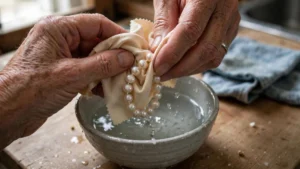
Dip a clean, soft cloth into the soapy water and wring it out until it is barely damp, not dripping. The cloth should feel cool and slightly moist to the touch, with no water to squeeze out. This is the most important distinction in pearl care: the pearls get a damp cloth, the necklace never gets a bath.
What to Do: Wring the cloth thoroughly so it is damp, not wet, before it touches a pearl.
What to Avoid: Never submerge the necklace, dip the strand in the bowl, or run it under a tap.
Best For: Every pearl necklace, without exception.
Time Needed: 1 minute.
Standout Tip: If the cloth leaves visible water on the towel underneath, it is too wet; wring it again.
5. Wipe each pearl one at a time
Working from one end of the strand to the other, wipe each pearl with the damp cloth using a slow, gentle circular motion, giving the sides near the drill holes an extra pass, since residue collects there.
What to Do: Clean pearl by pearl, in order, with light circular strokes and extra care around the drill holes.
What to Avoid: Do not scrub, press hard, or drag the cloth along the strand in long strokes.
Best For: Necklaces worn regularly or exposed to perfume and hairspray.
Time Needed: 4 minutes.
Standout Tip: Re-fold the cloth to a clean section every few pearls so dirt is lifted off, not spread around.
6. Rinse the cloth and wipe again with plain water
Rinse the cloth in plain lukewarm water, wring it out again, and wipe each pearl a second time to remove any soap film. Soap left on nacre dries into a cloudy layer that dulls the pearl, so this rinse pass matters as much as the cleaning pass. Run a fingertip over a pearl afterwards; it should feel smooth and clean, not slightly tacky.
What to Do: Rinse the cloth well, wring it out, and wipe every pearl again with plain water only.
What to Avoid: Do not skip the rinse pass, and do not rinse the necklace itself under running water.
Best For: Any strand cleaned with soap, which means nearly every deep clean.
Time Needed: 3 minutes.
Standout Tip: If a pearl still feels tacky after the rinse pass, repeat it with a freshly rinsed cloth.
7. Dry the pearls flat on a soft towel
Lay the necklace flat on a clean, dry towel and leave it to dry in the open air, away from radiators, sunlight, and hairdryers. Depending on the room, drying takes an hour or two.
What to Do: Lay the strand flat on a dry towel in a cool, shaded spot and leave it undisturbed until fully dry.
What to Avoid: Do not hang the necklace to dry, use a hairdryer, or put it away while damp.
Best For: Every cleaned strand, every time.
Time Needed: 1 to 2 hours of air drying.
Standout Tip: Roll the towel gently around the strand after ten minutes to draw off surface moisture, then unroll it and leave it flat.
8. Let the strand rest before putting it away
Once the pearls feel dry to the touch, give the strand another hour lying flat before storing it, because the silk thread and the knots hold moisture longer than the pearls do. This is also a good moment to give the pearls a final light buff with a dry cloth.
What to Do: Leave the necklace flat for an extra hour after it feels dry, then buff lightly with a dry cloth.
What to Avoid: Do not coil the necklace tightly or close it in a box while the thread may still be damp.
Best For: Strands cleaned with any water at all.
Time Needed: 1 hour of resting.
Standout Tip: A strand that is fully dry will feel cool and smooth, never slightly sticky or heavy.
9. Check the clasp and the silk thread before wearing
Before the necklace goes back on, test the clasp by opening and closing it a few times, and run the strand through your fingers to check that the knots are still firm and evenly spaced. A clasp that clicks shut cleanly and a thread with no slack mean the necklace is ready to wear. Anything loose or gritty should go to a jeweller first.
What to Do: Test the clasp, feel for slack or fraying, and confirm the knots sit snugly between the pearls.
What to Avoid: Do not force a stiff clasp or wear a necklace whose thread feels stretched.
Best For: Every necklace after cleaning, and especially older or frequently worn strands.
Time Needed: 1 minute.
Standout Tip: If the necklace has not been restrung in two years of regular wear, ask a jeweller to check it at the next visit.
How pearls differ from other jewellery when you clean them
The biggest difference is hardness. Most jewellery metals and many gemstones are hard enough to tolerate a soak, a brush, or an ultrasonic bath. Pearls are not. Nacre sits around 2.5 to 4.5 on the Mohs hardness scale, which makes it softer than a fingernail in some cases, and its layered structure can flake if it is knocked, scraped, or exposed to chemicals.
The second difference is the silk thread. A gold chain or a metal bracelet has no organic component to worry about, but a pearl strand is held together by silk, which weakens with water, perfume, and age. This is why pearl cleaning is always a cloth job, never a bath.
The third difference is what pearls react to. Acids in vinegar, lemon juice, and many household cleaners dissolve nacre. Alcohol in perfume and hairspray strips its shine. Chlorine and salt water dull it. The safe rule is simple: if a product is not plain water, mild soap, and a soft cloth, keep it away from the strand. For the rest of the routine, our guide to how to store pearl jewellery explains how to keep a cleaned necklace safe between wears.
The caveats that matter
Pearl cleaning is gentle work, but there are limits to what it can do and mistakes that cause real damage.
| Detail | What is known |
|---|---|
| Pearl hardness | Nacre measures about 2.5 to 4.5 on the Mohs scale, so pearls scratch easily and need a soft cloth only. |
| Water exposure | A damp cloth is safe, but soaking a strand wets the silk thread and can stretch it or loosen the knots. |
| Soap choice | One drop of mild, fragrance-free soap is enough; harsh or perfumed soaps can leave a film on nacre. |
| Ultrasonic cleaners | Never use them on pearls; the vibration can crack nacre and loosen pearls from the thread. |
| Household cleaners | Vinegar, lemon juice, baking soda, and bleach are acidic or abrasive and can dissolve or dull nacre. |
| Perfume and hairspray | Apply them before putting the necklace on, and let them dry fully, since alcohol dulls pearl lustre. |
| Drying method | Dry the strand flat at room temperature; hanging it or using heat stretches the silk while it is damp. |
| When to see a jeweller | Flaking nacre, frayed thread, loose knots, or a faulty clasp need professional repair, not home cleaning. |
Checklist: cleaning a pearl necklace honestly
- Inspect the strand flat in good light before any water touches it.
- Use a clean, lint-free cloth, lukewarm water, and one drop of mild soap only.
- Keep the cloth damp, never wet, and never soak or rinse the strand itself.
- Wipe pearl by pearl, then repeat with a plain-water cloth to remove soap film.
- Dry the necklace flat at room temperature and let it rest before storing.
- Check the clasp and thread afterwards, and book a restringing if the knots are loose.
Frequently asked questions
Can I use soap to clean a pearl necklace?
Yes, but only a single drop of mild, fragrance-free soap in lukewarm water, applied with a wrung-out cloth. Rinse the cloth and wipe the pearls again with plain water afterwards so no soap film stays on the nacre. Harsh, perfumed, or antibacterial soaps should be avoided.
Can I soak a pearl necklace in water?
No. Soaking wets the silk thread, which stretches and weakens when damp, and can loosen the knots between the pearls. Clean the pearls with a damp cloth instead, and keep the strand itself out of the water entirely.
How often should I clean a pearl necklace?
A quick dry wipe after each wear is enough for daily care. A full damp-cloth clean is usually needed every two to three months of regular wear, or sooner if the necklace was exposed to perfume, hairspray, or lotion.
Can I use a jewellery cleaning solution on pearls?
Most commercial jewellery cleaners are made for metal and hard gemstones and are too harsh for pearls. Unless a product is specifically labelled safe for pearls, do not use it. Plain water, mild soap, and a soft cloth remain the safest combination.
What should I do if my pearl necklace looks dull after cleaning?
First, check whether soap film is the cause by wiping again with a plain-water cloth and drying fully. If the pearls still look chalky or rough, the nacre itself may be worn, which cleaning cannot fix.
When should a pearl necklace be restrung?
As a general guide, a strand worn regularly should be restrung every one to two years, or sooner if the pearls slide freely, the knots look flattened, or the thread frays near the clasp. Restringing is a job for a jeweller, not a home repair.
The bottom line
Cleaning a pearl necklace is a quiet, unhurried job: a soft cloth, lukewarm water, a drop of mild soap, and a strand laid flat to dry. The method protects both the pearls and the silk thread, and it takes about fifteen minutes of hands-on work plus drying time. Done every few months, with a dry wipe after each wear, it keeps a necklace looking the way it did when it was first bought.
The one thing to remember is what not to do. No soaking, no ultrasonic cleaners, no vinegar or baking soda, and no scrubbing. And if the strand shows fraying, flaking, or a faulty clasp, let a jeweller take it from there; some jobs belong to a professional. If a new strand is on the shopping list, our guide to what to look for in a pearl necklace covers lustre, surface, and matching before buying.