
A pearl necklace is one of the few pieces of jewellery that never really leaves fashion. Yet two strands that look almost identical in a shop window can be worlds apart in quality, durability and value.
The difference lies in qualities that have nothing to do with brand names or price tags: luster, nacre thickness, surface quality, shape, colour, size and matching. Learn to read them and you can shop with confidence.
This guide covers what to look for in a pearl necklace in 2027, from pearl type and length to knotting and spotting imitations.
Key takeaways
- Luster comes first: a pearl with sharp, bright reflections beats a larger, duller pearl every time.
- Thick nacre keeps a pearl glowing for decades; thin nacre turns chalky and wears through.
- The four main cultured pearl types are freshwater, Akoya, South Sea and Tahitian.
- On a strand, matching matters as much as individual quality.
- Inspect the knotting, the clasp and the drill holes, and buy from a seller who discloses treatments in writing.
Start with the seven quality factors
Gemologists judge pearls on seven value factors: size, shape, colour, luster, surface quality, nacre quality and matching. There is no single worldwide grading scale for pearls, so letter grades such as AAA are set by each seller, not by an independent body.
Of the seven, luster matters most: the sharpness and brightness of the light a pearl returns. A high-luster pearl shows a crisp, almost mirror-like reflection, while a low-luster pearl looks milky or chalky. Hold the strand in natural daylight and tilt it slowly. If your reflection stays clear, the luster is strong; if it fades, the nacre is thin, and nothing else can rescue it.
Nacre decides how long the beauty lasts. It is the layered material a mollusk deposits around the nucleus, built from microscopic platelets bound by protein. Thick nacre gives deep glow and durability; thin nacre can yellow, chip or peel, eventually revealing the bead nucleus beneath. Freshwater pearls are nearly solid nacre, so ask about thickness for Akoya, South Sea and Tahitian pearls.
Know the four main pearl types
Nearly all pearl necklaces sold today use cultured pearls, grown with human help inside a living mollusk. Freshwater pearls are grown in mussels, mostly in China, and are the most commonly produced type. Because many pearls can grow in a single mussel, they are also the most affordable, making them the natural starting point for a first necklace.
Akoya pearls are the classic saltwater pearl, farmed mainly in Japan and China. They are usually 6 to 8 millimetres across, white or cream with rose or silver overtones, and prized for the brightest, most mirror-like luster of any pearl type. South Sea pearls, from the Pinctada maxima oyster in Australia, Indonesia and the Philippines, are the largest cultured pearls, typically 9 to 16 millimetres, in white, silver and gold. Tahitian pearls, from French Polynesia, are naturally dark, in grey, green, blue and near-black.
| Pearl type | Main origin | Typical size | Colour | Luster character | Best for |
|---|---|---|---|---|---|
| Freshwater | China | 5–12 mm | White, pink, lavender, peach | Soft to bright | First strands, everyday wear |
| Akoya | Japan, China | 6–8 mm | White, cream, rose overtone | Sharp, mirror-like | Classic round strands |
| South Sea | Australia, Indonesia, Philippines | 9–16 mm | White, silver, gold | Satiny, deeply luminous | Statement, heirloom pieces |
| Tahitian | French Polynesia | 8–14 mm | Grey, green, blue, near-black | Bright, iridescent | Modern, dramatic looks |
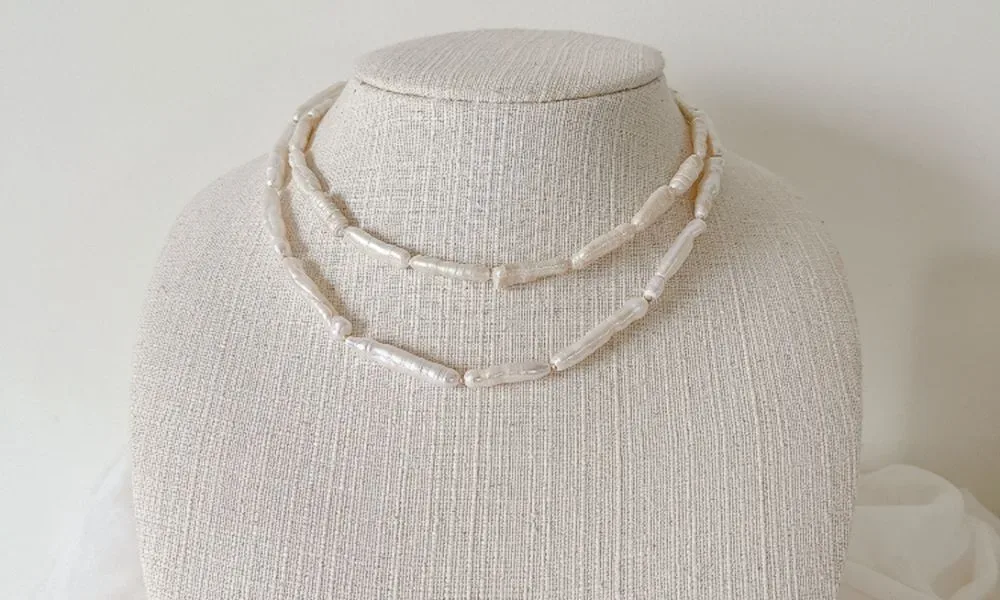
| Keshi | Varies by host oyster | Small to medium | Matches host type | High, with orient | Unique, one-off strands |
| Baroque | All pearl regions | Varies widely | All natural colours | Varies by shape | Artistic, relaxed styling |
| Mabe | Japan, Australia | Large, domed | White, pink, blue | Bright, rainbow hints | Pendants, bold designs |
Luster, surface and shape: reading a pearl at a glance
Judge the strand pearl by pearl, starting with luster, and remember that standards differ by type. Fine Akoya pearls give a hard, almost metallic reflection. South Sea pearls give a broader, softer, satiny return. A large, round, clean pearl with dull luster is a poor pearl, whatever the label says.
Next, look at the surface. Every natural pearl carries some tiny marks, and a few small blemishes are normal. What matters is how many there are and where they sit. A mark hidden at the drill hole matters far less than one on the visible face. Avoid strands with cracks, deep pits or wrinkles you can feel with a fingernail.
Shape is the third check. Round is the hardest shape to grow and holds the most value, and for a classic strand, round to near-round is the standard to aim for. Symmetrical drops, buttons and ovals can be just as beautiful, and baroque pearls are a style choice rather than a flaw.
Size, colour and matching
Size is the easiest factor to overpay for. In general, the larger the pearl, the more valuable it is, but only when the other factors hold up. A smaller pearl with superior luster and a clean surface can be more desirable than a larger pearl that is dull or heavily blemished. For a first strand, 7 to 8 millimetres is a versatile size that suits most necklines.
Colour is mostly a matter of taste. A pearl has a body colour, its main colour, and an overtone, the secondary colour that floats across its surface in the light. White Akoya pearls often carry a rose overtone and Tahitian pearls a peacock overtone of green and pink. Ask whether a strand has been dyed, since dyed freshwater pearls are common and should be priced accordingly.
Matching only applies to strands, and on a necklace it can be the difference between a good price and a serious one. Every pearl should match its neighbours in size, shape, colour, luster and surface quality. Stand back and look at the strand as a whole: a well-matched strand looks calm and continuous, while a poorly matched one looks restless. This is also where a diamond necklace differs from a pearl strand: diamonds are graded stone by stone, but a pearl necklace is judged as a single, flowing piece.
The strand itself: knotting, clasp and length
A pearl necklace is more than its pearls. Traditionally, pearls are knotted on silk thread, with a small knot between every pearl. The knots keep the pearls from rubbing against each other and stop the whole strand from scattering if the thread ever breaks. Run your fingers along the strand: you should feel a tiny knot between each pearl.
The clasp deserves the same attention. It should feel solid, close with a confident click and sit comfortably at the back of the neck. Also check the drill holes: they should be clean and centred, with no chipped edges or flaking nacre, which can signal thin nacre or rough drilling.
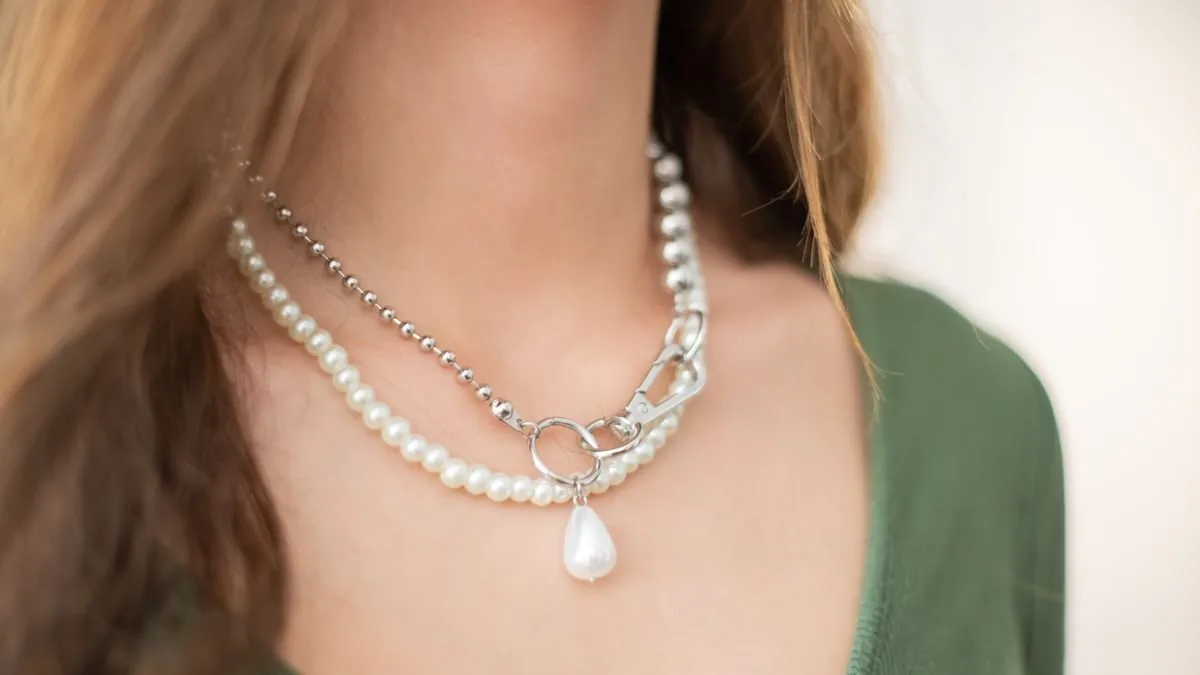
Length changes the whole look of a necklace, so choose it against your wardrobe. A choker sits high at 35 to 40 centimetres and suits open necklines and evening wear. A princess length, around 45 centimetres, is the most versatile choice, sitting just below the collarbone. A matinee length, around 50 to 60 centimetres, suits business dress, while an opera length, 70 to 90 centimetres, can be doubled.
How to spot fakes, dyed pearls and misleading labels
Imitation pearls are common, and some are convincing at a glance. Glass, plastic and shell-based imitations can copy the shape and shine of a real pearl, but rarely its feel. Real pearls feel cool to the touch at first and warm up slowly, while plastic imitations feel warm immediately and oddly light. Real pearls also have a slightly gritty texture when rubbed gently against a tooth, because of the layered nacre, while imitations feel smooth and slippery.
Look closely at the surface under magnification if you can. Real pearls show a subtle, uneven surface with depth, while imitations often have a perfectly even, painted-looking coating. Be wary of labels that lean on letter grades alone. There is no official AAA grade, so a tag that promises AAA is telling you about the seller’s own scale, not an independent standard. Ask for the pearl type, size range, origin and any treatments, and get the answers in writing.
Treatments are not always a problem, but they must be disclosed. Dyeing to change the colour, irradiation to darken it, or coating to add shine are more significant, and they should be reflected in the price. For a valuable strand, a laboratory report documenting origin, treatment and nacre thickness is worth requesting.
Styling a pearl necklace in 2027
Pearls are firmly back in everyday fashion, and the styling in 2027 is looser and more personal than the formal strand of the past. The current look mixes a classic single strand with casual clothes: a white shirt, a knit, a denim jacket or a simple black dress. Our guide to whether pearl necklaces are in style in 2027 covers the looks that are working now and the ones that feel dated.
Keep the rest of the jewellery quiet when the pearls are the focus. Small pearl studs or a simple gold earring suit a strand far better than a competing statement piece. For evening, a longer or graduated strand adds drama without needing anything else. For work, a princess-length strand in 7 to 8 millimetres is polished without being distracting. If you are comparing styles before you buy, our round-up of the best statement necklaces shows how a bold necklace changes an outfit, and where a pearl strand fits in.
Your buying checklist
- Check the luster first in natural daylight: look for a sharp, bright reflection on every pearl.
- Confirm the pearl type, size range and origin in writing, and ask about nacre thickness.
- Inspect the surface for cracks, deep pits and flaking around the drill holes.
- Check the matching: colour, luster and size should stay even along the whole strand.
- Feel for a knot between every pearl, test the clasp, and make sure the length suits your wardrobe.
- Ask about treatments and dyeing, and request a laboratory report for any valuable purchase.
Frequently asked questions
What is the most important thing to look for in a pearl necklace?
Luster is the most important single factor. A pearl with sharp, bright reflections will look beautiful on the neck, while a large, dull pearl will not, however clean or round it is. Check luster in natural daylight first.
Are freshwater pearls good quality?
Yes. They are the most affordable type, nearly solid nacre so they are hard-wearing, and modern freshwater pearls often have beautiful luster and a wide range of colours.
How can I tell if a pearl necklace is real?
Real pearls feel cool at first touch and have a slightly gritty texture when rubbed gently against a tooth, while plastic imitations feel warm, light and slippery. Ask the seller for the pearl type, origin and treatments in writing.
What size pearl necklace should I buy?
For most people, 7 to 8 millimetres is the most versatile size, flattering on the neckline and easy to wear every day. Smaller pearls suit a delicate look.
How long should a pearl necklace be?
A princess length of around 45 centimetres is the most versatile choice, sitting just below the collarbone. A choker of 35 to 40 centimetres suits evening wear, a matinee of 50 to 60 centimetres suits business dress, and an opera length of 70 to 90 centimetres can be worn long or doubled.
How do I care for a pearl necklace?
Put your pearls on last, after makeup and perfume, since cosmetics can damage nacre. Wipe the strand with a soft, damp cloth after wearing, store it flat in a soft pouch away from other jewellery, and keep it away from heat, sunlight and ultrasonic cleaners.
The bottom line
A good pearl necklace is bought with the eyes, not the label. Start with luster, check the nacre and the surface, confirm the type and the matching, and then inspect the knotting, the clasp and the length. Do those checks and you will end up with a strand that still looks beautiful a decade later.
The other half of the decision is personal. Choose the type, size and length that feel right for you, buy from a seller who answers your questions plainly and in writing, and wear the necklace often. Pearls are made to be worn.
Note: Pearl grades such as AAA are set by individual sellers, not by an independent worldwide standard, so compare pearls on the seven quality factors and ask for treatments, origin and nacre details in writing.