
Gold and silver are the two metals almost every necklace collection is built on, and choosing between them is rarely just about colour. Gold warms the skin, holds its value, and suits evening light; silver feels cooler, lighter, and easier to wear every day. Both can be beautiful, and both can be a mistake, depending on your skin tone, your wardrobe, your budget, and the care you will give it.
Neither metal wins on every count. Gold is more durable and more expensive, but it can look heavy on very fair skin and scratches easily. Silver is more affordable and flattering on cool skin tones, but it tarnishes, and a cheap chain can feel flimsy within a year. The difference between a necklace you reach for daily and one that sits in a drawer is usually the quality of the piece and how well it fits your life.
This guide compares gold and silver necklaces across nine points: warmth, durability, tarnish and care, price, weight, photographs, ageing, layering, and occasion. Each point ends with a clear steer, so you can decide with confidence.
Key takeaways
- Gold suits warm skin tones and evening wear; silver suits cool skin tones and everyday wear.
- Solid gold and gold-filled necklaces last far longer than gold-plated ones, which wear through within a year or two of daily wear.
- Sterling silver tarnishes and needs regular cleaning, but it is far more affordable, so the same money buys a better-made piece.
- Check the hallmark: 14k or 18k for gold, 925 for sterling silver, and whether a piece is solid, filled, or plated.
- No metal is maintenance-free: a necklace that is never cleaned or stored properly will look tired whatever it is made from.
What gold and silver necklaces actually are
A gold necklace is rarely pure gold. Pure gold, at 24 karats, is too soft for everyday wear, so necklaces are usually 14k or 18k gold, mixed with copper, silver, or palladium for strength. Yellow gold is the classic warm shade, white gold is coated in rhodium for a cool finish, and rose gold gets its pink tone from extra copper. Gold-filled necklaces have a thick layer of gold bonded to a base metal; gold-plated ones have a very thin coating that wears away.
A silver necklace is usually sterling silver: 92.5 percent silver, 7.5 percent other metals, most often copper. That copper is also why silver tarnishes: it reacts with sulphur in the air and turns dark. Fine silver, at 99.9 percent, is softer and rarely used for chains. A genuine sterling silver necklace will be stamped 925, and that stamp is the simplest check you can do before buying.
Both metals have been worn for thousands of years: gold for ceremony, silver for everyday elegance. What has changed is the range of prices and qualities on offer, and the number of listings that blur the line between solid, filled, and plated. Knowing the difference before you shop is worth more than any brand name.
How we chose these comparisons and what to look for
Start with the hallmark: 14k or 18k stamped on the clasp for gold, 925 for silver. If there is no stamp, or the listing says only “gold tone” or “silver tone”, the piece is not gold or silver at all, but a base metal with a coloured finish, and it should be priced accordingly. A reputable seller states the metal, the karat, and whether the piece is solid, filled, or plated.

Look next at the chain: even links, a clasp that clicks firmly shut, and no rough edges. Hold it up: it should fall in a smooth line, not kink or twist. Thinner chains look delicate but snap more easily, especially in gold, where a fine chain is costly to repair. A chain of 1.5 to 2 millimetres is a sensible weight.
Finally, consider how you will wear the piece. A necklace for daily wear needs to be comfortable, easy to clean, and tough enough for the shower, the gym bag, and the occasional snag on a scarf. One for occasional evening wear can be finer and higher maintenance. Our guide to what to look for in a gold necklace walks through the same checks in more detail. The same logic applies to silver: buy the best construction you can afford, in the metal that suits your life, not just your eye.
The 9 comparisons that matter
1. Warmth against the skin
What it shows: Yellow gold flatters warm undertones; silver has a cool, bright tone that flatters cool ones. Rose gold sits between the two. What to consider: Undertone matters more than skin colour. Hold both chains against your inner wrist in daylight and see which makes your skin look healthier. Best for: Warm undertones in yellow or rose gold; cool undertones in silver or white gold. Material: 14k yellow gold or sterling silver. Price range: Silver from around $40; gold from around $300. Standout feature: The right metal makes your skin look better, not just the necklace.
2. Durability and everyday wear
What it shows: Solid gold is more durable for daily wear: it does not tarnish and resists corrosion. Silver is softer and scratches more easily, though a well-made chain holds up well. What to consider: Gold-plated necklaces are the least durable, because the thin gold layer wears through at the clasp and along the chain. Gold-filled is a far better compromise. Best for: Daily wear in solid gold or gold-filled; occasional wear in sterling silver. Material: 14k solid gold or gold-filled; sterling silver 925. Price range: Gold-filled from around $80; solid 14k gold from around $300. Standout feature: A solid gold chain lasts decades of daily wear; a plated one rarely survives two years.
3. Tarnish and cleaning
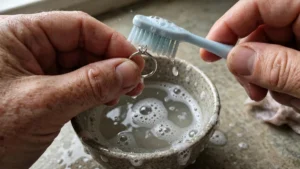
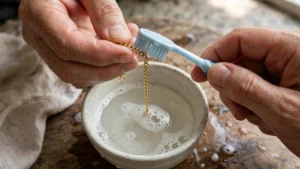
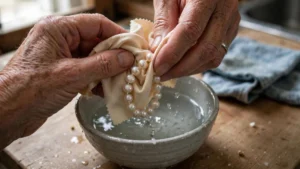
What it shows: Silver tarnishes, gold does not. Sterling silver reacts with sulphur in the air and darkens, especially in damp rooms. Gold keeps its colour with a simple wipe, though white gold needs its rhodium refreshed every year or two. What to consider: Tarnish is not damage. A silver necklace can be cleaned in minutes with a silver cloth, and regular wear slows tarnishing because friction polishes the surface. Best for: Low-maintenance wearers in gold; monthly cleaners in silver. Material: Sterling silver with a polishing cloth; 14k gold with mild soap and water. Price range: A silver polishing cloth costs a few dollars; professional rhodium replating for white gold costs around $60 to $100. Standout feature: Silver rewards a little care; gold rewards almost none.
4. Price and value for money
What it shows: Silver is far cheaper than gold, often by a factor of ten or more for the same design. A modest budget buys a well-made silver necklace, while the same money buys only a very fine or plated gold one. What to consider: Gold holds resale value far better, and a solid gold necklace lasts a lifetime. Silver is the better buy if you want variety: several good silver necklaces cost the same as one gold one. Best for: Building a collection in silver; buying one piece for life in gold. Material: Sterling silver 925 or 14k solid gold. Price range: Silver $40 to $200; solid 14k gold $300 to $2,000 and above. Standout feature: Silver gives you more necklace for your money; gold gives you more value.
5. Weight and comfort
What it shows: Gold is denser and heavier than silver, so a gold chain of the same size feels noticeably weightier. Some love that solid feel; others find it tiring. What to consider: A heavy pendant on a fine chain is the most common problem. Match the chain weight to the pendant, and try the necklace on for a few minutes before deciding. Best for: All-day comfort in light sterling silver; a substantial feel in solid gold. Material: Hollow or fine-link sterling silver for lightness; solid 14k gold for weight. Price range: Light silver from around $40; solid gold from around $300. Standout feature: Comfort is about the chain and the pendant together, not the metal alone.
6. How each metal photographs
What it shows: Gold stands out in photographs, especially in evening and candlelight, while silver looks crisp in daylight. What to consider: Very shiny silver can glare in flash photography, and very yellow gold can look brassy under strong light. A brushed or satin finish photographs more evenly than a high polish. Best for: Evening events in gold; daylight photographs in silver. Material: Brushed or satin-finish gold or silver for even photographs. Price range: Finish rarely changes the price; it is a design choice, not a cost. Standout feature: A satin finish is the most forgiving in photographs, in either metal.
7. How they age over time
What it shows: Gold ages gracefully, developing a soft patina, but it keeps its colour for decades. Silver develops tarnish and a deeper patina in its recesses, which some love and others find dirty-looking. What to consider: Ageing is a matter of taste. A vintage gold necklace looks warm and lived-in; a vintage silver one looks darker and more dramatic, and a good clean restores its brightness in minutes. Best for: A piece to hand down in solid gold; a changing character in sterling silver. Material: Solid 14k or 18k gold; sterling silver 925. Price range: Antique and vintage pieces vary widely; condition and hallmark matter more than age. Standout feature: Gold stays the same; silver tells the story of its wear.
8. Layering with other jewellery
What it shows: Silver layers easily with almost everything, because its cool tone is neutral. Gold layers best with other warm metals, and mixing the two works when one metal clearly leads. What to consider: Mixed-metal layering looks best with different chain lengths, so the metals do not compete at the same point on the neck. A single gold pendant on a silver chain, or the reverse, often looks accidental. Best for: Easy everyday layering in silver; a warm stack in gold. Material: Sterling silver chains in varied textures; 14k gold chains in varied lengths. Price range: Layering sets in silver from around $60; in gold from around $400. Standout feature: Silver is the easier metal to layer; gold is the warmer one to build a stack around.
9. Occasion and dress code
What it shows: Gold reads as formal and celebratory, which is why it dominates weddings and evening events. Silver reads as clean and understated, which suits work and daytime events. What to consider: These are conventions, not rules. A fine gold chain works at work, and a bold silver necklace can carry an evening outfit. The design matters more than the metal for most occasions. Best for: Weddings and evening in gold; work and daytime in silver. Material: 14k gold for formal occasions; sterling silver for everyday and work. Price range: Formal gold from around $400; everyday silver from around $40. Standout feature: The occasion should shape the design you choose, not just the metal.
Which metal suits your skin tone and wardrobe
Warm undertones, with green-looking veins on the inner wrist, usually suit yellow and rose gold best. Cool undertones, where the veins look blue, usually suit silver and white gold. Neutral undertones can wear either, and often look best in rose gold. If you are unsure, hold both metals against your face in natural light and look at your skin, not at the necklace.
Your wardrobe matters just as much. Gold pairs beautifully with warm colours: cream, camel, olive, and burgundy. Silver pairs beautifully with cool colours: black, navy, grey, white, and jewel tones. If your wardrobe is mostly one palette, the matching metal will get far more wear. If you wear both, a rose gold necklace is a practical compromise, and silver necklaces for everyday wear are an easy way to test the cooler side before committing to gold.
Think about the rest of your jewellery. If your rings, watch, and earrings are mostly gold, a gold necklace will look coordinated; if mostly silver, a silver one will. Mixed metals work best when the mix is deliberate, with one metal clearly leading and the other as an accent.
The caveats that matter
Both metals have honest drawbacks. Gold is expensive, and a cheap gold necklace is almost always plated, so the gold wears away. Silver is affordable, but it tarnishes, and a cheap silver necklace can feel light and flimsy. Neither metal is hypoallergenic for everyone: nickel is sometimes used in white gold alloys and cheap silver-plated pieces, and it is the most common cause of jewellery reactions. If your skin reacts to jewellery, look for nickel-free pieces.
| Detail | What is known |
|---|---|
| Best for warm skin tones | Yellow and rose gold flatter warm undertones; silver flatters cool ones |
| Best for daily wear | Solid gold lasts longest; sterling silver is comfortable and affordable |
| Tarnish | Silver tarnishes and needs regular cleaning; gold does not tarnish |
| Price range | Silver $40 to $200; solid 14k gold $300 to $2,000 and above |
| Hallmark to check | 14k or 18k for gold; 925 for sterling silver |
| What to avoid | Plated necklaces for daily wear; they wear through quickly |
| Allergy risk | Nickel in some white gold alloys and cheap plated pieces |
| Care | Gold: mild soap and water; silver: polishing cloth and dry storage |
Keep necklaces dry, in a soft pouch or lined box, and fasten the clasp before storing so the chain does not tangle. Avoid wearing either metal in the shower, the pool, or the gym: chlorine, salt water, and sweat all speed up wear and tarnish. A little care, applied consistently, is worth more than any expensive cleaning product, and our guide to how to clean gold jewellery covers the simple routine that keeps a gold necklace looking new.
Checklist: choosing between gold and silver honestly
Use these checks before you buy, and again when it arrives.
- Check the hallmark: 14k or 18k for gold, 925 for silver, and solid, filled, or plated.
- Hold both metals against your skin in daylight and choose the one that flatters it.
- Check the clasp and links: even, well-closed, no rough edges, and a clasp that clicks shut.
- Match the chain to the pendant: a heavy pendant needs a heavier chain.
- Be honest about care: if you will not clean monthly, gold is the easier choice.
- Buy the best construction you can afford, and be wary of a “gold” necklace priced like silver.
Frequently asked questions
Is gold or silver better for everyday wear?
Solid gold is more durable for daily wear because it does not tarnish, but sterling silver is comfortable, affordable, and easy to clean, so it is a good everyday choice if you polish it occasionally. Gold-plated necklaces are the poorest choice for daily wear.
Which metal suits fair skin best?
It depends on undertone, not fairness. Fair skin with warm undertones suits yellow and rose gold; with cool undertones, silver and white gold. Hold both metals against your face in daylight to see which brightens your skin.
Does sterling silver always tarnish?
Yes, eventually: the copper in sterling silver reacts with sulphur in the air. Regular wear slows it down, and a silver polishing cloth restores brightness in minutes. A dry, airtight pouch also helps.
Is gold-filled better than gold-plated?
Yes, by a wide margin. Gold-filled has a much thicker gold layer bonded to the base metal, so it lasts for years of regular wear. Gold-plated has a very thin coating that wears through within a year or two of daily use.
Can I wear gold and silver necklaces together?
Yes, if the mix looks deliberate. Use different chain lengths and textures, and let one metal lead. Build the stack around one dominant metal, so a single gold pendant on a silver chain does not look accidental.
Which metal holds its value better?
Gold, by far. A solid gold necklace holds resale value because of the metal itself, while silver is worth far less as a metal. Buy silver for the design and the wear, and gold for the design and the value.
The bottom line
Gold and silver necklaces are both worth owning, but for different reasons. Gold is the better choice if you want one piece to last for decades with almost no care. Silver is the better choice if you want variety, comfort, and a beautiful necklace at a fair price, and you will polish it now and then.
Choose by your skin tone, your wardrobe, and how you live, not by which metal is fashionable this year. Check the hallmark, buy the best construction you can afford, and your necklace will be the one you reach for.