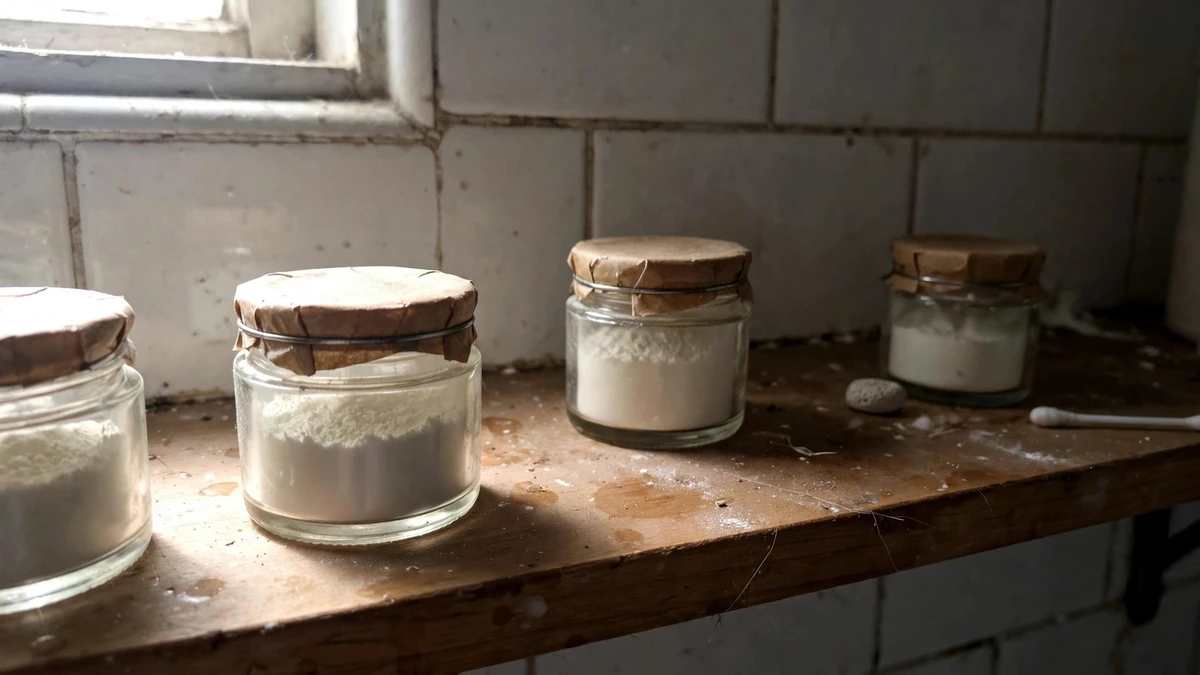
A powder cleanser looks like the least practical product in a skincare routine. It arrives as a fine, dry powder in a small bottle, with no water, no foam and no obvious way to wash your face with it. Add a few drops of water in your palm, though, and it turns into a soft, creamy lather that cleans gently and rinses away completely. It is a format that has been popular in Japanese and Korean skincare for years, and it is now finding its way into Western routines for a simple reason: it travels well, stays fresh without preservatives, and lets you control how strong the cleanse feels.
The appeal is practical as much as cosmetic. Because a powder contains no water, it needs fewer preservatives, it does not spill in a wash bag, and a small bottle lasts for months. The texture is the other draw. Most powder cleansers use rice bran, oat or gentle enzymes that clean and lightly polish the skin at the same time, without the tight, stripped feeling that a harsh foaming wash can leave behind.
Below are nine powder cleansers worth considering in 2027, from a gentle rice enzyme powder for daily use to a clay-based option for congested skin. Each one is described by what it is good at, what to watch for, and who it suits best, so you can choose with your skin in mind, not just a bestseller list.
Key takeaways
- A powder cleanser is a water-free formula that turns into a soft lather when mixed with a few drops of water in your palm.
- Most use rice bran, oat, clay or gentle enzymes to clean and lightly polish the skin without stripping it.
- You control the strength: more water gives a lighter cleanse, less water gives a creamier, more polishing one.
- Oily and congested skin usually suits clay and enzyme powders, while dry or sensitive skin does better with oat and fragrance-free formulas.
- A powder cleanser cannot replace sunscreen, treat acne or remove pigmentation, and one that leaves skin tight or gritty is the wrong formula for your skin.
What a powder cleanser actually does for skin
A powder cleanser is a dry formula, usually based on finely milled starches, clays or enzyme powders, that activates with water. When you tip a small amount into a wet palm and rub your hands together, it forms a light foam or a creamy paste, depending on how much water you add. That lather lifts sunscreen residue, light makeup and the day’s oil and dust, and it rinses away cleanly because the powder itself dissolves fully. Nothing is left behind to clog pores, which is one reason people with congested skin often like the format.
Many powder cleansers also exfoliate very gently. Rice bran and oat powders polish the surface of the skin as you massage, while enzyme powders such as papain break down the dull, dead cells that make skin look tired. The effect is much milder than a scrub, because the particles are fine and the enzymes work chemically rather than by friction. Used once or twice a day, that gentle polishing can make skin look brighter over a few weeks, but it is not a treatment for acne or pigmentation, and it should never be scrubbed hard.
The format has one more advantage that matters in practice. A water-free powder is naturally stable, so it needs fewer preservatives than a liquid cleanser, and it is far less likely to go off in a warm bathroom. That stability is also why powder cleansers suit sensitive skin so often, since there are simply fewer ingredients that can irritate it. It is also the easiest cleanser to travel with, since it cannot leak, and a small bottle usually lasts two to three months because a pea-sized amount is enough for the whole face.
How we chose these powder cleansers and what to look for
Look first at the base powder and the particle size. Rice bran and oat give the gentlest cleanse and suit most skin, including sensitive skin. Kaolin and other clays absorb more oil and suit congested or oily skin, but they can feel drying if used twice a day. Enzyme powders, usually based on papain or bromelain, polish more actively and suit dull skin, but they should be used less often at first. Avoid powders with large, gritty particles or added scrub beads, which can scratch the skin barrier.

Check the ingredient list for fragrance and for how the powder is meant to be used. Fragrance-free formulas suit sensitive skin best, and a powder that dissolves fully in water will rinse more cleanly than one that leaves a chalky residue. The best exfoliating cleansers of 2027 include several powder formats, so compare how often each one is meant to be used before you choose, since a daily powder and a twice-weekly one are different products in practice.
The 9 best powder cleansers of 2027
The Gentle Rice Enzyme Powder
What We Like: A fine rice bran base with a mild enzyme that cleans and lightly polishes in one step, leaving skin soft rather than tight.
What to Consider: The lather is light rather than rich, so it may feel too gentle if you like a deep foaming wash.
Best For: Daily use on normal, combination and mildly sensitive skin.
Material: Rice bran powder with papain enzyme and a small amount of kaolin clay.
Price Range: Around £12 to £25 for a standard bottle.
Standout Feature: The fine, silky texture that turns into a creamy lather with very little water.
The Foaming Oat Cleansing Powder
What We Like: Colloidal oat soothes while it cleans, and the powder foams up more generously than most, so it feels familiar from the first use.
What to Consider: The foam can feel rich enough to need a thorough rinse, especially on dry skin.
Best For: Dry and sensitive skin that wants comfort as well as a proper cleanse.
Material: Colloidal oat with a gentle coconut-derived surfactant and no added fragrance.
Price Range: Around £10 to £22 for a standard bottle.
Standout Feature: The oat base calms redness while the powder cleans, which is rare in a foaming formula.
The Clay-Based Deep-Clean Powder
What We Like: Kaolin and bentonite clays absorb excess oil and draw out congestion, leaving skin visibly clearer after a few weeks.
What to Consider: It can dry out cheeks if used twice a day, so start with evening use only.
Best For: Oily, congested and combination skin, especially in warmer months.
Material: Kaolin and bentonite clay with a small amount of zinc for oil control.
Price Range: Around £12 to £28 for a standard bottle.
Standout Feature: The deep-clean feeling without the stripping that a harsh gel wash can cause.
The Fragrance-Free Enzyme Powder for Sensitive Skin
What We Like: No fragrance, no essential oils and a short ingredient list, with a very mild enzyme that polishes without stinging.
What to Consider: The cleanse is deliberately light, so it may not fully remove heavy sunscreen on its own.
Best For: Sensitive, reactive and eczema-prone skin.
Material: Rice starch and a low dose of papain, with soothing allantoin.
Price Range: Around £14 to £26 for a standard bottle.
Standout Feature: The shortest ingredient list in this roundup, which makes reactions easier to trace.
The Vitamin C Brightening Powder
What We Like: A stable vitamin C derivative in powder form, which stays fresh until it meets water and gives a gentle brightening effect over time.
What to Consider: Brightening takes weeks of consistent use, and the powder should be used in the morning under sunscreen.
Best For: Dull, uneven skin that wants brightness as well as a cleanse.
Material: A stable vitamin C derivative with rice bran and a mild enzyme.
Price Range: Around £18 to £35 for a standard bottle.
Standout Feature: Vitamin C stays stable in powder form, so it does not oxidise the way liquid serums can.
The Charcoal Detox Powder
What We Like: Activated charcoal gives a thorough clean for congested skin, and the powder format keeps it from staining the sink the way liquid charcoal washes can.
What to Consider: It is best used two or three times a week rather than daily, since daily charcoal can dry out the skin.
Best For: Congested, oily skin and anyone who wears heavy sunscreen daily.
Material: Activated charcoal with kaolin clay and a gentle surfactant.
Price Range: Around £12 to £24 for a standard bottle.
Standout Feature: The charcoal is rinsed away cleanly, leaving no grey residue on skin or sink.
The Probiotic Balance Powder
What We Like: A fermented, probiotic-style formula that aims to support the skin barrier while it cleans, with a very gentle daily action.
What to Consider: The benefit is subtle and slow, so it suits people who want a calm routine rather than a dramatic result.
Best For: Stressed, reactive skin and anyone rebuilding a routine after over-exfoliating.
Material: Fermented rice filtrate with oat and a mild, skin-friendly surfactant.
Price Range: Around £16 to £32 for a standard bottle.
Standout Feature: The focus on barrier comfort rather than deep cleaning, which suits over-treated skin.
The Travel-Friendly Water-Activated Powder
What We Like: A tiny, spill-proof bottle that passes through airport security without a thought and works with any water, hard or soft.
What to Consider: The bottle is small, so it runs out faster than a full-size powder if used twice a day.
Best For: Frequent travellers and anyone who wants a cleanser that cannot leak in a bag.
Material: Rice bran and corn starch with a gentle surfactant, in a compact shaker bottle.
Price Range: Around £8 to £18 for a travel-size bottle.
Standout Feature: The spill-proof format, which is the whole point of a powder cleanser for travel.
The Everyday Budget Enzyme Powder
What We Like: A straightforward enzyme powder that does the job well at a low price, with no fragrance and a fine, even texture.
What to Consider: The packaging is plain and the lather is light, so it feels basic next to luxury formulas.
Best For: Anyone trying a powder cleanser for the first time without spending much.
Material: Rice starch with papain enzyme and a simple surfactant base.
Price Range: Around £8 to £15 for a standard bottle.
Standout Feature: The lowest price in this roundup for a formula that still rinses cleanly.
Which powder cleanser is right for your skin type
Dry skin usually does best with an oat or rice-based powder that foams gently and leaves the skin feeling comfortable. Use a little more water so the lather is light, and follow with a moisturiser while the skin is still slightly damp. Avoid clay and charcoal powders as a daily wash, since they can take too much oil from skin that has little to spare.
Oily and combination skin can use a wider range, but clay and enzyme powders are the most useful, because they absorb excess oil and keep pores clearer. Start with evening use and add a morning wash only if your skin stays comfortable. The best cleansing balms of 2027 can pair well with a powder cleanser as a second step on heavy sunscreen days, since the balm removes the oil-based layers first and the powder finishes the job.
Sensitive skin should choose a fragrance-free powder with a short ingredient list, and start with three or four uses a week before going daily. Patch-test behind the ear for a few days, and stop if you notice redness, stinging or flaking. Acne-prone skin can use a powder cleanser, but it should be a gentle enzyme or clay formula, and it should never replace treatment products prescribed by a dermatologist.
The caveats that matter
A powder cleanser is a gentle product, but a few honest caveats keep it useful. It will not treat acne, fade pigmentation or replace sunscreen, and no cleanser should be sold as a treatment. Enzyme powders should not be used on broken or irritated skin, and any powder that leaves skin tight, gritty or red is the wrong formula, not a sign that it is working. Always mix the powder with water in your palm first, never apply dry powder directly to the face, since that is how scratching and irritation happen.
| Detail | What is known |
|---|---|
| Main job | Cleans and lightly polishes the skin, then rinses away fully |
| Texture | Fine dry powder that turns into a soft lather with water |
| How much to use | A pea-sized amount is enough for the whole face |
| Dry skin | Suits oat and rice powders, used with plenty of water |
| Oily skin | Suits clay and enzyme powders, starting with evening use |
| Sensitive skin | Choose fragrance-free, patch-test, and start a few times a week |
| Travel | Spill-proof and stable, with no liquid to leak or oxidise |
| What it cannot do | Cannot treat acne, fade dark spots or replace sunscreen |
Checklist: choosing a powder cleanser honestly
- Check the base powder: rice or oat for gentle daily use, clay for oil, enzymes for dullness.
- Choose fragrance-free if your skin is sensitive, reactive or prone to redness.
- Mix the powder with water in your palm first, never apply dry powder to your face.
- Start with evening use, and add a morning wash only if your skin stays comfortable.
- Use a pea-sized amount and rinse thoroughly, since leftover powder can feel chalky.
- Stop using it if it leaves skin tight, gritty or red, and try a gentler formula.
Frequently asked questions
Can I use a powder cleanser every day?
Most gentle rice and oat powders are fine daily. Clay, charcoal and stronger enzyme powders are better two or three times a week at first, then daily only if your skin stays comfortable and does not feel tight.
Do powder cleansers remove makeup?
They remove light makeup and sunscreen well, but not heavy or waterproof makeup on their own. For a full face of makeup, use a balm or oil first, then the powder as a second cleanse.
Are powder cleansers good for acne-prone skin?
Often yes, because they rinse cleanly and do not leave residue behind. Choose a gentle enzyme or clay formula, avoid gritty powders, and keep using any treatment your dermatologist has prescribed, since a cleanser alone cannot treat acne.
How do I use a powder cleanser properly?
Wet your hands, tip a pea-sized amount of powder into your palm, add a few drops of water and rub your hands together until it forms a soft lather. Massage it over damp skin for about a minute, then rinse thoroughly. More water gives a lighter cleanse, less water gives a creamier one.
Can I use a powder cleanser with retinol or vitamin C?
Yes, but keep the routine gentle. Use the powder as your cleanser, then apply retinol in the evening or vitamin C in the morning as usual. If your skin feels irritated, use the powder less often. Our roundup of the best gel cleansers of 2027 includes milder options for nights when you want the gentlest possible wash.
Why does my powder cleanser feel gritty?
It may not be mixed with enough water, or the particles may be too large for your skin. Add more water and rub your palms together longer before applying. If it still feels gritty, switch to a finer rice or oat powder, since a gritty texture can scratch the skin barrier.
The bottom line
A powder cleanser is a practical, travel-friendly way to wash your face, and it suits a surprising range of skin once you find the right base. Choose the base to match your skin: oat or rice for gentle daily use, clay for oil and congestion, enzymes for dullness. Mix it properly in your palm, use a pea-sized amount, and rinse thoroughly.
Do not expect it to treat skin concerns or replace the rest of your routine. Its job is to leave the skin properly clean without stripping it, so that everything you apply afterwards can work on a fresh surface. Used that way, a powder cleanser earns its place on the shelf.