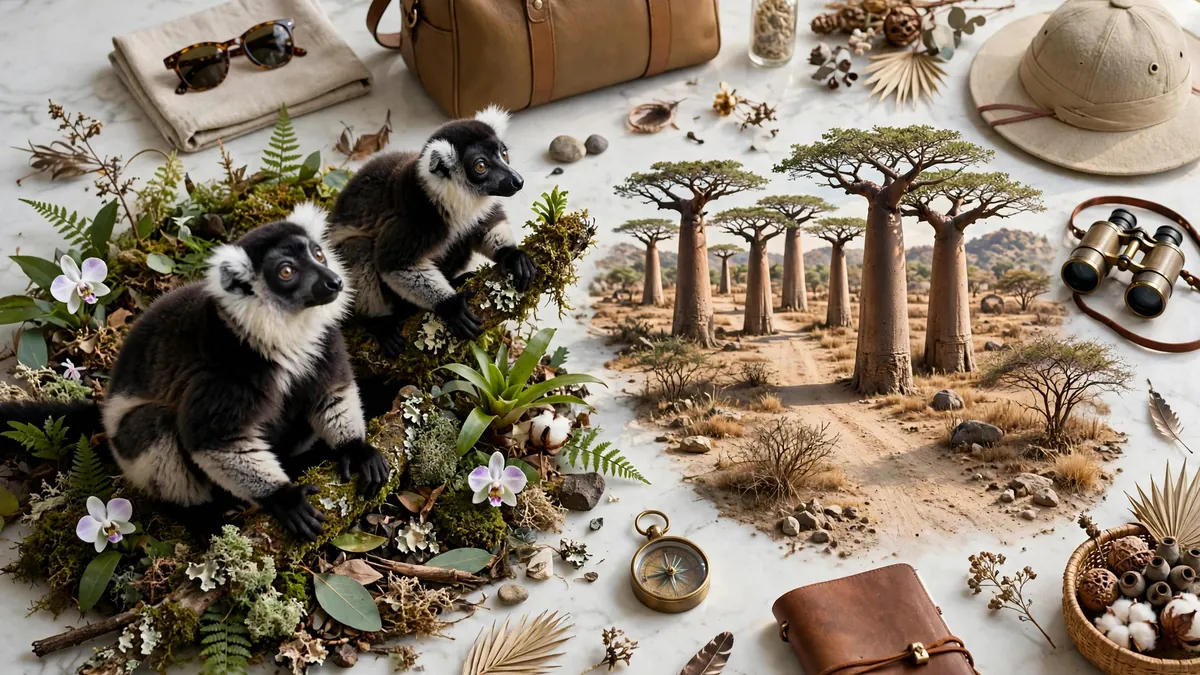

Madagascar is the most unusual safari destination on Earth. It is an island the size of France, cut off from Africa for 90 million years, and almost everything that lives there exists nowhere else. Lemurs instead of lions, chameleons instead of cheetahs, baobab trees instead of acacia savanna. A luxury safari here is not a game drive across open plains. It is a slow, guided journey through rainforest, dry canyon, and island coast, with a private guide, a good lodge, and a route planned around the wildlife that only Madagascar has.
That difference is exactly why it rewards planning. There is no Big Five here, and there is no single park that covers everything. The rainforest of the east holds indri lemurs and chameleons, the dry south holds baobabs and spiny forest, and the west holds the Tsingy limestone forests and the beaches of Nosy Be. Roads are rough, distances are long, and internal flights are often the sensible way to move between regions. A well-planned trip picks two or three regions and does them properly, rather than trying to see the whole island in a week.
Below are nine luxury safaris in Madagascar worth considering in 2027, from a classic lemur trek in Andasibe to a grand circuit that links the island’s best regions. Each one is described by what it is good at, what to watch for, and who it suits best, so you can choose with your time and your interests in mind, not just a list of park names. Luxury here means a private guide, a comfortable lodge, and a route that works, not a five-star resort on every stop.
Key takeaways
- Madagascar has no Big Five, and that is the point: its wildlife is lemurs, chameleons, and birds found nowhere else on Earth.
- Pick two or three regions and do them properly, because roads are rough, distances are long, and trying to see the whole island in one trip wastes days in transit.
- The dry season, roughly April to October, is the best time for most regions, with easier roads, clearer trails, and better wildlife viewing.
- Internal flights save days of driving, and a private guide is essential, because the parks are large, the trails are unmarked, and the wildlife is hard to spot alone.
- Madagascar is a malaria area, the sun is strong, and medical facilities outside the main towns are basic, so health preparation and travel insurance are part of the planning, not an afterthought.
What a luxury safari in Madagascar actually is
A luxury safari in Madagascar is a guided wildlife journey, not a game drive. The island’s animals live in forest, not on open savanna, so the days are spent walking with a guide through rainforest trails, dry canyons, and spiny forest, looking and listening. The indri, the largest lemur, announces itself with a call that carries for kilometres through the forest. Chameleons hide in plain sight on branches. Baobabs stand alone in dry, red earth. The experience is quieter and slower than an African savanna safari, and for many travellers it is more memorable because of it.
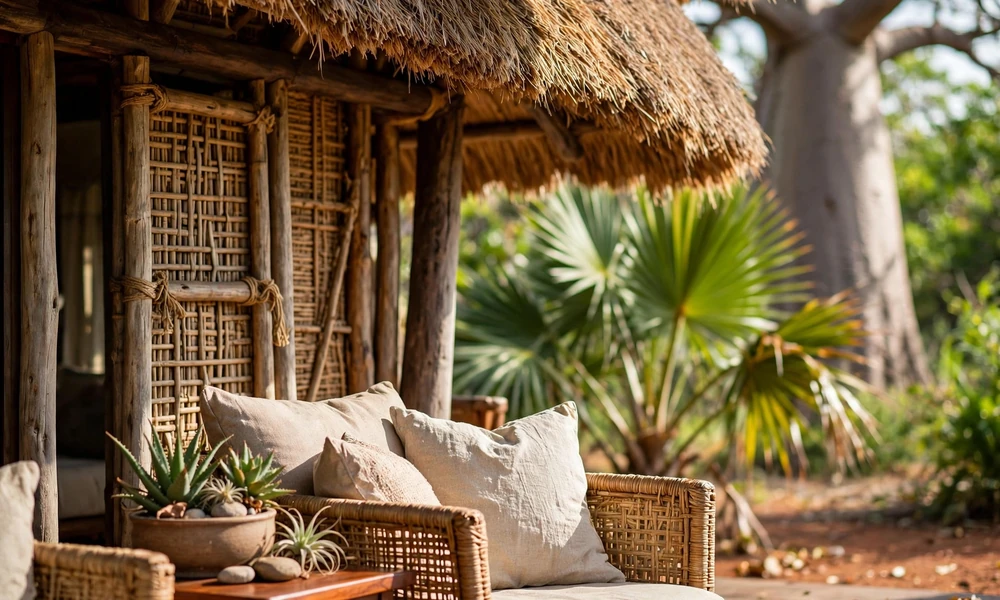
Luxury here means something specific. It means a private guide who knows the forest, a lodge with a comfortable bed and good food after a long walk, and a vehicle and driver who know the roads. It does not mean a five-star resort at every stop, because in several of the best wildlife regions there simply is not one. The best lodges are comfortable, well-run, and close to the park gate, and that matters more than a spa or a swimming pool when the day starts at dawn.
What it does not do is deliver a checklist of big animals in a day. Madagascar rewards patience: a morning in the forest, a quiet afternoon at the lodge, a night walk to see mouse lemurs and chameleons. If you want lions and elephants, go to Kenya or Tanzania. If you want wildlife you cannot see anywhere else, and a landscape that changes completely from one region to the next, Madagascar is the right choice.
How we chose these safaris and what to look for
Look first at the region, not the lodge. The east is rainforest and lemurs, the south is baobabs and spiny forest, the west is the Tsingy and dry forest, and the north is Nosy Be and island coast. Each region has its own season, its own wildlife, and its own logistics. A safari that tries to cover all four in ten days will spend most of its time on the road, so choose the regions that match what you most want to see.
Look next at the guide. A good local guide is the difference between a walk in the forest and a wildlife experience. Guides find animals you would walk past, explain the calls and the tracks, and know which trails are worth the climb. Ask whether the guide is included, whether they are local to the park, and whether night walks are part of the plan, because many of Madagascar’s most interesting animals are nocturnal.
Finally, look at the logistics honestly. Check how you get between regions, whether internal flights are included, how long the drives are, and what the lodge is really like. A lodge that is two hours from the park gate will cost you two hours of wildlife time every day. Our guide to luxury safaris covers the same planning questions for the classic savanna destinations, and the logic is the same here: the route and the guide matter more than the thread count.
The 9 best luxury safaris in Madagascar of 2027
Andasibe-Mantadia Lemur Safari
What we like: The classic Madagascar safari, with indri lemurs calling through the rainforest, chameleons on every trail, and a comfortable lodge close to the park gate. What to consider: The forest is wet and the trails can be muddy, especially in the rainy season. Location: Andasibe-Mantadia National Park, eastern Madagascar. Best for: A first Madagascar safari. Price range: Mid-range to premium. Standout feature: The indri’s morning call, heard across the forest.
Ranomafana Rainforest Safari
What we like: A deep rainforest park with golden bamboo lemurs, a rich bird list, and trails that feel genuinely wild. What to consider: The trails are steep and can be slippery, and the park is a long drive from the capital. Location: Ranomafana National Park, south-eastern Madagascar. Best for: Serious wildlife watchers. Price range: Mid-range to premium. Standout feature: Golden bamboo lemurs in a true rainforest.
Isalo Canyon Safari
What we like: A dramatic sandstone canyon with natural pools, ring-tailed lemurs, and some of the best walking in Madagascar. What to consider: The sun is strong and the walking is exposed, so start early and carry water. Location: Isalo National Park, south-central Madagascar. Best for: Walking and photography. Price range: Mid-range. Standout feature: Natural swimming pools inside a sandstone canyon.
Avenue of the Baobabs Safari
What we like: The most photographed landscape in Madagascar, with giant baobabs lining a red dirt road, best at sunrise and sunset. What to consider: It is a single, short experience rather than a full safari, so pair it with a nearby park. Location: Near Morondava, western Madagascar. Best for: Photography and a first taste of the west. Price range: Mid-range. Standout feature: Baobabs silhouetted against a sunset sky.
Nosy Be Island Safari
What we like: An island escape with beaches, snorkelling, and a relaxed pace, plus the chance to see lemurs on nearby Nosy Komba. What to consider: It is a beach destination first and a wildlife destination second, so do not expect a deep safari here. Location: Nosy Be, north-western Madagascar. Best for: A relaxing end to a safari. Price range: Premium. Standout feature: Island beaches after a week in the forest.
Masoala Peninsula Safari
What we like: The wildest rainforest in Madagascar, with red-ruffed lemurs, a remote coast, and almost no other visitors. What to consider: It is remote, the access is by boat or small plane, and the weather is unpredictable. Location: Masoala National Park, north-eastern Madagascar. Best for: Adventurous travellers who want remoteness. Price range: Premium. Standout feature: Red-ruffed lemurs in a rainforest that meets the sea.
Tsingy de Bemaraha Safari
What we like: A limestone forest of sharp pinnacles, with suspension bridges, caves, and lemurs living among the rock. What to consider: The access road is rough, the climbing is real, and it is not suitable for anyone uncomfortable with heights. Location: Tsingy de Bemaraha National Park, western Madagascar. Best for: Adventure and geology. Price range: Premium. Standout feature: Walking across suspension bridges over a limestone forest.
Kirindy Forest Safari
What we like: A dry forest with fossas, the island’s largest predator, plus lemurs, birds, and a famous night walk. What to consider: The fossa is elusive, so treat a sighting as a bonus, not a guarantee. Location: Kirindy Forest, near Morondava, western Madagascar. Best for: Night walks and fossa spotting. Price range: Mid-range. Standout feature: The night walk, with mouse lemurs and chameleons.
Madagascar Grand Circuit Honeymoon Safari
What we like: A two-week circuit linking Andasibe, Isalo, the baobabs, and Nosy Be, with private guides, comfortable lodges, and a mix of forest, canyon, and beach. What to consider: It is a long trip with internal flights and long drives, so it needs a flexible schedule. Location: Eastern, southern, and western Madagascar, ending on Nosy Be. Best for: A honeymoon or a once-in-a-lifetime trip. Price range: Premium. Standout feature: Four regions in one trip, ending on an island beach.
Which Madagascar safari is right for your trip
If this is your first trip to Madagascar, start with Andasibe and Isalo. Andasibe gives you the indri and the rainforest within a few hours of the capital, and Isalo gives you the canyon, the pools, and the ring-tailed lemurs. Together they show the two sides of Madagascar, wet and dry, in a week, without the long internal flights that a wider circuit needs.
If you have more time, add the west: the Avenue of the Baobabs and Kirindy Forest, then finish on Nosy Be. The west is the most photogenic part of the island, and Nosy Be is the right place to recover after a week of early starts. If you are an experienced traveller and want the wildest option, Masoala and the Tsingy are the two to aim for, but do not try to do both in one trip unless you have three weeks.
Our guide to honeymoon destinations covers the same logic for other regions: the best honeymoon mixes adventure with rest, and a Madagascar circuit does exactly that. Season matters more here than in most safari destinations. The dry season, roughly April to October, is the best time for most regions, with easier roads, clearer trails, and better wildlife viewing. The rainy season, November to March, brings lush forest and fewer visitors, but roads wash out, some parks are hard to reach, and cyclones are a real risk. Our guide to luxury safari lodges covers the same seasonal planning for the classic destinations, and the principle holds here: book for the dry season if you can.
The caveats that matter
Madagascar is a wonderful destination, but it is not an easy one. The roads are rough, the drives are long, and the infrastructure outside the main towns is basic. A journey that looks short on the map can take a full day on the road, and a rainstorm can close a route without warning. That is why a private guide and driver, and internal flights between regions, are worth the cost: they turn a difficult trip into a manageable one.
| Detail | What is known |
|---|---|
| Best time to go | Dry season, roughly April to October, for easier roads and better wildlife viewing |
| What you will not see | No Big Five: no lions, elephants, or rhinos, which do not live on Madagascar |
| What you will see | Lemurs, chameleons, baobabs, and birds found nowhere else on Earth |
| How to move between regions | Internal flights save days of driving; roads are rough and slow |
| Health | Madagascar is a malaria area; take advice on prophylaxis, and carry sun protection |
| Guides | A private local guide is essential; parks are large, trails unmarked, and wildlife hard to spot alone |
| What to pack | Light, quick-dry clothing, sturdy walking shoes, a head torch for night walks, and rain gear |
| What it does not do | It does not deliver big animals in a day, and a trip that tries to cover the whole island will spend most of its time in transit |
Health preparation is part of the planning, not an afterthought. Madagascar is a malaria area, the sun is strong, and medical facilities outside the main towns are basic. Speak to a travel clinic well before you go, carry a basic medical kit, and take out travel insurance that covers medical evacuation. That is not a formality in a country where the nearest good hospital can be a flight away.
Checklist: planning a Madagascar safari honestly
Use these checks before you book, and again before you travel.
- Pick two or three regions, not the whole island, and plan the route around internal flights.
- Book for the dry season, roughly April to October, unless you have a specific reason to travel in the rains.
- Confirm the guide is included, local to the park, and that night walks are part of the plan.
- Check the lodge’s real distance from the park gate, because a two-hour transfer costs wildlife time every day.
- Speak to a travel clinic about malaria prophylaxis, and take out insurance that covers medical evacuation.
- Pack light and practical: quick-dry clothing, sturdy shoes, a head torch, rain gear, and sun protection.
Frequently asked questions
When is the best time to visit Madagascar?
The dry season, roughly April to October, is the best time for most regions. Roads are easier, trails are clearer, and wildlife is easier to see. The rainy season, November to March, is lush and quiet, but roads wash out and some parks are hard to reach.
Is Madagascar safe for a luxury safari?
Yes, with a reputable operator and a private guide. The main risks are practical, not criminal: rough roads, long drives, and basic medical facilities outside the main towns. Good planning and travel insurance cover most of it.
Do I need a guide in Madagascar’s parks?
Yes, and it is required in most national parks. A local guide finds wildlife you would walk past, knows the trails, and explains the forest. Night walks, which are among the best experiences in Madagascar, are only possible with a guide.
What animals will I actually see?
Lemurs are the headline: indri in Andasibe, ring-tailed lemurs in Isalo, golden bamboo lemurs in Ranomafana. You will also see chameleons, birds, and baobabs. There are no lions or elephants, because Madagascar has been an island for 90 million years and its wildlife evolved separately.
How long should a Madagascar safari be?
Ten days is a good minimum for two regions, and two weeks is better for three. A trip shorter than a week will spend too much of its time in transit, because the distances are long and the roads are slow.
Can I combine Madagascar with a beach holiday?
Yes, and Nosy Be is the natural way to do it. Finish the safari on the island, with beaches, snorkelling, and a slower pace, rather than trying to fit a beach into the middle of a forest itinerary.
The bottom line
The best luxury safari in Madagascar in 2027 is not the one that covers the most ground. It is the one that picks two or three regions, pairs them with a good guide and a comfortable lodge, and leaves time to walk slowly and look properly. For a first trip, Andasibe and Isalo show the two sides of the island. For a longer trip, add the baobabs and finish on Nosy Be.
Choose the regions that match what you most want to see, travel in the dry season, and judge the trip on the wildlife you saw and the forest you walked through, not on the number of parks you ticked off. Madagascar rewards patience, and a well-planned safari there is unlike any other wildlife trip on Earth.