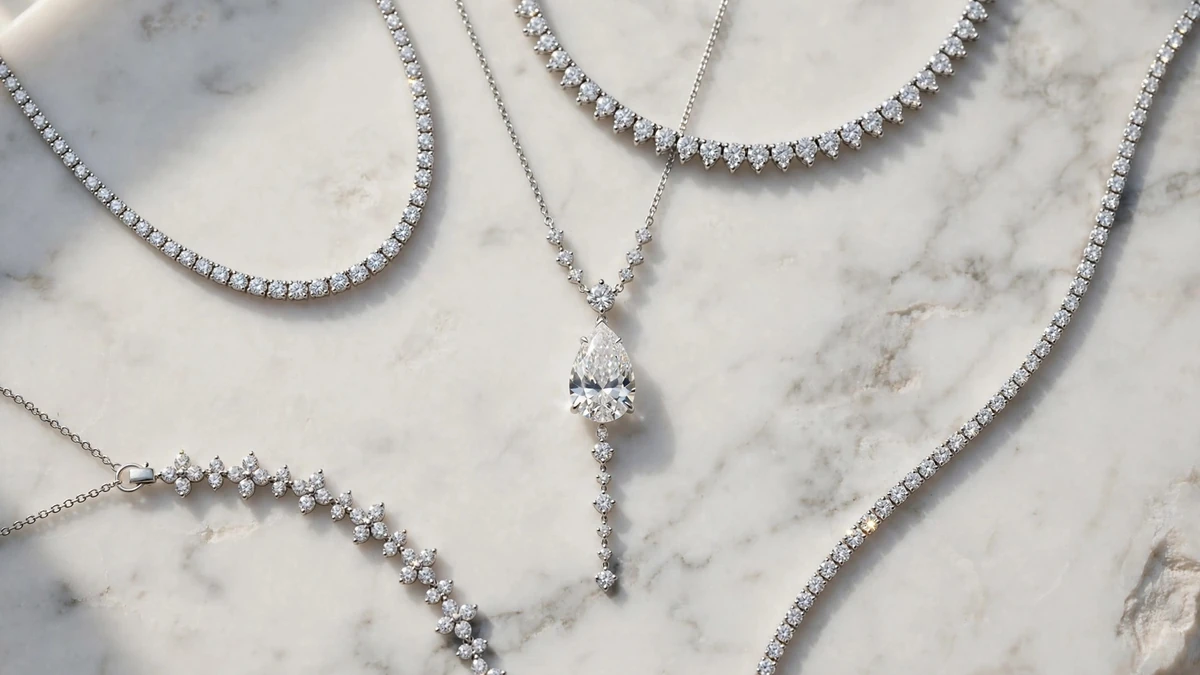

The most expensive necklaces in the world are not really jewellery in the ordinary sense. They are history you can wear: a diamond the size of a small stone, a ruby that once belonged to a royal house, a string of jade beads worth more than a city block. Each one has a story, a record price, and a reason it will probably never be made again.
The problem is that this world is full of numbers that sound made up, prices quoted in different currencies and different years, and pieces that are sometimes confused with one another. A famous diamond can appear in a necklace, a brooch, and a ring over the course of a century. Sorting the real record-breakers from the merely expensive takes a little care.
Below are nine of the most expensive necklaces in the world in 2027, from a diamond necklace that took years to assemble to a jadeite strand that stunned an auction room. Each one is described by what makes it remarkable and what to know about it, so you can enjoy the stories without getting lost in the price tags.
Key takeaways
- The most expensive necklaces in the world are usually famous named pieces, not pieces you can buy off a shelf, and their prices come from auction records, not retail tags.
- Size, rarity, colour and provenance matter more than weight alone: a small vivid pink diamond can be worth more than a much larger white one.
- Jadeite, ruby, emerald and natural pearl necklaces can rival or beat diamond necklaces when the stones are exceptional.
- Many record-breaking necklaces were remade, reset or broken up over time, so the piece that sold at auction is not always the piece that exists today.
- No necklace is a guaranteed investment, and auction prices reflect rarity and competition on the day, not a promise about tomorrow.
What the most expensive necklaces in the world actually are
A necklace enters the record books when several rare things come together at once. The stones have to be exceptional, which usually means large, vividly coloured, and flawless or nearly so. The piece has to have a story, often a royal owner, a famous maker, or a dramatic discovery. And it has to be sold in public, at auction, where two determined bidders can push the price far beyond what anyone expected.
That last point matters more than people realise. Most of the necklaces on this list are known to us because they changed hands at auction, and the auction price is the only public number we have. A necklace that has sat in a royal collection for a century may be worth far more, but nobody knows the figure, because it has never been sold.
How we chose these necklaces and what to look for
We chose necklaces with a documented public price or a widely reported valuation, a famous name or history, and stones that are genuinely exceptional rather than merely large. A big but ordinary diamond did not make the list; a smaller but extraordinary stone, a famous owner, or a record auction result did.
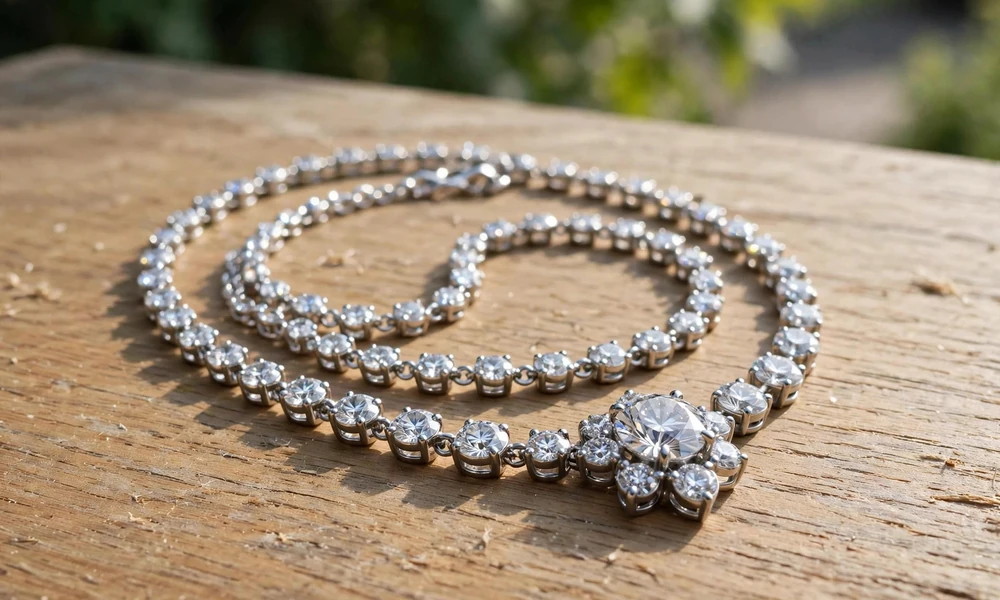
Look first at the stones. For diamonds, colour and clarity matter as much as size, and a vivid pink, blue or green diamond is far rarer than a white one of the same weight. For coloured stones, a vivid, even colour with no visible flaws is what collectors pay for. For jadeite, the test is colour, translucency and texture; for a natural pearl, lustre, shape and size. Our guide to the best diamond necklaces shows how the same qualities are judged at a more wearable level.
Look next at provenance, the documented history of who owned the piece. A necklace with a clear, famous history is worth more than an identical necklace with no story, because collectors are buying the story as much as the stones. Look finally at condition: a piece that survives intact, with its original setting and paperwork, commands the highest prices.
The 9 most expensive necklaces in the world of 2027
The L’Incomparable Diamond Necklace
What we like: A necklace built around one of the largest internally flawless diamonds ever graded, with a design that lets the central stone speak for itself. What to consider: It is a museum-grade piece, not something that could ever be worn casually, and its value is tied to a single stone. Stone: Yellow diamond, with white diamond accents. Metal: Rose gold. Best for: Collectors and anyone fascinated by record-breaking diamonds. Price range: Tens of millions of dollars. Standout feature: The enormous yellow diamond at its centre, one of the largest of its kind ever set in a necklace.
The central stone is a deep yellow diamond of extraordinary size, in a simple setting that lets it dominate. A piece for exhibitions, not for shops.
The Hutton-Mdivani Jadeite Necklace
What we like: Twenty-seven perfectly matched jadeite beads of an intense, even green, with a clasp set with diamonds and rubies. What to consider: Jadeite is judged on colour and texture, not on carat weight, so its value is hard to compare with a diamond necklace. Stone: Jadeite. Metal: Platinum and gold, with diamond and ruby accents. Best for: Collectors of coloured stones and lovers of Art Deco jewellery. Price range: Tens of millions of dollars. Standout feature: The flawless match of the beads, which is what makes the necklace so rare.
Made for Barbara Hutton, one of the wealthiest women of her time, it stunned dealers at auction: twenty-seven matching jadeite beads of that colour, size and translucency are almost impossible to find.
The Heart of the Kingdom Ruby Necklace
What we like: A necklace centred on a vivid Burmese ruby of exceptional colour, set with diamonds in a design that frames the stone without overwhelming it. What to consider: Fine Burmese rubies are among the rarest coloured stones, and their price depends heavily on colour and origin. Stone: Ruby, with diamonds. Metal: Platinum. Best for: Collectors of coloured gemstones and anyone who loves red stones. Price range: Tens of millions of dollars. Standout feature: The vivid, pigeon-blood red colour of the central ruby, the finest colour a ruby can have.
A ruby of this quality is rarer than a diamond of the same size, and that rarity drives the price. Made for a royal collection, it later set a record for a ruby necklace.
The La Peregrina Pearl Necklace
What we like: A necklace built around one of the most famous pearls in history, a large, perfectly shaped natural pearl with a history stretching back centuries. What to consider: Natural pearls are judged on lustre, shape and history, and this one has been reset several times. Stone: Natural pearl, with diamonds and rubies. Metal: Gold and platinum. Best for: Lovers of jewellery history and collectors of natural pearls. Price range: Millions of dollars. Standout feature: The pearl itself, which has passed through the hands of queens, kings and film stars.
Found in the sixteenth century, worn by Spanish queens, and later owned by Elizabeth Taylor, who had it set with diamonds and rubies, it fetched far above its estimate at auction: buyers were paying for five centuries of history as well as a beautiful pearl.
The Hope Diamond Necklace
What we like: A necklace centred on one of the most famous diamonds in the world, a deep blue stone with a legend attached to it. What to consider: The Hope Diamond is not for sale and sits in a museum, so its value is an estimate, not a price. Stone: Blue diamond, with white diamonds. Metal: Platinum. Best for: Anyone fascinated by famous diamonds and their stories. Price range: Hundreds of millions of dollars, by estimate. Standout feature: The deep blue colour of the central stone, among the rarest colours a diamond can have.
Probably the most famous diamond in the world, its necklace is one of the most visited objects in any museum. Never sold in modern times, it belongs at the top of this list by any estimate.
The Patiala Necklace
What we like: A necklace made for the Maharaja of Patiala, set with thousands of diamonds including a famous yellow diamond, in a design of extraordinary scale. What to consider: The original necklace was partly dismantled and its stones sold over time, so the piece that survives today is not the piece that was made. Stone: Diamonds, including a large yellow diamond. Metal: Platinum. Best for: Lovers of royal jewellery and Art Deco design. Price range: Tens of millions of dollars, by estimate. Standout feature: Its sheer scale, with thousands of diamonds set in a single necklace.
Made by Cartier in the 1920s for one of the richest men in India, it was one of the most spectacular pieces of jewellery ever created. Much of it was later lost or sold.
The Pink Star Diamond Necklace
What we like: A necklace centred on a vivid pink diamond of extraordinary size and colour, one of the finest pink diamonds ever found. What to consider: Pink diamonds are among the rarest of all coloured diamonds, and their prices have risen sharply as the most famous pink diamond mine has closed. Stone: Vivid pink diamond, with white diamonds. Metal: Platinum. Best for: Collectors of coloured diamonds and anyone who loves pink stones. Price range: Tens of millions of dollars. Standout feature: The vivid pink colour, the rarest and most valuable colour for a diamond of this size.
One of the largest vivid pink diamonds ever graded, its stone set a record for any jewel sold at auction. Pink diamonds of this size and colour are almost never found.
The Rockefeller Emerald Necklace
What we like: A necklace built around a Colombian emerald of exceptional colour and size, set with diamonds in a classic design. What to consider: Fine emeralds are judged on colour and clarity, and the very finest are rarer than fine diamonds. Stone: Emerald, with diamonds. Metal: Platinum. Best for: Collectors of coloured stones and lovers of green gems. Price range: Millions of dollars. Standout feature: The deep, vivid green of the central emerald, the colour collectors prize most.
Once owned by the Rockefeller family, it set a record for an emerald at auction. The necklace is elegant rather than showy: the stone does the work.
The Sunrise Ruby Necklace
What we like: A necklace centred on a Burmese ruby of extraordinary colour and size, surrounded by diamonds in a design that lets the ruby dominate. What to consider: The finest Burmese rubies are now extremely rare, because the best mines are exhausted. Stone: Ruby, with diamonds. Metal: Platinum. Best for: Collectors of coloured gemstones and lovers of red stones. Price range: Tens of millions of dollars. Standout feature: The sunrise-red colour of the central ruby, which gives the necklace its name.
At auction it set a record price per carat for a ruby. The colour is the key: a vivid, glowing red with no hint of brown or orange, which gemmologists call pigeon-blood red.
Which most expensive necklace is right for you
None of these necklaces is for sale in the ordinary sense, so the right one for you is the one whose story you love most. If you are drawn to diamonds, the L’Incomparable and the Pink Star are the pieces to remember. If you love colour, the ruby and emerald necklaces show how a coloured stone can outshine a diamond. If you love history, La Peregrina and the Patiala necklace have the longest stories.
The practical lesson is what to look for in a necklace at any price. Colour, clarity, craftsmanship and provenance matter at every level, and a well-chosen necklace with a good stone and a clear history will always be more satisfying than a larger, duller piece. Our guide to the best luxury jewellery brands shows which houses are known for this kind of craftsmanship.
The caveats that matter
Record prices are real, but they are easy to misunderstand. An auction price includes the buyer’s premium, the fee added on top of the hammer price, and it is quoted in the currency of the sale. A necklace sold in 2014 for one figure would not necessarily sell for the same figure in 2027, because the market for rare stones moves in both directions.
| Detail | What is known |
|---|---|
| What drives the price | Rarity, colour, size, provenance and craftsmanship, in that order |
| Most common top stone | Diamond, but vivid rubies, emeralds and pink diamonds can be worth more per carat |
| Where prices come from | Public auction results, not retail tags or insurance valuations |
| What provenance adds | A famous owner or maker can add a large premium over an identical unstoried piece |
| What can reduce value | Remaking, resetting, damage, or a lost or unclear history |
| Are they a good investment | No guarantee; auction prices reflect competition on the day, not a promise |
| Can you buy one | Almost never; most are in museums or private collections, and replicas are not the same thing |
| What to watch out for | Fakes, treated stones, and inflated claims about famous pieces |
Fakes and treated stones are a real risk, even at the top of the market. A stone can be heat-treated, filled, or coated to improve its colour, and a famous name can be attached to a piece with no real connection to it. Insist on a certificate from a respected gemmological laboratory, and on paperwork that traces the piece back to its maker.
Checklist: enjoying the most expensive necklaces honestly
Use these checks before you take any record price at face value, and again before you buy any necklace at any price.
- Check the source of the price: auction results are public, insurance valuations and estimates are not prices.
- Check whether the price includes the buyer’s premium, which can add a large percentage to the hammer price.
- Check the stone: colour, clarity, origin and treatment matter more than weight alone.
- Check the provenance: a famous owner should be documented, not just claimed.
- Check the condition: a remade or reset necklace is not the same piece that set the record.
- Remember the point: a necklace you love wearing is worth more to you than a record price you will never pay.
Frequently asked questions
What is the most expensive necklace in the world?
There is no single agreed answer, because most of the most valuable necklaces have never been sold in public. By auction records, the most expensive are built around record-breaking diamonds, vivid pink diamonds, and exceptional rubies and jadeite, with prices in the tens of millions of dollars. The Hope Diamond necklace is often estimated far higher, but it is in a museum and not for sale.
Why are some necklaces worth tens of millions of dollars?
Because the stones are almost impossible to replace. A vivid pink diamond, a flawless jadeite bead, or a Burmese ruby of the finest colour may occur only a handful of times in a generation. Add a famous maker, a royal owner, and two determined bidders at auction, and the price can rise far beyond the value of the stones alone.
Are the most expensive necklaces a good investment?
Not necessarily. Some famous stones have risen in value over decades, but others have not, and auction prices reflect competition on a single day. A necklace is a poor investment if you buy it for the price alone. Buy it because you love it, and treat any rise in value as a bonus, not a plan.
Can I buy a necklace like the ones on this list?
Not the originals, which are in museums or private collections. But you can buy a necklace with the same kind of stone, in a smaller size, from a reputable jeweller, and the same rules apply: good colour, good craftsmanship, and a clear history. A statement necklace with a strong design can give you much of the drama at a fraction of the price.
How do I know if a necklace is real?
Ask for a certificate from a respected gemmological laboratory, and buy from a jeweller with a long, verifiable reputation. Be wary of pieces that claim a famous history without paperwork, and of stones that look too perfect for their price. If a deal seems too good to be true, it almost always is.
What is the difference between a necklace and a pendant?
A necklace is the whole piece, including the chain and the setting, while a pendant is the ornament that hangs from the chain. Many of the famous pieces on this list are pendants set on a necklace, and the pendant is usually where the value sits, because it holds the main stone.
The bottom line
The most expensive necklaces in the world are worth knowing about not for their prices, but for what they teach us about jewellery: colour and rarity matter more than size, a stone with a story is worth more than a stone without one, and the best craftsmanship lets the stone speak for itself.
If you remember one thing, let it be this: a necklace is worth what someone will pay for it on a given day, in a given room, for a given stone with a given story. That figure changes. What does not change is the pleasure of looking at a beautiful stone, well set, with a history worth telling. Choose the necklace you love, check the stone and the paperwork, and let the record prices stay in the auction room.