Best Osmanthus Perfumes 2027: 9 Picks Worth Trying
Osmanthus is the note that smells like apricot skin in late autumn. It is floral without being sweet in the usual way, fruity without tasting of fruit, and leathery in a quiet, suede-like manner that only appears after an hour on skin. One spray can smell of dried apricots, black tea, and warm suede, and that strange combination is why perfumers treat it as a treasure rather than a common floral.
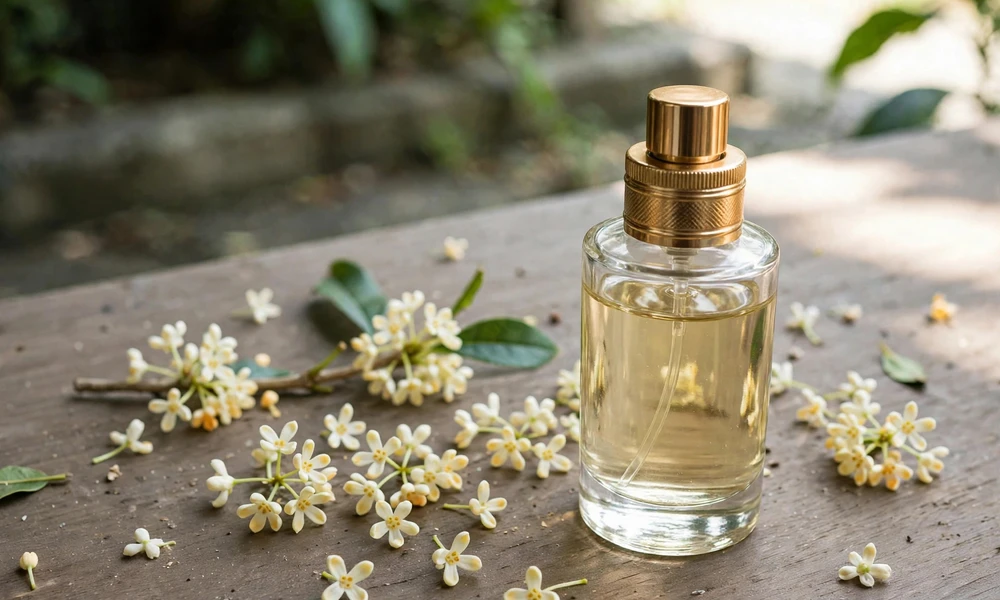
The note is widely misunderstood, partly because the flower itself is almost unknown outside East Asia. Osmanthus fragrans is a small white or orange blossom from China and Japan, and it yields almost no oil, so what perfumers call osmanthus is usually an absolute made from hand-picked flowers, or a careful reconstruction. The result is a note that smells like apricot but is not apricot, like leather but is not leather, and like tea but is not tea.
Below are nine perfumes that genuinely carry osmanthus in their official pyramids, from a $25 Elizabeth Arden spray to a $280 Ormonde Jayne extrait, with prices checked against retailers. Each entry lists what it does well, where it falls short, and who it suits best.
Key takeaways
- Osmanthus is a small autumn blossom from China and Japan that smells of apricot skin, black tea, and soft suede, all at once.
- It usually sits in the heart, where it warms tea, fruit, and white floral notes without ever turning loud.
- The cheapest genuine pick here is Elizabeth Arden Green Tea Osmanthus at $25–$30, and the most expensive is Ormonde Jayne Osmanthus at $280–$295.
- Jean-Claude Ellena made the note famous in niche perfumery, with Osmanthe Yunnan for Hermès in 2005 and Osmanthus for The Different Company in 2000.
- Pyramids sometimes call it osmanthus and sometimes hide it behind apricot, so confirm the full note name and the bottle size before you buy.
What osmanthus actually smells like in a bottle
On a blotter, osmanthus smells like a dried apricot left in a leather glove, with a breath of black tea over the top. It is not a bright floral. The first impression is soft and a little powdery, almost like peach skin, then it deepens into something warmer and duskier, closer to suede than to a bouquet.
The note is famously hard to pin down, because the blossom itself is so small and so briefly in flower. Osmanthus fragrans blooms in autumn, for only a few weeks, and the flowers are tiny, white or orange, and easily missed on the tree. What perfumers use is an absolute, made by soaking the blossoms until their scent is drawn out, and that absolute is expensive, which is why the note turns up more often in niche houses than in department-store bestsellers.
In a composition, osmanthus acts like a warmer. It rounds off sharp citrus, softens green notes, and gives white florals a golden, apricot-like glow they would not have on their own. It rarely leads a perfume, and it almost never shouts, which is why it is usually found in the heart, doing quiet work while the top notes take the applause. Spray it, wait an hour, and that is when it shows itself.
How we chose these nine and what to look for
Every perfume in this list was checked against its official note pyramid, and only those that name osmanthus explicitly were included. A pyramid that says only apricot was not enough on its own, because apricot is a smell-alike, not the note itself, and neither was a retailer listing that could not be confirmed elsewhere. That rule removed several well-known names whose pyramids list apricot or peach without ever naming the flower. Our earlier guides to sweet clover perfumes and elderflower perfumes used the same rule, and it kept this list honest too.
Check first where the note sits in the pyramid. A top note hits immediately and fades, while a heart note, as in Hermès Osmanthe Yunnan, stays for hours. Next look at what surrounds it: tea and citrus sharpen it, apricot and peach deepen it, leather and suede make it duskier. A perfume that pairs osmanthus with heavy oud or dark woods is a different animal from one that pairs it with green tea.
The price spread matters here more than usual, because the range is wide and the bottle sizes do not match. A 50 ml extrait and a 120 ml eau de parfum cannot be compared by bottle price alone, so work out the price per millilitre first. Two of the nine here are limited or hard to find outside their home market, and their prices now depend on where you find them.
The 9 best osmanthus perfumes of 2027
Green Tea Osmanthus — Elizabeth Arden
What we like: A green, easy take on the note that costs less than a dinner out. Bergamot, lemon, and green tea open the scent, then osmanthus softens the middle, with musk underneath. It is the lightest, freshest pick in this list.
What to consider: Longevity is short, so it fades after three or four hours, and the osmanthus itself is quieter than the tea around it. Best For: A first osmanthus buy on a small budget, and anyone who wants the note without warmth. Material: Bergamot, lemon, green tea, osmanthus, musk. Price Range: $25–$30 for 100 ml. Standout Feature: The cheapest genuine pick in this list and the freshest osmanthus here.
Osmanthus — Demeter
What we like: A single-note cologne that does one thing and does it plainly. Osmanthus on its own, without tea, fruit, or leather to dress it up, so you can learn exactly what the flower smells like. It is the most honest pick in this list.
What to consider: It is very simple, so it can smell thin on its own, and it fades within a few hours. Best For: Learning the note, and layering under a heavier perfume. Material: Osmanthus. Price Range: $36–$42 for 120 ml. Standout Feature: The only single-note osmanthus in this list.
Osmanthus Abricot Eau de Toilette — L’Occitane en Provence
What we like: A soft, Provençal take on the flower, built on osmanthus with apricot and orange blossom, over a clean musk base. It smells like a garden in late afternoon, warm and a little powdery, and it is the most wearable pick in this list.
What to consider: It is gentle, so it stays close to the skin, and the apricot can read as sweet on some people. Best For: Daytime wear and anyone who wants osmanthus at its softest. Material: Osmanthus, apricot, orange blossom, musk. Price Range: $85–$90 for 50 ml. Standout Feature: The softest osmanthus in this list.
Kinmokusei — J-Scent
What we like: A Japanese take on the flower, named for the golden osmanthus itself. Osmanthus with apricot and green tea, over a quiet musk base, smelling like an autumn garden after rain. It is the most atmospheric pick in this list.
What to consider: It is hard to find outside Japan, so bottles change hands through importers, and the tea note can read as sharp on first spray. Best For: Niche lovers and anyone who wants osmanthus at its most Japanese. Material: Osmanthus, apricot, green tea, musk. Price Range: $95–$110 for 50 ml. Standout Feature: The only Japanese osmanthus in this list.
Osmanthus Blossom — Jo Malone London
What we like: A clean, bright cologne that puts the flower front and centre. Petitgrain opens the scent, osmanthus blossom fills the middle, and cashmere wood holds it together underneath. It is the most polished pick in this list.
What to consider: It is light, so it fades within a few hours, and the petitgrain opening can smell sharp before it settles. Best For: Spring days and anyone who wants osmanthus without weight. Material: Petitgrain, osmanthus blossom, cashmere wood. Price Range: $145–$155 for 100 ml. Standout Feature: The brightest osmanthus in this list.
Osmanthe Yunnan — Hermès
What we like: The reference point for the whole note, from Jean-Claude Ellena in 2005. Apricot, orange, and tea open the scent, osmanthus fills the heart, and suede carries the drydown. It is the most famous osmanthus perfume ever made, and the most balanced.
What to consider: It is quiet, so it needs to be worn close to the skin, and the tea note can read as thin in cold weather. Best For: Anyone who wants the definitive osmanthus. Material: Apricot, orange, tea, osmanthus, suede. Price Range: $160–$170 for 100 ml. Standout Feature: The most famous osmanthus perfume ever made.
Nuit de Cellophane — Serge Lutens
What we like: A strange, beautiful floral built on osmanthus, jasmine, and lily of the valley, with almond and musk underneath. It smells like cellophane wrapped around flowers, sweet and a little artificial in the best sense, and it is the most unusual pick in this list.
What to consider: It is odd, so it will not suit everyone, and the almond note can read as powdery on some skins. Best For: Niche lovers and anyone who wants osmanthus at its strangest. Material: Osmanthus, jasmine, lily of the valley, almond, musk. Price Range: $180–$190 for 50 ml. Standout Feature: The strangest osmanthus in this list.
Osmanthus — The Different Company
What we like: A pure, golden take on the flower, also from Jean-Claude Ellena, from 2000. Osmanthus with apricot and musk, over warm amber, with nothing in the way. It is the most concentrated osmanthus in this list.
What to consider: It is rich, so one spray is enough for an office, and the apricot can read as syrupy in hot weather. Best For: Evenings and anyone who wants osmanthus at its richest. Material: Osmanthus, apricot, musk, amber. Price Range: $225–$240 for 100 ml. Standout Feature: The richest osmanthus in this list.
Osmanthus — Ormonde Jayne
What we like: A green, sparkling take on the flower, built on pomelo and petitgrain over osmanthus, with green notes and amber underneath. It is the most luminous pick in this list, and the longest lasting.
What to consider: It is expensive, so the price is high for a perfume that is still, at heart, a floral, and the citrus opening can smell sharp before it settles. Best For: Formal occasions and anyone who wants osmanthus at its most elegant. Material: Pomelo, petitgrain, osmanthus, green notes, amber. Price Range: $280–$295 for 120 ml. Standout Feature: The most elegant osmanthus in this list.
Which osmanthus perfume is right for you
Start with your budget and your tolerance for warmth. Under forty dollars, Green Tea Osmanthus is the only honest option, and a good one, though it leans green rather than warm. Between eighty and one hundred and ten dollars, L’Occitane Osmanthus Abricot gives you softness, while J-Scent Kinmokusei gives you atmosphere, though you will have to hunt for it. Our guide to violet leaf perfumes follows the same price-first logic, and it works here too.
Between one hundred and forty and one hundred and ninety dollars, the choice is about character. Jo Malone Osmanthus Blossom is bright and polished, Osmanthe Yunnan is balanced and famous, and Nuit de Cellophane is strange and beautiful. At this level you are buying a point of view, not merely a smell. Try Osmanthe Yunnan if you want the reference, Osmanthus Blossom if you want brightness, and Nuit de Cellophane if you want something odd.
Above two hundred dollars, you are choosing between moods. The Different Company Osmanthus is rich and golden, and Ormonde Jayne Osmanthus is green and luminous. Both are worth their prices, but they suit different people. Sample both on skin before you commit: at this level the difference is entirely personal.
The caveats that matter
Osmanthus is an easy note to love and a hard one to buy well: the name changes from pyramid to pyramid, the note is usually an expensive absolute rather than a pressed oil, and two of the nine here are hard to find outside their home market. Keep the points in the table below in mind before you spend anything.
| Detail | What is known |
|---|---|
| What “apricot” means on a pyramid | It can mean the fruit, or it can be the smell-alike for osmanthus; only “osmanthus” confirms this note |
| Where the note usually sits | Heart in most picks here; it warms over the first hour and stays for several more |
| Longevity | Moderate for most; Ormonde Jayne Osmanthus lasts longest, Green Tea Osmanthus fades fastest |
| Best season | Autumn suits it best, when the flower blooms; warmer picks work in winter, lighter ones in spring |
| Who should sample first | Anyone who dislikes apricot or suede notes should try Green Tea Osmanthus and Osmanthus Blossom first |
| Price range in this list | $25–$30 at the low end, $280–$295 at the high end, for standard bottles (Nuit de Cellophane, Kinmokusei and L’Occitane Osmanthus Abricot are 50 ml) |
| Hardest to find | J-Scent Kinmokusei and Demeter Osmanthus are the hardest to find outside their home markets |
| What it does not do | It does not make a perfume last longer, and it does not suit every skin chemistry |
Patch-test any new perfume on a small area of skin and wait a day before wearing it properly. Osmanthus itself is gentle, but the citrus and spice notes around it can irritate, and a perfume is never just one note.
Checklist: choosing an osmanthus perfume honestly
Work through these before you buy.
- Read the pyramid first: it should name “osmanthus” outright, not just “apricot” or “peach”.
- Work out the price per millilitre first: a small bottle usually charges more per spray than a large one does.
- Spray it on your wrist, not a paper strip: warm skin changes how osmanthus behaves, and paper flattens that change.
- Wait an hour before you judge it: the apricot note arrives softly, then warms into suede over the first hour.
- Try two side by side before you buy one: Osmanthe Yunnan against The Different Company Osmanthus, or Green Tea Osmanthus against Osmanthus Blossom.
- Pick the smallest bottle when you are unsure: a 50 ml you finish beats a 120 ml that gathers dust.
Frequently asked questions
Does osmanthus smell like apricot?
It smells like apricot skin, but it is not apricot. Osmanthus is a flower, Osmanthus fragrans, and its scent is apricot-like, with a leathery, tea-like edge that real apricot never has. A pyramid that says only “apricot” is naming the fruit, not the flower.
Why do so many osmanthus perfumes cost so much?
Mostly the absolute around it. Osmanthus absolute is expensive, because the flowers are tiny, hand-picked, and briefly in bloom, and it appears in niche perfumes where the price reflects the house, the concentration, and the bottle. Green Tea Osmanthus shows the note itself can be had for about twenty-five dollars.
Is osmanthus an autumn scent only?
It suits autumn best, when the flower blooms, but the lighter picks here work in spring and summer too. Jo Malone Osmanthus Blossom and Green Tea Osmanthus have enough citrus and tea underneath to carry the note into warm weather.
How long does osmanthus last on skin?
Usually several hours. It sits in the heart of most perfumes, so it stays longer than a top note, and it warms as the base takes over. Ormonde Jayne Osmanthus lasts longest, at eight hours or more, while Green Tea Osmanthus fades within three or four.
Can men wear osmanthus perfume?
Yes. Osmanthe Yunnan and Nuit de Cellophane are both unisex and lean woody and leathery rather than sweet, and The Different Company Osmanthus has been worn by men since 2000. The note itself carries no gender; the notes around it decide who it suits best.
Why is J-Scent Kinmokusei so hard to find?
It is a Japanese house with a small distribution, and the name is Japanese for golden osmanthus, so it rarely appears on Western shelves. Bottles now change hands through importers, which is why the price varies so much from one seller to the next.
The bottom line
For most people, Osmanthe Yunnan is the smartest osmanthus buy in 2027: balanced, widely available, and it shows the note at its most appealing. For the richest flower, try The Different Company Osmanthus; for the cheapest genuine entry point, Elizabeth Arden Green Tea Osmanthus is hard to beat.
Whatever you pick, confirm the pyramid names “osmanthus” rather than just “apricot”, wear it on skin for a full day, and judge it by how the apricot note warms into suede over hours, not by the first minute. That is how you find an osmanthus perfume you will actually wear to the last drop.