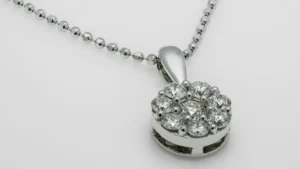
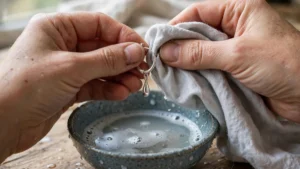
Silver jewellery has a cruel little habit: it looks perfect in the shop window and quietly dulls in the drawer. A chain that gleamed on a Saturday can look grey and tired by the following month, and the usual advice — polish it more, wear it less — never quite explains why some pieces stay bright for years while others tarnish in weeks. The difference is rarely luck. It is the alloy, the finish, and how the piece is actually worn.
That is the problem this guide solves. Sterling silver is a beautiful, affordable metal, but it is also a reactive one, and the market is full of pieces that look identical yet behave very differently. Some are solid sterling silver, properly finished and sealed. Others are thinly plated, hollow, or made from alloys that darken fast. Knowing which is which before you buy saves money, disappointment, and a lot of polishing cloths.
Below, we walk through what silver jewellery really covers, how to choose pieces that resist tarnish, and nine standout pieces for 2027 — from everyday chains to occasion earrings. Each one comes with honest notes on what we like and what to consider, plus the care habits that keep silver looking the way it did on day one.
Key takeaways:
- Sterling silver is 92.5% pure silver mixed with 7.5% other metals, usually copper; that copper is what tarnishes, not the silver itself.
- Look for a 925 hallmark, a solid feel, and a rhodium or anti-tarnish coating if you want the slowest possible dulling.
- Silver-plated pieces look the same at first but wear through to a base metal, so they suit occasional wear rather than daily use.
- Storing silver in a sealed pouch or anti-tarnish box, away from humidity, slows tarnish far more than polishing does.
- Even the best silver will tarnish eventually; claims of a piece that never tarnishes at all should be treated with caution.
What silver jewellery actually covers
When people say silver jewellery, they usually mean sterling silver, and sterling silver has a precise definition. It is an alloy of 92.5% silver and 7.5% other metals, most often copper, which gives the soft metal the strength it needs to hold a shape. Pure silver is too soft for everyday jewellery, so the alloy is not a compromise — it is the standard. The number 925, stamped on a clasp or an inner band, is the hallmark that tells you the piece meets that standard.
Not everything that shines silver is sterling, though. Silver-plated jewellery is a thin layer of silver over a base metal such as brass or copper, and it will eventually wear through at the edges, especially on rings and bangles that rub against skin and surfaces. Then there are fashion pieces made from silver-toned alloys that contain no silver at all, which tend to discolour quickly and can irritate sensitive skin.
The pieces in this guide are sterling silver, or clearly described as such, because that is where the value sits. A sterling chain, a pair of studs, or a simple band can be worn daily, cleaned easily, and even repaired by a jeweller. It also pairs beautifully with other stones and metals: a silver setting can make a pale stone look cooler and crisper, which is why so many readers who start with silver go on to explore diamonds. If that is where you are headed, our diamond buying guide for 2027 explains the four Cs in plain language before you spend a penny.
How to choose silver jewellery that stays bright
Choosing silver that does not tarnish fast comes down to three checks. First, the hallmark: look for 925 stamped somewhere discreet, such as inside a ring band or on a clasp. Second, the weight: solid sterling feels noticeably heavier than a hollow or plated piece of the same size. Third, the finish: a rhodium plating or a clear anti-tarnish coating adds a protective layer that slows the reaction with air and moisture.
Style matters too, but it should come after the metal checks. A delicate chain suits a fine pendant and a silk blouse; a chunky curb chain suits a plain tee and a leather jacket. Earrings should match the weight your ears are comfortable with, and rings should be sized for the finger you will actually wear them on.
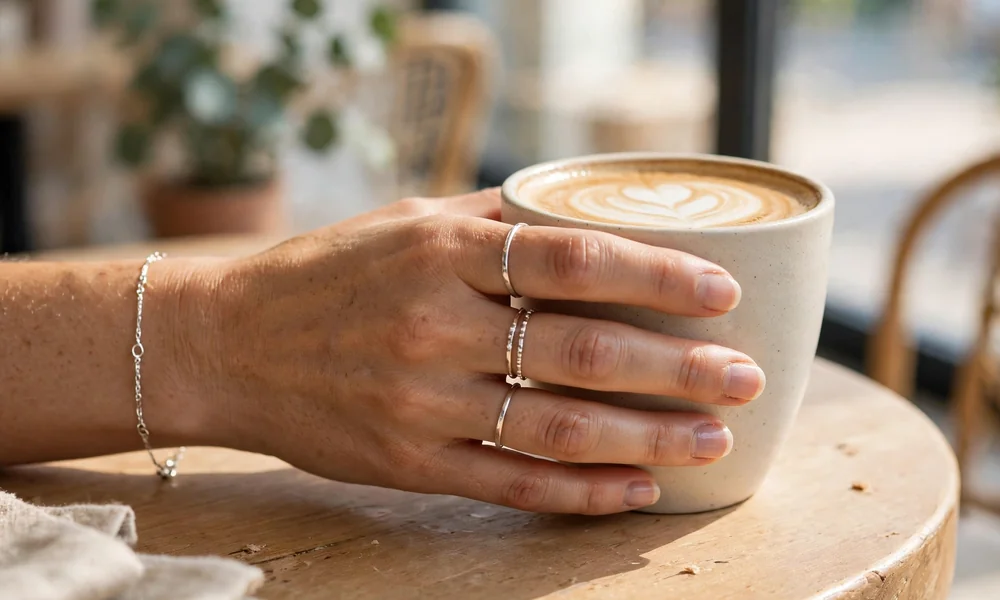
1. The Classic Sterling Silver Curb Chain
What we like: The curb chain is the workhorse of silver jewellery. Its flat, interlocking links lie neatly against the skin, catch the light from every angle, and suit almost any pendant. A solid 925 curb chain in a medium weight feels substantial without pulling, and its smooth links are easy to keep clean.
What to consider: Very fine curb chains can kink if they are stored tangled, and a hollow version will feel light and may dent. Choose a solid link and a clasp that clicks firmly shut, and store the chain flat or hanging rather than knotted in a pouch.
2. The Everyday Silver Pendant Necklace
What we like: A small pendant on a fine chain is the piece most people reach for daily. A simple disc, bar, or teardrop in polished sterling silver adds polish to a plain outfit without demanding attention.
What to consider: Pendants with textured or engraved surfaces tarnish unevenly, which can look patchy rather than patinaed. Smooth, polished pendants are easier to keep bright, and a pendant that sits directly on skin will need a wipe more often than one worn over clothing.
3. Sterling Silver Stud Earrings
What we like: Studs are the lowest-maintenance silver you can buy. Small balls, cubes, or pavé-style studs sit close to the ear, do not catch on hair or scarves, and suit every face shape. They are also a safe first piece for sensitive ears. For sparkle that pairs well with silver, see our roundup of the best diamond earrings for 2027.
What to consider: Check the posts and butterfly backs, which are often made from a different metal than the stud itself. Look for sterling posts and secure screw backs if you tend to lose earrings, and avoid oversized studs that pull on the lobe.
4. The Silver Hoop Earrings
What we like: Hoops bring movement and light to the face, and silver hoops feel fresher and cooler than gold for spring and summer. A medium hoop in polished sterling silver works from the office to an evening out.
What to consider: Hollow hoops dent more easily than solid ones, and very large hoops can catch on clothing. A hinged closure is more secure than a simple wire hook, and hoops with a rhodium finish will keep their shine longer between polishes.
5. The Sterling Silver Signet Ring
What we like: The signet is silver’s most confident piece. A flat face, clean edges, and a solid band give it presence on the hand, and it ages gracefully. It suits men and women alike and works as a standalone statement or alongside a wedding band.
What to consider: Signet faces show fingerprints and fine scratches, so expect to polish more often than with a smooth band. Get the size right, because resizing a thick signet costs more than resizing a thin band, and an engraved face limits how much a jeweller can adjust later.
6. The Silver Tennis Bracelet
What we like: A line of small, evenly set stones on a silver chain is quietly luxurious, and in sterling silver it is far more affordable than the gold version. The clasp on a good tennis bracelet is a box clasp with a safety catch, which is reassuring for a piece you wear all day.
What to consider: The many settings create dozens of tiny crevices where tarnish and lotion collect, so this is a piece that needs regular gentle cleaning. Check that each stone is secure and that the safety catch works before you buy.
7. The Silver Cuff Bangle
What we like: A cuff is the easiest silver piece to put on and take off, and its broad, smooth surface shows off silver’s mirror shine better than any other shape. A hammered or twisted cuff adds texture and hides small marks beautifully.
What to consider: Cuffs take knocks: they hit desks, door frames, and bag clasps all day, so expect dents over time. Choose a thickness that springs back rather than bending permanently, and avoid wearing a cuff on the same wrist as a watch, which will scratch both.
8. The Silver Charm Bracelet
What we like: A charm bracelet is jewellery with a story, and silver is the traditional metal for it. Each charm marks a place, a person, or a milestone, and the bracelet grows with you. Sterling charms hold their detail well.
What to consider: Charms add weight and can snag on knitwear, so this is not the piece for a delicate sleeve. Buy charms from the same maker as the bracelet where possible, so the fittings match, and keep a spare link or two in case the bracelet needs lengthening.
9. The Silver Pearl Drop Earrings
What we like: Silver and pearls are a classic pairing: the cool metal sets off the pearl’s soft lustre, and the combination suits weddings, evenings, and formal days alike. A drop earring with a freshwater pearl on a sterling hook is graceful without being fussy.
What to consider: Pearls are delicate and should never be polished with a silver cloth or dipped in silver cleaner. Clean the silver parts separately, keep pearls away from perfume and hairspray, and store them in a soft pouch so the pearl surface does not scratch against the metal.
Background: why silver has endured for centuries
Silver has been worn as jewellery for more than four thousand years, and its appeal has barely changed. It is the most reflective of all metals, which is why a polished silver surface seems to glow, and it is soft enough to be shaped into fine, intricate work. Ancient civilisations prized it alongside gold, and by the nineteenth century, silversmiths in Britain, Mexico, and India had turned it into an everyday luxury rather than a rarity reserved for royalty.
The standard we use today, sterling silver, was set in the thirteenth century, when English silversmiths agreed on the 92.5% purity that is still stamped as 925. That long history is part of silver’s charm: a sterling piece bought today follows the same recipe as one made hundreds of years ago, and it can be melted down, reshaped, and worn again without losing its character. Few materials offer that kind of continuity.
Silver also sits at a friendly price point. It looks and feels like a precious metal because it is one, yet a beautiful sterling piece costs a fraction of the same design in gold or platinum. That is why silver remains the first real jewellery many people buy, and a common choice for milestone gifts.
The caveats that matter
Silver’s main weakness is tarnish, a thin dark layer that forms when the copper in sterling silver reacts with sulphur compounds in the air. It is not damage, and it is not permanent, but it is inevitable, and the speed depends on where you live and how you store your pieces. Humid bathrooms, coastal air, and sealed plastic bags that trap moisture all speed it up. Perfume, hairspray, and swimming pools do too, with chlorine being especially harsh.
Allergies are the second caveat. Sterling silver itself is hypoallergenic for most people, but a small number react to the copper or nickel traces in lower-grade alloys, and plated pieces can expose the skin to base metals once the coating wears thin. If your ears or fingers itch after wearing a new piece, stop wearing it and check whether it is genuinely stamped 925. Finally, solid silver is heavy, so a thick cuff or long chain can feel tiring by the end of the day.
| Detail | What is known |
|---|---|
| Standard | Sterling silver is 92.5% silver, 7.5% other metals, usually copper. |
| Hallmark | Look for 925 stamped on the clasp, inner band, or back of the piece. |
| Tarnish | Caused by sulphur in the air reacting with copper; reversible with cleaning. |
| Plated silver | A thin silver layer over base metal; wears through, best for occasional wear. |
| Rhodium coating | Slows tarnish but wears off after a year or two of daily wear. |
| Allergies | Most people tolerate sterling silver; reactions usually come from base metals. |
| Cleaning | Warm soapy water and a soft cloth are safest; avoid harsh dips on pearls and stones. |
| Storage | Sealed pouches or anti-tarnish boxes in a dry place slow tarnish most. |
Checklist: before you buy silver jewellery
- Check for a 925 hallmark on the clasp, inner band, or back of the piece.
- Hold the piece: solid sterling feels heavier than hollow or plated lookalikes.
- Ask whether the piece has a rhodium or anti-tarnish coating, and how long it lasts.
- Try it on with the outfit and hairstyle you will actually wear it with.
- Check clasps, posts, and catches — they should close firmly and feel secure.
- Buy from a seller who offers a clear returns policy and a cleaning or replating service.
Frequently asked questions
Does sterling silver tarnish?
Yes, all sterling silver tarnishes eventually, because the copper in the alloy reacts with sulphur in the air. The good news is that tarnish is only a surface layer: a gentle polish with a silver cloth, or a wash in warm soapy water, restores the shine. Pieces worn often tarnish more slowly than pieces left in a drawer, because regular contact keeps the surface rubbed clean.
How can I tell real sterling silver from plated silver?
Look for the 925 hallmark, feel the weight, and check the edges. Real sterling is solid through and through, so worn edges stay silver-coloured. Plated pieces show a different metal — usually a yellowish or coppery tone — where the coating has worn thin, especially on rings and bangle edges. A reputable seller will state the metal plainly rather than hiding behind the word “silver”.
Can I wear silver jewellery every day?
Yes, sterling silver is made for daily wear. Chains, studs, and simple bands handle it best, while pieces with stones, pearls, or delicate settings need a little more care. Avoid wearing silver in the shower, the pool, or the gym, where water, chlorine, and sweat speed up tarnishing and can loosen settings over time.
Is silver jewellery safe for sensitive skin?
For most people, yes. Sterling silver is one of the gentlest jewellery metals and is far less likely to cause a reaction than nickel-rich fashion alloys. If you have very sensitive skin, choose pieces stamped 925 with sterling posts and backs, and avoid plated jewellery, where the base metal can come into contact with skin once the coating wears.
How should I clean silver jewellery at home?
Wash it in warm water with a drop of mild washing-up liquid, then dry it thoroughly with a soft cloth. A dedicated silver polishing cloth removes light tarnish without scratching. Avoid toothpaste, baking soda, and harsh chemical dips, and never dip pearls, turquoise, or porous stones in silver cleaner.
Is silver a good choice for an engagement ring?
Silver can be a lovely choice for an engagement ring, especially for a design that will be worn alongside other rings or for a couple who prefer a cooler metal. It is softer than platinum or gold, so it will scratch more easily and may need occasional refinishing. If you are weighing metals for a ring you will wear for decades, our guide to the best engagement rings for 2027 compares the options side by side.
The bottom line
The best silver jewellery for 2027 is not the shiniest piece in the shop window — it is the piece with the right metal, the right weight, and the right finish for the way you will actually wear it. Start with the 925 hallmark, choose solid over plated for anything you will wear daily, and give your pieces a dry, sealed home when they are not on you. Do that, and a sterling chain or a pair of studs will look bright for years rather than weeks.
Silver rewards simple habits more than expensive ones. A quick wipe after wearing, a sealed pouch instead of a bathroom drawer, and a gentle wash now and then will do more for your jewellery than any special potion. Buy the piece you love, wear it often, and let it earn the soft, lived-in shine that makes silver feel personal.
Note: This guide covers sterling silver jewellery in general terms. Check the hallmark and care instructions for each individual piece, and ask a jeweller before cleaning any piece set with pearls or porous stones.
Meet Our Experts
Our jewellery and fashion editors research, wear, and compare pieces across high street and independent makers, checking hallmarks, finishes, and construction before recommending anything. We draw on published jewellery care guidance and makers’ own specifications when describing metals and finishes.
Why Trust BrassSmile
BrassSmile’s editors write from hands-on experience with the pieces we cover, focusing on verifiable details such as hallmarks, materials, and construction rather than marketing claims. We do not accept payment for placement, and we update our guides when makers change their materials or finishes.