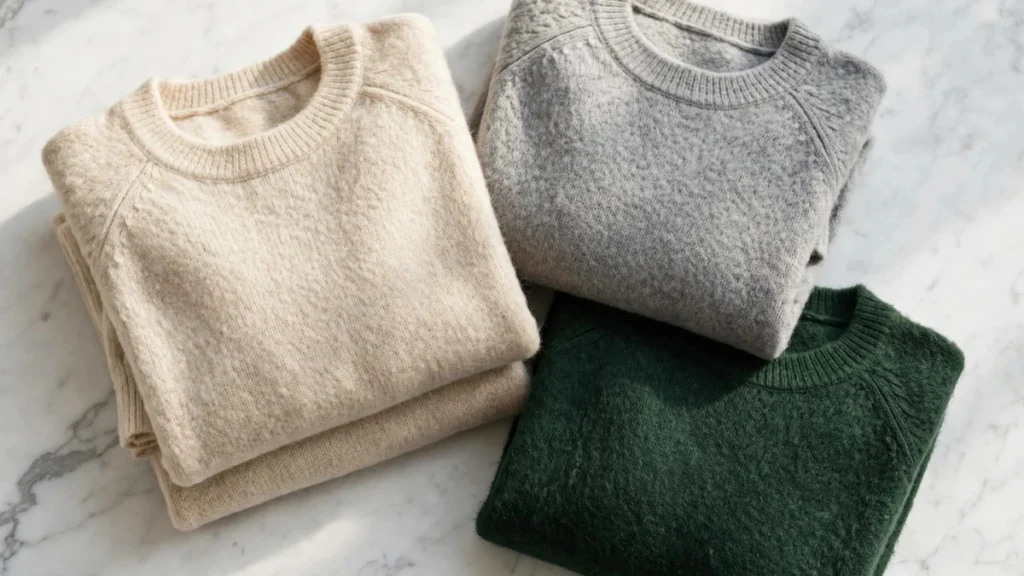
A good wool sweater is the hardest-working piece in a winter wardrobe. It keeps you warm on a cold morning walk, layers neatly under a coat, and looks just as right with jeans on a weekend as it does with tailored trousers at work. Wool does this better than most fibres because it insulates even when damp, breathes when you move indoors, and holds its shape for years when it is made well.
The problem is not finding a wool sweater. It is finding one that is warm without being itchy, soft without pilling into a mess by February, and well made without costing a fortune. A loose, open knit can look cosy and still let the cold straight through. Fibre, knit density, and fit matter far more than the label on the tag.
Below are nine wool sweaters for winter worth considering in 2027, from an affordable lambswool crew to a soft alpaca knit and a classic ragg wool pullover. Each one is described by what it is good at, what to watch for, and who it suits best, so you can choose with your winter in mind, not just a bestseller list.
Key takeaways
- Merino is the softest and least itchy wool, lambswool is warm and affordable, and alpaca is the warmest and lightest of the three.
- Look for a tight, even knit, a high wool content, and seams that lie flat, because those are the signs of a sweater that will last.
- Size up if you plan to layer over a shirt, and size down if you want a neat fit under a tailored coat.
- Wash wool cold, by hand or on a wool cycle, and always dry it flat, never in a tumble dryer.
- No wool sweater is itch-proof for everyone, and even good wool pills, so keep a fabric comb on hand and test a new sweater against your skin first.
What wool actually does in winter
Wool keeps you warm because its fibres trap still air in tiny pockets, and still air is an excellent insulator. That is why a thick, loosely knitted sweater can feel less warm than a thinner, densely knitted one. The dense knit holds more air in place and blocks the wind, while the loose knit lets it pass straight through. When you are choosing, hold the sweater up to the light. If you can see through the knit easily, it will not be as warm as it looks.
Wool also handles moisture better than cotton or most synthetics. It can absorb up to a third of its weight in water before it feels damp, and it releases that moisture slowly, which is why it keeps you comfortable on a snowy commute and not clammy indoors. That same quality means wool needs less washing than cotton. Air it out after wearing, and wash it only when it actually needs it.
Not all wool feels the same against skin. Merino fibres are fine and flexible, which is why merino rarely itches. Lambswool, from a sheep’s first shearing, is softer than ordinary sheep’s wool and slightly less fine than merino. Alpaca fibres are hollow, which makes them very warm for their weight, and they contain no lanolin, so they suit people who find sheep’s wool irritating. Ragg wool is coarser, so wear it over a layer.
How we chose these sweaters and what to look for
Look first at the fibre and the percentage. A sweater that is 100 percent wool, or a high wool blend, will be warmer and longer-lasting than one that is mostly acrylic with a little wool added for the label. Check the composition on the tag, not just the product name. A little nylon or elastane adds strength and shape retention, but if wool is not the first fibre listed, it is not really a wool sweater.

Look next at the knit and the seams. A tight, even knit with no thin patches will keep its shape and keep you warmer. Seams should lie flat and feel smooth inside, with no bulky joins at the shoulder or under the arm. Try the sweater on over the kind of top you will actually wear under it. If the shoulders sit right and the body skims rather than clings, the fit is right, and a sweater that fits well will look better for longer than one that is a size too small.
Finally, think about how the sweater fits your winter. A lightweight merino crew is the best layering piece, a chunky ragg wool pullover is the best for cold weekends outdoors, and a turtleneck is the warmest single piece because it closes the gap at the neck. Our guide to winter sweater trends shows how these styles are being worn this season, but the buying rules do not change with trends. Fibre first, knit second, fit third, and price last.
The 9 best wool sweaters for winter 2027
Uniqlo Premium Lambswool Crew Neck Sweater
What we like: Soft lambswool at a very fair price, a clean crew neck that layers easily, and a wide range of colours including the neutrals that go with everything. What to consider: A lighter-weight knit, so it is best as a layer rather than a standalone piece on the coldest days. Best for: Everyday layering and first-time wool buyers. Fabric: 100% lambswool. Price range: Around $50. Standout feature: The best value in this guide.
This is the sweater to buy if you want to try wool without spending much. It is soft enough to wear against skin, warm enough under a coat, and cheap enough to own in two colours. Wash it cold and dry it flat, and it will last far longer than its price suggests.
Everlane The Alpaca Crew
What we like: Warm, light alpaca in a relaxed crew neck, with a soft hand feel and no itch for most wearers, plus a responsible sourcing story. What to consider: A relaxed fit that runs slightly oversized, so size down if you want a neat silhouette. Best for: Cold days when you want warmth without bulk. Fabric: 100% alpaca. Price range: Around $118. Standout feature: Remarkably warm for its weight.
Alpaca is the quiet overachiever of winter knits. This crew feels barely there on the body and still keeps you warm on a cold walk, which is why it works so well as a layer under a heavy coat or on its own indoors.
COS Merino Wool Crew-Neck Jumper
What we like: Fine merino in a minimal, modern cut, with a dense knit that holds its shape and a palette of muted, easy colours. What to consider: A slim fit, so size up if you want room for a shirt underneath. Best for: Smart, minimal outfits and office wear. Fabric: 100% merino wool. Price range: Around $99. Standout feature: The cleanest, most modern cut here.
If your winter wardrobe leans minimal, this is the sweater that will get the most wear. It tucks neatly into trousers, sits flat under a blazer, and the merino is soft enough to wear all day without thinking about it.
J.Crew Lambswool Crewneck Sweater
What we like: A classic American crewneck in soft lambswool, with a ribbed collar, cuffs and hem that keep their shape, and a fit that works on most body types. What to consider: It can pill a little at first, so a fabric comb in the first few weeks is worth having. Best for: A classic, preppy winter look. Fabric: 100% lambswool. Price range: Around $98. Standout feature: A timeless shape that never dates.
This is the crewneck to buy when you want one sweater that does everything. It looks right with jeans, with a skirt, or under a blazer, and the lambswool is warm without being heavy.
Arket Merino Crew Neck Sweater
What we like: Fine merino with a slightly boxy, relaxed cut, in a tight knit that resists sagging, and colours that are easy to build an outfit around. What to consider: The relaxed cut means it can look oversized if you buy your usual size, so check the measurements. Best for: Relaxed, Scandinavian-style layering. Fabric: 100% merino wool. Price range: Around $90. Standout feature: A tight knit that keeps its shape wash after wash.
Arket does the basics unusually well, and this merino crew is a good example. It is warm, soft, and cut to sit neatly over a shirt, which makes it one of the easiest sweaters in this guide to style.
& Other Stories Wool Turtleneck Sweater
What we like: A soft wool-blend turtleneck with a flattering high neck, in rich winter colours that lift a dark coat. What to consider: The neck is snug, so try it on if you dislike close-fitting collars. Best for: The coldest days, worn under a coat. Fabric: Wool blend. Price range: Around $99. Standout feature: The warmest neckline in this guide.
A turtleneck closes the gap a scarf usually has to fill, which is why it is the warmest single sweater here. Wear it with wide-leg trousers or a long skirt for a simple, polished winter outfit.
Massimo Dutti 100% Wool Sweater
What we like: Pure wool in a refined, slightly tailored cut, with a smooth finish that looks more expensive than it is. What to consider: A finer knit, so it is best layered rather than worn as a heavy outer layer. Best for: Smart outfits and layering under a blazer. Fabric: 100% wool. Price range: Around $79. Standout feature: A polished finish at a mid-range price.
Massimo Dutti is a reliable source for wool that looks smart rather than sporty. This sweater works under a blazer at work and with jeans at the weekend, which is a useful range for one piece.
L.L.Bean Ragg Wool Sweater
What we like: A chunky, hard-wearing ragg wool knit in a classic crew, made to last and warm enough for proper cold weather. What to consider: Coarse against bare skin, so wear it over a long-sleeve top. Best for: Cold weekends, walks, and outdoor days. Fabric: Ragg wool blend. Price range: Around $99. Standout feature: The toughest, warmest knit here.
This is the sweater for days when warmth matters more than polish. The flecked ragg knit hides wear, the fit is generous enough for layering, and it only gets better with age.
Vince Wool Crew Neck Sweater
What we like: A beautifully soft wool crew with a relaxed, drapey fit and a luxurious hand feel, in a palette of soft neutrals. What to consider: Premium price, and the relaxed fit means it can look oversized if you buy your usual size. Best for: A quiet-luxury winter wardrobe. Fabric: Wool blend. Price range: Around $225. Standout feature: The softest hand feel in this guide.
If you want one sweater that feels like a treat every time you put it on, this is it. The drape is elegant, the neutrals pair with everything, and the quality shows in how it holds its shape.
Which wool sweater is right for you
If you want one sweater to buy first, choose a mid-weight merino crew in a neutral colour. It layers under a coat, works with jeans and trousers alike, and is soft enough to wear all day. Merino is the safest first wool because it rarely itches, and a crew neck is the most versatile shape because it works with shirts, scarves, and necklaces.
If you run cold, choose alpaca or a chunky ragg wool knit, and add a turtleneck to your collection. Alpaca gives the most warmth for the least bulk, while ragg wool is the best choice for outdoor days. If your winter is mostly indoors and smart, a fine lambswool or merino crew will serve you better than a heavy knit you wear twice a year. A cashmere sweater worth the splurge is a different kind of purchase, softer and more delicate, while a wool sweater is the workhorse that takes daily wear.
The caveats that matter
Wool is not a zero-maintenance fibre. It pills, especially under the arms and where a bag strap rubs, and it can felt if washed too hot or tumble dried. That does not mean wool is fragile, only that it needs the right care: wash cold, dry flat, and store folded, because hanging stretches a heavy knit out of shape.
| Detail | What is known |
|---|---|
| Warmest fibre | Alpaca, then ragg wool, then merino and lambswool |
| Softest against skin | Merino, followed by alpaca and lambswool |
| Best first buy | A mid-weight merino crew in a neutral colour |
| How to wash | Cold water, by hand or on a wool cycle, with wool detergent |
| How to dry | Flat, on a towel, away from direct heat, never tumble dried |
| How to store | Folded, with cedar or lavender to deter moths |
| When to size up | When you plan to layer over a shirt or a thermal |
| What it does not do | It does not stay itch-free for everyone, and it will pill with wear |
If wool irritates your skin, try merino or alpaca first, and always wear a thin layer underneath a coarser knit. If a sweater feels scratchy in the shop, it will not soften much with wear, so put it back and choose a finer fibre instead.
Checklist: buying a wool sweater honestly
Use these checks before you buy, and again after two weeks of wear.
- Check the label: wool should be the first fibre listed, ideally 100 percent or a high wool blend.
- Check the knit: hold it up to the light, and look for a tight, even knit with no thin patches.
- Check the seams: they should lie flat, with no bulky joins at the shoulder or under the arm.
- Try it against skin: if it itches in the shop, it will itch at home, so choose a finer fibre.
- Check the fit over a shirt: it should skim, not cling, with the shoulders sitting in the right place.
- Plan the care: cold wash, dry flat, fold to store, and keep a fabric comb for pilling.
Frequently asked questions
Are wool sweaters itchy?
Some are, and some are not. Merino and alpaca are the least itchy wools because their fibres are fine and flexible. Coarser wools, such as ragg wool, are more likely to itch, so wear them over a layer. If a sweater itches in the shop, it will not improve much with wear.
How should I wash a wool sweater?
Wash it cold, by hand or on a wool cycle, with a wool detergent. Do not use hot water, and never put it in a tumble dryer. Reshape it while damp and dry it flat on a towel, away from direct heat.
How do I stop a wool sweater from pilling?
You cannot stop it completely, because pilling comes from friction, but you can reduce it. Avoid rough surfaces, carry your bag on the opposite shoulder, and remove pills with a fabric comb. Pilling usually slows after the first few wears.
Is merino or lambswool warmer?
Lambswool is slightly warmer and bulkier, while merino is finer, softer, and better for layering. For a first sweater, merino is usually the better choice because it is soft and versatile. For a chunky, cosy knit, lambswool is hard to beat.
Can I wear a wool sweater in spring?
Yes, if it is lightweight. A fine merino crew works well in cool spring weather, especially in the evening. Save heavy ragg wool and alpaca knits for winter, and store them folded with cedar or lavender through the summer. A winter coat that actually keeps you warm is what carries a light wool sweater through the coldest months.
How many wool sweaters do I need?
Three is a good number for most people: a mid-weight merino crew in a neutral, a chunky knit for cold weekends, and a turtleneck for the coldest days. That covers layering, smart outfits, and outdoor wear without a crowded wardrobe.
The bottom line
The best wool sweater for winter 2027 is not the most expensive or the thickest. It is the one in the right fibre for your skin, in a knit dense enough to block the wind, and in a fit you will actually wear. Merino is the safest first buy, alpaca is the warmest for its weight, and ragg wool is best for cold days outdoors.
Choose one sweater, check the label, try it against your skin, and care for it properly. Cold wash, dry flat, fold to store. A well-chosen wool sweater will keep you warm for years, and it will only get better the more you wear it.