
A bathrobe is the garment you wear when nobody is watching, which is exactly why it is worth choosing properly. It is the first thing you reach for after a shower and the last thing you take off at night, and a bad one announces itself daily: short sleeves, a belt that comes undone, fabric that turns flat after three washes.
Choosing well comes down to five decisions: what you will use the robe for, which fabric suits that use, how heavy it should be, how long it should fall, and how much care you will give it. Get those five right and the price almost takes care of itself.
This guide covers terry, waffle, velour, silk and cashmere, explains the weight numbers on listings, and sets out what different price bands buy. There are no product picks here, only the judgement you need to read any listing.
Key takeaways
- Start with use, not fabric: a robe for drying off needs absorbency, while a robe for lounging needs drape and warmth.
- Terry is the best all-rounder for drying, waffle dries fastest, velour looks the most polished, silk is light and cool, and cashmere is the warmest and hardest to care for.
- Weight is the number that matters most on a listing: look for 350 to 450 GSM for everyday use and 450 to 600 GSM for a heavy, hotel-style robe.
- Length matters more than the size label: a robe should fall to the knee or below, with sleeves that reach the wrist and a belt that stays tied when you sit down.
- Caveat: GSM figures and fibre claims are self-reported by sellers, so check the label and the returns policy before you buy, and wash a new robe twice before judging it.
Start with how you will use it
Before you compare fabrics, picture the robe in your day. The person who showers at six and must be dressed in fifteen minutes wants a different robe from the person who works from home in one until lunch, and both differ from the gift buyer. Most disappointing robes are not badly made; they were bought for the wrong job.
A robe for drying off is a towel you can wear: cotton loops and proper length. A robe for lounging is closer to a dressing gown, so silk, cashmere and light velour come into their own. A robe for a warm climate needs to dry fast between uses, which points to waffle or linen, while a robe for cold mornings needs weight and coverage, which points to heavy terry or cashmere.
Fabric first: terry, waffle, velour, silk and cashmere

Each of the five main fabrics has a clear character. Learn them once and you can read any listing in seconds.
Cotton terry
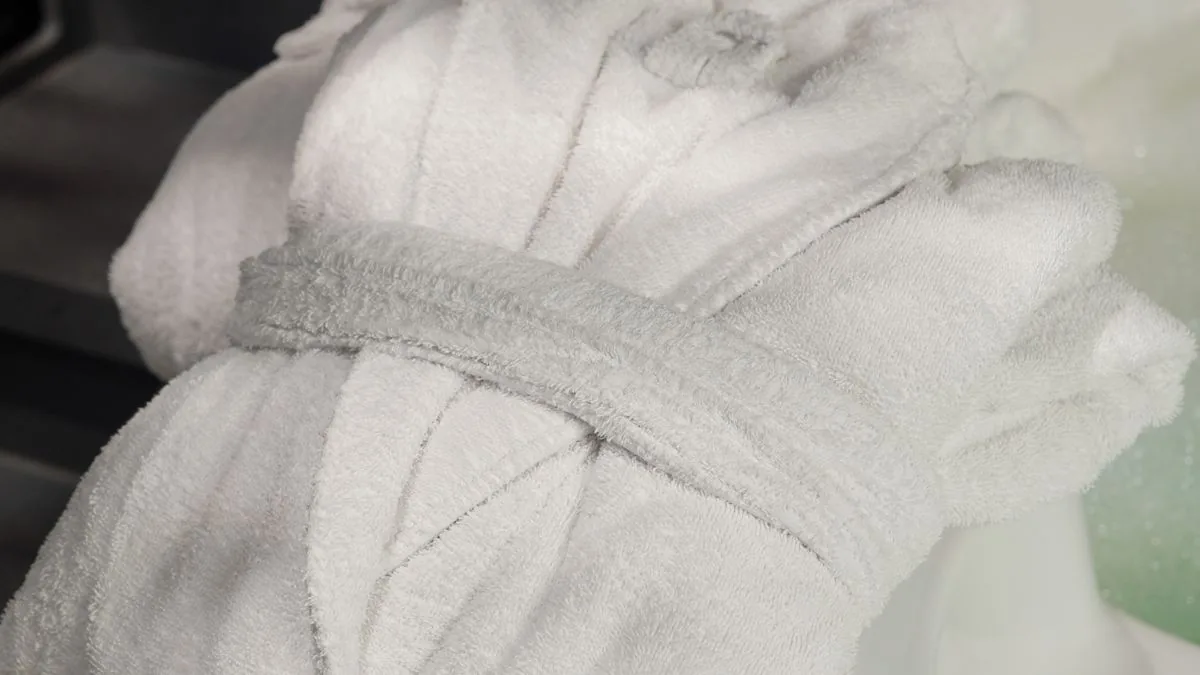
Terry is cotton woven into loops that stand up from the cloth, and those loops are what soak up water. The longer and denser the loops, the more the robe absorbs, which is why long-fibred Turkish cotton is the standard for good terry: it softens with washing and holds its pile. It is the best choice for drying off, and it survives hard washing better than any other robe fabric, though a heavy terry robe is slow to dry in a humid bathroom.
Waffle weave
Waffle is woven into small honeycomb squares that trap air against the skin. It absorbs less water per gram than terry, but it dries much faster, feels lighter, and packs small, which makes it the right robe for warm rooms, summer, and travel. It will not keep you cosy on a cold morning, though, and its crisp texture divides opinion.
Velour
Velour is terry with the loops sheared flat on the outside, leaving a smooth face and a looped back. It is the most polished cotton robe, the one to choose if you answer the door in yours. It absorbs less than full terry and shows water marks more readily, but for a robe that doubles as morning dress it is hard to beat. The heavy terry robes in our guide to the best luxury hotels in Paris are often finished this way for exactly that reason.
Silk
Silk is the lightest robe fabric and the coolest against the skin. It drapes like tailoring rather than towelling, which makes it the natural choice for a dressing gown worn over nightwear or for warm evenings. It absorbs very little water, so it is a poor choice straight out of the shower, and it needs gentle care: hand wash or a delicate cycle, and no wringing. Our guide to the best silk blouses shows how the fibre likes to be treated.
Cashmere
Cashmere is the warmest robe fabric and the softest, a dressing gown that feels like a blanket cut into a garment. It suits cold houses and slow mornings better than anything else. It is also the most demanding: it pills where the belt rubs and needs gentle washing or dry cleaning. A cashmere robe is a robe you live in, not one you dry off in, as our guide to the best cashmere sweaters explains.
| Fabric | Feel | Absorbency | Drying speed | Best for |
|---|---|---|---|---|
| Cotton terry | Plush, looped, thick | High | Slow | Everyday drying |
| Turkish cotton | Soft, dense, lighter | High | Moderate | Softness without bulk |
| Waffle weave | Textured, light, airy | Moderate | Fast | Warm rooms, travel |
| Velour | Smooth outside, looped inside | Moderate | Moderate | Looking dressed |
| Silk | Smooth, cool, fluid | Low | Fast | Lounging |
| Cashmere | Soft, warm, light | Low | Slow | Cold houses |
| Linen | Crisp, dry, airy | Moderate | Fast | Hot climates |
Weight and warmth: reading GSM
GSM, grams per square metre, is the one number worth reading on a robe listing. Below 300 GSM, a robe feels thin, more cover-up than robe. From 350 to 450 GSM, a solid mid-weight robe dries you properly and dries overnight on a hook. From 450 to 600 GSM, heavy hotel-style territory: substantial and warm on a cold morning. Above 600 GSM, robes become very heavy and suit only cold houses.
Weight also affects care: a heavy robe holds more water after a wash, so it needs a longer spin and more drying time. Wash a new robe twice before judging it, without softener, and judge it on the third wear rather than the first.
Length, fit and the small details
Robes are forgiving garments, which is exactly why fit problems sneak up on people. Length matters more than the size label: a robe should fall to the knee at the shortest, and to mid-calf if you want full coverage when you sit down. Sleeves should reach the wrist, and the belt should wrap around the body with enough length to tie in a proper knot, not a hurried bow that comes undone. Check the stated length against your height, since robe sizes vary widely.
The details are what separate a robe that lasts from one that frays. An inner tie as well as the outer belt keeps the robe closed when you bend. Pockets should fit a hand flat, and belt loops should hold the belt in place. If you are between sizes, size up: a robe that wraps with overlap looks generous, while one that barely meets in the middle looks wrong and feels worse.
Price tiers: what the money buys
Under fifty pounds or dollars, you are buying basic cotton in a light to mid weight, usually a shorter cut with a simple belt. Check the GSM and the seam finishing, since corners are cut where you cannot see them. From fifty to one hundred and fifty, the range opens up: Turkish cotton terry at 400 GSM and above, good waffle, lined velour, and longer cuts with inner ties. This is the band where most people should shop.
From one hundred and fifty to five hundred, you are paying for fibre and finishing: long-staple cotton, silk from a proper mill, careful tailoring, and details such as bound seams and a belt that stays tied. Above five hundred, you are in cashmere and fine silk territory, where the money buys the fibre itself. Judge any robe by cost per wear: a mid-weight terry robe worn daily for three years costs pennies a day, while a robe that needs dry cleaning and stays in the wardrobe costs far more.
Care: keeping a robe soft
Care is simple but strict, and most robes are ruined by softener rather than by wear. Wash cotton robes at 40 to 60 degrees with detergent and no softener: softener coats the loops in a waxy film that stops them absorbing water. If a robe feels less absorbent than it used to, two hot washes with a cup of white vinegar in the rinse will usually strip the build-up. Tumble dry on low and hang it on a wide hook.
Silk and cashmere need gentler handling. Wash silk by hand or on a delicate cycle with a mild detergent, roll it in a towel to remove water, and never wring it. Wash cashmere rarely, in cool water with a wool wash, and dry it flat so it keeps its shape. Wash a robe before its first wear, and wash it regularly.
Checklist: before you buy
- Decide the job first: drying off, lounging, warm climate, or cold mornings.
- Check fabric and weight: 350 to 450 GSM everyday, 450 to 600 GSM heavy hotel style.
- Check the length against your height: knee length at minimum, mid-calf for full coverage.
- Look for an inner tie, firm belt loops, sleeves that reach the wrist, and pockets that fit a hand.
- Read the care label before you buy: if you will not hand wash it, do not buy silk or cashmere.
- Check the returns policy, then wash the robe twice without softener before judging it.
Frequently asked questions
What GSM should a bathrobe be?
For everyday use, 350 to 450 GSM is the sweet spot: absorbent enough to dry you properly, light enough to dry overnight on a hook. For a heavy, hotel-style robe, look for 450 to 600 GSM.
Is terry or waffle better for a bathrobe?
Terry is better for drying off: its loops soak up far more water, and it is warmer. Waffle is better for warm rooms: it dries much faster and feels lighter.
How long should a bathrobe be?
Knee length is the minimum; mid-calf is better if you sit in it. Check the stated length against your height.
Should I buy silk or cashmere?
Buy silk for light, cool lounging on warm evenings, if you will hand wash it. Buy cashmere for the warmest robe on cold mornings, if you will care for it gently. Neither dries you off after a shower; for that, buy terry.
Why has my bathrobe stopped absorbing water?
Fabric softener is the usual cause: it coats cotton loops in a waxy film that repels water. Wash the robe twice on a hot cycle with a cup of white vinegar in the rinse and no softener, and the absorbency usually returns.
How much should I spend on a bathrobe?
Most people should spend in the fifty to one hundred and fifty range, where proper Turkish cotton terry, good waffle and lined velour live. Spend more only for a fibre you will feel every day, such as silk or cashmere.
The bottom line
The right bathrobe matches your routine: terry at 350 to 450 GSM for everyday drying, waffle for warm rooms, velour for looking dressed, silk for lounging, cashmere for cold mornings. Check the fabric, the weight, the length and the care label before you buy, and wash the robe twice without softener before you judge it.
Start with the job, not the label. The most expensive robe is the one you never wear; the best is the one that dries you, warms you, stays tied, and still feels soft after a hundred washes.
Note: GSM figures, fibre content and prices are stated by sellers and change. Check the label and listing before you buy.
Meet our experts
Our editors cover fashion, textiles and homeware, and test what we write about in everyday use. Where a claim rests on a maker’s specification, we say so.
Why trust BrassSmile
We judge robes by fabric, weight, cut and care, checked against the maker’s own listing. We do not accept payment for placement, and we favour robes that wash well and last.
Sources
Fabric and care guidance draws on textile care standards and maker specifications, and on our BrassSmile guides to hotels, silk and cashmere.