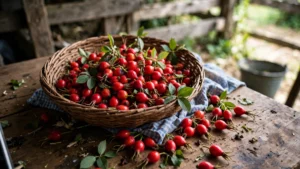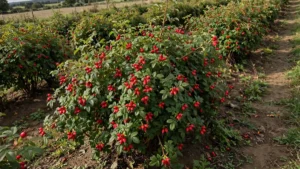
Planning a rosehip farm escape is a different kind of trip planning. There is no single city to fly to and no famous sight to tick off. Instead there is a short harvest window, a handful of small farms, and a fruit that ripens late and waits for no one. The trip works when the dates line up with the hips, and it falls apart when they do not.
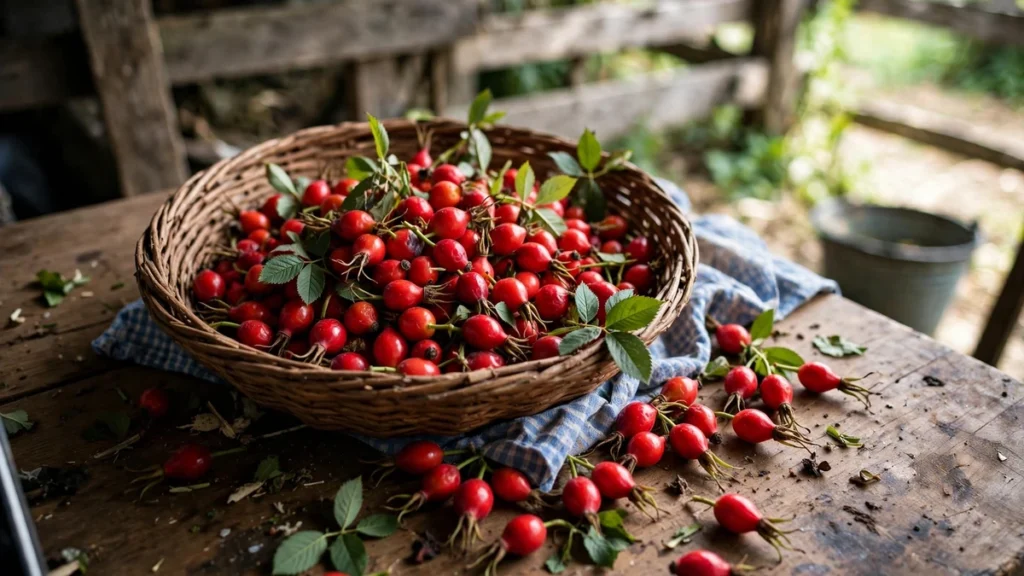
Rosehips are the fruit of the rose, most often the dog rose, and they ripen from September into November. They are tart raw and almost always cooked, into tea, syrup or jam, and the seeds carry fine hairs that must be strained out. The farms in this guide grow their own roses, harvest them every autumn, and make their own products on site. Guests pick in the morning and cook in the afternoon.
This guide walks through the nine steps that matter, from tasting a jar of jam before you plan anything to carrying sealed jars home from the farm shop. Follow them in order and the planning mostly takes care of itself. Skip the early steps and you risk booking a beautiful room in a week when there is nothing to pick.
Key takeaways
- The harvest window is short, usually September into November, and it moves with the frost — get the farm’s dates in writing before you book anything else.
- Taste rosehip tea or jam before you plan the trip, so you know whether you actually like the fruit you are travelling to pick.
- Every farm on the rosehip trail is small, with a handful of rooms, so the best weeks sell out and most farms ask you to confirm picking dates first.
- Rosehip seeds must be strained out before eating or drinking, and the bushes are thorny — gloves and long sleeves are not optional.
- Gluten-free travellers must ask in writing: the hips have no gluten, but farm kitchens bake with wheat breads and use soy sauce.
What a rosehip farm escape involves
A rosehip farm escape is a short stay on a working farm during the rosehip harvest. You sleep in one of a handful of rooms, pick hips in the hedgerows in the morning, and spend the afternoon in the kitchen watching them boiled, strained and bottled. Evenings are for the table: tea, jam and syrup made from the day’s picking.
The stays are small and the work is real. The hips have to be picked when they are soft and red, and a late frost can move the week by days. The farm needs the harvest done, and guests are part of the labour rather than an audience for it. That is the point of the trip, and it is also why the planning matters: if you arrive a week early or a week late, there is no harvest to join.
Most escapes last three or four nights. That is enough time to pick twice, join a kitchen session, visit a market with the cook, and rest. Longer stays suit travellers who want to combine the harvest with walking or a nearby town. The nine steps below cover the whole trip, from the first jar of jam to the flight home.
How to plan it, and what to ask first
Begin with the fruit, not the flight. Buy a jar of rosehip jam or a bag of rosehip tea and taste it at home. The flavour is tart, somewhere between a cranberry and a tomato, and not everyone likes it. If you do, the trip is worth planning. If you do not, pick a different harvest.

Next, write to two or three farms and ask for this year’s picking dates. Do not trust last year’s dates: the harvest moves with the frost, and a warm autumn can push it by a fortnight. Ask whether guests pick on those dates, what the room rate covers, and what the kitchen cooks for a gluten-free guest. The farms that answer plainly are the ones worth visiting.
Only then book flights, and book them to land a day before picking starts. That gives you a margin for a delayed flight and a day to settle in before the first morning in the hedges. Book a room that can be changed if the harvest moves, and keep some cash for the farm shop and the town market, since small farms often do not take cards.
The 9 steps to plan a rosehip farm escape
Start at home with a jar of rosehip jam
Before you spend money on flights, spend a little on the fruit. A jar of rosehip jam or a bag of rosehip tea costs a few pounds and tells you whether the trip is yours. The flavour is tart and unusual, and some travellers love it at once while others find it too sharp.
What to do: Buy rosehip jam or tea from a farm shop or a good grocer, taste it at home, and cook with it once before you plan.
What to avoid: Booking flights and a farm stay before you have ever tasted a rosehip.
Best for: Anyone who has never eaten a rosehip and wants to know what the trip tastes like.
Time needed: One afternoon at home, tasting and cooking.
Standout tip: If the jam is too tart for you, the syrup is usually sweeter — try both before you decide.
Confirm the picking window, then book travel
The harvest is the trip. Rosehips ripen from September into November, and the best picking weeks are short — often a fortnight at most. Write to the farm first, get the picking dates in writing, and only then look at flights.
What to do: Get the farm’s picking dates in writing, then book flights that land a day before picking starts.
What to avoid: Booking a non-refundable flight before the farm confirms its picking dates.
Best for: Travellers whose dates can bend around the harvest.
Time needed: One message to the farm, then a day to compare flights.
Standout tip: A light frost sweetens the hips, so a farm that waits for the first frost often picks later than its neighbours.
Follow the farm menus, not the postcards
Every rosehip region cooks the fruit differently. England makes syrup and jam, Central Europe dries hips for tea, Provence pairs jam with honey, and Tuscany makes a rosehip vinegar. The scenery changes too, but the kitchen is what you will eat every day, so choose the region whose cooking you love most.
What to do: Read each farm’s tea, syrup and jam list, and pick the region whose kitchen excites you.
What to avoid: Choosing a region for its photographs and finding a kitchen that bores you.
Best for: Travellers who care more about the table than the view.
Time needed: An evening reading farm menus and shop lists.
Standout tip: A farm that lists its products plainly usually cooks them well — vague menus are a warning sign.
See if guests may watch the straining
Picking is only half the harvest. After the baskets come in, the hips are stripped from their stems, boiled, and strained to remove the seeds and their irritating hairs. Some farms let guests join this work, and some keep it in the kitchen.
What to do: Ask the farm whether guests can join the stripping and straining, not just the picking.
What to avoid: Assuming that a picking walk includes the kitchen work — it often does not.
Best for: Travellers who want to learn the cooking, not just the picking.
Time needed: One question in your first message to the farm.
Standout tip: The straining is the skill that matters most; watch how the farm does it before you try it at home.
Ask for every extra charge up front
The room rate is only part of the cost. Kitchen sessions, syrup-making and transfers are often charged separately, and the price of a jar in the shop varies widely. Read the farm’s product list before you pay, so you know what is included and what will cost extra.
What to do: Ask for the full list of included sessions and extra charges before you pay a deposit.
What to avoid: Paying a deposit and then finding that the kitchen sessions cost extra.
Best for: Travellers who want the full cost clear before they commit.
Time needed: One message to the farm, asking for the price list.
Standout tip: Compare the farm shop prices with the cost of the sessions — the jars are often cheaper than the class.
Send the farm your allergy list first
Rosehips have no gluten, but farm kitchens do not run on rosehips alone. They bake with wheat breads, cook with soy sauce, and serve breakfasts built around bread and pastry.
What to do: Mention wheat and any allergy in your first message, and ask what the kitchen will cook for you.
What to avoid: Arriving and hoping the kitchen can improvise a gluten-free menu on the day.
Best for: Gluten-free travellers and anyone with a food allergy.
Time needed: A single message sent before you book.
Standout tip: A farm that answers with a specific menu is safer than one that answers with a general promise.
Old clothes, gloves and closed shoes for the hedges
Rose bushes are thorny, the mornings are cool, and the work is sticky. The hips stain your hands and the syrup sticks to everything it touches. Pack closed shoes, long sleeves and gloves for the hedgerows, a warm layer for the early picking, and clothes you do not mind staining.
What to do: Pack gloves, long sleeves, closed shoes and a warm layer, and wear clothes you can stain.
What to avoid: Picking in shorts and sandals, or wearing anything you would mind getting sticky.
Best for: Anyone picking for the first time, who may not know how thorny the bushes are.
Time needed: An evening packing, before you leave.
Standout tip: Bring a spare pair of gloves — the first pair will be sticky by noon.
Buy breakfast supplies at the town market
The best mornings on a rosehip farm start before the picking, at the town market with the cook. You will see what the farm buys, what the season offers, and how the cook plans the week’s table.
What to do: Ask the cook if you can join the market run, and go early, before the stalls are picked over.
What to avoid: Sleeping through the market and missing the best sense of the region.
Best for: Early risers and travellers who love food markets.
Time needed: One early morning, from dawn to breakfast.
Standout tip: Buy something small at the market — a cheese or a loaf — and share it at the farm table that evening.
Bring home jars of the syrup you helped make
The trip ends at the farm shop. Buy sealed jars of syrup or jam, and a bag of dried hips for tea, so the harvest comes home with you. Check that the jars are sealed and labelled, and ask the farm how long they keep.
What to do: Buy sealed jars and dried hips from the farm shop, and ask how long each keeps.
What to avoid: Carrying unsealed jars in your luggage, or buying more than customs allows.
Best for: Travellers who want the harvest to last past the trip.
Time needed: Half an hour at the farm shop before you leave.
Standout tip: The farm’s own syrup is the best souvenir — it is the one thing you cannot buy anywhere else.
Picking the right season and region
September is the earliest month, and it suits Provence, where the southern sun ripens the hips first. October is the main month across England and Central Europe, when the hips are soft and red and the hedgerows are at their fullest. November is late, and it suits New Zealand, where the seasons run opposite, and any farm that waits for the first frost to sweeten the fruit.
England is the easiest region for a first trip: Kent and Herefordshire are close to London, the farms are small, and the harvest is gentle. Central Europe is wilder or more precise, the Mediterranean farms are warmer and grander, and Sonoma and Marlborough are the most comfortable and the most remote.
Pick the season first and the region second. If you can only travel in September, go south. If October is free, England or Central Europe will be at their best. If you are travelling in November, look to New Zealand or a farm that picks after the frost. The fruit is the same everywhere; the season decides the trip.
The caveats that matter
| Detail | What is known |
|---|---|
| Best time to visit | September into November, when the hips are soft and red; the window moves by country and by frost |
| What the fruit is | The fruit of the rose, most often the dog rose; small, red-orange, tart raw and cooked into tea, syrup or jam |
| The seeds | Rosehip seeds carry fine irritating hairs and must be strained out before eating or drinking |
| Vitamin C | Rosehip tea is very high in vitamin C, but it is a food, not a medicine, and farms make no health claims |
| What is usually included | Room and breakfast plus a picking walk or kitchen session; syrup and jam sessions and transfers often cost extra |
| Gluten | The hips themselves have no gluten, but farm kitchens bake with wheat breads and use soy sauce — tell the farm in writing |
| Thorns | Rose bushes are thorny; gloves, long sleeves and closed shoes are needed in the hedgerows |
| How much to carry home | Most farms sell jars in the shop; check customs rules before flying home with syrup or jam |
Checklist: before you book a rosehip farm escape
- Taste rosehip jam or tea at home, so you know you like the fruit before you plan the trip.
- Get the farm’s picking dates in writing, and book flights that land a day before picking starts.
- Ask what the room rate covers, and what the kitchen sessions and transfers cost extra.
- Tell the farm about wheat and allergies in your first message, and ask what it will cook for you.
- Pack gloves, long sleeves, closed shoes and clothes you can stain, and leave the white linen at home.
- Keep cash handy for the farm shop and the town market, and check the customs rules for jars before you fly.
Frequently asked questions
When is the best month for a rosehip farm escape?
October in most of Europe, September in Provence, November in New Zealand. Look for hips that are soft and red; a light frost can sweeten them.
Do I need to know how to cook to enjoy a rosehip farm?
No. The farms teach the kitchen work as they go, and the picking needs no skill beyond gloves and patience.
Can children join a rosehip farm escape?
On most farms, yes, with supervision. The thorns mean children need gloves and long sleeves, and the farm will tell you which sessions suit which ages.
Is rosehip safe for everyone to eat?
The flesh is safe once the seeds are strained out, but the seeds carry fine hairs that irritate the throat and stomach.
How long should a rosehip farm escape last?
Three or four nights is enough for two picking mornings, a kitchen session and a market run.
Can a gluten-free eater enjoy a rosehip farm escape?
Yes, but ask in writing first. The hips themselves have no gluten, but farm kitchens bake with wheat breads and use soy sauce, so tell the farm before you book.
The bottom line
A rosehip farm escape works when the dates line up with the harvest. Taste the fruit first, get the picking dates in writing, book flights that land a day before picking starts, and tell the farm about gluten in your first message. Do that and the trip mostly plans itself: pick in the morning, cook in the afternoon, and eat the day’s work at dinner.
Start with the region whose kitchen you love, pack for thorns and cool mornings, and leave with sealed jars from the farm shop. For a darker berry harvest, the elderberry farm escape guide follows the same season with a fruit that must be cooked, the sea buckthorn farm escape guide covers a sharper orange berry from thorny shrubs, and the goji berry farm escape guide picks small red berries in the dry hills of Ningxia.