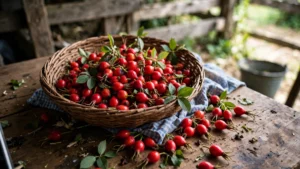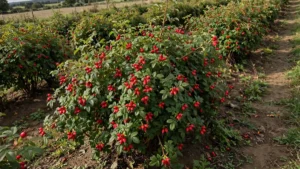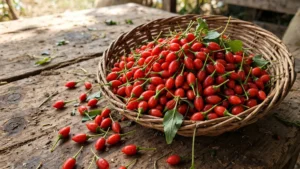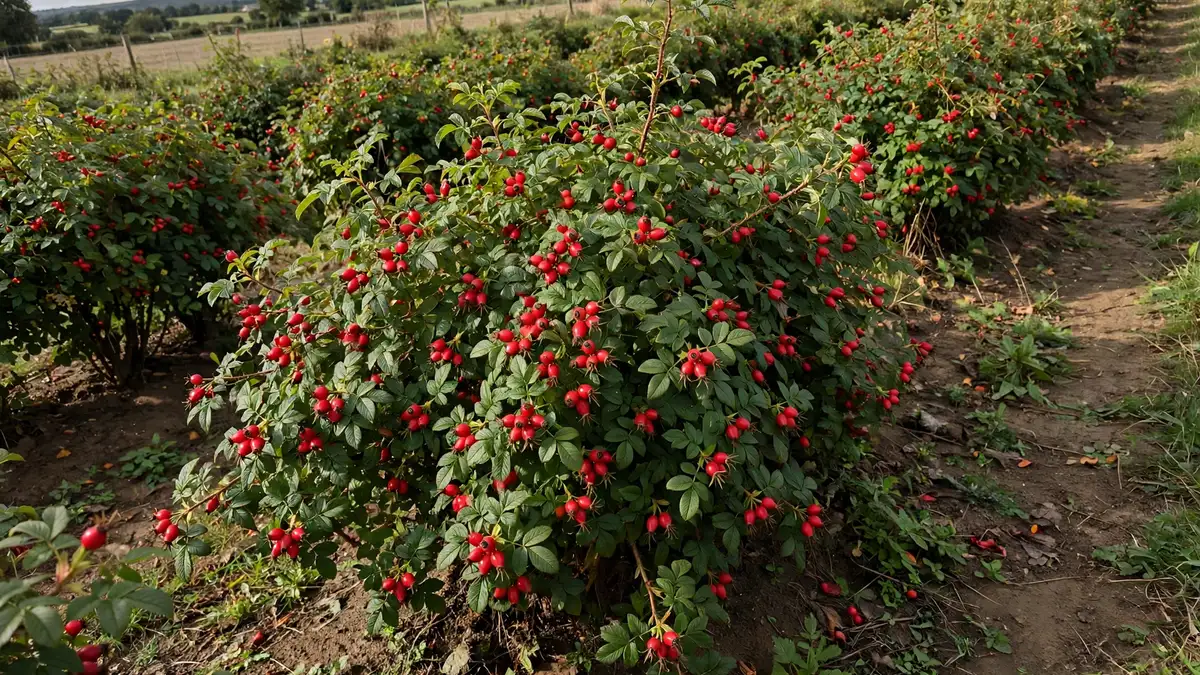
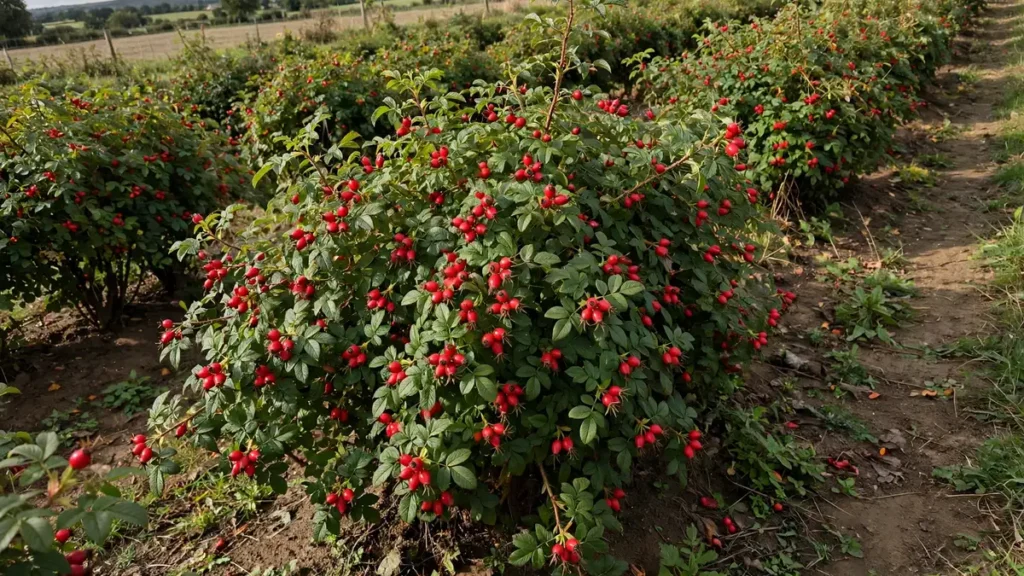
A rosehip farm retreat is not the kind of trip most people picture when they book a farm stay. There are no vineyards to tour and no olive groves to wander. Instead there are hedgerows, heavy with small red-orange fruit. The farms on this list turn that overlooked fruit into the centre of the stay: guests pick rosehips in the morning, watch them strained into syrup by lunch, and drink the tea they made themselves by dinner.
Rosehips are the fruit of the rose, most often the dog rose, and they ripen late, usually from September into November. They are tart raw, which is why almost every farm cooks them into tea, syrup or jam. The fruit is famous for vitamin C — a cup of rosehip tea can hold more of it than a glass of orange juice.
We picked nine stays across England, Europe, California and New Zealand, from a hedgerow farm in Kent at $65–$95 a night to a hillside estate in Marlborough at $345–$380. Every one is a working farm first and a guesthouse second, so the picking calendar matters more than the flight board.
Key takeaways
- Rosehips ripen late, from September into November, and the best picking weeks are short — book around the harvest, not around cheap flights.
- The fruit is tart raw and almost always cooked, into tea, syrup or jam; the seeds carry irritating hairs and must be strained out.
- Rosehip tea is very high in vitamin C, but it is a food, not a medicine, and no farm on this list makes health claims about it.
- Every stay below is a working farm with a small number of rooms, so dates are limited and most farms ask guests to confirm picking dates before paying.
- Gluten-free travellers need to ask in writing: farm kitchens bake with wheat breads and use soy sauce, so the rosehip dishes themselves are safe but the table around them is not always.
What a rosehip farm retreat actually is
A rosehip farm retreat is a small farm stay built around the rosehip harvest. The farm grows roses for their fruit rather than their flowers, and guests stay in a handful of rooms on the property. Mornings are spent in the hedgerows with baskets and gloves, and afternoons in the kitchen watching the hips boiled, strained and bottled.
The stays are small by design. Most of the farms below keep between four and twelve rooms, and the hosts do the cooking and the guiding themselves. You are joining a harvest the farm needs done, and a late frost can change the week entirely.
How we picked these stays, and what to ask first
We looked for farms where rosehips are a real crop, not a garnish: each farm grows its own roses, harvests them every autumn, and makes its own tea, syrup or jam on site. A farm that buys dried hips in bulk did not make the list, and we favoured farms that let guests into the harvest itself.

Price was the second filter. The nine stays run from $65–$95 a night to $345–$380, and the range reflects the room, the meals and how much of the harvest you join, not the quality of the fruit. A cheaper farm with a good kitchen can be a better trip than a dearer one with a grander house.
Before you book, ask three questions. First, what are the picking dates this year, and are guests picking on those days? Second, does the room rate cover meals and picking sessions? Third, what does the kitchen cook for a gluten-free guest? Farms that answer quickly and plainly are usually the ones worth visiting.
The 9 best luxury rosehip farm retreats of 2027
Kent, England — Dog Rose Hedges by the Hop Fields
The Kent farm sits on the edge of a hop-growing village, with rosehip hedgerows along the old field boundaries. The farmhouse is small, with six rooms, and the garden runs down to a lane lined with dog roses. Guests pick in the morning and the kitchen makes syrup the same afternoon.
What we like: The syrup is made the same day you pick, and the hosts explain every step while they work.
What to consider: The rooms are small and the lane to the farm is narrow, so large cars struggle on the last stretch.
Best for: First-time pickers who want a gentle introduction to the harvest.
Style: A plain farmhouse with a walled garden and a wood-burning stove.
Price range: $65–$95 a night, room and breakfast included, picking walks included.
Standout feature: The same-day syrup session, with jars to take home.
Herefordshire, England — Rose Hips between the Apple Trees
Herefordshire grows cider apples, and the rosehip hedges run between the orchards. The farm here is a converted cider barn with eight rooms, and the picking walks cross both orchards and hedgerows. The kitchen makes rosehip and apple jam, a combination the county has cooked for generations, and the farm shop sells it alongside cider.
What we like: The rosehip and apple jam is excellent, and the orchard walks are lovely in autumn light.
What to consider: The barn rooms are cool in the evening, and the farm asks guests to wear gloves in the hedges.
Best for: Travellers who want orchards and hedgerows in the same walk.
Style: A converted cider barn with stone floors and a long dining table.
Price range: $85–$115 a night, room and breakfast included, jam-making sessions included.
Standout feature: The rosehip and apple jam, made in the barn kitchen.
Transylvania, Romania — Wild Dog Roses on the Open Meadows
The Transylvanian farm stands in open meadow country, where dog roses grow wild along the field edges. The farmhouse is old and low, with five rooms, and the picking walks cross meadows that have never been sprayed. The kitchen dries hips for tea as well as cooking them into syrup, and the tea is served at every meal.
What we like: The meadows are unsprayed and the tea is dried on the farm, so the flavour is unusually clean.
What to consider: The walks are long and the ground is uneven, so sturdy shoes are essential.
Best for: Walkers who want a wilder, more open harvest.
Style: An old farmhouse with a wood stove and a drying room for tea.
Price range: $110–$145 a night, room and breakfast included, tea-drying sessions included.
Standout feature: The farm-dried rosehip tea, served at every meal.
Styria, Austria — Rose Hips on a Sunny Hillside
Styria is green hill country, and the farm here grows roses in neat rows on a south-facing slope. The house is modern inside an old shell, with seven rooms, and the picking walks are short and well marked. The kitchen makes rosehip syrup and a rosehip liqueur, and the farm shop sells both in small bottles.
What we like: The picking dates are published months ahead, and the syrup is consistently good.
What to consider: The rooms face the road on one side, and the village is quiet rather than lively.
Best for: Travellers who need firm dates before they book flights.
Style: A restored farmhouse with a modern kitchen and a hillside garden.
Price range: $135–$170 a night, room and breakfast included, syrup sessions included.
Standout feature: The rosehip liqueur, made in small batches each autumn.
Provence, France — Roses and Herbs on the Sunny Terraces
The Provençal farm grows roses alongside lavender and herbs, and the hips ripen early in the southern sun. The house is a stone mas with nine rooms, and the picking walks cross terraces planted with roses and rosemary. The kitchen makes rosehip jam with honey from the farm’s own hives, and the jam is served at breakfast every morning.
What we like: The honey and rosehip jam is superb, and the market mornings are a pleasure.
What to consider: The harvest is early and short, so the best weeks book out fast.
Best for: Sun-seekers who want an early harvest and a market morning.
Style: A stone mas with terraces, a herb garden and a shaded courtyard.
Price range: $160–$195 a night, room and breakfast included, market mornings included.
Standout feature: The honey and rosehip jam, made with the farm’s own honey.
Tuscany, Italy — Rosehip on a Hillside Estate
The Tuscan estate is the grandest stay on this list, ten rooms in a restored villa above olive groves. The rosehips grow in hedges between the vines, and the picking walks climb the hillside in the cool of the morning. The kitchen makes rosehip jam and a rosehip vinegar, and dinner is served on the terrace when the weather allows.
What we like: The villa is beautiful, the food is excellent, and the hillside walks are memorable.
What to consider: The hillside is steep, and the estate charges extra for transfers from the nearest town.
Best for: Travellers who want a grander house and a serious kitchen.
Style: A restored villa with a terrace, olive groves and a large kitchen garden.
Price range: $190–$225 a night, room and breakfast included, cooking sessions included.
Standout feature: The rosehip vinegar, made in the estate kitchen.
Alentejo, Portugal — Rose Hips on the Whitewashed Farm
Alentejo is open plain country, and the farm is a whitewashed house with eleven rooms and a long, shaded veranda. The rosehips grow in hedges around the vegetable garden, and the picking walks are short and flat. The kitchen makes rosehip tea and a rosehip syrup, and the farm’s cork oaks shade the afternoon rest.
What we like: The veranda, the quiet plains and the unhurried schedule.
What to consider: The plains are hot at midday, and the nearest town is a drive away.
Best for: Travellers who want quiet, space and a slow schedule.
Style: A whitewashed farmhouse with a long veranda and cork oaks.
Price range: $220–$260 a night, room and breakfast included, tea sessions included.
Standout feature: The shaded veranda, where the farm serves its rosehip tea.
Sonoma, California, USA — Roses Planted between the Vines
The Sonoma farm sits on a hillside above the vineyards, roses planted in rows between the vines. The house is modern and light, with eight rooms, and the picking walks look out over the valley. The kitchen makes rosehip jam and a rosehip shrub, a vinegar-based drink, and the farm shop sells both alongside local wine.
What we like: The kitchen sessions are genuinely hands-on, and the valley views are superb.
What to consider: The farm is popular and the best weekends go early, so book ahead.
Best for: First-timers who want clear guidance and a comfortable room.
Style: A modern farmhouse with a large kitchen and valley views.
Price range: $275–$310 a night, room and breakfast included, kitchen sessions included.
Standout feature: The rosehip shrub, a vinegar drink made in the farm kitchen.
Marlborough, New Zealand — Rosehip at the Edge of the World
The Marlborough estate is the farthest-flung stay on this list, a hillside farm above the vineyards of New Zealand. The roses grow in long hedges along the property boundary, and the picking walks take in mountain views. The kitchen makes rosehip syrup and jam, and the farm serves dinner with wines from the neighbouring vineyards.
What we like: The mountain views, the careful harvest and the excellent table.
What to consider: The farm is remote, and transfers from the nearest town cost extra.
Best for: Travellers who want a once-in-a-while trip at the far end of the map.
Style: A hillside estate with large rooms, a long table and mountain views.
Price range: $345–$380 a night, room and breakfast included, harvest and kitchen sessions included.
Standout feature: The small, careful harvest, processed the same day it is picked.
Which rosehip region fits your trip
England is the easiest starting point. Kent and Herefordshire are close to London, the farms are small and honest, and the harvest is gentle enough for a first-timer. The hedges are old, the kitchens are plain, and the jam is made the same day you pick. If you have never picked rosehips before, start here.
Central Europe suits travellers who want a wilder or more precise harvest: Transylvania for open meadows, Styria for firm dates. Provence and Tuscany are warmer and grander, while Alentejo is the quietest stay of all — open plains and a slow schedule.
The New World farms are for travellers who want comfort and clear instruction: Sonoma for hands-on sessions and valley views, Marlborough for a once-in-a-while trip at the far end of the map. The fruit is the same everywhere — tart, red and late — but the setting changes the trip entirely.
The caveats that matter
| Detail | What is known |
|---|---|
| Best time to visit | September into November, when the hips are soft and red; the window moves by country and by frost |
| What the fruit is | The fruit of the rose, most often the dog rose; small, red-orange, tart raw and cooked into tea, syrup or jam |
| The seeds | Rosehip seeds carry fine irritating hairs and must be strained out before eating or drinking |
| Vitamin C | Rosehip tea is very high in vitamin C, but it is a food, not a medicine, and farms make no health claims |
| What is usually included | Room and breakfast plus a picking walk or kitchen session; syrup and jam sessions and transfers often cost extra |
| Gluten | The hips themselves have no gluten, but farm kitchens bake with wheat breads and use soy sauce — tell the farm in writing |
| Thorns | Rose bushes are thorny; gloves, long sleeves and closed shoes are needed in the hedgerows |
| How much to carry home | Most farms sell jars in the shop; check customs rules before flying home with syrup or jam |
Checklist: booking a rosehip farm stay honestly
- Confirm the picking dates in writing before you pay, and ask whether guests pick on those days.
- Ask what the room rate covers: meals, picking walks and kitchen sessions are sometimes charged separately.
- Tell the farm about wheat and gluten in your first message, and ask what the kitchen will cook for you.
- Pack gloves, long sleeves and closed shoes for the hedgerows, and a hat for the midday sun.
- Carry cash for the farm shop and the town market, since small farms often do not take cards.
- Check customs rules for syrup and jam before you fly home with jars.
Frequently asked questions
When is rosehip season?
From September into November in most of Europe, earlier in Provence and later in New Zealand. The hips should be soft and red, and a light frost can sweeten them.
What does rosehip taste like?
Tart and slightly sweet, somewhere between a cranberry and a tomato. Raw hips are sharp enough to pucker the mouth, which is why farms cook them into tea, syrup or jam.
Can guests pick rosehips on the farm?
Yes, on most of the farms on this list — the picking is the point of the stay. You will need gloves and long sleeves, and the farm will show you which hips are ripe.
Are rosehip seeds safe to eat?
The flesh is fine, but the seeds carry fine hairs that irritate the throat and stomach, so farms strain them out. Do not eat whole hips without straining.
Which rosehip farm should a first-timer try first?
Kent or Herefordshire in England. The farms are small, the harvest is gentle, and the hosts explain everything as they work.
Can a gluten-free eater enjoy a rosehip farm?
Yes, but ask in writing first. The hips have no gluten, but farm kitchens bake with wheat breads and use soy sauce, so tell the farm before you book.
The bottom line
A rosehip farm retreat is a small, seasonal trip built around a fruit most people walk past. The nine stays above run from a Kent farmhouse at $65–$95 a night to a Marlborough estate at $345–$380, and the difference is the house, the table and the setting — not the fruit. Pick the region that fits how you like to travel, confirm the picking dates in writing, and tell the farm about gluten before you pay.
If you go at the right week, you will pick in the morning, watch the hips strained into syrup by lunch, and drink tea made from your own picking by dinner. That is the whole trip, and it is all you need. For a darker berry harvest, the elderberry farm retreats run a similar season with a fruit that must be cooked, the sea buckthorn farm retreats offer a sharper orange berry from thorny shrubs, and the goji berry farm retreats pick small red berries in the dry hills of Ningxia.