A pothos plant is one of the easiest houseplants you can own, and one of the most forgiving. If you want trailing green leaves, fast growth and a plant that survives a missed watering, this is the place to start.
The short answer is that pothos thrives in bright, indirect light, with watering only when the top few centimetres of soil feel dry. Give it a pot with drainage, a warm room and a little patience, and a small plant can become a long, leafy vine within a year or two.
Key takeaways:
- Pothos is a trailing tropical vine that suits beginners and busy owners.
- Bright, indirect light keeps variegated leaves colourful; low light slows growth.
- Water only when the top few centimetres of soil are dry, and let excess water drain away.
- Cuttings root easily in water or soil, so one plant can soon become several.
- Pothos is toxic to pets if eaten, so keep it out of reach of cats and dogs.
What is a pothos plant?
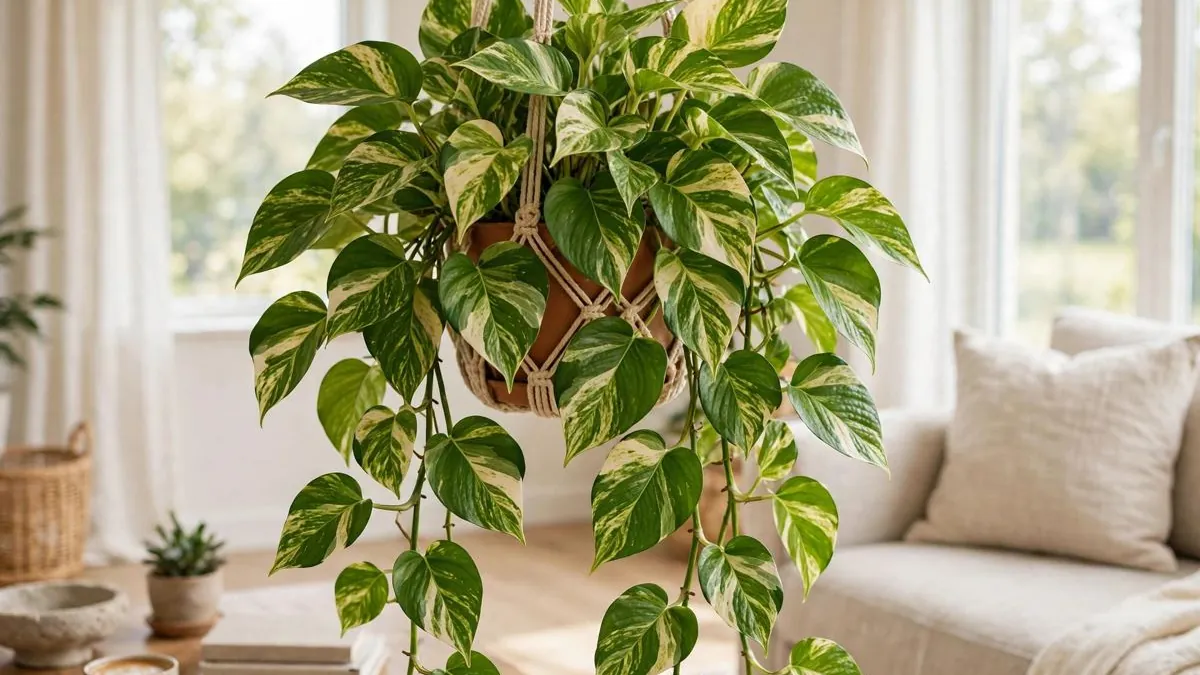
Pothos, botanically known as Epipremnum aureum, is a tropical vine native to islands in the South Pacific and parts of South-East Asia. In the wild it climbs trees with aerial roots; indoors it sends out long stems that trail from a hanging basket or climb a moss pole.
Its appeal is easy to understand. The heart-shaped leaves are glossy and generous, the stems grow quickly in the warmer months, and the plant asks for very little in return. It tolerates a range of light levels and ordinary room temperatures, and recovers well from the occasional lapse in care. That combination has made it a fixture in homes and offices, and earned it the nickname devil’s ivy.
Pothos varieties to know
Most pothos sold as houseplants are cultivars of the same species, selected for leaf colour and pattern. They share the same basic care needs, but they do not all look alike, and some grow more slowly than others.
Golden pothos
Golden pothos is the classic form, with mid-green leaves splashed in creamy yellow. It is the fastest grower and the most tolerant of lower light, although strong variegation needs good light to hold. Best for: first-time owners and anyone who wants quick, visible growth.
Marble queen
Marble queen has leaves heavily marbled in white and cream, sometimes so pale that green appears only in flecks. It grows more slowly, as the pale areas contain less chlorophyll, and needs brighter light to keep its pattern. Best for: bright rooms where its pale leaves can be shown off.
Neon pothos
Neon pothos has leaves in a clear, bright chartreuse that glow against a white wall or dark shelf. With no variegation to lose, its colour stays true in a wider range of light. Best for: adding a bold splash of colour to a plain room.
N’Joy pothos
N’Joy is smaller and neater, with crisp white edges on green leaves. It stays compact, suiting a shelf or small pot, and likes bright, indirect light. Best for: small spaces and tidy, compact displays.
Light: what pothos really needs
Bright, indirect light is the sweet spot for most pothos plants. A spot a metre or two from a sunny window, or beside a window that never takes direct midday sun, suits them well. Variegated varieties in particular need this level of light to keep their pale markings; in dim light, new leaves often emerge plain green.
Direct sun is the main thing to avoid. A few hours of gentle morning sun is usually fine, but harsh afternoon sun through glass can scorch leaves, leaving pale patches that do not heal. Set the plant back from a south-facing window or hang a sheer curtain between plant and sun.
Low light will not kill a pothos quickly, but it will slow it down. Growth becomes sparse and leggy, so move it closer to a window and prune back the bare stems; fresh growth usually follows within weeks.
Watering a pothos plant
Watering is where most pothos problems begin. Water thoroughly, then wait until the soil has partly dried before watering again. Push a finger into the top few centimetres of compost: if it feels dry, water; if it still feels damp, wait.
When you do water, pour slowly until water runs from the drainage holes, then empty the saucer. Roots sitting in soggy compost are the fastest route to root rot, the one problem that can genuinely kill a pothos.
How often you water depends on the season, the pot and the room. In warm, bright summer weather, a pothos may need water every week or so. In a cool winter room, it may go two or three weeks between waterings. The plant’s needs change through the year, so checking the soil matters more than a fixed schedule. Yellowing lower leaves are often the first sign of watering too often.
Soil, pots and feeding
Pothos is not fussy about soil, but it needs compost that drains freely. A standard houseplant compost with added perlite or bark works well. Heavy compost that stays wet for days is the main thing to avoid.
Repot in spring when roots circle the drainage holes, moving up only one pot size. Feed lightly once a month from spring to early autumn with a balanced liquid houseplant feed at half strength, and stop in winter. The same seasonal thinking applies to starting a vegetable garden, where timing and soil matter just as much.
How to propagate pothos
Propagation is one of the great pleasures of owning a pothos. A single stem can produce several new plants to share with friends, and spring and summer give the fastest results.
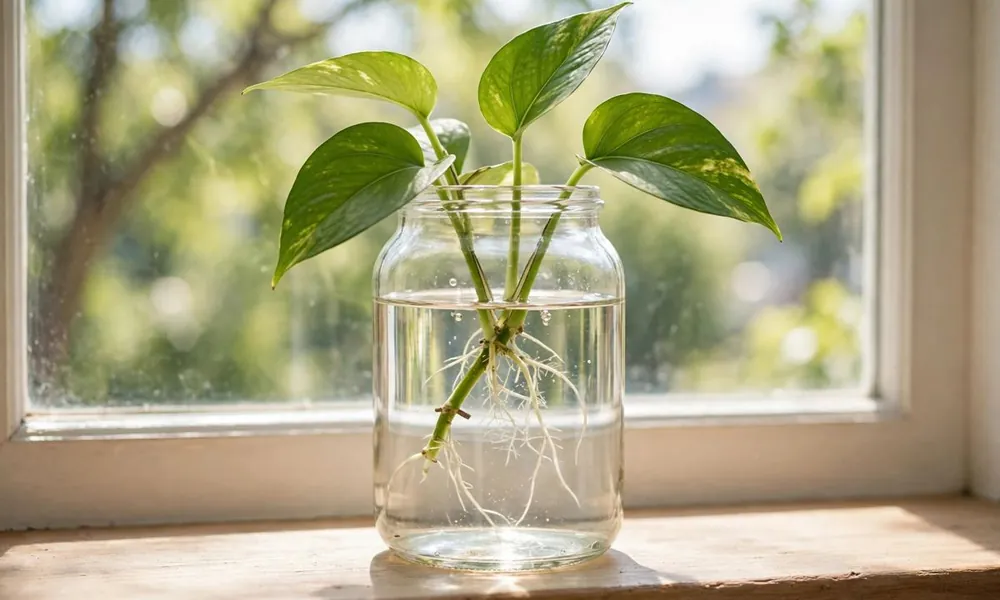
Start by choosing a healthy stem with at least two or three leaves. Cut just below a node, the small bump on the stem where a leaf joins it and where roots will emerge. Remove the lowest leaf so that no leaf sits in water or under soil.
Water propagation is the simplest method. Place the cutting in a jar of clean water so the node is submerged, in bright, indirect light, and change the water weekly. Roots usually appear within two to three weeks, and once they are a few centimetres long, the cutting can be potted into compost.
Soil propagation skips the water stage. Push the node into moist compost and keep it lightly damp; new leaf growth is the sign that roots have formed. Both methods work well, so choose whichever you enjoy more.
Training, pruning and shaping
Left alone, a pothos will trail downwards, which suits a hanging basket or a high shelf. Given a moss pole, a trellis or a wall hook, it will climb instead, and climbing stems often produce larger leaves. Either habit looks good; the choice is yours.
Pruning keeps a pothos full rather than straggly. Cut back long, bare stems in spring, just above a leaf node, and the plant will usually branch from the node below the cut. The pieces you remove are cuttings, so nothing need go to waste. Rotate the pot every few weeks so all sides receive light.
Common pothos problems
Most pothos problems are easy to read once you know the signs. Yellow leaves usually point to watering, brown tips to dry air or overfeeding, and pale leaves to too much sun or too little light.
| Symptom | Likely cause | What to do |
|---|---|---|
| Yellow lower leaves | Watering too often | Let soil dry; check drainage |
| Brown, crisp leaf tips | Dry air or too much fertiliser | Raise humidity; feed less often |
| Pale or scorched patches | Direct sun | Move out of harsh sunlight |
| Variegation fading to green | Too little light | Move to brighter, indirect light |
| Long bare stems | Low light or age | Prune back; give more light |
| Drooping, soft leaves | Very dry soil or root rot | Check soil; water if dry, repot if roots are mushy |
| Small black spots | Fungal leaf spot | Remove affected leaves; avoid wetting foliage |
Pothos care checklist
Use this checklist through the year to keep your pothos in good shape.
- Check the soil with a finger before watering; water only when the top few centimetres are dry.
- Empty the saucer after watering so the pot never stands in water.
- Give bright, indirect light, and keep variegated varieties out of dim corners.
- Wipe the leaves every month or two so they can absorb light properly.
- Rotate the pot a quarter turn every few weeks for even growth.
- Feed lightly once a month in spring and summer, and not at all in winter.
- Prune leggy stems in spring and use the cuttings to grow new plants.
- Check the undersides of leaves for pests whenever you water.
- Repot in spring when roots fill the pot, moving up only one pot size.
- Keep the plant out of reach of pets and small children.
Pothos and pet safety
Pothos is toxic to pets if eaten. The leaves and stems contain insoluble calcium oxalate crystals, which irritate the mouth and throat when chewed. A pet that takes a bite may drool or paw at its mouth, and should be kept away from the plant.
The practical answer is placement. Hang pothos high, set it on a tall shelf a cat cannot easily reach, or grow it in a room your pets do not use. Trailing stems tempt curious animals, so train vines up a pole or pin them out of reach. If you think a pet has eaten part of the plant, contact your vet. The guide to the best food for dogs is a useful reminder that not everything natural is safe for pets.
Frequently asked questions
How often should I water a pothos plant?
Water when the top few centimetres of soil feel dry, roughly weekly in summer and every two to three weeks in winter. Always check the soil first, and empty the saucer afterwards.
Why are my pothos leaves turning yellow?
Yellow leaves most often mean the soil has stayed too wet. Let the compost dry out more between waterings, check that the pot drains freely, and remove the yellow leaves.
Can pothos grow in low light?
It can survive in low light, but it will grow slowly and may lose variegation. Plain green varieties cope best. For fuller growth and brighter markings, move the plant to bright, indirect light.
How do I make my pothos fuller?
Prune the longest stems back to a leaf node in spring, and plant the cuttings back into the same pot. More stems in one pot, plus good light, gives a fuller plant far faster than a single long vine.
Is pothos safe for cats and dogs?
No. Pothos is toxic to pets if eaten, causing irritation to the mouth and throat. Keep it out of reach, and contact your vet if you think a pet has chewed the leaves.
Can I grow pothos in water permanently?
You can keep a cutting in water for months. Change the water regularly, add a very weak liquid feed occasionally, and be aware that growth is usually slower and leaves smaller than in soil.
Why pothos earns its place
Pothos has earned its reputation by thriving in real homes rather than perfect conditions. It grows fast enough to be rewarding, forgives the occasional forgotten watering, and a single plant can trail from a shelf, climb a pole or fill a corner.
The plant’s needs are simple: bright, indirect light, watering only when the soil has dried, a pot that drains, and a spot safely out of a pet’s reach. For more ideas, see the guide to how to grow lettuce indoors and out.