A good wool scarf is the hardest-working piece in a winter wardrobe. It keeps you warm on a cold platform, softens a structured coat, adds colour to a grey day, and folds small enough to disappear into a tote. The problem is not finding a wool scarf. It is finding one that is actually warm, that does not itch, that holds its shape after a season of wear, and that suits the way you dress rather than fighting it.
That is why this guide is organised by how a scarf is made and how it will be worn, not just by price or label. A chunky cable-knit scarf is a different tool from a fine woven lambswool stole, and a lightweight merino scarf serves a different purpose from a thick brushed-wool blanket scarf. Fibre, weave, weight and finish all change how warm a scarf feels, how it drapes, and how long it lasts.
Below are nine wool scarves worth considering in 2027, from a classic lambswool woven scarf to a soft, oversized blanket style, a fine merino layer, and a practical everyday knit. Each one is described by what it is good at, what to watch for, and who it suits best, so you can choose with your wardrobe in mind, not just a bestseller list.
Key takeaways
- Wool warms because its fibres trap air, and the best scarves balance warmth with softness, so check the fibre and the weave, not just the thickness.
- Lambswool and merino are the softest everyday choices, while pure new wool and blends are warmer and tougher but can feel scratchier against bare skin.
- A scarf you wear every day should be easy to care for, so check the washing instructions before you buy, not after the first spill.
- Length matters more than most people expect: a scarf that is too short cannot be looped properly, and one that is too long overwhelms a petite frame.
- No wool scarf is fully moth-proof or pill-free, and a very cheap scarf in a loose knit will usually lose its shape within one winter.
What a wool scarf actually does for an outfit
A wool scarf does three jobs at once. It keeps you warm, it finishes an outfit, and it protects the rest of your clothes. Warmth comes first. Wool fibres are naturally crimped, which traps still air between them, and still air is what insulates. That is why a loosely woven wool scarf can feel warmer than a flat, dense one of the same weight, and why a scarf that feels light can still be genuinely warm on a cold day.
The second job is visual. A scarf sits close to the face, so its colour and texture change how an outfit reads. A soft neutral scarf makes a dark coat feel calmer and more considered. A deep green, rust or burgundy scarf adds colour without the commitment of a coloured coat.
The third job is practical. A scarf protects a coat collar from makeup and skin oils, and it can be used as a light wrap indoors when a room is draughty. The best scarves are the ones you reach for without thinking, because they work with everything you own. That is the real test of a wool scarf: not how it looks on a hanger, but how often it leaves the drawer.
How we chose these scarves and what to look for
Look first at the fibre. Lambswool comes from a sheep’s first shearing and is fine, soft and light, which makes it a good everyday choice. Merino is finer still, with a smooth hand that rarely itches, and it regulates temperature well, so it suits people who run warm as well as people who feel the cold. Pure new wool is coarser and tougher, warmer for its weight, and better for a hard-wearing outdoor scarf, but it can feel scratchy against bare skin.
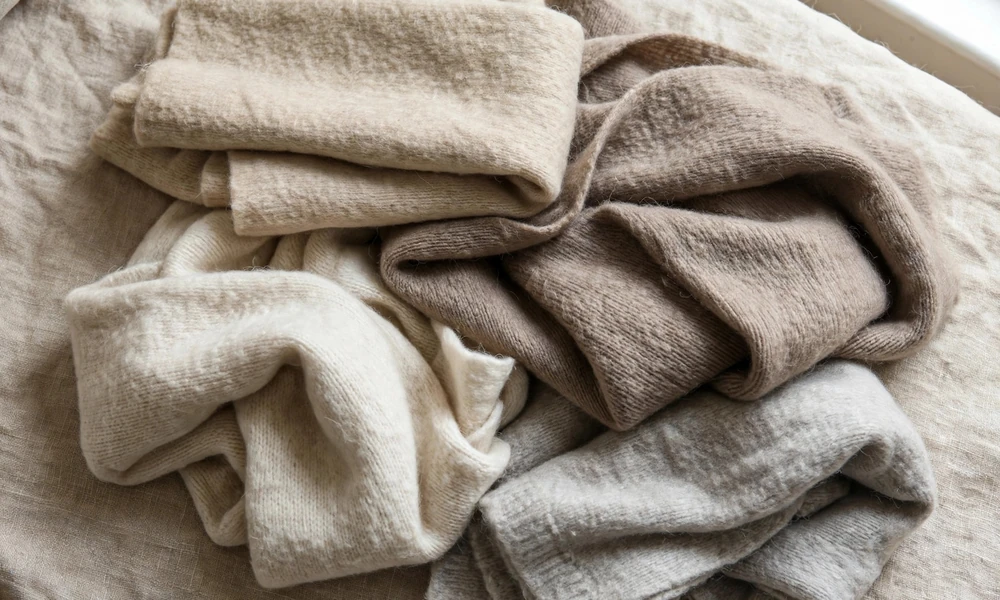
Look next at the weave and the finish. A woven scarf holds its shape and drapes cleanly, which suits a tailored coat. A knitted scarf is softer and stretchier, which suits a relaxed outfit, but a loose knit will stretch out of shape if it is pulled or hung by one end. A brushed finish feels softer and warmer, because the raised fibres trap more air, but it can also shed a little at first. Fringing should be even and secure, not already fraying, and the edges should lie flat rather than curling. Our guide to the best winter scarves for women covers the wider winter picture, including cashmere and blended styles, if you want to compare wool with the alternatives before you decide.
Finally, look at the size and the care label. A scarf around 180 to 200 centimetres long, and 30 to 40 centimetres wide, is the most versatile for most women, long enough to loop twice, wide enough to fold into a shawl, but not so wide that it overwhelms a coat. Shorter scarves suit petite frames and neat, single-loop styling. Check whether the scarf is hand-wash only or machine-washable on a wool cycle, because a scarf you cannot clean easily is a scarf you will wear less often.
The 9 best wool scarves for women in 2027
Johnstons of Elgin Lambswool Woven Scarf
What we like: A classic Scottish woven scarf in soft lambswool, with a clean drape, even fringing, and a generous length that loops twice comfortably. What to consider: A plain weave, so it is less chunky than a knit, and it needs hand washing. Best For: Everyday wear with a tailored coat. Fabric: 100% lambswool. Price Range: £85–£120. Standout Feature: The smooth, even weave that never looks bulky under a coat collar.
Acne Studios Canada Scarf
What we like: A wide, soft, fringed scarf in a brushed wool blend, famous for its generous size and the way it drapes like a light shawl. What to consider: It is large, so it can overwhelm a petite frame, and the pale colours mark easily. Best For: A relaxed, oversized look with a long coat. Fabric: Wool and mohair blend. Price Range: £160–£200. Standout Feature: The extra width, which lets it double as a wrap on cold days.
Burberry Check Wool Scarf
What we like: The familiar check in pure lambswool, woven in Scotland, with a neat size that works looped or draped, and a pattern that reads as classic rather than loud. What to consider: Premium price, and the check is recognisable, which not everyone wants. Best For: A polished finish to a camel, navy or black coat. Fabric: 100% lambswool. Price Range: £300–£380. Standout Feature: The check itself, which adds pattern without needing a second accessory.
COS Oversized Wool Scarf
What we like: A clean, minimal, oversized scarf in a soft wool blend, in muted colours that sit well with a neutral wardrobe, at a fair price for the size. What to consider: The minimal design means no pattern to hide wear, so choose a darker colour for daily use. Best For: Minimal outfits and long, straight coats. Fabric: Wool blend. Price Range: £45–£70. Standout Feature: The generous length, which allows a double loop with ends still to spare.
Arket Merino Wool Scarf
What we like: A fine, smooth merino scarf that is light, warm and almost never itchy, in a compact size that packs flat into a bag. What to consider: It is thinner than a chunky knit, so it suits milder cold rather than deep winter. Best For: Commuting, travel, and layering under a coat. Fabric: 100% merino wool. Price Range: £35–£55. Standout Feature: The fine, smooth hand that sits comfortably against bare skin.
Toast Brushed Wool Scarf
What we like: A soft, brushed wool scarf in natural, undyed tones, with a relaxed, slightly rustic texture and a generous, easy drape. What to consider: The brushed surface can shed a little at first, and the colours are deliberately muted. Best For: A soft, natural look with knitwear and denim. Fabric: 100% brushed lambswool. Price Range: £75–£110. Standout Feature: The brushed, almost fleecy surface that feels warmer than its weight suggests.
Uniqlo Premium Lambswool Scarf
What we like: A straightforward, well-priced lambswool scarf in a useful range of colours, with a neat size and a soft finish for the price. What to consider: The weave is finer and lighter than premium woven scarves, so it is less warm in deep cold. Best For: A first good wool scarf, or a spare to keep at work. Fabric: 100% lambswool. Price Range: £20–£30. Standout Feature: The price, which makes a real lambswool scarf accessible to almost any budget.
& Other Stories Chunky Cable-Knit Scarf
What we like: A thick, cosy cable-knit scarf in a soft wool blend, with a plush texture that looks deliberately wintry and feels immediately warm. What to consider: It is bulky, so it suits a roomy coat rather than a fitted one, and it needs gentle washing. Best For: Cold weekends, walks, and casual outfits. Fabric: Wool and acrylic blend. Price Range: £35–£55. Standout Feature: The deep cable pattern, which adds texture even to a plain outfit.
Mango Wool-Blend Fringed Scarf
What we like: A long, fringed scarf in a soft wool blend, in seasonal colours that follow the year’s palette, at a price that makes trying a new colour easy. What to consider: The blend means it can pill with heavy wear, so keep a fabric comb handy. Best For: Adding a seasonal colour to a neutral coat. Fabric: Wool blend with acrylic. Price Range: £25–£40. Standout Feature: The long fringe, which gives movement and a relaxed finish.
Which wool scarf is right for you
Start with how cold you actually get. If you walk to work in deep winter, choose a thick woven or chunky knit scarf, or a brushed lambswool style, and look for a length that loops twice. If you mostly move between car, office and home, a fine merino or a neat lambswool scarf will be warm enough and far easier to wear indoors. If you run warm, merino is the safest fibre, because it regulates temperature better than heavier wools.
Then think about your coats. A fitted coat needs a scarf that lies flat, so choose a fine woven or merino style and loop it once. A roomy, oversized coat can take a chunky knit or a wide blanket scarf without looking bulky. If your coats are mostly dark, a scarf is your easiest way to add colour, so choose a shade that flatters your skin rather than one that simply matches the coat. Our guide on how to style a wool scarf shows nine ways to wear one, from the classic loop to the Parisian knot, which is worth reading before you decide on length.
Finally, be honest about care. If you will not hand-wash, choose a machine-washable wool or a sturdy blend, and accept a little more pilling in exchange for convenience. If you are happy to hand-wash, a pure lambswool or merino scarf will reward you with a softer hand and a longer life. The right scarf is the one you will actually wear, wash, and reach for again.
The caveats that matter
Wool is a natural fibre, and it behaves like one. It pills where it rubs against a coat strap or a bag, it can felt if it is washed in hot water or agitated, and it attracts moths if it is stored dirty in a dark drawer. None of this means wool is fragile. It means it needs the small amount of care that any natural fibre deserves: a cool wash, a flat dry, and clean storage.
| Detail | What is known |
|---|---|
| Warmest everyday fibre | Lambswool and pure new wool, with a brushed finish for extra warmth |
| Softest against skin | Merino, then lambswool; coarse pure wool can itch on bare skin |
| Most versatile length | 180 to 200 centimetres long, 30 to 40 centimetres wide |
| Best for deep cold | Thick woven, brushed, or chunky cable-knit scarves |
| Best for travel and commuting | Fine merino, which packs flat and rarely itches |
| Main causes of pilling | Friction from bag straps and coat collars, and loose, low-twist yarns |
| How to wash wool | Cool hand wash or a wool cycle, reshape and dry flat, never tumble-dry |
| What wool does not do | It does not stay pill-free forever, and it is not moth-proof on its own |
If your skin is very sensitive, test a scarf against your neck before you buy, or choose merino, which is the least likely wool to irritate. If you are allergic to lanolin, wool may not suit you at all, and a plant-fibre or recycled-fibre scarf is a better choice. That is not a failure of wool, it is a reminder that the best fibre is the one your skin tolerates.
Checklist: choosing a wool scarf honestly
Use these checks before you buy, and again after a month of wear.
- Check the fibre on the label: lambswool or merino for softness, pure new wool for warmth, and a blend only if you understand what the blend adds.
- Check the length: hold it up and loop it once, then twice, to see whether it is long enough for the styles you actually wear.
- Check the edges and fringe: they should be even, secure, and lie flat, not curling or already fraying.
- Check the care label: hand-wash only means a real commitment, so be sure you will follow through.
- Check the colour against your face: hold it under your chin in daylight, not under shop lighting, and look for the shade that brightens your skin.
- Check for pilling after a month: a little is normal, but heavy pilling in the first weeks usually means a loose, low-quality yarn, as our guide to why wool keeps you warm explains when it covers fibre quality and weave.
Frequently asked questions
Are wool scarves itchy?
Some are, and some are not. Fine fibres such as merino and lambswool rarely itch, because their fibres are thin and smooth. Coarse pure wool can feel scratchy, especially against bare skin. If you are sensitive, choose merino, or wear the scarf over a high collar rather than directly on your neck.
How do I wash a wool scarf?
Hand-wash in cool water with a gentle wool detergent, press out the water without wringing, reshape it, and dry it flat away from direct heat. Some scarves are machine-washable on a wool cycle, but never use hot water or a tumble dryer, because both can felt wool permanently.
How do I stop a wool scarf from pilling?
You cannot stop it completely, but you can slow it down. Reduce friction from bag straps, avoid wearing the same scarf every day, and remove pills with a fabric comb or a gentle de-piller rather than pulling them off, which weakens the yarn.
What length of wool scarf should I buy?
For most women, 180 to 200 centimetres is the most versatile length, long enough to loop twice with ends to spare. Petite frames often suit 160 to 180 centimetres better, while a blanket scarf can be 200 centimetres or more.
Is lambswool warmer than merino?
Not necessarily. Lambswool is usually a little thicker and cosier, while merino is finer and regulates temperature better, so it feels warm without overheating. For deep cold, a thick lambswool scarf is warmer. For all-day wear, merino is often more comfortable.
How should I store a wool scarf in summer?
Wash it first, dry it fully, and store it clean in a breathable cotton bag or a drawer with cedar or lavender. Never store a dirty wool scarf in a dark, airtight space, because that is what attracts moths.
The bottom line
The best wool scarf for women in 2027 is not the most expensive or the most fashionable. It is the one in the right fibre, at the right length, in a colour you reach for without thinking, and with a care label you will actually follow. For most people, a lambswool woven scarf or a fine merino scarf covers the widest range of outfits and weather, and either one will last for years with basic care.
Choose one good scarf, wear it for a month, and notice how often it leaves the drawer. If it becomes the piece you grab on the way out, you chose well. If it stays folded, the fibre, the length or the colour was wrong, and the next one will be easier to choose because you will know exactly why.