



Velvet and leather are two of the most confident fabrics a coat can be made from, and they could hardly be more different. Velvet is soft, plush and light-catching, the fabric you reach for when you want to look dressed up without trying too hard. Leather is tough, smooth and weather-beating, the fabric you reach for when you want a coat that works as hard as you do. Both can last for years. Both can look expensive. And both can disappoint if you buy the wrong one for your life.
The mistake is to judge them on looks alone. A velvet coat that is beautiful on a hanger can be a poor choice for a rainy commute, and a stiff leather coat can be a poor choice for a long evening indoors. The fabric decides warmth, care, ageing and how often you will wear it, which matters more than looks once the newness has worn off.
Below are nine comparisons that matter in 2027, from warmth and softness to care, cost and ageing. Each one is judged on its own terms, so you can decide which fabric fits your climate, routine and wardrobe, not just which one photographs better.
Key takeaways
- Leather wins on weather resistance and durability, while velvet wins on softness, drape and evening polish.
- Velvet is warmer than it looks but hates rain, while leather handles rain well and improves with age.
- A good velvet coat needs dry cleaning and gentle handling, while a good leather coat needs occasional conditioning and little else.
- Price per wear is usually lower for leather, because it lasts longer and is worn in more kinds of weather.
- Neither fabric is a financial investment, and a cheap coat in either fabric will look cheap within a season.
What velvet and leather coats actually are
A velvet coat is made from a woven fabric with a short, dense pile, usually cotton, silk or a blend, cut so the fibres stand upright and catch the light. That pile gives velvet its depth of colour and soft hand, and it is also what makes it vulnerable: it crushes under pressure, marks where it is rubbed, and shows water spots. A well-made velvet coat has a sturdy lining and a structured shoulder, because the fabric itself has little body of its own.
A leather coat is made from animal hide, usually cowhide, lambskin or goatskin, tanned and finished for clothing. Cowhide is the toughest and heaviest, lambskin the softest and lightest, goatskin a middle ground with a fine grain. Unlike velvet, leather has a natural resistance to wind and rain, and it develops a patina over time rather than wearing thin in the same way. The finish matters: smooth aniline looks sleek but marks easily, corrected grain wears harder but has less character.
The two fabrics also sit differently on the body. Velvet drapes and falls, which suits longer, looser shapes, while leather holds its shape, which suits structured, tailored cuts. Velvet coats are often long, flowing overcoats, leather coats often trench styles or sharp single-breasted shapes. Neither is better in the abstract. The question is which shape and feel you will reach for on a cold Tuesday morning.
How we chose these comparisons and what to look for
Look first at the fabric itself, not the label. For velvet, check that the pile is even and dense, with no bare patches, and that the colour looks rich from every angle. For leather, check that the grain is consistent, the hide feels supple rather than stiff or plasticky, and the seams are straight. A coat that fails these basic checks will not improve with wear.
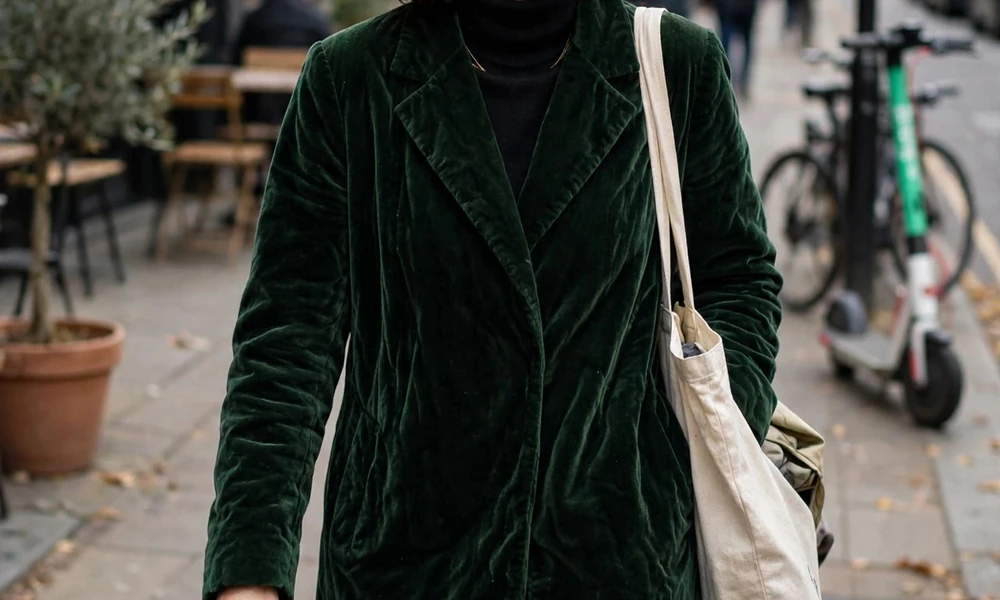
Look next at the construction. A good coat in either fabric has a lining that lets it slide on easily, a hem that hangs straight, and buttons or a zip that close without pulling. Velvet needs a lining that does not cling, because the pile can catch on rough fabrics. Leather needs a lining that breathes, because the hide does not. Our guide to velvet versus leather dresses makes the same point for a lighter garment, and it holds even more strongly for a coat, which has to work harder in worse weather.
Finally, look at the fit in movement, not just standing still. Sit down, raise your arms, walk in it. Velvet should move with you and fall back into place, leather should feel firm at first and soften with wear. A coat that restricts you on day one will not become comfortable, however good the fabric is.
The 9 comparisons that matter in 2027
Warmth and insulation
What we like: Leather blocks wind almost completely, which makes it feel warmer in a cold wind than its weight suggests. Velvet traps a layer of warm air in its pile, which makes it surprisingly warm in still, cold air. What to consider: Neither fabric is insulated on its own, so both depend on the lining and what you wear underneath. Best for: Leather for windy days, velvet for cold, dry evenings. Fabric: Cowhide or lambskin versus cotton or silk velvet. Price range: £150 to £800 for a good coat in either fabric. Standout feature: Leather’s windproofing is the more practical warmth in everyday winter weather.
Softness against the skin
What we like: Velvet is the softest of the two by a wide margin, smooth and plush wherever it touches the neck or wrists. Lambskin leather is soft too, but cowhide can feel firm and cool at first. What to consider: Velvet’s pile can irritate very sensitive skin at the collar, and leather’s seams can feel stiff until they soften. Best for: Velvet for comfort against bare skin, lambskin leather for a softer leather feel. Fabric: Silk-blend velvet versus lambskin. Price range: £200 to £600 for a soft, well-lined coat. Standout feature: Velvet’s pile is the most immediately comfortable of any coat fabric.
Drape and movement
What we like: Velvet falls in soft, fluid folds that move as you walk, which suits long coats and evening wear. Leather holds a clean, structured line that looks sharp and intentional. What to consider: Velvet can look limp in a badly cut coat, and leather can look boxy if the shoulders are too wide. Best for: Velvet for flowing, elegant shapes, leather for sharp, tailored shapes. Fabric: Silk velvet versus structured cowhide. Price range: £180 to £700. Standout feature: Velvet’s drape is what makes it look expensive in motion.
How each fabric handles light
What we like: Velvet changes colour as you move, shifting from deep to bright as the pile catches the light, which gives it a richness no flat fabric can match. Leather has a quieter glow, a smooth sheen that looks polished without being showy. What to consider: Velvet’s colour shift can look uneven in harsh light, and pale leather can show marks and scuffs easily. Best for: Velvet for evening and low light, leather for daylight and everyday wear. Fabric: Cotton velvet versus smooth aniline leather. Price range: £150 to £800. Standout feature: Velvet’s light play is the reason it photographs so well.
Durability and ageing
What we like: Leather is the tougher fabric by a long way, resisting scuffs, lasting for decades, and looking better as it develops a patina. Velvet is less hardy but holds its colour well if it is kept dry and stored properly. What to consider: Velvet’s pile crushes permanently where it is rubbed, especially at the elbows and seat, while leather can crack if it is never conditioned. Best for: Leather for daily wear and long life, velvet for occasional wear and special occasions. Fabric: Full-grain cowhide versus cotton velvet. Price range: £250 to £900 for a coat built to last. Standout feature: Leather’s patina is the one ageing process in fashion that genuinely improves a garment.
Ageing is where leather earns its price. A good leather coat at ten years old often looks better than it did new, while a velvet coat at ten years old usually shows its age in crushed pile and faded patches. Our guide to why leather ages beautifully explains the patina in detail, and it is the strongest argument for leather as a long-term buy.
Care and cleaning
What we like: Leather needs little: a wipe down, occasional conditioning, and a dry place to hang. Velvet needs more: dry cleaning, careful brushing, and protection from crushing. What to consider: Leather can be ruined by the wrong conditioner or by getting soaked and dried badly, while velvet can be ruined by a single rainstorm. Best for: Leather for low-maintenance owners, velvet for people happy to dry clean. Fabric: Corrected-grain leather versus silk-blend velvet. Price range: £20 a year in leather care versus £60 or more in dry cleaning for velvet. Standout feature: Leather’s care routine is a ten-minute job twice a year.
Water and weather resistance
What we like: Leather sheds rain naturally and keeps its shape when wet, which makes it a real winter coat rather than a fair-weather one. Velvet absorbs water into its pile, marks easily, and takes a long time to dry. What to consider: Untreated leather can still stain in heavy rain, and velvet can be protected with a spray, though the protection is partial and needs reapplying. Best for: Leather for rain, snow and slush, velvet for dry days only. Fabric: Treated cowhide versus cotton velvet. Price range: £200 to £700. Standout feature: Leather is the only one of the two you can wear without checking the forecast.
Price and value
What we like: Both fabrics are available at a wide range of prices, and a good coat in either one can be found for £200 to £400. Leather holds its value better second-hand, and is worn more often, which brings the cost per wear down. What to consider: Cheap velvet looks cheap fast, with a thin pile and a dull finish, while cheap leather is often bonded or heavily corrected, which cracks within a season. Best for: Leather for value over years, velvet for impact per pound in the short term. Fabric: Full-grain leather versus dense cotton velvet. Price range: £150 to £900. Standout feature: Leather’s resale value and cost per wear are the best in outerwear.
Versatility and styling
What we like: Leather works with almost everything, from jeans and boots to a dress and heels, and suits day and evening equally. Velvet is more dramatic, best with simple clothes underneath so the fabric does the talking. What to consider: Velvet can overwhelm a casual outfit, and leather can feel too hard-edged for a soft, formal look. Best for: Leather for everyday versatility, velvet for making an impression. Fabric: Smooth leather versus deep-pile velvet. Price range: £180 to £800. Standout feature: A leather coat is the easiest coat in the wardrobe to style without thinking.
Versatility is leather’s second big win after durability. It goes with everything you already own. Velvet asks for a simpler outfit underneath, which is not a flaw, only a limit. If you want one coat that does everything, it is leather. If you want a coat that makes an evening, it is velvet.
Which coat is right for you
If your winter is wet and windy, you commute on foot, and you want one coat to wear most days, buy leather. It will handle the weather, last for years, and go with everything. Choose lambskin for softness and lightness, cowhide for toughness, and a classic cut that will not date. A well-chosen leather coat is the most practical luxury in outerwear.
If your winter is mostly dry, you drive or take short trips outdoors, and you want a coat for evenings, events and days when you want to look dressed up, buy velvet. Choose a deep, rich colour, a dense pile, and a long, flowing cut, and keep it dry. Our roundup of the best winter coats for women is a useful place to compare shapes, because the cut matters as much as the fabric, and a good shape flatters in either material.
The caveats that matter
Both fabrics have limits that are easy to ignore in the shop and hard to ignore at home. Velvet’s pile crushes where you sit, marks where it gets wet, and needs dry cleaning, so it is a coat for dry days and special occasions, not every day. Leather’s limits are different: it is heavy, it needs conditioning, and a poor-quality hide will crack and peel, which looks worse than a worn-out velvet coat.
| Detail | What is known |
|---|---|
| Warmth | Leather wins in wind, velvet is warm in still, dry cold |
| Softness | Velvet is softer; lambskin is the softest leather |
| Durability | Leather lasts decades and improves; velvet crushes with wear |
| Weather | Leather handles rain; velvet should stay dry |
| Care | Leather needs occasional conditioning; velvet needs dry cleaning |
| Price and value | Leather has lower cost per wear; velvet gives more impact per pound |
| Who should avoid velvet | Anyone who walks in rain often or dislikes dry cleaning |
| What neither does | Neither is a financial investment, and cheap versions of both fail fast |
One more honest note: neither fabric is free of trade-offs. Leather is an animal product with a long life, velvet is usually plant or synthetic based but its production and dry cleaning carry their own footprint. Buy the coat you will actually wear for years, whichever fabric it is, because the most wasteful coat is the one that stays in the wardrobe.
Checklist: choosing between velvet and leather honestly
Use these checks before you buy, and again after a month of wearing the coat.
- Check your weather: if it rains often where you live, leather is the practical choice.
- Check the fabric: dense, even pile for velvet, supple grain and straight seams for leather.
- Check the fit in movement: sit, walk and raise your arms before you buy.
- Check the care: are you happy to dry clean velvet, or condition leather twice a year?
- Check the cost per wear: divide the price by the times you will realistically wear it.
- Check the rest of your wardrobe: leather goes with everything, velvet needs a simpler outfit underneath.
Frequently asked questions
Which is warmer, a velvet coat or a leather coat?
It depends on the weather. Leather is warmer in wind, because it blocks the wind almost completely. Velvet is warm in still, dry cold, because its pile traps warm air. In most real winters, leather feels warmer.
Can I wear a velvet coat in the rain?
Not really. Velvet absorbs water into its pile, marks easily, and takes a long time to dry. A light shower may leave only a faint mark, but steady rain will spoil the pile, so save velvet for dry days.
Does leather really last longer than velvet?
Yes, by a long way. A good leather coat can last decades and often looks better with age as it develops a patina. A velvet coat is shorter-lived, because the pile crushes where it is rubbed, especially at the elbows and seat.
Is a velvet coat hard to look after?
It needs more care than leather. Dry cleaning is the safe option, the pile should be brushed gently, and the coat should be stored on a wide hanger so it does not crush. It is manageable, but it is not a low-maintenance coat.
Which fabric is better value for money?
Leather, in most cases, because it is worn more often, lasts longer, and holds its value second-hand. Velvet gives more visual impact per pound in the short term, but its cost per wear is usually higher because it is worn less often.
Can I own both a velvet and a leather coat?
Yes, and for many people that is the best answer. Leather covers the everyday and the bad weather, velvet covers evenings and occasions, and together they cover the whole winter.
The bottom line
Velvet and leather coats are not rivals so much as answers to different questions. Velvet is how to look striking, soft and dressed up on a dry evening. Leather is how to stay warm, dry and sharp through a real winter, day after day, year after year. Both are worth owning, but only one is the right first coat for most people, and that is leather.
Buy the leather coat if you want one coat to do everything. Buy the velvet coat if you already have a practical coat and want something beautiful for the occasions that matter. Whichever you choose, buy the best fabric you can afford, check the construction, and wear it often. A coat that lives in the wardrobe is a waste in any fabric.



