A bow tie is a small piece of fabric with an outsized effect: two loops and two ends, tied at the throat, that change a whole outfit in a way a long tie rarely does. The problem is not finding a bow tie. It is knowing which kind to buy, how it should sit, and when it is the right choice rather than a costume. A badly chosen bow tie looks borrowed; a well chosen one looks deliberate, even with a simple shirt.
That is why this guide starts with the basics and stays there. A bow tie is not just a formal accessory, and it is not just for weddings and black tie. It has a history, a shape, and a set of rules that are simpler than they look. Once you understand the knot, the fabric, and the fit, the rest is a matter of taste.
Below are nine facts about bow ties worth knowing in 2027, from the shape that defines them to the price you should expect to pay. Each one covers what is good about it, what to watch for, and who it suits best.
Key takeaways
- A bow tie is two loops and two ends tied at the throat, and its shape, size, and fabric decide whether it looks sharp or sloppy.
- Self-tie bow ties look better and feel more personal than pre-tied ones, but they take practice, and a pre-tied bow tie is fair for a first event.
- Silk is the classic bow tie material, while cotton, linen, and wool suit daytime and warmer or colder seasons.
- A bow tie should sit neatly between the collar points, with loops roughly the width of your face, and never wider than your collar.
- No bow tie fixes a badly fitting shirt or a clashing outfit, and a cheap, shiny bow tie is worse than no bow tie at all.
What a bow tie actually is
A bow tie is a short tie that fastens around the neck, forming a bow at the front of the collar. Unlike a long necktie, it has no tail hanging down the chest. It is made from a single strip of fabric, usually silk, tied in a knot similar to the one used for shoelaces, then shaped into two loops and two flat ends. The result sits flat against the collar and frames the face, drawing the eye upward in a way a long tie does not.
The bow tie seems formal, but its history is more practical than that. It grew out of the cravats worn by Croatian soldiers in the seventeenth century, and became a standard part of evening dress in the nineteenth century, worn with a tailcoat and a wing collar. By the twentieth century it was also a daytime choice, worn by teachers, doctors, and architects who wanted a neat, distinctive look without the fuss of a long tie.
Today the bow tie sits in an interesting place: formal enough for black tie, relaxed enough for a summer wedding, and distinctive enough to lift a simple outfit. It is also a little divisive, which is why fit, fabric, and occasion matter. A bow tie that suits the moment looks effortless. One that does not looks like a joke, even when it is expensive.
How we chose these facts and what to look for
Look first at the shape. A classic bow tie has a butterfly shape, with loops slightly wider at the ends than at the middle. A batwing shape is straighter and narrower, suiting a slimmer face and a more modern look. A diamond-point shape has pointed ends and feels a little more playful. The shape is not a detail: it is the first thing people notice, and it sets the tone.
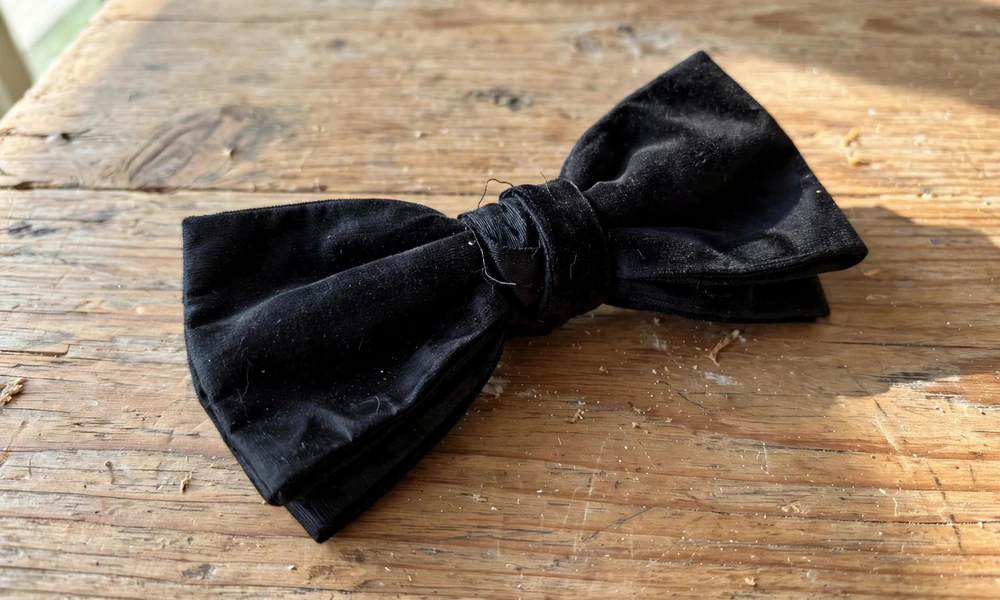
Look next at the fabric and the construction. Silk is the standard for formal bow ties: it holds a knot well and has a soft sheen that reads as smart rather than shiny. Cotton and linen are lighter and more casual, suiting daytime weddings and summer events, while wool is warmer and more textured, suiting autumn and winter. A well-made bow tie has a firm interlining, so it keeps its shape, and an adjustable neckband. A flimsy bow tie will sag and twist, and no careful tying will save it.
Finally, look at the occasion. A black silk bow tie with a dinner jacket is the classic black-tie choice. A patterned bow tie with a blazer is a daytime choice, best when the rest of the outfit is simple. A bow tie with a casual shirt and jeans can work, but only if the fabric is relaxed, like cotton or linen, and the shirt is neat. Our guide to how to wear a necktie covers the same question from the other side, since the choice between a long tie and a bow tie is often about the shape of the outfit.
The 9 facts about bow ties in 2027
The shape is the whole idea
What we like: The bow shape frames the face and adds balance to a collar, and a well-shaped bow tie makes even a plain shirt look finished. What to consider: A bow tie that is too large overwhelms a slim face, and one that is too small looks lost under a wide collar. Best for: Anyone who wants a distinctive, neat neckline. Cost: From around £25 for a good high-street bow tie to £150 or more for a handmade silk one. Time needed: Five minutes to tie, once you have practised.
A 19th-century staple that never really left
What we like: The bow tie has been worn for over two hundred years, so it carries a sense of history without feeling like a costume. What to consider: It can read as old-fashioned if the rest of the outfit is also traditional, so balance it with something modern. Best for: Formal events, weddings, and anyone who likes classic style. Cost: No extra cost, since the history is free. Time needed: None, beyond choosing well.
Self-tie is the classic, pre-tied is the shortcut
What we like: A self-tie bow tie has a slightly uneven, natural shape that looks alive, and it can be untied and retied to suit the collar. What to consider: It takes practice, and your first few attempts will look lopsided, so try it at home before an event. Best for: Formal occasions and anyone who enjoys the ritual. Cost: Self-tie and pre-tied bow ties cost about the same at most prices. Time needed: Ten to fifteen minutes of practice, then five minutes on the day.
Silk is the classic bow tie material
What we like: Silk holds a knot, keeps its shape, and has a soft sheen that reads as smart in evening light. What to consider: Silk stains easily and needs dry cleaning, and a very shiny silk can look cheap under bright light. Best for: Black tie, weddings, and evening events. Cost: From around £40 for a good silk bow tie to £200 or more for a handmade one. Time needed: None to choose, but allow time for dry cleaning after wear.
How a bow tie should fit
What we like: A well-fitting bow tie sits flat, stays in place, and lets the collar do its job, so the whole neckline looks tidy. What to consider: A neckband that is too tight will pull the collar closed, and one that is too loose will let the bow tie slide and twist. Best for: Every wearer, since fit is not optional. Cost: No extra cost, since most bow ties have an adjustable neckband. Time needed: Two minutes to measure your collar and set the band.
Bow ties and face shapes
What we like: The right bow tie shape can balance a long face or soften a wide one, and the effect is immediate. What to consider: A very wide bow tie on a narrow face looks out of proportion, and a very narrow one on a broad face looks lost. Best for: Anyone who wants the bow tie to flatter, not just decorate. Cost: No extra cost, since shape is a choice, not a price. Time needed: A few minutes trying shapes in a mirror.
How to wear a bow tie with modern clothes
What we like: A bow tie with a modern blazer or a smart shirt feels fresh, and it stops a classic outfit from looking like a period costume. What to consider: Pairing a bow tie with a very casual outfit, like a T-shirt, usually looks forced, so keep the rest of the outfit neat. Best for: Weddings, dinners, and smart daytime events. Cost: No extra cost, since the outfit is the point. Time needed: Ten minutes to try combinations at home.
How to store and care for a bow tie
What we like: A bow tie is small, easy to store, and lasts for years if it is kept flat and clean. What to consider: Silk creases if it is folded tightly, and a self-tie bow tie should be untied, not pulled apart, after wear. Best for: Anyone building a small, lasting collection. Cost: Dry cleaning from around £5 to £10 per bow tie. Time needed: Two minutes to untie and lay flat after an event.
What a bow tie costs in 2027
What we like: A good bow tie is one of the cheapest luxury accessories, and a single well-chosen one can serve for years. What to consider: Very cheap bow ties often use stiff, shiny fabric that looks poor in photographs, so spend a little more for silk. Best for: Anyone starting a collection, since one good bow tie beats five poor ones. Cost: Around £25 to £60 for a good high-street silk bow tie, £80 to £200 for a handmade or designer one. Time needed: An hour to shop and compare, if you want to choose well.
Which bow tie is right for you
Start with the occasion. For black tie, choose a black silk bow tie in a butterfly shape, self-tie if you can manage it, with a dinner jacket and a wing or spread collar. For a wedding, choose a colour or pattern that suits the season, silk for winter, linen or cotton for summer, with a plain shirt. For a daytime event, choose a patterned bow tie with a blazer, and let it be the one bold element in the outfit.
Then think about your face and your collar. A wider bow tie suits a longer face, a narrower one suits a broader face, and the loops should sit neatly between the collar points. If you are buying your first bow tie, choose a dark, plain silk one in a butterfly shape: it is the most versatile choice, and it works for almost every occasion. A power suit follows the same logic, with a simple, well-fitting outfit that lets one detail do the talking.
Finally, think about how much effort you want to put in. A self-tie bow tie is the classic choice and worth learning, but a pre-tied bow tie is a fair start, especially for a first event. Buy one good bow tie rather than three cheap ones, wear it a few times at home, and keep it clean and flat.
The caveats that matter
A bow tie is a small accessory, but it can go wrong. The most common mistake is wearing one that is too big or too shiny, which makes the whole outfit look like a costume. The second is wearing one to an occasion that does not suit it, like a very casual lunch, where it looks like you are trying too hard. The third is pairing it with a shirt that does not fit, because a bow tie draws the eye to the collar, and a bad collar becomes the first thing anyone sees.
| Detail | What is known |
|---|---|
| Classic material | Silk, matte for black tie, soft sheen for evening |
| Best shape for most faces | Butterfly, loops roughly the width of the face at the cheekbones |
| Self-tie or pre-tied | Self-tie looks more natural; pre-tied suits a first event |
| How it should fit | Neckband set to collar size, loops between the collar points |
| When to wear one | Black tie, weddings, dinners, and smart daytime events |
| When to avoid one | Very casual settings, or with a badly fitting shirt or collar |
| Care | Untie after wear, lay flat, dry clean silk, keep away from sunlight |
| What it does not do | It does not fix a poor outfit; a cheap shiny bow tie is worse than none |
If you have a skin condition around the neck, or you find collars irritating, a bow tie is not the best choice, since it sits close to the skin and adds pressure at the throat. If you are attending a formal event with a strict dress code, check whether a bow tie is expected or a long tie is the norm. And if you are buying your first bow tie, try it on with the shirt and jacket you plan to wear.
Checklist: buying and wearing a bow tie honestly
Use these checks before you buy, and again before you leave the house.
- Check the shape: butterfly for most faces, batwing for a slimmer look, loops roughly the width of your face.
- Check the fabric: silk for formal events, cotton or linen for daytime, wool for autumn and winter.
- Check the fit: set the neckband to your collar size, and make sure the loops sit between the collar points.
- Practise the knot: try a self-tie bow tie at home first, and keep a pre-tied one as a backup for your first event.
- Keep the rest simple: a plain shirt, a dark jacket, and one bold element, so the bow tie does not compete.
- Store it flat: untie it after wear, lay it flat, and dry clean silk rather than washing it.
Frequently asked questions
Is a bow tie formal or casual?
Both, depending on fabric and occasion. A black silk bow tie with a dinner jacket is formal. A cotton or linen bow tie with a blazer is a daytime, smart-casual choice.
Should I wear a self-tie or a pre-tied bow tie?
A self-tie bow tie looks more natural and is the classic choice, but it takes practice. A pre-tied bow tie is always neat and is a fair choice for a first event. If you plan to wear bow ties often, learn the knot at home.
How do I tie a bow tie?
Start with the bow tie around your neck, one end slightly longer. Cross the longer end over the shorter one, bring it up through the neck loop, form the shorter end into a bow shape, fold the longer end over it, and push it through the loop behind. Pull the loops to tighten, then adjust. It takes a few tries, and that is normal.
Can I wear a bow tie with a normal collar?
Yes. A spread collar works well, as long as the loops sit neatly between the collar points. A wing collar is the classic black-tie choice, but a standard collar is fine for most occasions.
What colour bow tie should I choose first?
Black silk is the most versatile first choice, because it works for black tie and most evening events. After that, a dark navy or burgundy bow tie is a good second choice, and a patterned one a good third. Our guide to luxury fashion brands is a useful place to look for makers who do these colours well.
Do bow ties suit everyone?
Most people can wear a bow tie, as long as the shape suits their face and the outfit suits the occasion. A wider butterfly shape suits a longer face, a narrower batwing suits a broader face. If you are unsure, try a few shapes in a mirror before you buy.
The bottom line
The best bow tie in 2027 is not the most expensive or the most elaborate. It is the one that fits your collar, suits your face, and matches the occasion. A black silk butterfly bow tie, self-tied, is the classic choice for formal events, and a patterned cotton or linen one suits a daytime wedding. Buy one good bow tie rather than three cheap ones, learn the knot at home, and keep the rest of the outfit simple.
Choose the shape, the fabric, and the occasion first, and let the price follow. A bow tie is worn close to the face, so it is noticed more than most accessories. Get those three choices right, and it will look deliberate, confident, and entirely your own.