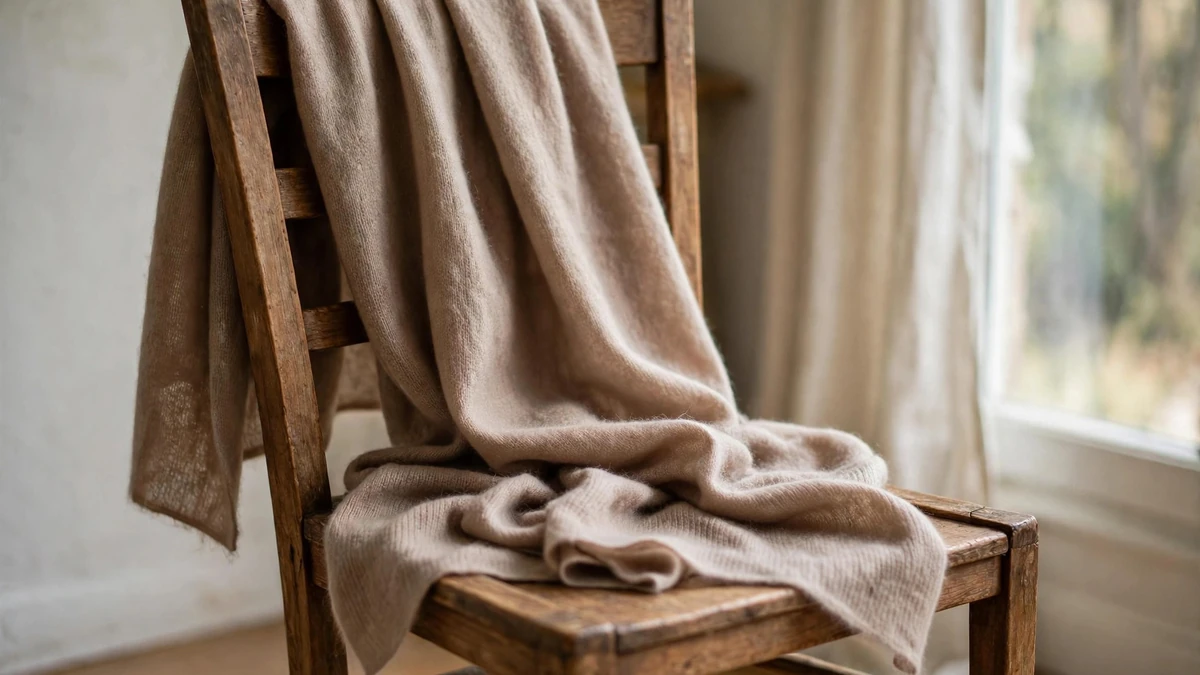

A cashmere scarf is one of those quiet luxuries that does not need to announce itself. It is softer than wool, lighter than it looks, and warmer than its thinness suggests. Draped over a coat or looped once around the neck, it changes how an outfit feels before it changes how it looks. That is why it has stayed in wardrobes for decades, while louder accessories come and go.
The problem is that the word cashmere is used very loosely. Scarves labelled cashmere can be pure, blended, or barely cashmere at all. Prices range from the cost of a lunch to the cost of a weekend away, and the difference is not always obvious from a photograph. A cheap scarf can look soft in a shop and feel scratchy by the second wear. A good one can look plain on a hanger and feel extraordinary against the skin.
This guide explains what a cashmere scarf actually is, how it is made, what the labels mean, and how to choose one worth its price in 2027. It covers the fibre, the grades, the weave, the care, and the small details that separate a scarf you will wear for ten winters from one you will give away by spring.
Key takeaways
- A cashmere scarf is made from the soft undercoat of cashmere goats, combed out in spring, and it is warmer, lighter and softer than sheep’s wool.
- Grade A fibre is the longest and finest, usually 14 to 15.5 microns thick and at least 34 millimetres long, and it pills less and lasts longer.
- Ply tells you how many yarns are twisted together, not how good the fibre is, so a two-ply scarf made from short fibre is still a poor scarf.
- Check the label for 100 percent cashmere, feel for softness without a slippery coating, and expect a real scarf to cost more than a blended one.
- No scarf stays perfect without care, and cashmere that is never washed, badly stored, or left for moths will lose its softness long before its time.
What a cashmere scarf actually is
Cashmere is the fine, soft undercoat of the cashmere goat, a hardy animal that lives in the cold, high regions of Mongolia, northern China, Tibet and parts of Iran and Afghanistan. Each spring, as the weather warms, the goat sheds this undercoat. It is combed out by hand, a slow process that yields only a small amount of fibre per animal, usually around 150 to 200 grams a year. That scarcity is the first reason a real cashmere scarf costs more than a wool one.
The fibre itself is what makes the difference. A cashmere fibre is finer than a human hair, usually between 14 and 19 microns thick, and it has a natural crimp that traps air. That trapped air is insulation, which is why cashmere feels warm without being heavy. It is also why a cashmere scarf can be thin enough to fold into a coat pocket and still keep your neck warm on a cold morning. Wool can do some of this, but it does it with thicker, coarser fibres that more skin finds itchy.
A cashmere scarf is that fibre spun into yarn and woven or knitted into a rectangular length of cloth, usually between 180 and 200 centimetres long and 30 to 70 centimetres wide, with finished edges or a light fringe. Some are plain, some are patterned, and some are dyed in deep colours that suit winter coats.
How we chose these facts and what to look for
Look first at the label, and read it properly. A scarf that says 100 percent cashmere should be exactly that. A scarf that says cashmere blend can contain as little as 5 percent cashmere, with the rest wool, viscose or acrylic, and the law in most countries allows that wording. If the label is vague, or if it lists cashmere after three other fibres, treat the scarf as a wool scarf with a cashmere price and walk away.
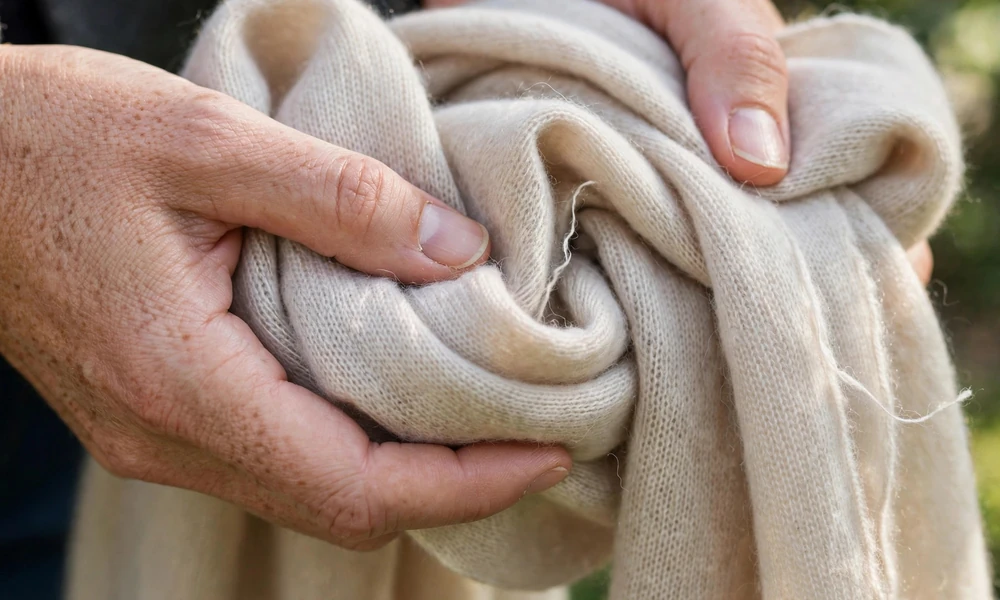
Look next at the hand feel. Real cashmere feels soft and slightly dry, not silky or slippery. A slippery surface often means the scarf has been treated with a softening finish that washes off, leaving a coarser fabric underneath. Rub the fabric gently between your fingers. It should feel fine and even, with no scratchiness and no hard lumps. Hold it up to the light. A loosely woven scarf will show gaps, while a well-made one looks even and holds its shape when you let it fall.
Finally, look at the finishing. The edges should be neat, the fringe even, and the weave tight enough that the scarf does not stretch out of shape when you pull it gently. A good maker finishes the edges properly because the edges are where a cheap scarf starts to unravel. Price is a useful guide, but it is not a guarantee. Our guide to the best cashmere sweaters makes the same point about knitwear, because the same fibre grades and the same labelling tricks apply to sweaters as to scarves.
The 9 things to know about a cashmere scarf in 2027
Cashmere comes from a goat, not a sheep
What we like: The story is simple and true, which makes it easy to check. A goat’s undercoat is finer and softer than sheep’s wool, and that is the whole reason cashmere feels different. What to consider: The word cashmere is sometimes used for fine wool, which is not the same thing at all. Best for: Anyone choosing their first real cashmere scarf. Cost: A genuine 100 percent cashmere scarf usually starts around £80 to £120. Time needed: Five minutes to read the label and feel the fabric.
The fibre is graded, and the grade matters
What we like: Grading gives you a real way to compare scarves, because the numbers are not marketing. Grade A fibre is the longest and finest. What to consider: Grades are not printed on most labels, so you have to judge by feel and by the reputation of the maker. Best for: Buyers who want a scarf that will last more than one winter. Cost: Grade A scarves cost more, often £150 and above. Time needed: A few minutes of handling the scarf in the shop.
Ply is about thickness, not quality alone
What we like: Ply is easy to understand once you know it. Two-ply means two yarns twisted together, which makes a thicker, warmer scarf. What to consider: Ply says nothing about the fibre itself, and a two-ply scarf made from short, coarse fibre is still a poor scarf. Best for: Choosing between a light spring scarf and a heavy winter one. Cost: Two-ply scarves usually cost a little more than one-ply. Time needed: A moment to check the product description.
A real cashmere scarf feels different in the hand
What we like: The hand feel is the most honest test you have, and it costs nothing. Real cashmere feels soft, dry and slightly warm to the touch. What to consider: Softening finishes can fool the hand for a few wears, then wash out and leave the true fabric behind. Best for: Shopping in person, where you can touch before you buy. Cost: Nothing, just your attention. Time needed: A minute or two of handling.
Cashmere is warm for its weight
What we like: A cashmere scarf keeps you warm without bulk, which is why it works under a tailored coat and over a dress alike. What to consider: It is not windproof, so on a truly bitter day it needs a coat with a high collar. Best for: Cold mornings, air-conditioned rooms, and travel, where a light scarf earns its place. Cost: The warmth is part of the price, not an extra. Time needed: One cold day to notice the difference.
It pills, and that is normal
What we like: Pilling is not a sign that your scarf is fake. Even good cashmere pills where it rubs, under a coat collar or a bag strap. What to consider: Heavy pilling in the first week usually means short fibres, and it will not get better. Best for: Anyone who has been put off cashmere by a pilling scarf before. Cost: A cashmere comb costs a few pounds and lasts for years. Time needed: Five minutes, once every few weeks.
It needs gentle washing, not dry cleaning every time
What we like: Hand washing is simple, cheap, and kinder to the fibre than repeated dry cleaning. What to consider: Hot water, agitation and ordinary detergent will felt the fibre, and felted cashmere cannot be undone. Best for: Anyone willing to spend fifteen minutes washing a scarf properly. Cost: A bottle of wool wash costs a few pounds and lasts a season. Time needed: Fifteen minutes to wash, a day to dry flat.
Blends are common, and the label tells the truth
What we like: A blend is not always a bad thing. Cashmere mixed with silk can add shine, and cashmere mixed with wool can add structure and lower the price. What to consider: A blend sold at a pure cashmere price is a poor deal, and a blend with only a little cashmere will not feel like cashmere. Best for: Buyers on a budget who still want some of the softness. Cost: Blends usually cost 30 to 60 percent less than pure cashmere. Time needed: A minute to read the fibre percentages on the label.
A good scarf lasts for years if you store it well
What we like: Cashmere rewards simple care. Folded, clean and protected from moths, a good scarf can last a decade or more. What to consider: Moths love cashmere, and a single season in a warm, undisturbed drawer can ruin it. Best for: Anyone buying a scarf as a long-term piece rather than a seasonal trend. Cost: Cedar blocks or lavender sachets cost a few pounds. Time needed: Ten minutes at the end of winter to wash, fold and store it.
Which cashmere scarf is right for you
If you want one scarf for everything, choose a two-ply, 100 percent cashmere scarf in a neutral colour, around 180 centimetres long and 35 to 40 centimetres wide. It will be warm enough for winter, light enough for spring, and plain enough to work with most coats. Grey, camel and navy are the safest choices, because they sit well against most skin tones and most outerwear.
If you run cold, or you spend a lot of time outside, choose a wider scarf, or a heavier two-ply one, and wear it doubled around the neck with the ends tucked into your coat. If you run warm, or you mostly wear a scarf indoors, a one-ply scarf is enough, and it will sit more neatly under a blazer.
Think about how you will wear it as well as how it looks. A long scarf suits a looped style, a wide scarf suits a draped style, and a narrow scarf suits a neat knot. Our guide to how to wear a scarf with a coat shows the three most useful ways to wear one, and each works better with a scarf of the right size and weight, so it is worth matching the scarf to the style you actually wear.
The caveats that matter
Cashmere is a natural fibre with real limits, and knowing them helps you buy well and avoid disappointment. It is not waterproof, it is not stain-proof, and it is not indestructible. A scarf caught in heavy rain will dry slowly and may need reshaping. A scarf that meets a rough bag strap every day will pill where it rubs. A scarf that is never washed will build up oils and attract moths.
| Detail | What is known |
|---|---|
| What it is | The soft undercoat of the cashmere goat, combed out each spring |
| Best fibre grade | Grade A, 14 to 15.5 microns thick and at least 34 millimetres long |
| What the label should say | 100 percent cashmere, with the fibre content listed clearly |
| Typical size | 180 to 200 centimetres long, 30 to 70 centimetres wide |
| Typical price | £80 to £150 for a genuine 100 percent cashmere scarf |
| How to wash it | Hand wash in cool water with wool wash, dry flat, never wring |
| What to watch for | Pilling from short fibres, slippery finishes, vague blend labels |
| What it does not do | It does not stay perfect without care, resist moths, or block wind |
Be careful with very cheap cashmere. A scarf sold for the price of a sandwich is unlikely to be pure, long-fibre cashmere, however the label reads. It may be a blend, or it may be made from short, low-grade fibre that will pill and lose its shape quickly. That does not make it a bad scarf for the price, but it does mean you should not judge all cashmere by it. If you want to know whether cashmere is worth the money, our guide on why cashmere scarves are worth it looks at the cost per wear, which is the honest way to judge a piece you will wear for years.
Checklist: buying a cashmere scarf honestly
Use these checks before you buy, and again when the scarf arrives.
- Read the label: it should say 100 percent cashmere, or list the exact blend percentages.
- Feel the fabric: soft and slightly dry, not slippery, waxy or scratchy.
- Check the edges: neat finishing, even fringe, no loose threads or gaps in the weave.
- Hold it to the light: the weave should look even, with no thin patches.
- Press it to your wrist: if it itches there, it will itch at your neck all day.
- Plan the care: buy a wool wash and a cashmere comb at the same time, and wash before storing.
Frequently asked questions
How can I tell if a cashmere scarf is real?
Read the label first, then trust your hands. A real cashmere scarf feels soft and slightly dry, drapes in soft folds, and does not feel slippery or waxy. A label that says 100 percent cashmere from a maker with a clear reputation is a good sign. A very cheap scarf with a vague label is not.
Why does my cashmere scarf pill?
Pilling is normal, especially where the scarf rubs against a coat collar or a bag strap. Short fibres work their way out of the yarn and tangle on the surface. Longer, higher-grade fibres pill less. Remove pills with a cashmere comb or a fabric shaver, gently, in one direction, and do not pull them off by hand.
Can I wash a cashmere scarf at home?
Yes. Hand wash in cool water with a small amount of wool wash, soak for ten minutes, press the water out gently without wringing, roll it in a towel, and dry it flat away from direct heat. Do not use hot water, ordinary detergent, or a tumble dryer.
Is a cashmere scarf worth the price?
Often yes, if you choose well and care for it. A genuine scarf that costs £120 and lasts ten winters costs £12 a year, while a £25 scarf that pills and loses its shape in one season costs £25 a year. The cost per wear is the honest comparison.
What is the difference between cashmere and pashmina?
Pashmina is a fine, soft wool from a specific breed of goat in the Himalayas, and the word is often used for very fine cashmere shawls. In practice, many scarves sold as pashmina are blends, so the label matters more than the name. A true pashmina is a type of cashmere, not a different fibre.
How should I store a cashmere scarf in summer?
Wash it first, fold it rather than hanging it, and keep it in a sealed bag or a drawer with cedar blocks or lavender sachets. Moths are drawn to body oils and food stains, so a clean scarf stored dry is far less likely to be damaged.
The bottom line
A cashmere scarf is a simple thing made from a remarkable fibre. It is warm without bulk, soft without fuss, and, bought well, it lasts for years. The things that matter are the fibre grade, the label, the hand feel, and the care you give it afterwards. Get those right, and the scarf will repay the price many times over.
Choose one scarf in a colour you will actually wear, check the label and the edges before you pay, wash it gently, and store it clean. That is the whole secret. There is no trick to cashmere, only attention to the details that make a good scarf different from a poor one.