What Is a Nose Ring? 2027
A nose ring is a small piece of jewellery worn through a piercing in the nose, most often in the nostril or through the septum, the thin wall of cartilage between the two nostrils. It can be as subtle as a tiny gold stud that catches the light when you turn your head, or as bold as a slim hoop that frames the whole lower face. For many people it is the smallest piece of jewellery they own and the one they think about most, because it sits right in the middle of the face and is visible in every photograph and every mirror.
Part of its appeal is how much choice it offers in such a small space. A stud suits a first piercing and a quiet, everyday look, a hoop reads softer and more romantic, and a septum ring makes a stronger statement and can be flipped up and hidden. The metal matters too: gold and titanium are kind to healing skin, while cheaper plated metals are the most common reason a new piercing becomes irritated.
Below are nine facts about nose rings in 2027, from where they sit and what they are made of to how long they take to heal and what they cost, so you can decide whether a nose ring fits your face, your style, and your patience.
Key takeaways
- A nose ring is jewellery worn through a piercing in the nostril or the septum, and the placement changes the look, the healing time, and the care it needs.
- Studs suit a first piercing and a quiet everyday look, hoops read softer and more romantic, and septum rings make the strongest statement.
- Implant-grade titanium and solid gold are the safest metals for a new piercing; cheap plated metals are the most common cause of irritation.
- Healing takes weeks, not days, and a new piercing needs gentle cleaning, clean hands, and no twisting or changing the jewellery too soon.
- No nose ring suits everyone, and a piercing that stays red, swollen, or painful after the first week should be checked by a professional piercer or a clinician.
What a nose ring actually is
A nose ring is a ring, stud, or hoop worn through a hole made in the nose. The two common placements are the nostril, usually the soft curve on one side of the nose, and the septum, the thin wall between the nostrils. A nostril piercing is the one most people picture first. It heals on the outside of the nose, it is easy to see in a mirror, and it suits a small stud or a slim hoop. A septum piercing sits underneath the nose and is less obvious from the front, which is why some people choose it when they want the option of hiding it.
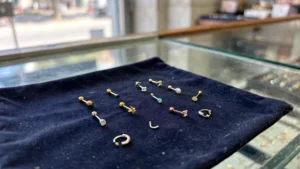
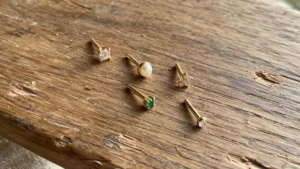
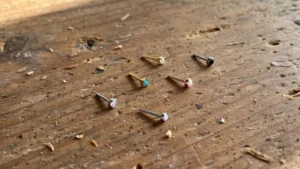
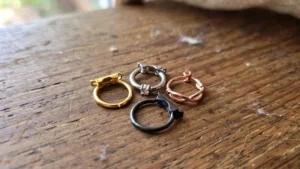
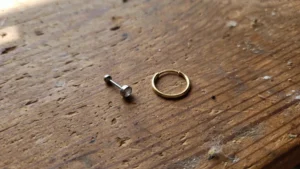
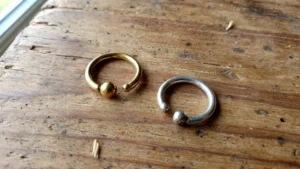
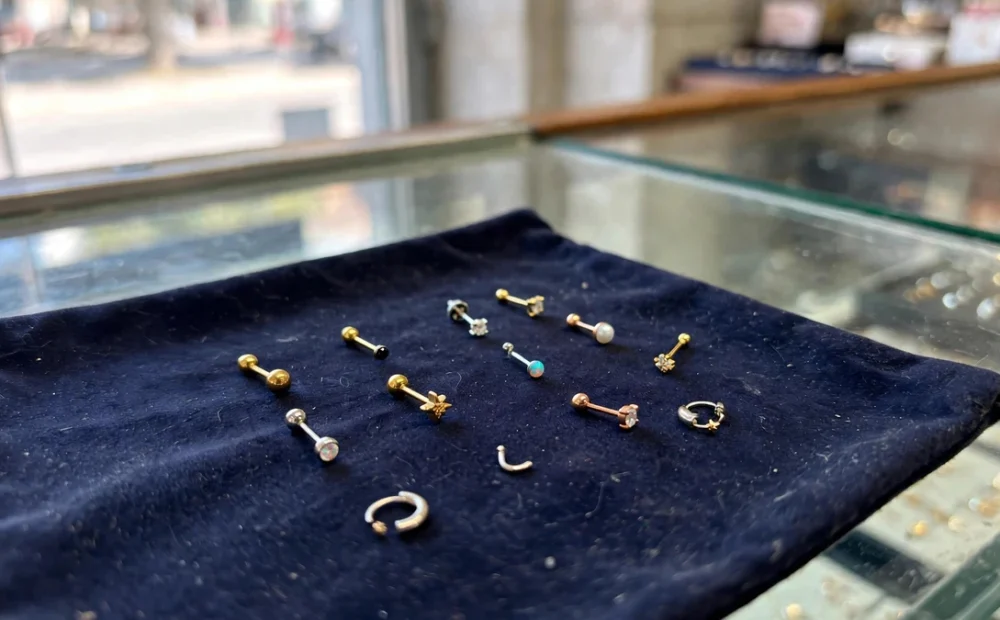
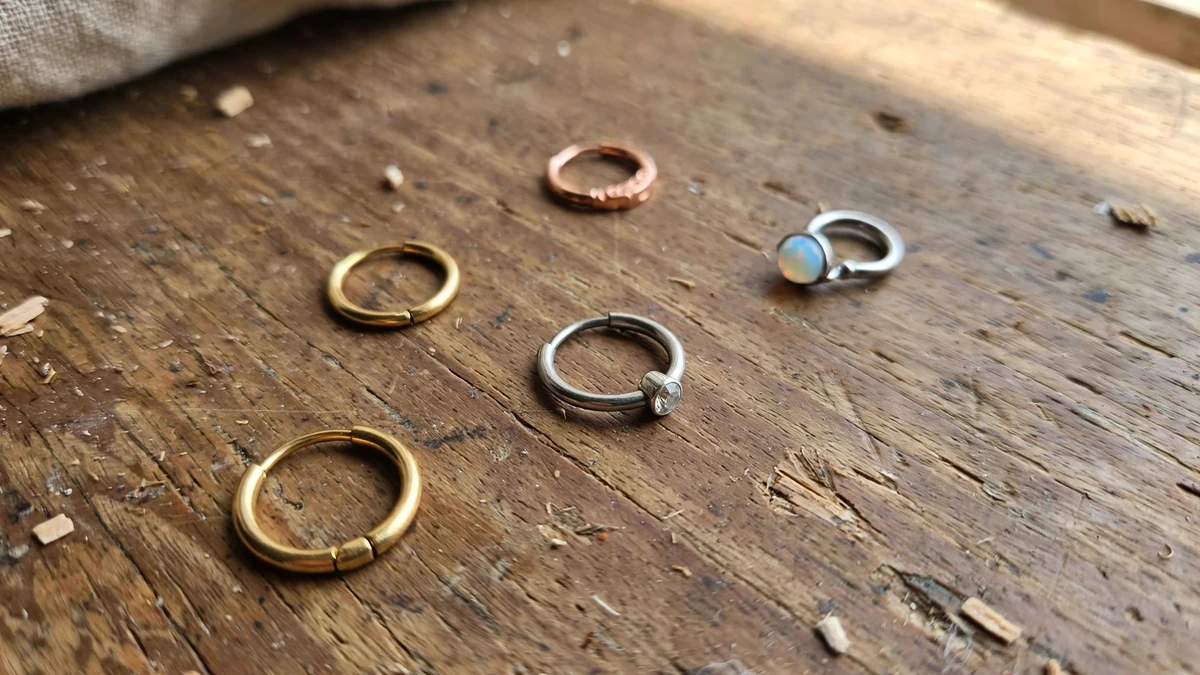
The jewellery itself is small by design. A nostril stud is usually a flat-backed post with a tiny gemstone, ball, or flat disc on the front. A nostril hoop is a thin, complete circle that sits flush against the side of the nose. A septum ring is most often a horseshoe-shaped barbell or a closed hoop, and a clicker ring, which opens and closes with a small hinge, is popular because it is easy to change once the piercing has healed.
What surprises most people is how much the placement changes the experience. A nostril piercing heals in about two to four months and is easy to clean because you can see it. A septum piercing often heals faster, in about six to eight weeks, but it is harder to clean without a mirror. Both need the same thing from you: patience, clean hands, and a willingness to leave the jewellery alone.
How we chose these facts and what to look for
Look first at the placement and the shape. Decide whether you want a nostril or a septum piercing, and whether you want a stud, a hoop, or a ring. A stud is the calmest choice for a first piercing because it sits flat and does not catch on clothing, scarves, or towels. A hoop looks lovely, but it moves more, and movement slows healing, so most piercers will start you with a stud and let you switch to a hoop once the piercing has settled.

Look next at the metal. Implant-grade titanium is the safest choice for a new piercing because it is light, strong, and very rarely causes a reaction. Solid 14k or 18k gold is also a good choice, and it suits people who want their everyday jewellery to match. Our guide to gold jewellery for everyday wear explains why solid gold ages so well, and the same logic applies here: a well-made piece in a good metal will look better for longer and irritate your skin less. Sterling silver is beautiful, but it tarnishes, so it is better as a healed-piercing choice than a first one.
Finally, look at the piercer, not just the jewellery. A good piercer works in a clean studio, uses a sterile single-use needle rather than a piercing gun, marks the placement with you before starting, and explains aftercare clearly. That conversation matters more than the price.
The 9 facts about nose rings in 2027
It sits in the nostril or the septum, and the placement changes everything
What we like: Two placements give you real choice. A nostril stud is classic and easy to show off, while a septum ring can be flipped up and hidden when you need it to disappear. What to consider: The septum is harder to clean without a mirror, and a nostril piercing is more visible while it heals. Best for: Anyone choosing their first nose piercing. Cost: About £25 to £60 for the piercing itself, plus the jewellery. Time needed: About 15 minutes in the studio, plus two to four months of healing.
Studs, hoops and rings are the three main shapes
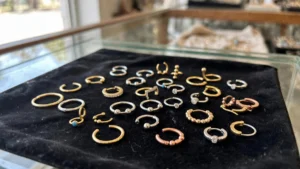
What we like: Three shapes cover almost every style, from a barely-there stud to a slim hoop to a bold septum ring. What to consider: Hoops move more than studs, which can slow healing, so most piercers start you with a stud. Best for: People who want to change their look without a new piercing. Cost: About £10 to £80 for a stud or hoop in a good metal. Time needed: A few minutes to change the jewellery once the piercing has healed.
Gold, silver and titanium are the safest everyday metals
What we like: Implant-grade titanium rarely causes a reaction, and solid gold is beautiful, durable, and kind to healing skin. What to consider: Sterling silver tarnishes and can stain the skin, and cheap plated metals are the most common cause of irritation. Best for: New piercings and sensitive skin. Cost: About £20 to £120 for a piece in titanium or solid gold. Time needed: No extra time, but choosing the right metal saves weeks of irritation.
Size is measured in gauge and diameter
What we like: Standard sizes make it easy to buy new jewellery once you know your gauge and diameter. What to consider: A hoop that is too small will pinch, and one that is too large will catch on everything. Best for: Anyone buying a second piece of nose jewellery. Cost: No extra cost, but a wrong size is a wasted purchase. Time needed: A few minutes to measure, or ask your piercer to confirm your size.
It has a long history, from South Asia to the 1970s
What we like: A nose ring carries real cultural history, from bridal jewellery in South Asia to the punk and fashion scenes of the 1970s. What to consider: In some cultures a nose ring has a specific meaning, so it is worth knowing the history before you borrow the look. Best for: Anyone who likes jewellery with a story behind it. Cost: Nothing extra, but the history is worth knowing. Time needed: A few minutes of reading, and a lifetime of wearing it well.
It works with almost every face shape and style
What we like: A small stud suits every face shape, and the right hoop can soften a strong jawline or balance a long face. What to consider: A very large or heavy piece can overwhelm a small nose, so scale matters more than sparkle. Best for: Anyone who wants one small change that makes a visible difference. Cost: About £10 to £60 for a well-made stud or hoop. Time needed: A few minutes trying shapes in front of a mirror.
Healing takes weeks, not days
What we like: A nose piercing heals faster than many other piercings, and the aftercare is simple once you know it. What to consider: Changing the jewellery too soon, touching it with unwashed hands, or sleeping on it can set healing back by weeks. Best for: Anyone who can be patient for two to four months. Cost: About £5 to £10 for saline spray. Time needed: Two to four months for a nostril, six to eight weeks for a septum.
Cleaning is simple but not optional
What we like: Saline spray and clean hands are all you need, and the routine takes less than a minute. What to consider: Alcohol, hydrogen peroxide, and strong soaps dry out a new piercing and slow healing. Best for: Anyone with a new piercing, and anyone who wears a nose ring daily. Cost: About £5 for a bottle of saline spray. Time needed: Less than a minute, twice a day.
Real gold and platinum hold their value best
What we like: A solid gold or platinum nose ring keeps its value, does not tarnish, and can be worn for years without looking tired. What to consider: The upfront cost is higher, and a very small piece can be easy to lose, so a secure fitting matters. Best for: Anyone who wants one good piece rather than a drawer of cheap ones. Cost: About £60 to £200 for a solid gold stud or hoop. Time needed: No extra time, but a good piece lasts for years.
Which nose ring is right for you
If this is your first nose piercing, start with a small stud in implant-grade titanium or solid gold, and let your piercer choose the placement with you. A stud heals fastest, it does not catch on things, and it gives you a quiet base to build from. Once it has healed, you can try a slim hoop, which changes the look completely without a new piercing.
Your face shape matters less than your habits. If you wear glasses, a stud is less likely to clash with the frames than a large hoop. If you play sport, a flat-backed stud is less likely to catch than a hoop. If you wear a lot of gold jewellery already, a gold nose ring will tie the whole look together, and a pearl necklace or a simple gold chain will sit comfortably alongside it. If your other jewellery is silver, a silver or titanium nose ring will feel more natural than gold.
Think about your daily life, not just the photograph. A nose ring is worn every hour of every day, through sleep, showers, workouts, and work. The right one is the one you forget you are wearing, because it is comfortable, it does not catch, and it does not irritate your skin.
The caveats that matter
A nose ring is a small piercing, but it is still a piercing, and it carries the same risks as any other. Infection is the most common problem, and it usually starts with dirty hands, a cheap metal, or jewellery changed too soon. An allergic reaction is less common, but it happens, usually to nickel, which is why implant-grade titanium and solid gold are the safest starting metals.
| Detail | What is known |
|---|---|
| Common placements | Nostril, usually one side, and septum, the wall between the nostrils |
| Best metal for a new piercing | Implant-grade titanium, or solid 14k or 18k gold |
| Healing time | Two to four months for a nostril, six to eight weeks for a septum |
| Daily care | Saline spray twice a day, clean hands, no twisting or early changes |
| Who should wait | Anyone with a skin infection, a cold, or a history of keloid scarring |
| What to avoid | Alcohol, hydrogen peroxide, nickel, and cheap plated metals |
| When to seek help | Redness, swelling, or pain that lasts beyond the first week |
| What it does not do | It does not suit everyone, and it cannot be rushed through healing |
If you are pregnant, taking blood-thinning medication, or managing a skin condition, talk to your clinician before getting a piercing. A piercing is a small wound, and anything that affects healing changes how it should be handled.
Checklist: choosing a nose ring honestly
Use these checks before you book, and again before you buy new jewellery.
- Choose your placement first: nostril for a classic look, septum if you want to hide it.
- Pick the metal before the design: implant-grade titanium or solid gold for a new piercing.
- Ask your piercer to write down your gauge and diameter so future jewellery fits.
- Check the studio: sterile single-use needles, clean surfaces, and clear aftercare advice.
- Plan for healing: two to four months for a nostril, and no jewellery changes until then.
- Buy one good piece rather than five cheap ones, and check the fitting is secure.
Frequently asked questions
Does getting a nose ring hurt?
Most people describe it as a sharp pinch that fades in seconds. A nostril piercing usually hurts a little more than a septum piercing, because the tissue is thicker, but both are quick. The soreness afterwards is mild, and it settles within a few days if you leave the piercing alone.
How long does a nose piercing take to heal?
A nostril piercing usually takes two to four months, and a septum piercing about six to eight weeks. The piercing will look healed long before it is fully healed inside, so do not change the jewellery early, even if it feels fine.
Can I change my nose ring myself?
Once it has fully healed, yes, with clean hands and the right size. For the first change, many people go back to their piercer, who can swap the jewellery quickly and check that the piercing is ready. A luxury watch is a simpler daily choice, but a nose ring needs a little more care, because a wrong size or a rough fitting can reopen a healed piercing.
Will a nose ring leave a scar if I take it out?
Usually a very small one, and often none at all if the piercing was healed and the jewellery was in for a short time. A nostril piercing that has been in place for years may leave a tiny mark, which fades with time. A septum piercing rarely leaves a visible mark, because it sits inside the nose.
Can I wear a nose ring with glasses?
Yes. A small stud sits well below most frames and rarely causes a problem. A large hoop can occasionally catch on the lower edge of a frame, so if you wear glasses every day, start with a stud and try a hoop later, once you know how the two sit together.
What metal is best for sensitive skin?
Implant-grade titanium is the safest choice, because it almost never causes a reaction. Solid 14k or 18k gold is also a good option. Avoid nickel and cheap plated metals, which are the most common cause of irritation and redness around a new piercing.
The bottom line
A nose ring is a small piece of jewellery with an outsized effect. It sits at the centre of the face, it is visible in every photograph, and it can change the whole feel of an outfit with a single point of light. The best choice is not the most expensive or the most dramatic. It is the one in the right metal, the right size, and the right placement for your face, done by a piercer you trust and cared for patiently while it heals.
Start with a small stud in titanium or solid gold, give it two to four months to heal properly, and then build from there. A hoop, a septum ring, or a second stud can wait. The piercing that heals well is the one you will still be glad you got in five years, and the jewellery that suits you is the one you forget you are wearing.