



A tweed coat is the kind of garment that looks like it has always existed, and in a way it has. It began as practical outdoor clothing in Scotland, woven from rough wool to keep out wind and rain, and it has stayed in wardrobes ever since because it does a simple job well: it keeps you warm, it lasts for years, and it looks better the more you wear it. In 2027 it is back in the spotlight, not as a costume piece but as a smart, everyday winter coat.
The confusion around tweed coats is understandable. Tweed is a fabric, not a shape, so a tweed coat can be a long overcoat, a short boxy jacket-coat, or a tailored belted style. What they share is the cloth itself: woollen yarn, usually in mixed colours, woven into a dense, slightly rough fabric with a visible flecked or checked pattern. That density is what makes tweed warm, and the flecked yarn is what makes it so forgiving to wear.
Below are nine facts that explain what a tweed coat is, how it is made, what it costs, and how to choose one that will still look good in five winters’ time. Each one is practical, not romantic, so you can buy with your eyes open and wear it with confidence.
Key takeaways
- A tweed coat is a coat made from tweed, a dense woollen cloth woven from mixed-colour yarns, usually in flecked or checked patterns.
- Tweed is naturally warm, wind-resistant and hard-wearing, which makes it well suited to cold, changeable weather.
- The best tweed coats are made from pure wool, fully lined, and cut generously enough to layer a knit underneath.
- Look for a close weave, a good weight, and a length that suits how you actually move through your day.
- No coat is waterproof on its own, and tweed needs dry cleaning and moth protection, not washing or damp storage.
What a tweed coat actually is
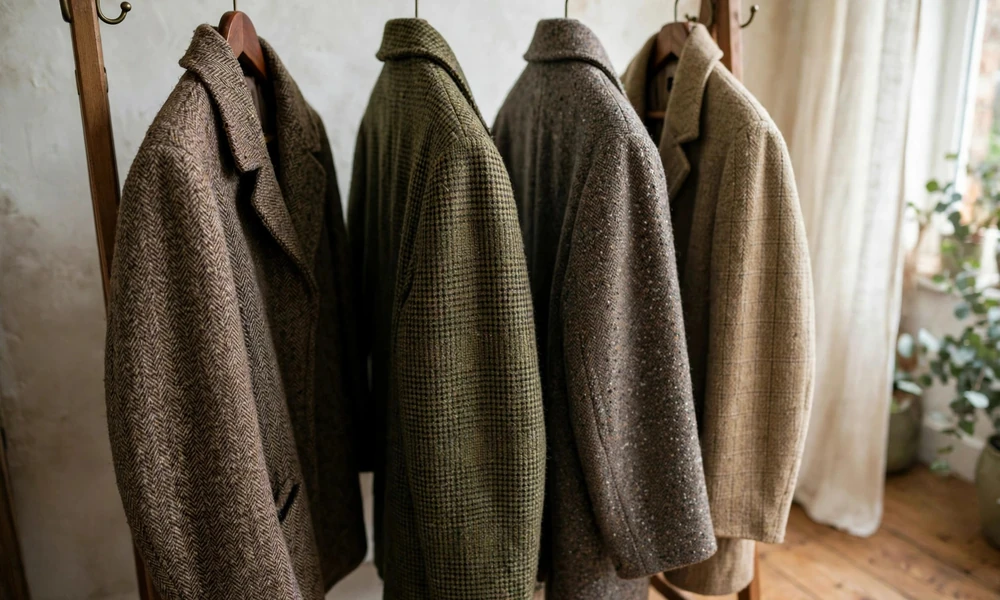
A tweed coat is an outer coat cut from tweed cloth. Tweed itself is a woollen fabric, traditionally woven in Scotland and Ireland, made by twisting together yarns of different colours before weaving. That twisting is what gives tweed its characteristic speckled surface: look closely at any tweed coat and you will see flecks of brown, cream, green, blue or rust running through the main colour. The effect is subtle from a distance and rich up close, which is why tweed never looks flat or plain.
The cloth is dense and slightly rough to the touch. That roughness is not a flaw. It comes from the short woollen fibres and the tight weave, and it is exactly what makes tweed so warm and so resistant to wind. A good tweed coat will keep you comfortable on a cold, blustery day in a way a smooth wool coat sometimes does not, because the dense weave slows the wind before it reaches you.
Tweed coats come in several shapes. The classic is a straight, knee-length overcoat with a notched lapel and a single row of buttons. There are also shorter, boxier styles that sit at the hip, and belted styles that define the waist. The shape matters less than the cloth and the fit, but it is worth knowing which one suits your life: a long coat protects more of you from the cold, while a shorter one is easier to wear in a car or on a crowded train. Our guide to what a tweed blazer is explains how the same cloth behaves in a lighter, shorter garment, which is a useful comparison if you already own a tweed blazer and are wondering whether a coat is different enough to be worth it.
How we chose these facts and what to look for
Start with the cloth. A tweed coat should be pure wool, or as close to it as possible, because wool is what gives tweed its warmth, its shape retention and its ability to recover from creasing. Blends with a little cashmere or alpaca can feel softer, and a small amount of synthetic fibre can add durability, but a coat that is mostly polyester is not really tweed in the way that matters. Check the label, and hold the fabric up to the light: a good tweed is dense enough that you cannot see through it.
Look next at the lining and the construction. A well-made tweed coat is fully lined, usually in a smooth viscose or silk-blend lining, so it slips easily over a knit and does not catch on your sleeves. The seams should be neat and the buttons firmly attached, with a spare button in a pocket. A coat with a centre vent or side vents is easier to walk and sit in, which matters more than it sounds when you are wearing a long coat all day.
Finally, look at the weight and the length. Tweed is a heavy cloth, and a full-length coat can feel substantial on the shoulders. Try it on with the thickest knit you plan to wear underneath, walk in it, and sit in it. If the shoulders pull or the coat feels stiff across the back, try a size up or a different cut. A tweed coat is an investment piece, and comfort on day one is a better guide than how it looks standing still in a mirror. The best wool coats for women show how different wool coats compare on warmth and fit, which is a useful cross-check before you commit to tweed.
The 9 things to know about a tweed coat in 2027
Tweed is a cloth, not a style
What we like: Because tweed is a fabric, it comes in many shapes, from long overcoats to short boxy coats, so there is a tweed coat for most tastes. What to consider: The word tweed is used loosely, and some coats labelled tweed are thin, loosely woven imitations. Best for: Anyone who wants a warm winter coat with character. Cost: From around £120 for a high-street style to £600 or more for a heritage brand. Time needed: An afternoon to try on a few cuts and compare the cloth.
Knowing that tweed is a cloth helps you shop better. Ignore the label and judge the fabric itself: it should feel dense, slightly rough, and heavy for its size, with visible flecks of colour. If it feels thin and smooth, it is not doing what tweed is meant to do.
It is woven from mixed-colour yarns
What we like: The mixed yarns give tweed its depth of colour, so a brown tweed coat is never just brown, and it hides dust and light marks well. What to consider: The flecked pattern makes bold prints and bright accessories harder to pair. Best for: People who like muted, natural colours. Cost: No extra cost, it is simply how tweed is made. Time needed: None, this is a fact to check when you look at the cloth.
The classic patterns are herringbone and check
What we like: Herringbone and windowpane checks are timeless, and they suit both smart and casual outfits. What to consider: A large, bold check can overwhelm a small frame, so scale matters. Best for: Anyone building a classic winter wardrobe. Cost: No extra cost for the pattern itself. Time needed: A few minutes to compare patterns in a mirror.
It is warm because the weave is dense
What we like: A dense weave blocks wind and holds warmth, so a tweed coat is genuinely warm in cold weather, not just decorative. What to consider: That density makes tweed heavy, and a long coat can feel tiring on the shoulders after a full day. Best for: Cold, windy winters and outdoor walking. Cost: Included in the price of the coat. Time needed: None, but try the coat on for a few minutes before buying.
Real tweed is pure wool
What we like: Pure wool holds its shape, recovers from creasing, and breathes, so you do not overheat indoors. What to consider: Pure wool tweed needs dry cleaning, and it can feel scratchy against bare skin, so wear a layer underneath. Best for: Anyone who wants a coat that lasts for years. Cost: Pure wool costs more than a polyester blend, usually from £200 upwards. Time needed: A minute to read the label.
Read the composition label before you buy. A coat that is 100 percent wool is the real thing. A blend with 10 to 20 percent cashmere will feel softer and is a genuine improvement. A coat that is mostly polyester with a tweed-like pattern printed on it is not tweed, however good it looks on the hanger, and it will not keep you as warm.
It lasts for years if you look after it
What we like: Tweed is one of the hardest-wearing coat fabrics, and a good coat can last a decade or more. What to consider: It needs dry cleaning, brushing, and moth protection, which is more upkeep than a washable coat. Best for: Anyone who wants to buy once and wear for years. Cost: Dry cleaning a few times a year, plus cedar or lavender for storage. Time needed: A few minutes of care after each wear.
The length changes how you wear it
What we like: A knee-length coat is the most versatile, warm enough for winter and smart enough for work. What to consider: A full-length coat is warmer but harder to drive in, and a short coat leaves your legs cold. Best for: Your daily routine, not an imagined one. Cost: No difference in price by length, broadly. Time needed: A few minutes trying on different lengths.
It works with smart and casual clothes
What we like: Tweed pairs naturally with jeans and boots, and equally well with tailored trousers and a shirt. What to consider: Very formal occasions still call for a smoother, plainer coat. Best for: Everyday winter dressing, work, and weekends. Cost: Nothing extra, it is about how you style it. Time needed: No time at all, once you own one.
It is not waterproof, and that matters
What we like: Tweed shrugs off light rain and drizzle, because the dense wool fibres resist water for a while. What to consider: In heavy rain it will soak through, and a wet tweed coat is heavy and slow to dry. Best for: Cold, dry days and light showers. Cost: A water-repellent spray can help, but it is not a substitute for a raincoat. Time needed: A few minutes to spray, once a season.
Which tweed coat is right for you
Start with your climate and your routine. If your winters are cold and windy, choose a long, heavy, pure-wool coat with a full lining and a high collar or a scarf-friendly neckline. If your winters are milder, a shorter, lighter tweed coat in a blend with a little cashmere will be more comfortable and easier to wear indoors.
Next, think about colour. A brown or camel tweed is the easiest to wear, because it pairs with navy, black, cream and grey. A green or grey tweed is slightly more distinctive and still very versatile. A bright or heavily checked tweed is a statement, and it is better as a second coat than as your only winter coat. The best trench coats make a useful comparison here, because they show how a different classic coat solves the same winter problems in a lighter, more weatherproof way.
Finally, get the fit right. A tweed coat should close comfortably over your thickest knit, with room to move your arms without the back pulling. The shoulders should sit at your own shoulder line, not droop past it, and the sleeves should reach your wrist bone. If you are between sizes, size up: a tweed coat that is slightly roomy looks intentional, while one that is too tight looks uncomfortable and will wear out faster at the seams.
The caveats that matter
Tweed is a wonderful fabric, but it is not the right coat for every situation. It is heavy, it needs dry cleaning, and it is not waterproof. It can also feel scratchy against bare skin, so always wear a layer underneath, and it attracts lint and pet hair more than a smooth cloth. None of these are reasons to avoid tweed, but they are reasons to buy it with your eyes open.
| Detail | What is known |
|---|---|
| What it is | A coat cut from tweed, a dense woollen cloth woven from mixed-colour yarns |
| Best cloth | Pure wool, or wool with a little cashmere; avoid mostly-polyester imitations |
| Warmth | Very warm in cold, windy weather, thanks to the dense weave |
| Classic patterns | Herringbone, windowpane check, Prince of Wales check, plain flecked tweed |
| Best length | Knee-length for most people; longer for maximum warmth, shorter for driving |
| Care | Dry clean, brush after wear, store on a wide hanger with moth protection |
| What it is not | Not waterproof, not washable, and not the lightest coat you will own |
| Who should think twice | Anyone who needs a rainproof coat, or who dislikes heavy outerwear |
If you have a wool allergy or very sensitive skin, try a tweed coat on over a long-sleeved top before buying, and check how the collar feels against your neck. A cashmere-blend tweed is usually softer and may be more comfortable, but it is worth confirming on your own skin rather than taking anyone’s word for it.
Checklist: choosing a tweed coat honestly
Use these checks before you buy, and again after a week of wear.
- Check the label: pure wool, or wool with a little cashmere, not mostly polyester.
- Check the weave: dense enough that you cannot see through it when held up to light.
- Check the lining: fully lined, smooth, and not catching on your sleeves.
- Try it with your thickest knit underneath, and walk and sit in it before deciding.
- Check the length against your daily routine: walking, driving, or commuting.
- Plan the care: dry cleaning, a clothes brush, and moth protection in storage.
Frequently asked questions
Is a tweed coat warm enough for winter?
Yes, for most cold weather. The dense wool weave blocks wind and traps warmth, and a lined tweed coat over a knit is comfortable well below freezing. In extreme cold, add a scarf and thermal layers underneath.
What is the difference between a tweed coat and a tweed blazer?
A tweed coat is longer, heavier, and designed as outerwear for cold weather, while a tweed blazer is shorter, lighter, and worn indoors as part of an outfit. They use the same cloth, but the coat is built for warmth and weather, and the blazer for tailoring.
Can I wear a tweed coat in the rain?
Light rain and drizzle are fine, because wool resists water for a while. Heavy rain will soak a tweed coat through, so carry an umbrella or choose a waterproof coat on wet days, and let a damp tweed coat dry naturally away from direct heat.
How do I clean a tweed coat?
Dry clean it, a few times a season or when it is visibly soiled. Between cleans, brush it with a clothes brush after wear, air it out, and spot-clean small marks with a damp cloth. Never machine wash a tweed coat.
Does tweed go out of fashion?
Not really. Tweed has been in and out of the spotlight for over a century, but a classic herringbone or plain tweed coat in a neutral colour has never looked wrong. Trends change the cut and the length, not the cloth itself.
Is a tweed coat worth the price?
Often yes, if you buy pure wool and look after it. A good tweed coat can last a decade, which makes the cost per wear very low compared with a cheaper coat you replace every year or two. A polyester imitation is rarely worth it, because it will not last or keep you as warm.
The bottom line
A tweed coat is a practical, long-lasting piece of winter clothing that happens to look good as well. It is warm because the cloth is dense, it is durable because wool is a tough fibre, and it is versatile because the flecked texture works with both smart and casual clothes. Choose pure wool, a length that suits your day, and a colour you will still like in five years.
Buy it once, look after it with a brush and a dry cleaner, and it will repay you every winter. That is the honest case for a tweed coat: not a fashion statement, but a coat that earns its place in your wardrobe year after year.



