Velvet curtains ask you to pay more for something that does a job a cheap pair of drapes already does: cover a window. The price looks high for fabric that hangs still most of the day, and the care label looks fussy for something you touch twice a day. It is easy to buy a light cotton pair instead and forget the window entirely.
Yet velvet keeps coming back, room after room, in homes that could afford anything. People who own velvet curtains rarely talk about the price after the first month. They talk about sleeping past sunrise, warm winter evenings, and an ordinary window that suddenly looked finished. The question is not whether velvet is a beautiful fabric. The question is whether curtains made from it earn their price in your home, hung on your windows, in the way you actually live.
This is an honest verdict, not a sales pitch. Velvet curtains are worth it for a lot of homes in 2027, and a waste of money for others. It depends on your windows, your light, your tolerance for dusting and dry cleaning, and what you buy. Below is the case for them, the maths, the rooms where they fail, and the checks that separate a good pair from a mistake.
Key takeaways
- Velvet earns its price through function, not just looks: its dense pile blocks light, traps air for insulation, and softens sound.
- Cost per day, not the price tag, is the fair test: curtains are used every day for years, so a good pair can cost less per day than a takeaway coffee.
- Fibre matters more than the label: cotton velvet drapes best, silk velvet is the most beautiful and delicate, and good polyester velvet suits sunny or busy rooms.
- Lining decides the performance: unlined velvet looks soft but blocks little light, while a blackout or thermal lining delivers the darkness and warmth.
- The verdict depends on the room: the same pair can be a bargain for a cold, street-facing bedroom and a mistake for a small, sun-baked kitchen.
What velvet curtains are worth paying for
The value starts with light. Velvet is a woven fabric with a dense, cut pile, and that pile is the whole point: light hits thousands of tiny upright fibres instead of a flat surface, and much of it never gets through. Even unlined velvet dims a room, and with a blackout lining it can make a bedroom properly dark at noon. For anyone who sleeps badly in summer or works nights, that darkness is not decoration. It is sleep.
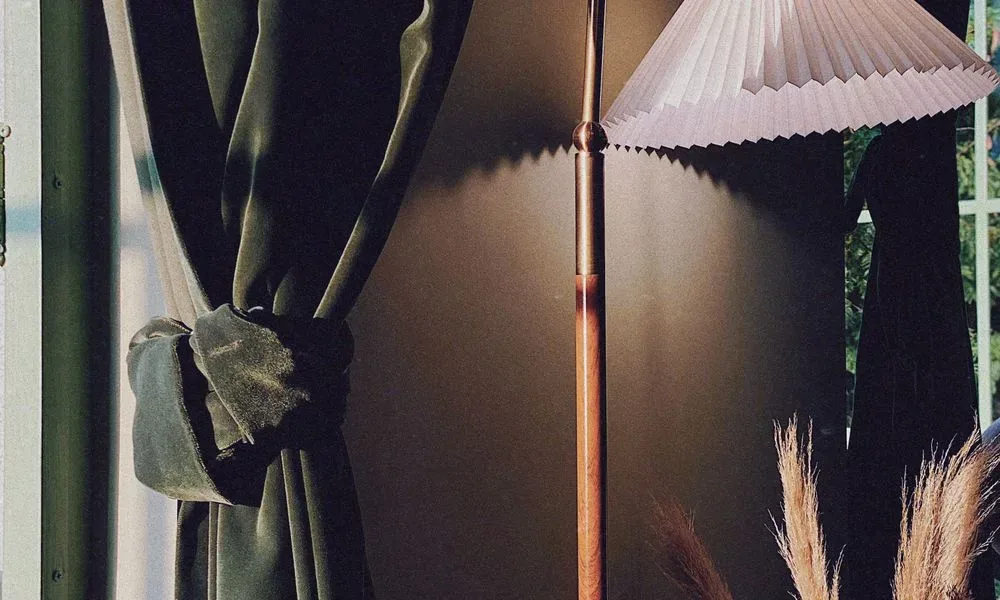
The second is warmth. The same pile that blocks light also traps air, and trapped air is insulation. Heavy velvet hung close to the window, floor length, cuts the draught off cold glass in winter and slows the heat through sunny glass in summer. It will not replace proper insulation, but in a draughty older home you feel the difference within an hour of drawing them.
The third is drape, and drape is where cheap curtains give themselves away. A good velvet falls in soft, even folds under its own weight, without stiffness and without collapsing into a flat sheet. That weight is also what makes the colour look expensive: the pile catches light differently across each fold, so the colour has depth instead of sitting flat.
What to look for before you pay
Start with the fibre, because it decides almost everything else. Cotton velvet has the best drape and the most natural hand, and takes deep, even colour; it is the classic choice for a gently used living room or bedroom. Silk velvet is the most beautiful of all, with a liquid sheen no other fibre matches, but it spots with water, fades fast in sun, and usually needs professional cleaning. Good polyester velvet is the practical choice, holding colour and shape in sunny rooms and busy households. A label that says velvet without naming the fibre is a warning sign, not a bargain.
Then check the weight. Lightweight velvet looks luxurious on a screen and behaves like a sheer once hanging, letting light bleed through. Heavier cloth, roughly 300 grams per square metre and above, is where the light blocking and insulation actually happen, and it is also what gives the drape its fall. Hold a panel up to a light: if you can see the bulb clearly through it, it will not darken your room.
Lining is the third decision, and it matters as much as the fabric. An unlined velvet looks soft and moves beautifully, but it blocks less light and fades faster. A cotton lining adds body and protects the face fabric from sun. A blackout or thermal lining delivers the full darkness and draught-proofing, but it makes the curtain stiffer and heavier. Choose the lining for the room: a bedroom deserves blackout, a formal dining room may not. For the makers behind the market, our roundup of the best luxury curtains brands sets out the names that define the top end.
Finally, get the size right, because velvet punishes stingy measurements more than any other fabric. Fullness of about two to two-and-a-half times the window width makes velvet look generous, and the rod should sit a few inches above the frame and extend past each side so the panels stack off the glass. Panels should just kiss the floor, or pool slightly if the room is formal. Check the rod and brackets before you order: velvet is heavy, and a flimsy rod will bow within months. Our best velvet curtains for luxury homes guide covers the styles in detail, if you want to compare how each one hangs first.
The cost maths
Curtains are one of the few things in a home that are used every single day, and that changes the maths completely. Take an illustrative example: a well-made pair for one window at $400, hung in a bedroom and used for eight years. That is about 14 cents a day, for darkness, warmth, and a finished room. A cheaper $120 pair that fades and gets replaced after two years costs more per day and looks worse for most of its life. The expensive pair is not the extravagant choice here; the disposable one is.
The real cost is not the fabric alone. Custom-made velvet for a wide window, in cotton or silk, with a proper lining and a sturdy rod, can run into four figures before cleaning. Ready-made polyester velvet panels, by contrast, can cost less than a dinner out, and for a sunny spare room or a rental they may be all you need. The mistake is paying custom prices for ready-made quality, or buying ready-made panels and expecting them to behave like custom ones.
When velvet curtains are not worth it
Velvet is not a universal answer, and the rooms where it fails are easy to name. It attracts dust and pet hair more than flat fabrics, so a home with shedding pets will need regular vacuuming with a soft brush, and silk velvet will usually need professional cleaning. It fades in strong, direct sun, so a south-facing window with no lining will lose its colour unevenly within a few years. And it crushes: pressure marks appear where the fabric is folded, and while steaming usually lifts them, a household without a steamer will see them.
Velvet is a heavy, formal fabric, and in a small, low-ceilinged room it can overwhelm the space and make it feel smaller and darker. In a bright, minimal room of pale wood and white walls, deep velvet curtains can look like they belong to a different house. And in a kitchen or bathroom, where steam, splashes, and cooking smells are daily facts, velvet is simply the wrong fabric: it holds odours and hates damp.
| Situation | Verdict |
|---|---|
| You need blackout darkness for sleep | Worth it: velvet with a blackout lining is one of the best ways to get it |
| Your home is draughty or cold in winter | Worth it: heavy, floor-length velvet cuts draughts from the window |
| You want a room to feel finished and formal | Worth it: nothing else gives a window the same weight and depth |
| Your room is small, dark, or low-ceilinged | Not worth it: velvet will make it feel smaller and heavier |
| Your window faces strong sun all day | Think twice: fading is likely unless lined and protected |
| You have shedding pets and hate cleaning | Not worth it: dust and hair show fast on velvet pile |
| You need curtains for a kitchen or bathroom | Not worth it: steam, damp, and smells are the wrong conditions |
| Your budget only stretches to one pair | Think twice: spend it on the window you use most, not the one you see least |
Before you buy: a quick checklist
- Check the label: the fibre should be named, cotton, silk, or polyester, not just velvet.
- Hold it to the light: if you can see the bulb clearly through it, it will not darken your room.
- Feel the weight: heavy cloth drapes and insulates, thin cloth flattens and lets light through.
- Choose the lining for the room: blackout for bedrooms, cotton lining for living rooms.
- Measure generously: about two to two-and-a-half times the window width, rod above the frame, panels to the floor.
- Check the rod first: velvet is heavy, so budget for brackets that can carry it.
Frequently asked questions
Are velvet curtains worth the money in 2027?
Yes, when the room needs what velvet does: darkness, warmth, quiet, and a formal finish. A good pair used daily for years costs little per day, but not where dust, sun, or damp will defeat the fabric.
Do velvet curtains block light?
Yes, better than most curtain fabrics, because the dense pile stops much of the light a flat weave would let through. For full blackout, they still need a blackout lining, with no gaps at the sides or top.
Do velvet curtains keep a room warm?
They help noticeably. The pile traps air, and a heavy, floor-length pair hung close to the window cuts the draught off cold glass. They will not replace insulation, but in a draughty room they make a real difference on cold evenings.
Are velvet curtains hard to clean?
Harder than cotton or linen. They attract dust and pet hair, so they need regular vacuuming with a soft brush, and silk velvet usually needs professional cleaning. Polyester velvet is the easiest to live with.
Do velvet curtains fade in sunlight?
Yes, over time, especially in strong direct sun and deep colours. A lining protects the face fabric, and a sheer behind the velvet takes the worst of the sun. Unlined velvet on a south-facing window fades fastest.
Which rooms suit velvet curtains best?
Bedrooms, living rooms, dining rooms, and home cinemas: anywhere that benefits from darkness, quiet, and a cocooned feeling. They suit a bedroom most of all. If you are planning one, our guide to how to create a luxury bedroom shows how the curtains fit into the room as a whole.
The bottom line
Velvet curtains are worth it when they match the room: a cold or bright bedroom, a living room that needs quiet and finish, a home where they are drawn every night for years. They do a job no other fabric does as well, they last, and the cost per day falls fast once they become part of the room. The price stings once; the darkness and the warmth pay back every night.
They are not worth it as a status purchase, a one-off for a room you barely use, or a cheap thin pair hung short on a weak rod. Buy the best fibre and lining you can afford for the window that matters most, and hang them high and full.
Note: Prices and cost-per-day figures here are illustrative examples, not surveyed market data, and vary with size, fibre, maker, and seller. Check the label, the fibre content, and the returns policy before buying.
Meet Our Experts
BrassSmile’s home editors cover interiors, fabrics, and luxury living, judging every piece on how it looks and performs in a real room.
Why Trust BrassSmile
We judge home pieces on real-world performance, light, warmth, drape, and care, not on catalogue photographs, and we say plainly when a luxury choice is not worth the money.
Sources
Textile references on velvet pile, fibre properties, and curtain care; BrassSmile’s home and curtains guides.